Spill Control Solutions for Faster Workplace Response
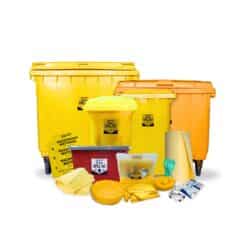
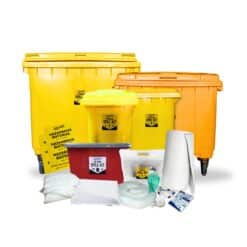
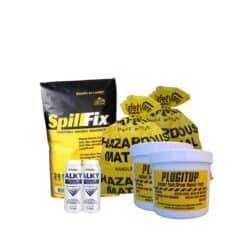
Spill control products help workers contain, absorb and clean up leaks before they spread across floors, enter drains or interrupt operations. Safetyware supplies chemical spill kits, oil-only spill kits, absorbent pads, socks, booms, pillows, disposal bags and spill response accessories for Malaysia and Singapore workplaces.
How to Choose Spill Kits and Absorbents
| Spill risk | Recommended product | Typical workplace |
|---|---|---|
| Acids, alkalis, solvents or unknown chemicals | Chemical spill kit or hazmat sorbents | Laboratories, factories, chemical stores and process areas |
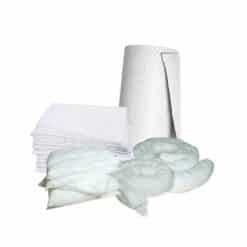
| Oil, fuel, diesel or hydraulic fluid | Oil-only spill kit or oil-only sorbents | Workshops, loading bays, marine areas and maintenance zones |
| Small leaks or refills after use | Pads, socks, pillows, booms or granular absorbents | Production floors, warehouses and vehicle service areas |
| Used absorbents and contaminated cleanup waste | Hazardous disposal bags and labels | Spill response stations and ERT equipment stores |
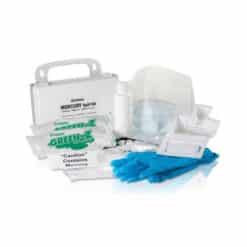
| Specialised liquid incidents | Mercury kit, acid solidifier or alkaline solidifier | Clinics, laboratories, schools and technical facilities |
Local Compliance and Response Planning
For Malaysia, spill response planning should consider DOSH chemical management, CLASS/SDS information, USECHH exposure controls and DOE scheduled waste requirements for contaminated cleanup materials. In Singapore, SS 532 and SCDF fire-safety requirements may apply where flammable liquids and spillage control are involved. Product selection should be supported by training, clear locations, inspection routines and disposal procedures.
Spill Control FAQ
What is the difference between a chemical spill kit and an oil spill kit?
A chemical spill kit is designed for chemicals such as acids, alkalis, solvents and unknown liquids. An oil-only kit targets petroleum-based liquids and is often used where water may be present.
Where should spill kits be placed?
Place kits near likely spill points such as chemical stores, loading bays, fuel handling areas, laboratories, maintenance rooms and process lines, while keeping access routes clear.
What should be checked after a spill kit is used?
Used pads, socks, gloves, bags or PPE should be replaced promptly, and contaminated waste should be handled according to the substance and local disposal requirements.
Need help choosing? Contact Safetyware for spill kit selection, absorbent refill planning or project enquiries.
Explore related spill control ranges: chemical spill kits, oil-only spill kits, chemical sorbents, oil-only sorbents, spill response products and safety storage and containment.