Sticky Mats for Cleanroom Entry Contamination Control
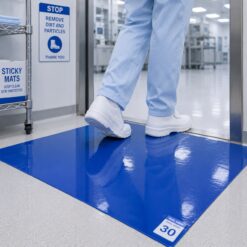
Sticky mats help capture dust and loose particles from footwear and trolley wheels before they enter cleaner or more controlled areas. They are useful at cleanroom entrances, gowning areas, laboratories, electronics production and hygiene-sensitive access points.
How to Select Sticky Mats
| Entry condition | Selection cue | Practical note |
|---|---|---|
| Cleanroom gowning entry | Layer count and adhesive strength | Change layers before the surface loses tack |
| Laboratory or controlled area | Mat size and placement | Ensure users step fully on the mat |
| Trolley or cart movement | Mat coverage and adhesion | Avoid curled edges or movement under wheels |
Standards, SOP and Procurement Notes
Sticky mats support contamination control but do not replace cleaning, gowning discipline or controlled-area procedures. Inspect layers, corners and surrounding floor condition so the mat remains useful without becoming a trip hazard.
Common Questions
Where should sticky mats be installed?
Place them at controlled-area entries where workers or carts can contact the surface before crossing into the clean zone.
How often should sticky mat layers be changed?
Change layers when visible dirt builds up, tack decreases or the site SOP requires a scheduled layer change.
Can sticky mats be used outside cleanrooms?
Yes, they can support laboratories, electronics rooms, inspection areas and hygiene-sensitive work zones where dust transfer matters.
Related Support
Need help selecting cleanroom garments, ESD smocks, jumpsuits, wipers or sticky mats? Contact Safetyware for product guidance, quotation support and practical recommendations. You can also compare related body protection, hand protection, respiratory protection and floor safety where contamination or static control involves multiple PPE categories.
Floor Mats