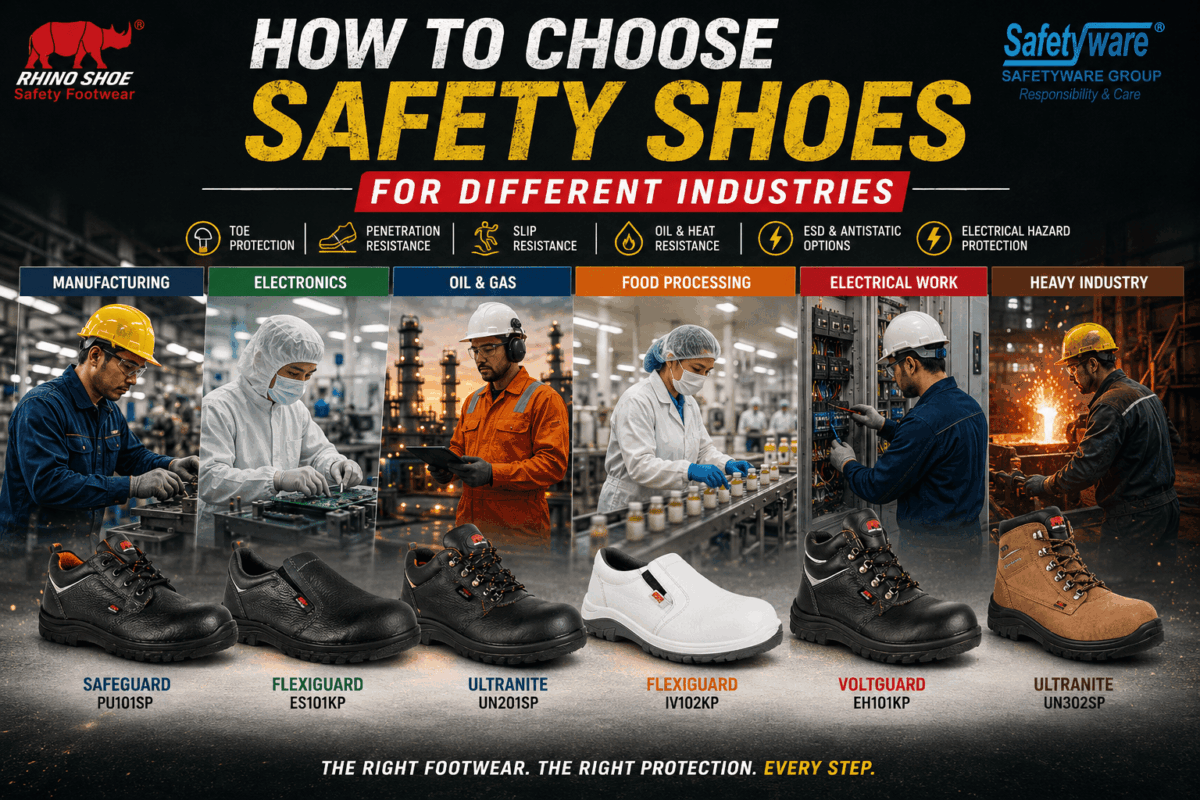
Safety shoes that work well in an electronics factory may not suit an oil refinery, construction site or food-processing plant.
Each workplace creates different risks. For example, factory workers may need protection from falling objects and sharp materials. Electronics workers may need ESD footwear, while oil and gas workers often face oily surfaces, heat and demanding outdoor conditions.
Therefore, the best way to choose safety shoes is to start with the hazard, not the industry name.
Malaysia’s Department of Occupational Safety and Health (DOSH) also advises employers to select foot protection according to the hazard. Impact, compression, penetration, chemical exposure and other risks may require different footwear features.
This guide explains how to choose safety shoes for different industries and highlights suitable RHINO SHOE models for common workplace applications.
RHINO SHOE is a Safetyware Group safety-footwear brand manufactured in Malaysia. Its range covers general industrial work, ESD environments and heavy industrial applications.
Start With the Hazard, Not Just the Safety Shoe Style
Before choosing between a low-cut shoe, mid-cut shoe or safety boot, ask:
What can actually injure the worker’s feet?
Look for these common hazards:
| Workplace Hazard | Footwear Feature to Consider |
|---|---|
| Falling or heavy objects | Safety toe cap |
| Nails, metal scraps or sharp objects | Penetration-resistant midsole |
| Wet or oily floors | Slip-resistant outsole |
| Oil and fuel exposure | Oil-resistant outsole |
| Hot surfaces | Heat-resistant outsole |
| Electronics and sensitive components | ESD footwear |
| Static build-up | Antistatic footwear |
| Electrical shock risk | Electrical-hazard / insulating footwear |
| Wet or direct chemical exposure | Suitable waterproof or chemical-resistant boots |
| Rough outdoor conditions | Durable outsole and suitable ankle coverage |
In addition, check fit, size and movement. DOSH’s 2024 guidance for standing work highlights correct footwear fit and supportive footwear as important factors for workers who spend long periods on their feet.
Most importantly, do not assume that one pair of safety shoes covers every hazard.
👉Learn More the about Safety Shoes Standard: Safety Footwear Standards Guide | Safetyware
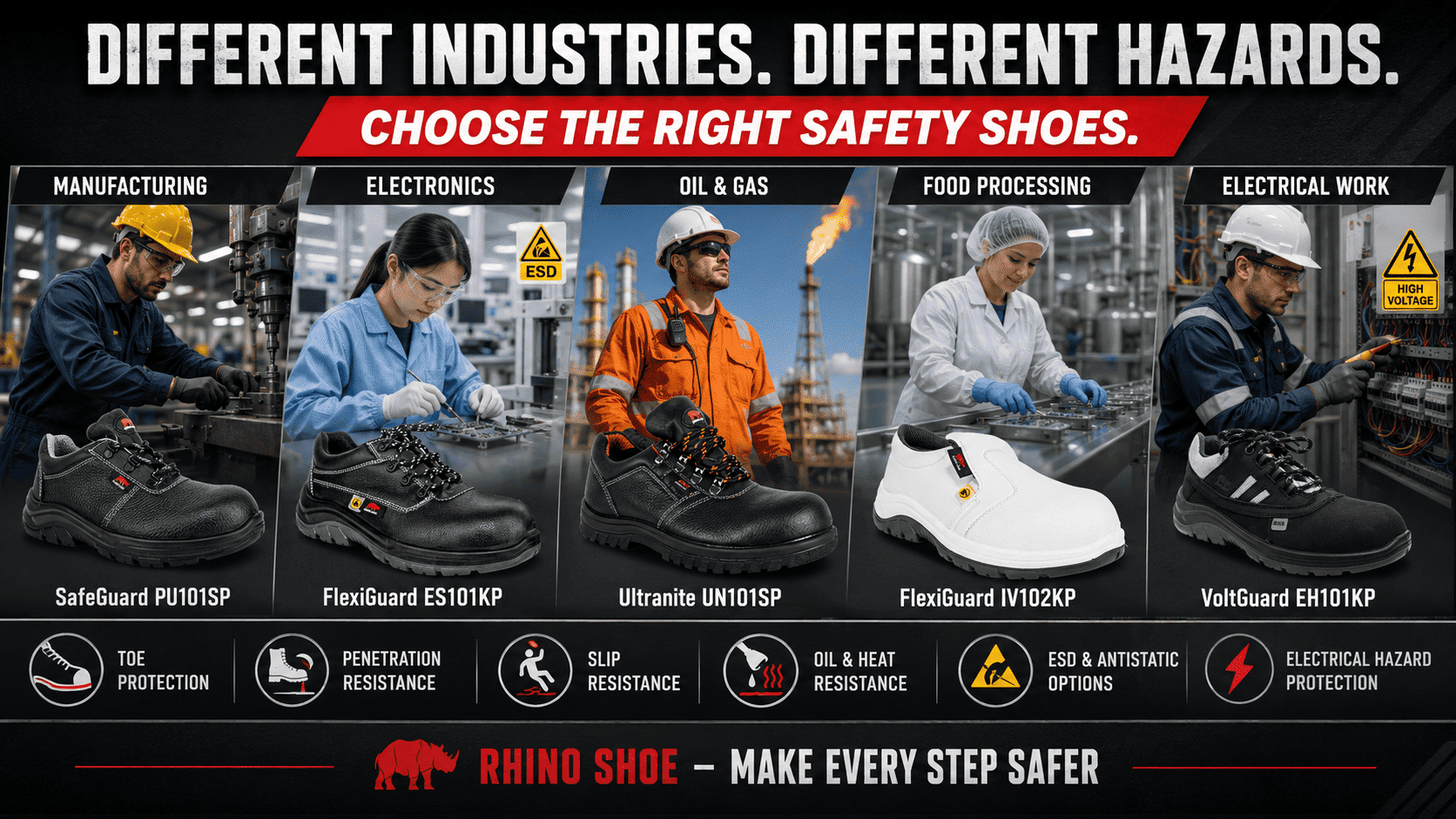
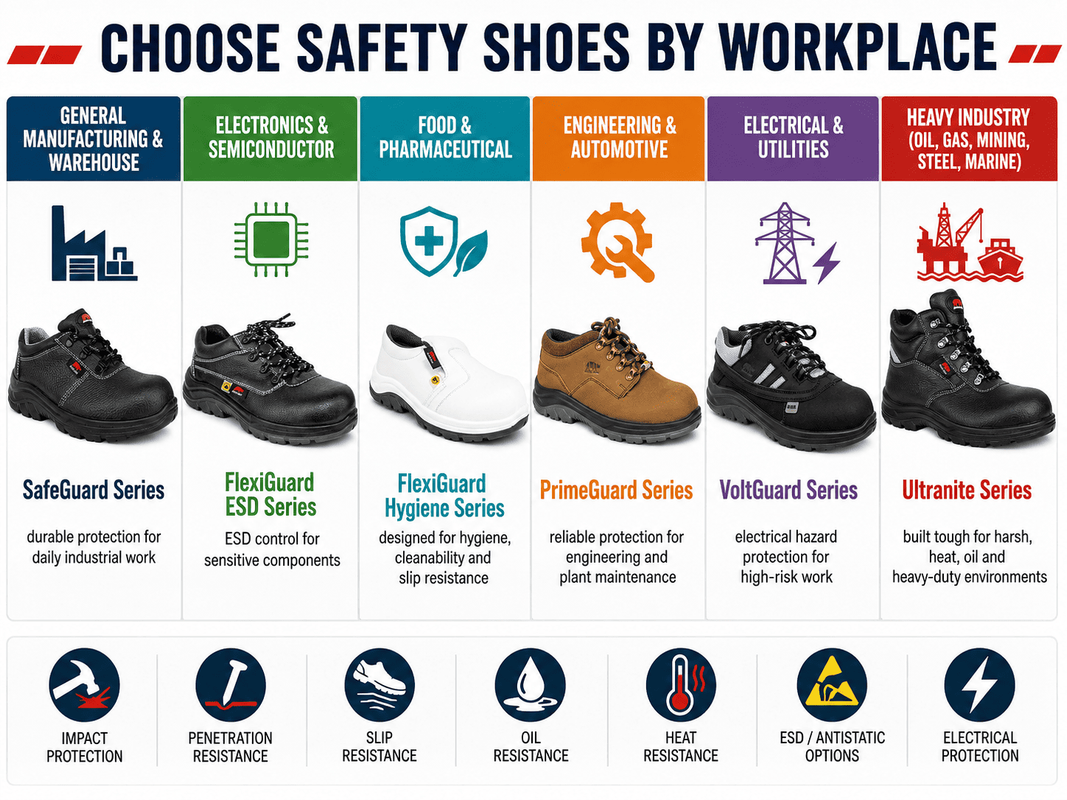
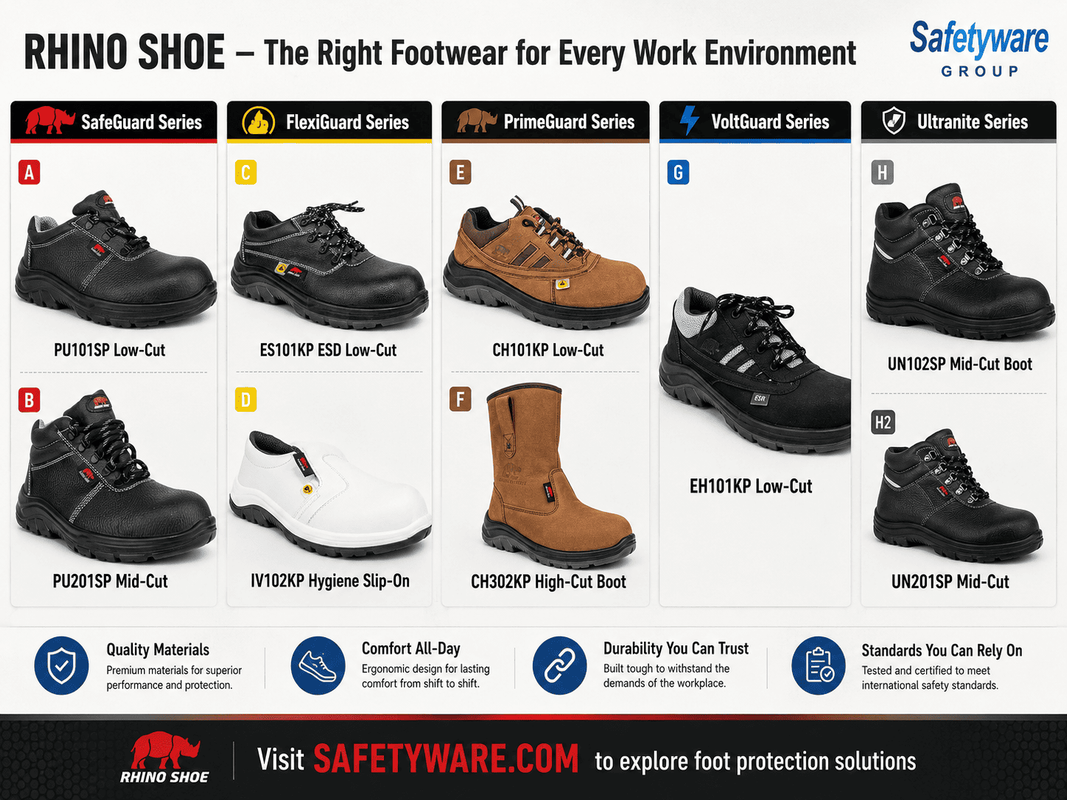
Quick Guide: Which RHINO SHOE Fits Which Industry?
| Industry / Work Area | Main Concerns | Suggested RHINO SHOE Range |
| General manufacturing | Impact, sharp objects, slips | SafeGuard PU101SP / PU201SP |
| Warehouse & logistics | Impact, penetration, daily movement | SafeGuard PU101SP / PU201SP |
| Electronics & semiconductor | ESD, sensitive components | FlexiGuard ES101KP / ES102KP |
| Food & pharmaceutical | Hygiene, cleanability, slip risk | FlexiGuard IV102KP |
| Engineering & automotive | Impact, penetration, daily industrial work | PrimeGuard CH101KP / CH111KP / CH211KP |
| Plant maintenance | Mixed hazards, ankle protection | PrimeGuard CH302KP |
| Electrical & utilities | Electrical shock risk | VoltGuard EH101KP |
| Oil & gas | Oil, heat, slips, impact, harsh conditions | Ultranite Series |
| Petrochemical | Oil, heat, common acid/alkali contact at outsole | Ultranite Series |
| Steel & foundry | Heat, impact, demanding surfaces | Ultranite Series |
| Mining & quarry | Rough terrain, penetration, durability | Ultranite Series |
| Shipbuilding & marine | Oil, slip, impact, heavy work | Ultranite Series |
The model still needs to match the actual risk assessment. For example, workers in the same refinery may need different footwear for production, electrical maintenance and chemical-cleaning work.
IMAGE SLOT 2 — INDUSTRY SELECTION INFOGRAPHIC
1. General Manufacturing, Warehouse and Logistics
Manufacturing workers often handle components, tools, pallets and machinery. Meanwhile, warehouse employees work around racks, forklifts and transported goods.
Therefore, important features may include:
- Toe protection
- Penetration-resistant midsole
- Slip resistance
- Oil resistance
- Antistatic performance
- Secure fit
Suggested RHINO SHOE: SafeGuard PU Series
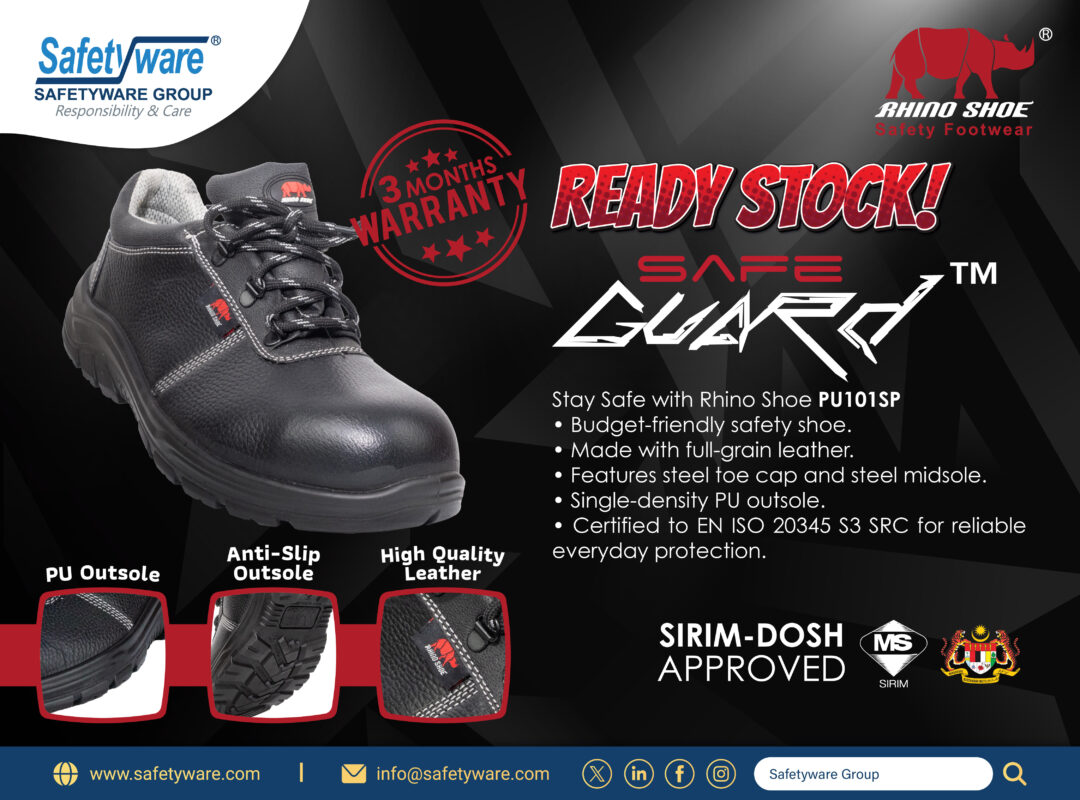
The PU101SP provides a low-cut option, while the PU201SP provides more ankle coverage with a mid-cut design.
Both models use a steel toe cap, steel midsole plate and antistatic construction. The catalogue lists both to EN ISO 20345:2022 S3 SR FO.
The PU101SP works well as a practical everyday safety shoe where workers need easy movement. By contrast, the PU201SP may suit workers who prefer a mid-cut design for additional coverage.
Common applications:
- General manufacturing
- Packaging
- Warehousing
- Logistics
- Printing
- Furniture production
- Light engineering
- General maintenance
👉Learn what ppe should wear in wearhouse: Warehouse & Logistics PPE Guide | Safetyware
2. Electronics and Semiconductor Manufacturing
Electronics workplaces need a different approach.
A safety toe may protect the worker, but uncontrolled static discharge can damage sensitive electronic components.
Therefore, these workplaces often require ESD safety footwear.
Suggested RHINO SHOE: FlexiGuard ES101KP and ES102KP
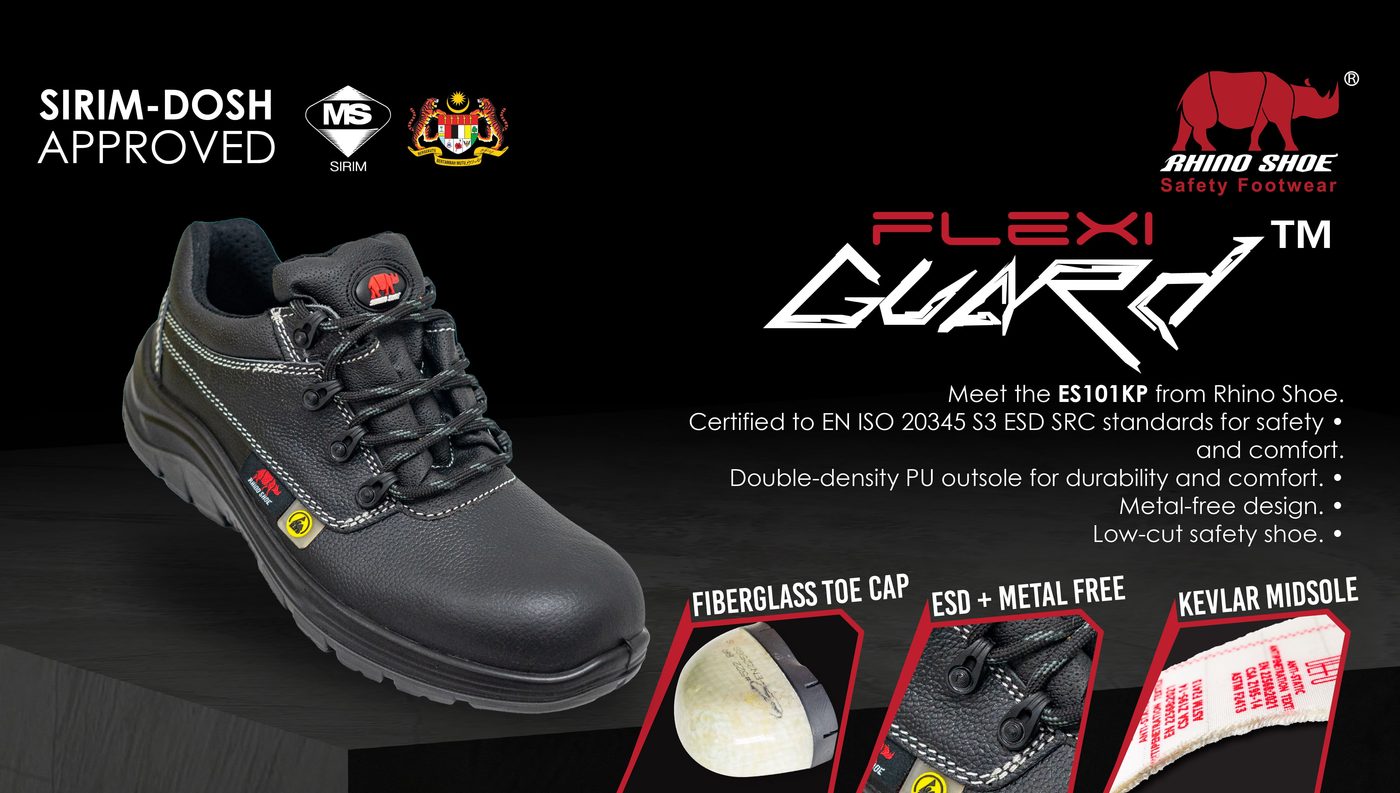
The ES101KP is a low-cut lace-up model, while ES102KP provides a slip-on option.
Both use:
- Fibreglass toe cap
- Anti-penetration fabric midsole
- Double-density PU/PU outsole
- ESD performance
The catalogue lists them to EN ISO 20345:2022 S3S SR FO and identifies both as ESD models.
Safetyware also positions its ESD footwear for semiconductor and electronics environments where controlling static charge helps protect sensitive equipment.
Suitable applications include:
- PCB manufacturing
- Semiconductor plants
- Electronics assembly
- Medical-device manufacturing
- Precision manufacturing
- Electrical-component production
ESD Is Not the Same as Electrical Protection
This distinction matters.
ESD footwear controls static electricity to protect sensitive products and processes.
Electrical-hazard footwear aims to reduce electrical shock risk to the wearer.
Therefore, never replace electrical insulating footwear with an ESD shoe simply because both products relate to electricity.
3. Food Processing, Pharmaceutical and Clean Environments
Footwear in food and pharmaceutical plants must combine protection with practical hygiene.
For example, buyers may look for:
- Easy-to-clean uppers
- Slip-on design
- Slip resistance
- Lightweight materials
- Clean appearance
- ESD performance where required
Suggested RHINO SHOE: FlexiGuard IV102KP
The IV102KP uses a white washable microfibre upper and a slip-on design. It also includes a fibreglass toe cap, anti-penetration fabric and double-density PU/PU outsole.
The white upper also makes dirt easier to identify during routine hygiene checks.
Potential workplaces include:
- Food processing
- Bakeries
- Beverage production
- Pharmaceutical plants
- Laboratories
- Medical-device manufacturing
- Cosmetic production
- Controlled production areas
However, wet processing areas can create heavier water exposure. In those cases, a waterproof Wellington boot may suit the task better than a standard safety shoe.
4. Engineering, Automotive and Plant Maintenance
Engineering workers often move between workshops, machines and maintenance areas. As a result, their footwear may need to handle impact, sharp objects and long periods of industrial use.
Suggested RHINO SHOE: PrimeGuard Series
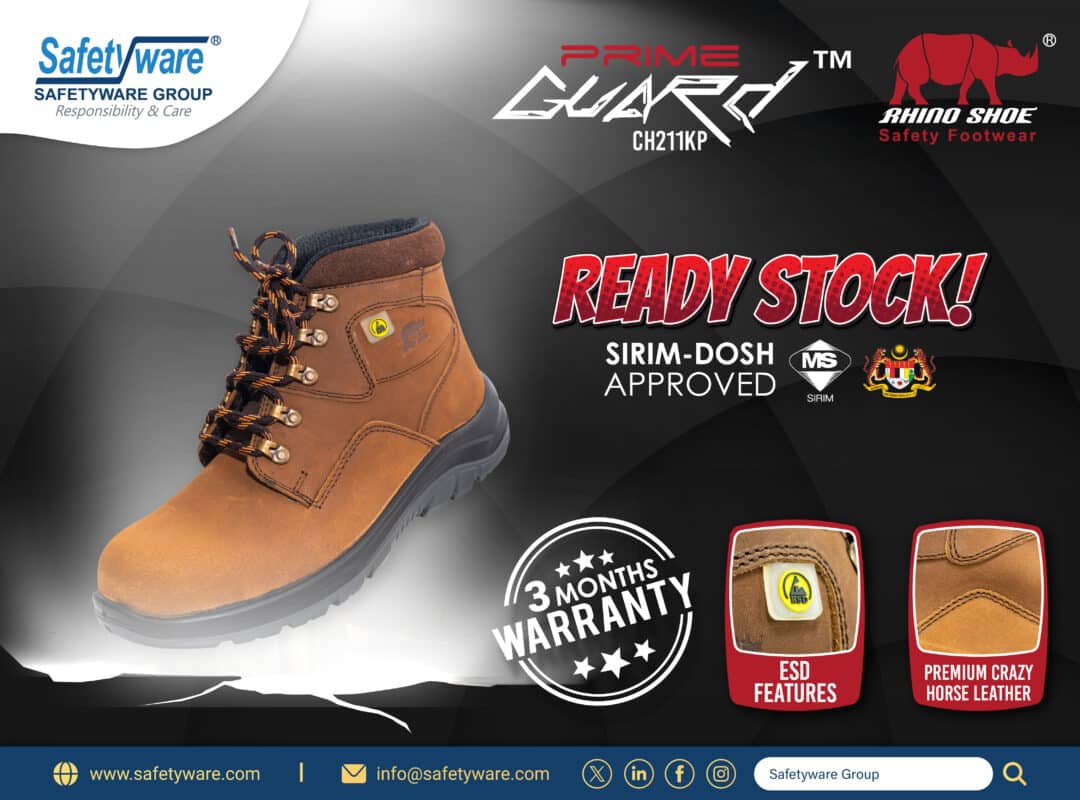
RHINO SHOE offers several PrimeGuard options:
- CH101KP — low-cut
- CH111KP — low-cut
- CH211KP — mid-cut
- CH302KP — high-cut safety boot
The CH101KP, CH111KP and CH211KP use fibreglass toe caps, anti-penetration fabric and ESD construction.
For work that needs greater leg and ankle coverage, the CH302KP high-cut pull-up boot provides another option.
These models may support work in:
- Automotive assembly
- Engineering workshops
- Industrial automation
- Machinery assembly
- Plant maintenance
- Solar manufacturing
- Battery manufacturing
- General factory engineering
5. Electrical, Utilities and Data Centres
Electrical workers face a special hazard: electric current.
Therefore, normal ESD or antistatic safety shoes should not automatically replace footwear made for electrical hazards.
Suggested RHINO SHOE: VoltGuard EH101KP
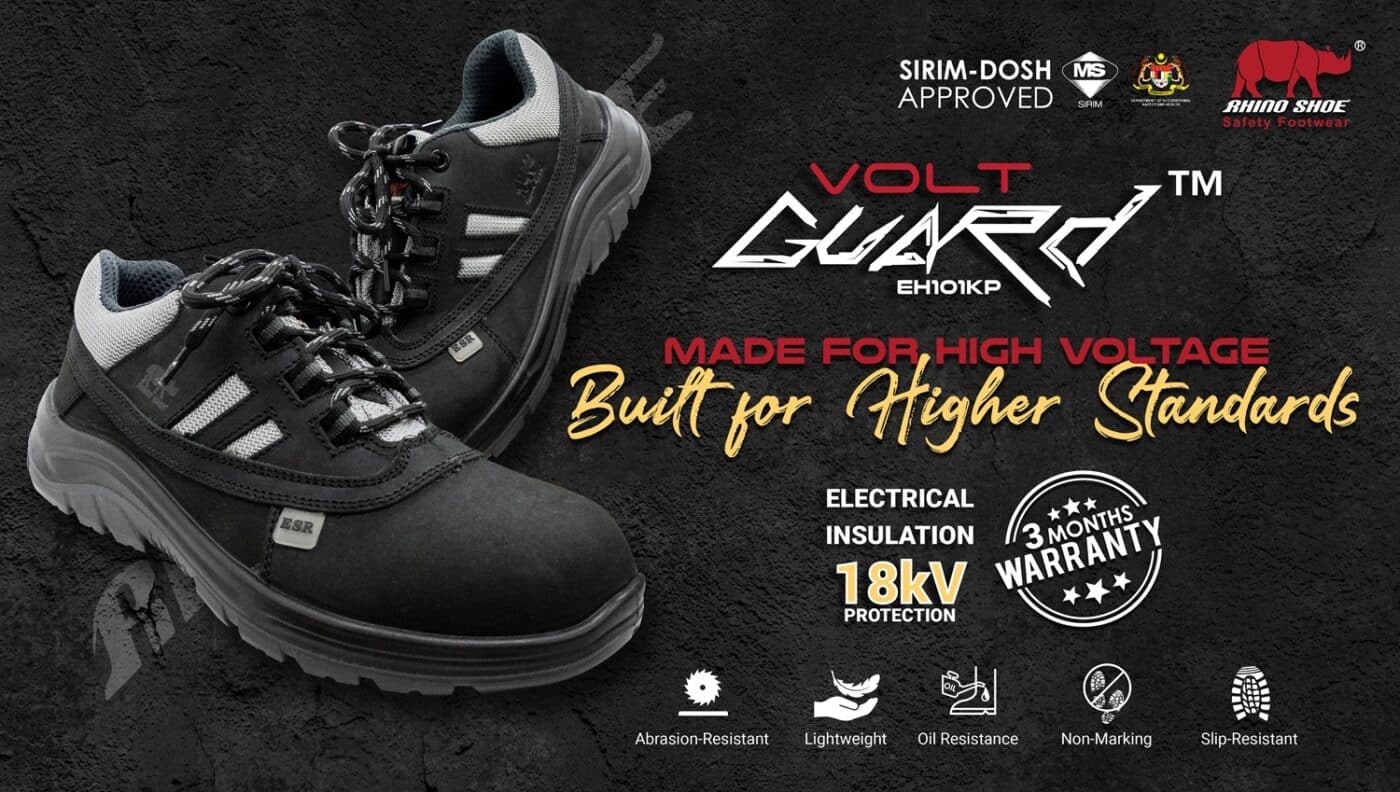
The EH101KP is a low-cut safety shoe with:
- Fibreglass toe cap
- Anti-penetration fabric
- Double-density PU/PU outsole
- Electrical insulating performance
The RHINO SHOE catalogue identifies this model as electrical shock resistant.
Safetyware’s current product information also states electrical-hazard protection up to 18,000 volts for this model.
Possible users include:
- Electrical contractors
- Power-distribution workers
- Utility companies
- Switchboard manufacturers
- Electrical-panel builders
- Data centres
- Telecommunication teams
- Solar installers
- EV charging maintenance teams
However, electrical footwear remains only one part of electrical safety. Workers must still follow isolation, lockout/tagout and other required electrical controls.
6. Oil & Gas, Petrochemical and Heavy Industry
Oil and gas sites place much higher demands on safety footwear.
Workers may face:
- Oily surfaces
- Fuel or hydrocarbon contact
- Hot surfaces
- Sharp materials
- Heavy equipment
- Outdoor conditions
- Wet areas
- Rough ground
Therefore, buyers should focus on outsole durability as well as toe and penetration protection.
Suggested RHINO SHOE: Ultranite Series
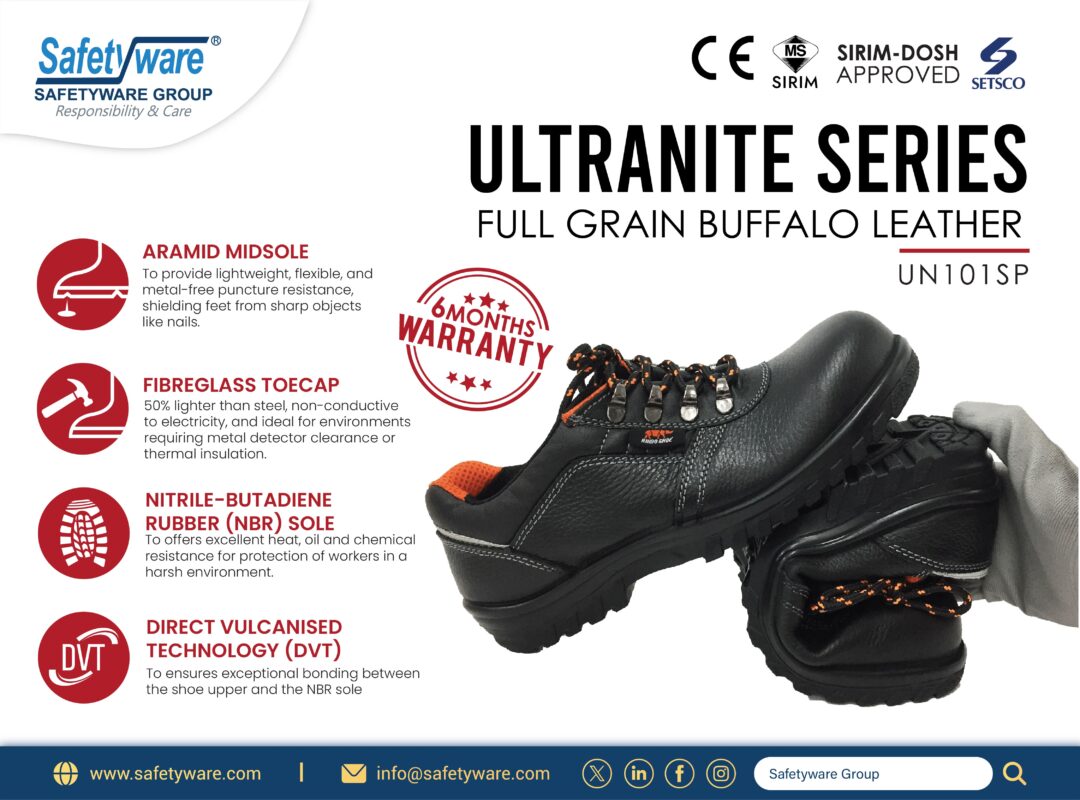
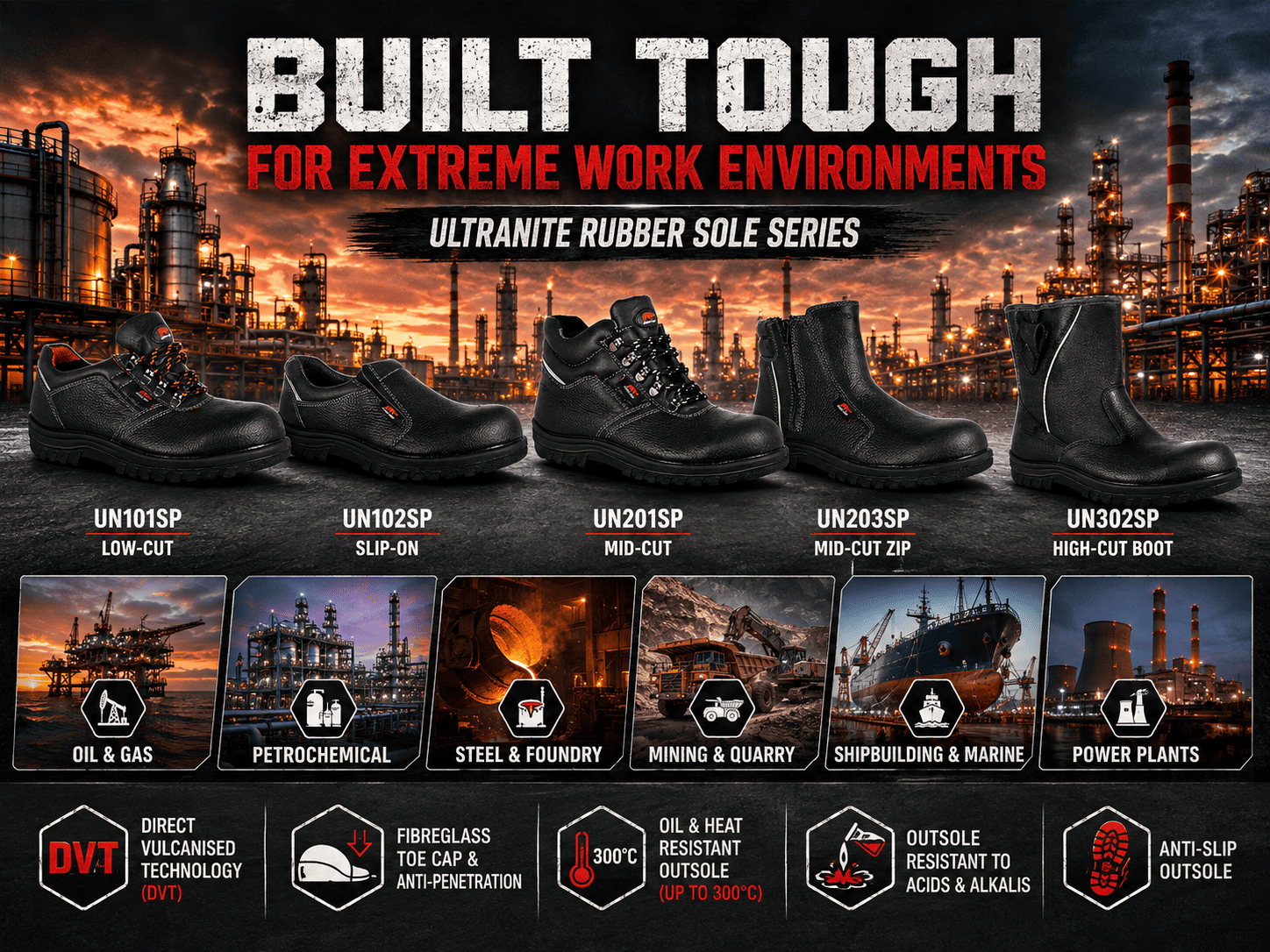
The Ultranite Series targets demanding work environments.
Key features listed in the RHINO SHOE catalogue include:
- Direct Vulcanised Technology (DVT)
- Fibreglass toe cap
- Anti-penetration fabric midsole
- Full-grain buffalo leather
- Oil-resistant outsole
- Anti-slip outsole
- Antistatic performance
- Heat-resistant outsole up to 300°C
- Outsole resistance to common acids and alkalis
Available designs include:
- UN101SP — low-cut lace-up
- UN102SP — low-cut slip-on
- UN201SP — mid-cut lace-up
- UN203SP — mid-cut zip-up
- UN302SP — high-cut pull-up boot
For example, UN101SP offers a lower-cut option for general industrial movement. Meanwhile, UN302SP provides a high-cut format for harsher work where additional coverage is useful.
The Ultranite range can support selected applications in:
- Oil & gas
- Petrochemical
- Palm oil mills
- Steel and foundry
- Construction
- Shipbuilding and marine
- Mining and quarry
- Cement plants
- Power plants
- Heavy machinery manufacturing
- Plant maintenance
👉Learn more about the PU vs Rubber outsole: PU Sole vs Rubber Sole Safety Shoes: (2026 Guide)
Important: A Chemical-Resistant Outsole Does Not Make the Whole Shoe Chemical-Proof
This point matters in chemical plants, refineries and process industries.
The Ultranite outsole can resist common acids and alkalis according to the product catalogue. However, that does not mean the entire leather shoe can protect against direct chemical immersion.
DOSH guidance states that footwear for hazardous chemical exposure should resist the chemical and remain impermeable. It also recommends one-piece footwear without stitching for this type of exposure.
Therefore, if workers may step directly into chemicals or face heavy liquid contact, select a suitable chemical-resistant boot instead.
Do not choose a leather safety shoe only because its outsole carries a chemical-resistance feature.
👉Learn more on how chemical industry should wear: Chemical Industry PPE Checklist | Essential Chemical PPE Guide
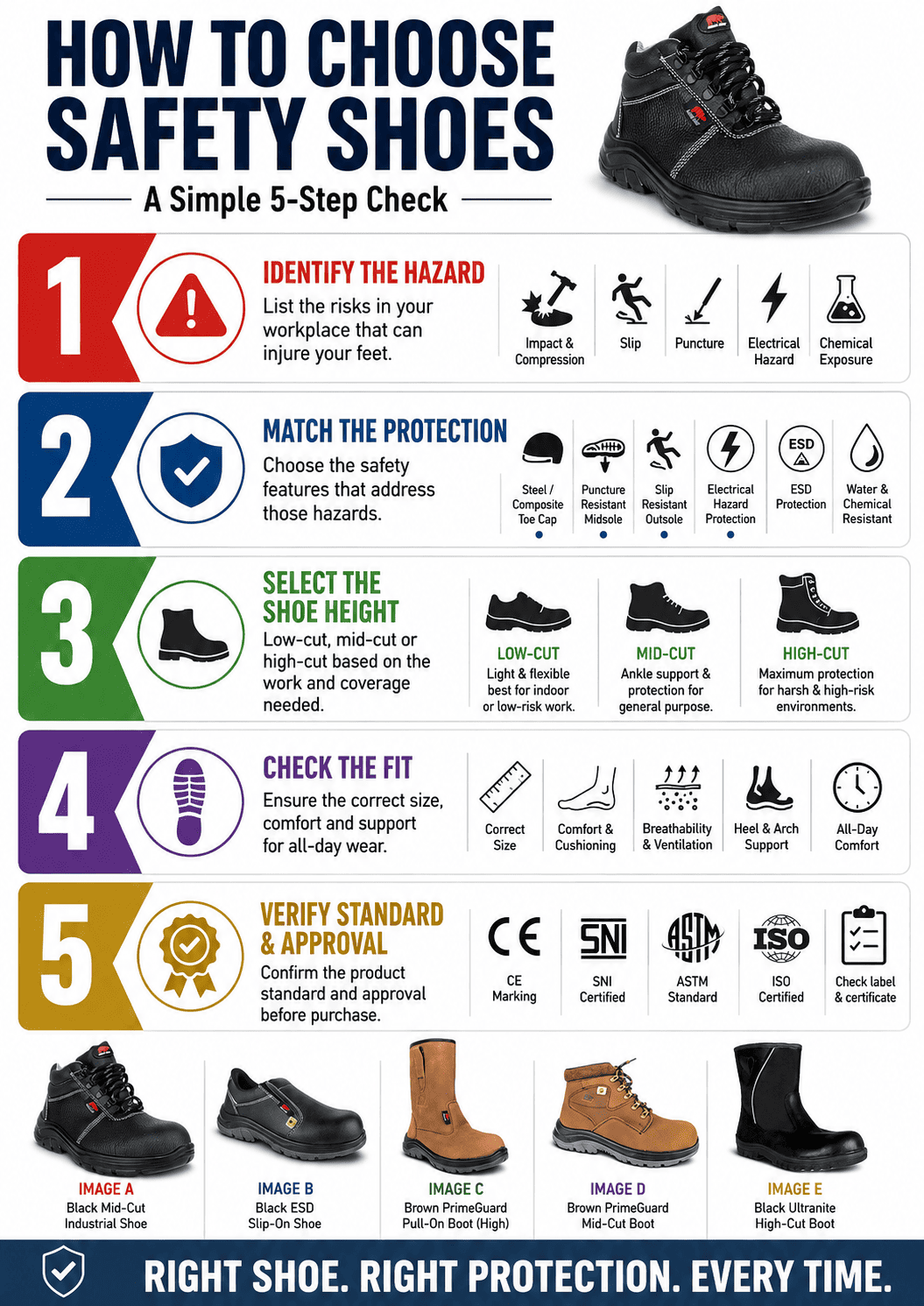
7. How to Choose Safety Shoes: A Simple 5-Step Check
Before purchasing safety footwear, use this process.
Step 1 — Identify the Hazard
Check for:
- Falling objects
- Sharp objects
- Wet floors
- Oil
- Heat
- Chemicals
- Static electricity
- Electrical hazards
Step 2 — Choose the Required Protection
Then match the hazard to the feature.
For example:
Sharp objects → penetration-resistant midsole
Electronics → ESD footwear
Electrical shock → electrical-hazard footwear
Hot, oily heavy industry → suitable heat- and oil-resistant outsole
Step 3 — Select the Shoe Height
Choose between:
Low-cut: easier movement for routine indoor work.
Mid-cut: added ankle coverage for mixed industrial work.
High-cut / boot: useful where the job needs more ankle and lower-leg coverage.
Step 4 — Check Fit
Workers should try the footwear with their normal work socks.
The shoe should hold the foot securely without crushing the toes. Also, allow enough room around the toe cap.
Step 5 — Check the Product Standard and Approval
Finally, confirm the exact model’s certification and approval rather than assuming every shoe in a brand has the same rating.
In Malaysia, DOSH lists foot protectors among the PPE categories that require relevant approval for workplace use.
Explore RHINO SHOE Safety Footwear from SAFETYWARE
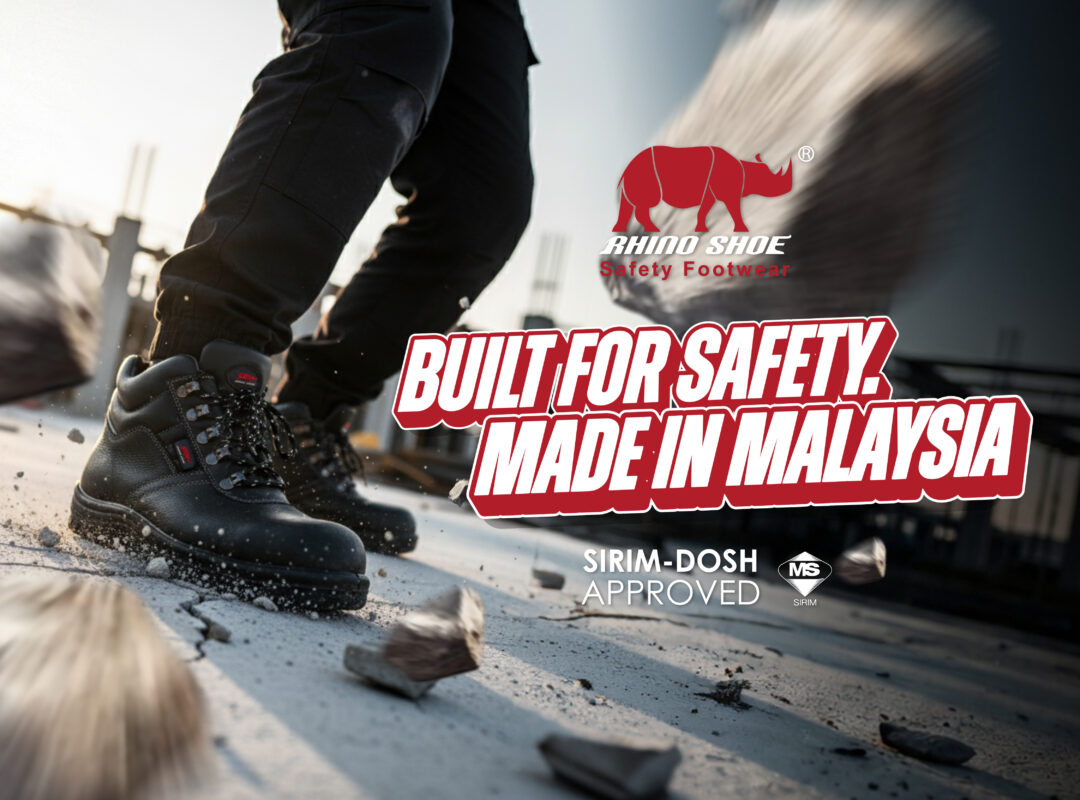
SAFETYWARE offers a broad RHINO SHOE range so companies can select footwear around the actual work environment rather than using one safety shoe for every employee.
Options include:
SafeGuard
Practical everyday industrial footwear for manufacturing, warehouse, logistics and general maintenance.
FlexiGuard
ESD and hygiene-focused models for electronics, semiconductor, food, pharmaceutical and controlled production areas.
PrimeGuard
Industrial footwear for engineering, automotive, plant maintenance and other demanding factory work.
VoltGuard
Specialised footwear for workplaces with electrical hazards.
Ultranite
Heavy-duty safety footwear for oil & gas, petrochemical, steel, mining, marine, construction and other harsh work environments.
RHINO SHOE also offers waterproof PVC and safety Wellington boots where the job requires greater water or liquid protection.
The range uses different toe caps, midsoles, outsoles and shoe heights because workplaces do not share the same risks. The RHINO SHOE catalogue covers applications from light industrial work to heavy-duty and ESD environments.
Explore SAFETYWARE’s foot-protection range to compare RHINO SHOE models, or speak with the SAFETYWARE team about workplace hazards, sizing and suitable footwear for your employees.
Conclusion
Knowing how to choose safety shoes for different industries starts with one simple rule: match the footwear to the hazard.
General manufacturing may need toe and penetration protection. Electronics factories may need ESD footwear. Electrical teams require footwear for electrical hazards. Meanwhile, oil and gas, steel and mining operations may need stronger outsole performance against heat, oil and demanding surfaces.
Therefore, do not select safety shoes based only on price, appearance or industry name.
Instead, identify the hazard, choose the required protection, check the fit and confirm the exact product standard.
With SafeGuard, FlexiGuard, PrimeGuard, VoltGuard and Ultranite options, RHINO SHOE allows companies to build a footwear programme around different departments and work environments rather than relying on a one-shoe-fits-all approach.
FREQUENTLY ASKED QUESTIONS
What safety shoes are suitable for factory workers?
Factory workers commonly need toe protection, a penetration-resistant midsole and slip-resistant footwear. RHINO SHOE SafeGuard PU101SP and PU201SP are options for general industrial environments, although the final selection should follow the workplace risk assessment.
What safety shoes should electronics workers use?
Electronics and semiconductor workers may require ESD safety shoes to control static charge around sensitive components. RHINO SHOE FlexiGuard ES101KP and ES102KP provide ESD options with fibreglass toe caps and anti-penetration fabric.
Are ESD and electrical safety shoes the same?
No. ESD footwear helps control static discharge and protects sensitive equipment. Electrical-hazard footwear aims to protect workers from electrical shock. Always select the correct type for the hazard.
What safety shoes are suitable for oil and gas workers?
Oil and gas workers may need toe protection, penetration resistance, slip resistance and outsoles that handle oil and heat. The RHINO SHOE Ultranite Series offers features aimed at demanding industrial environments. However, the specific model must match the task.
Do chemical-resistant outsoles protect the whole foot from chemicals?
No. A chemical-resistant outsole only describes the sole’s performance against specified chemicals. For direct hazardous chemical exposure, workers may need impermeable chemical-resistant boots that protect the complete foot.
How often should safety shoes be replaced?
Replace safety shoes when the toe area, outsole, midsole, upper or closure system becomes damaged or worn enough to reduce protection. Inspect footwear regularly and follow the manufacturer’s instructions.
Safetyware Group provide full range of PPE support!
Explore more industrial PPE solutions here:
Comprehensive Workplace Safety Equipment, PPE & Signage – Safetyware Group
Wear wisely, work safely with Safetyware!✨
If you need any support, feel free to contact us at:
📩 Email: [email protected]
📞 Tel: WhatsApp Us