
Choosing the right protective gloves is essential for reducing workplace hand injuries. However, not all safety gloves are designed to protect against the same hazards. Two common types of industrial protective gloves are cut-resistant and chemical-resistant gloves. While both provide hand protection, they are designed for very different risks.
Cut-resistant gloves are primarily designed to protect hands from sharp edges, blades, glass and other cutting hazards, while chemical-resistant gloves are designed to help protect the skin from chemical contact, splashes and permeation.
Understanding the difference between these two glove types can help employers and workers select the right protection for each task.
What Are Cut-Resistant Gloves?
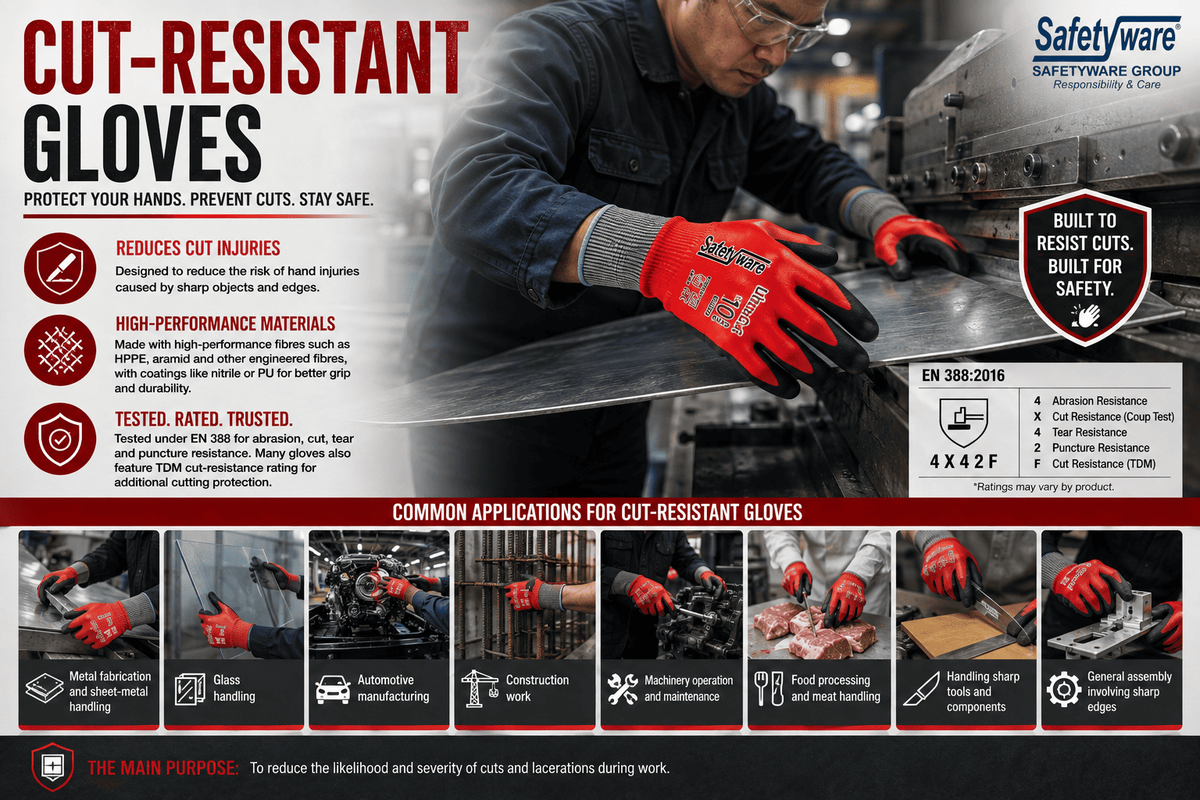
Cut-resistant gloves help reduce the risk of hand injuries from sharp objects and edges. Workers commonly use these gloves when handling metal sheets, glass, blades, machinery components and other sharp materials.
Manufacturers use high-performance fibres such as HPPE, aramid and other engineered fibres to produce cut-resistant gloves. Some designs also combine these fibres with protective coatings such as nitrile or polyurethane (PU) to improve grip, durability and handling performance.
A glove’s construction and performance rating determine its level of protection. EN 388 evaluates gloves against mechanical risks such as abrasion, cuts, tears and punctures. Modern cut-resistant gloves may also feature a TDM cut-resistance rating, which provides additional information about the glove’s ability to resist cutting.
Common Applications for Cut-Resistant Gloves
Cut-resistant gloves are commonly used for:
- Metal fabrication and sheet-metal handling
- Glass handling
- Automotive manufacturing
- Construction work
- Machinery operation and maintenance
- Food processing and meat handling
- Handling sharp tools and components
- General assembly involving sharp edges
The main purpose is to reduce the likelihood and severity of cuts and lacerations during work.
What Are Chemical-Resistant Gloves?
Chemical-resistant gloves are designed to help protect workers’ hands from exposure to hazardous chemicals. Depending on their material and construction, they can provide protection against specific chemicals through resistance to permeation, penetration and degradation.
Common materials used for chemical-resistant gloves include:
- Nitrile
- Neoprene
- PVC
- Butyl rubber
- Other specialised elastomers
However, chemical resistance is not universal. A glove that performs well against one chemical may provide limited protection against another.
For this reason, workers should always check the manufacturer’s chemical compatibility information and the relevant test data before selecting gloves for chemical handling.
Common Applications for Chemical-Resistant Gloves
Chemical-resistant gloves may be used in:
- Chemical processing
- Industrial cleaning
- Laboratory work
- Manufacturing
- Oil and industrial maintenance
- Waste handling
- Chemical mixing and handling
- Cleaning and sanitation operations
The correct glove should be selected according to the specific chemical, concentration, temperature, exposure time and type of task.
Cut-Resistant vs Chemical-Resistant Gloves: Key Differences
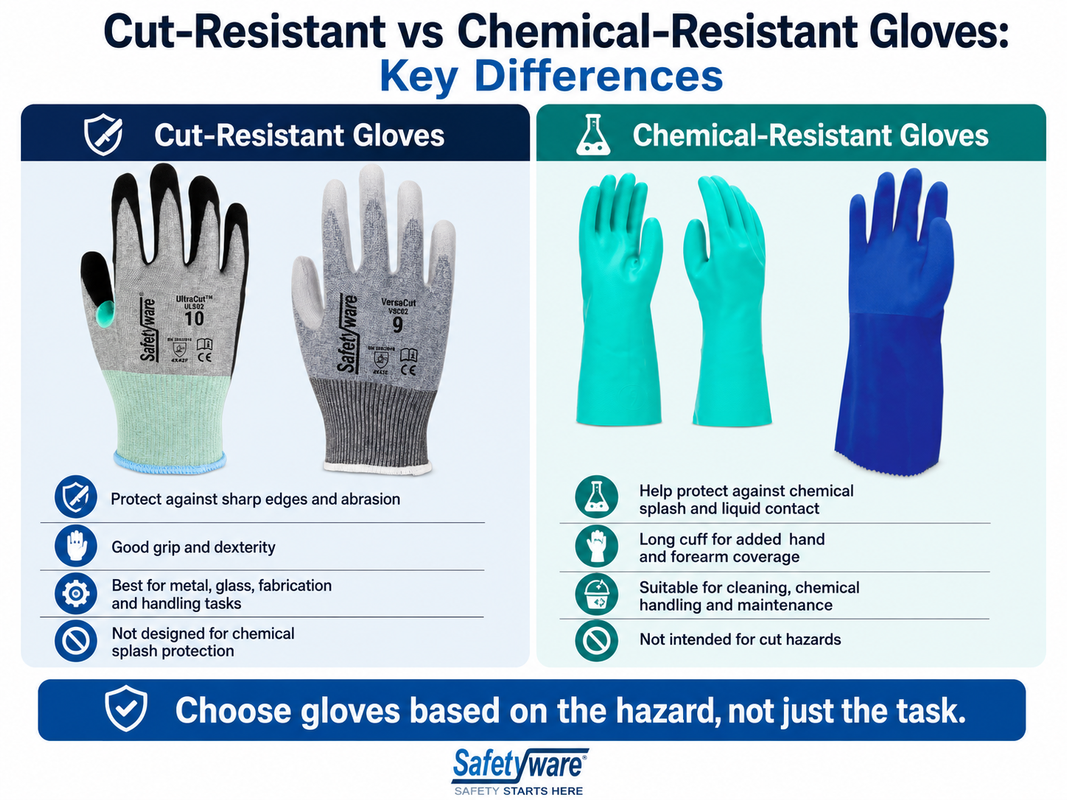
Although both are forms of protective handwear, their primary purposes are different.
| Feature | Cut-Resistant Gloves | Chemical-Resistant Gloves |
| Primary purpose | Protection against cuts and sharp edges | Protection against chemical exposure |
| Main hazards | Blades, glass, metal and sharp objects | Acids, alkalis, solvents and other chemicals |
| Common materials | HPPE, aramid and engineered fibres | Nitrile, neoprene, PVC, butyl and specialised materials |
| Relevant standard | EN 388 | EN ISO 374 |
| Typical applications | Metal, glass, automotive and construction | Chemical handling, cleaning and processing |
| Key selection factor | Cut-resistance level | Chemical compatibility and breakthrough time |
| Grip | Depends on glove coating and design | Often designed for wet or chemical handling |
| Protection against the other hazard | Not automatically chemical-resistant | Not automatically cut-resistant |
Understanding Cut Resistance Under EN 388
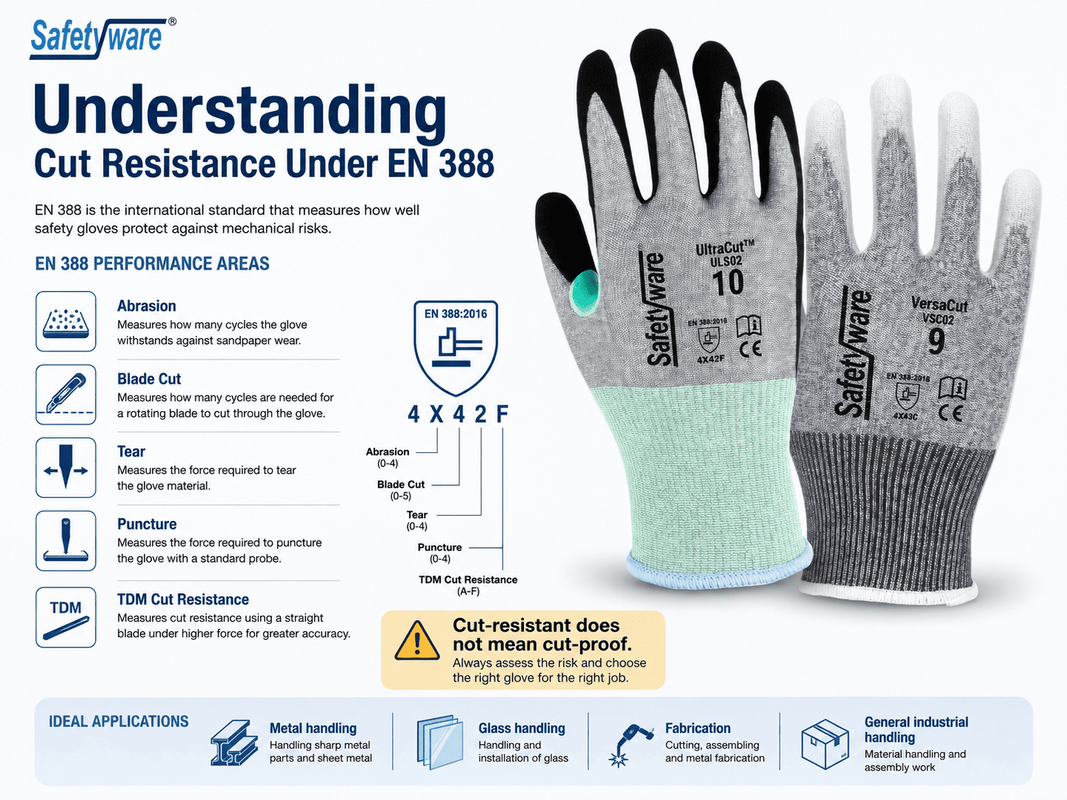
When selecting cut-resistant gloves, one important standard to look for is EN 388, which covers protective gloves against mechanical risks.
The standard evaluates several performance characteristics, including:
- Abrasion resistance
- Blade cut resistance
- Tear resistance
- Puncture resistance
- TDM cut resistance
A glove with a higher cut-resistance performance is generally more suitable for tasks involving greater cutting hazards. However, the rating should always be considered together with the actual workplace risk and task being performed.
It is also important to remember that cut resistance does not mean cut-proof. No glove can eliminate every risk associated with sharp objects.
Understanding Chemical Resistance Under EN ISO 374
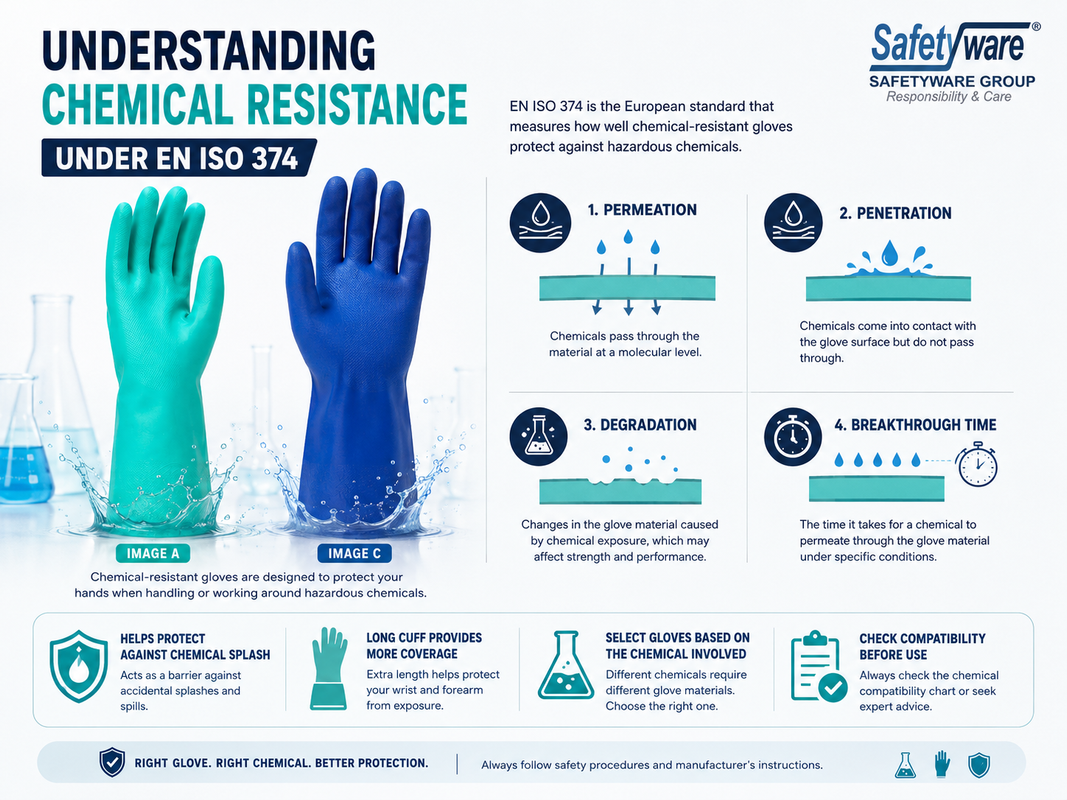
Chemical-resistant gloves are commonly evaluated under EN ISO 374, which addresses protection against dangerous chemicals and microorganisms.
Chemical glove performance can involve factors such as:
- Permeation – when a chemical passes through the glove material at a molecular level.
- Penetration – when a chemical passes through holes, seams or other imperfections.
- Degradation – when the chemical damages or changes the glove material.
One of the most important considerations is breakthrough time. This refers to how long it takes for a chemical to permeate through the glove under specified test conditions. Because different chemicals react differently with glove materials, simply choosing a thick glove is not enough. The glove must be compatible with the chemical being handled.
Can One Glove Protect Against Both Cuts and Chemicals?
Some gloves provide protection against both mechanical and chemical hazards. These gloves work well in workplaces where workers handle sharp components that may also contain oils, chemicals or other hazardous substances. For these applications, choose gloves that the manufacturer has specifically tested for both cut resistance and chemical resistance. Check the glove’s performance ratings and chemical compatibility data to confirm that it suits the task
For example, a glove may combine a cut-resistant liner with a chemical-resistant coating or outer layer. However, workers should not assume that any glove provides both types of protection. Always check the glove’s technical specifications, certification markings and manufacturer’s test data.
If both hazards are present, look for a glove that has been specifically tested and rated for both cut resistance and the required chemical resistance.
How to Choose the Right Gloves for Your Workplace
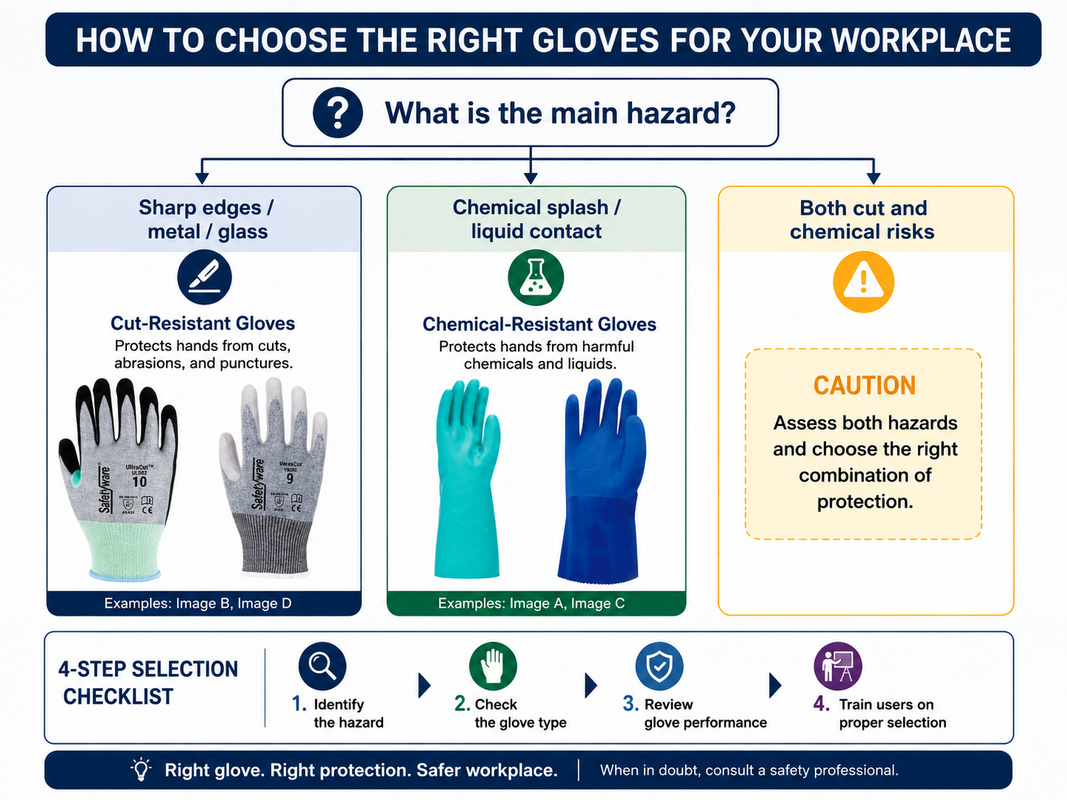
Choose Cut-Resistant Gloves When:
- Handling sharp metal components
- Working with glass
- Handling blades or cutting tools
- Working with sheet metal
- Handling sharp machinery parts
- Performing assembly work involving sharp edges
Choose Chemical-Resistant Gloves When:
- Handling industrial chemicals
- Working with cleaning chemicals
- Handling acids or alkalis
- Working with solvents
- Performing chemical processing
- Cleaning contaminated equipment
Consider Combination Protection When:
- Workers handle sharp components contaminated with chemicals
- Both cutting and chemical hazards are present
- The task requires mechanical protection as well as chemical protection
In these situations, selecting a glove specifically tested for both hazards can provide more appropriate protection than relying on a glove designed for only one risk.
Common Mistakes When Choosing Protective Gloves
Choosing the wrong glove can create a false sense of security. Some common mistakes include:
1. Assuming All Nitrile Gloves Are Chemical-Resistant
Nitrile is widely used in protective gloves and can offer resistance to many chemicals, but not every nitrile glove is suitable for every chemical.
Always check the manufacturer’s chemical resistance data.
2. Assuming Cut-Resistant Gloves Protect Against Chemicals
A glove may have excellent cut resistance but provide little or no protection against a particular chemical. Cut resistance and chemical resistance are separate performance characteristics.
3. Choosing Gloves Based Only on Thickness
A thicker glove is not necessarily better for every application. Protection depends on the glove material, construction, testing and intended use.
4. Ignoring Glove Fit and Dexterity
Protective gloves should fit properly and allow workers to perform their tasks safely. Gloves that are too loose may reduce dexterity, while gloves that are too tight may cause discomfort and fatigue.
5. Failing to Check the Chemical Compatibility
Chemical-resistant gloves should always be selected based on the specific chemical and working conditions rather than the glove material alone.
Explore Safetyware Protective Gloves
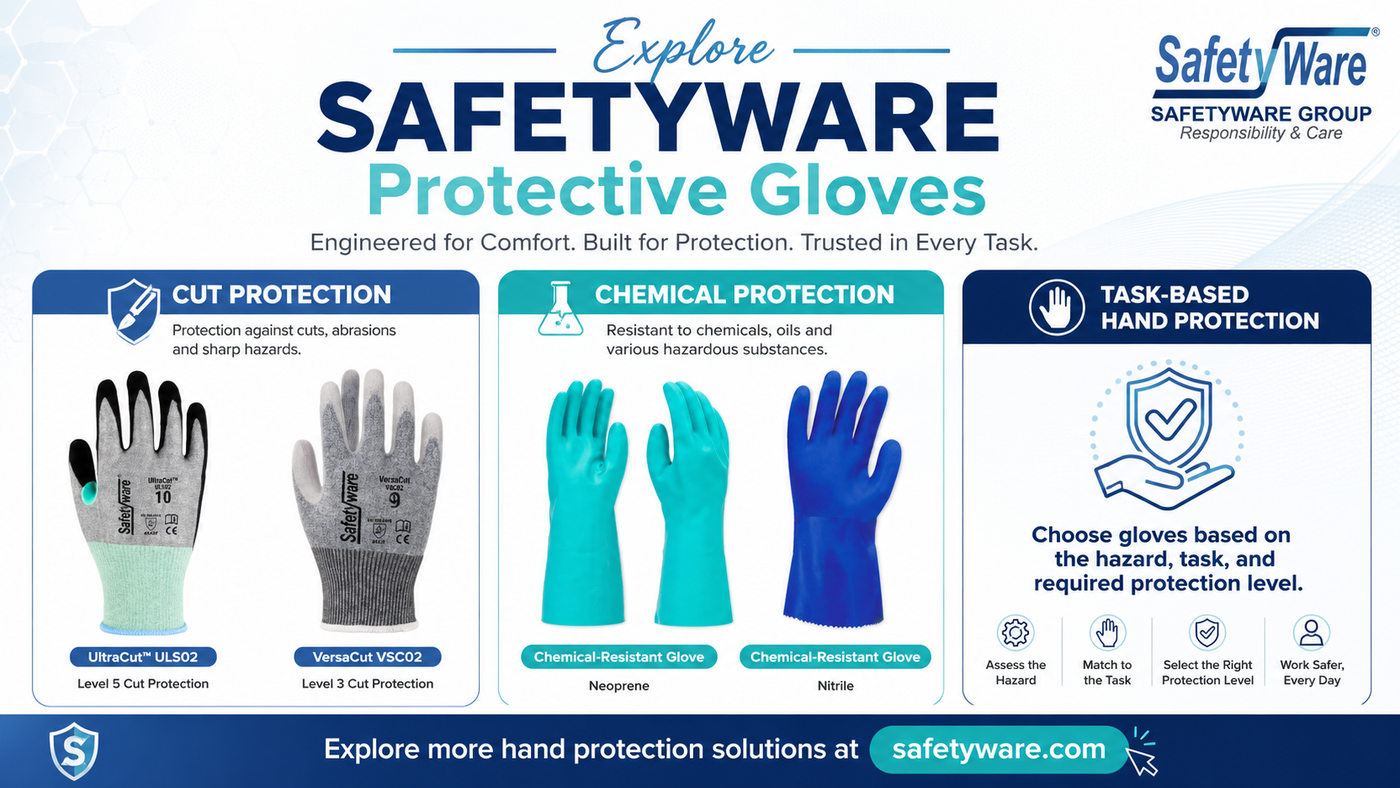
Choosing the right glove starts with understanding the hazards your workers face. Safetyware offers a range of protective gloves designed for different workplace applications, from general handling and assembly to cut protection and chemical handling.
Whether your priority is cut resistance, chemical protection, grip, dexterity or durability, selecting the appropriate glove can help provide better protection and comfort throughout the working day.
👉 Explore more on Safetyware Hand Protection catalogue
👉 Read more on EN388 Explained: Mechanical Protection Gloves
Latex vs Nitrile vs PU Palm Coated Gloves: Full Comparison
Frequently Asked Questions (FAQs)
Are cut-resistant gloves chemical-resistant?
Not necessarily. Cut-resistant gloves protect against mechanical hazards such as sharp edges, blades and cutting tools. They do not automatically protect against chemicals. Only use a cut-resistant glove for chemical handling when the manufacturer has specifically tested and rated it for the chemical involved.
Can nitrile gloves protect against cuts?
Standard nitrile gloves are not automatically cut-resistant. Some nitrile-coated gloves may have a cut-resistant liner, but the level of cut protection depends on the complete glove construction and its test rating.
What standard applies to cut-resistant gloves?
EN 388 specifies performance requirements for protective gloves against mechanical risks. The standard covers hazards such as abrasion, blade cuts, tears and punctures. When you choose cut-resistant gloves, check the EN 388 rating to understand their level of mechanical protection.
What standard applies to chemical-resistant gloves?
EN ISO 374 specifies requirements for protective gloves against dangerous chemicals and microorganisms. The standard assesses factors such as chemical permeation and penetration. Always check the glove’s test results and chemical compatibility data before using it with a specific chemical.
📞 Need More Information?
Looking for reliable Hand protection solutions for your workplace?
Explore SAFETYWARE’s safety shoes and workplace PPE range at
👉Safetyware Catalogs
Our safety specialists can help evaluate workplace hazards, recommend suitable safety helmets, and support compliance with Malaysia workplace safety requirements.
If you need a quotation, feel free to contact us at:
📩 Email: [email protected]
📞 Tel: WhatsApp Us