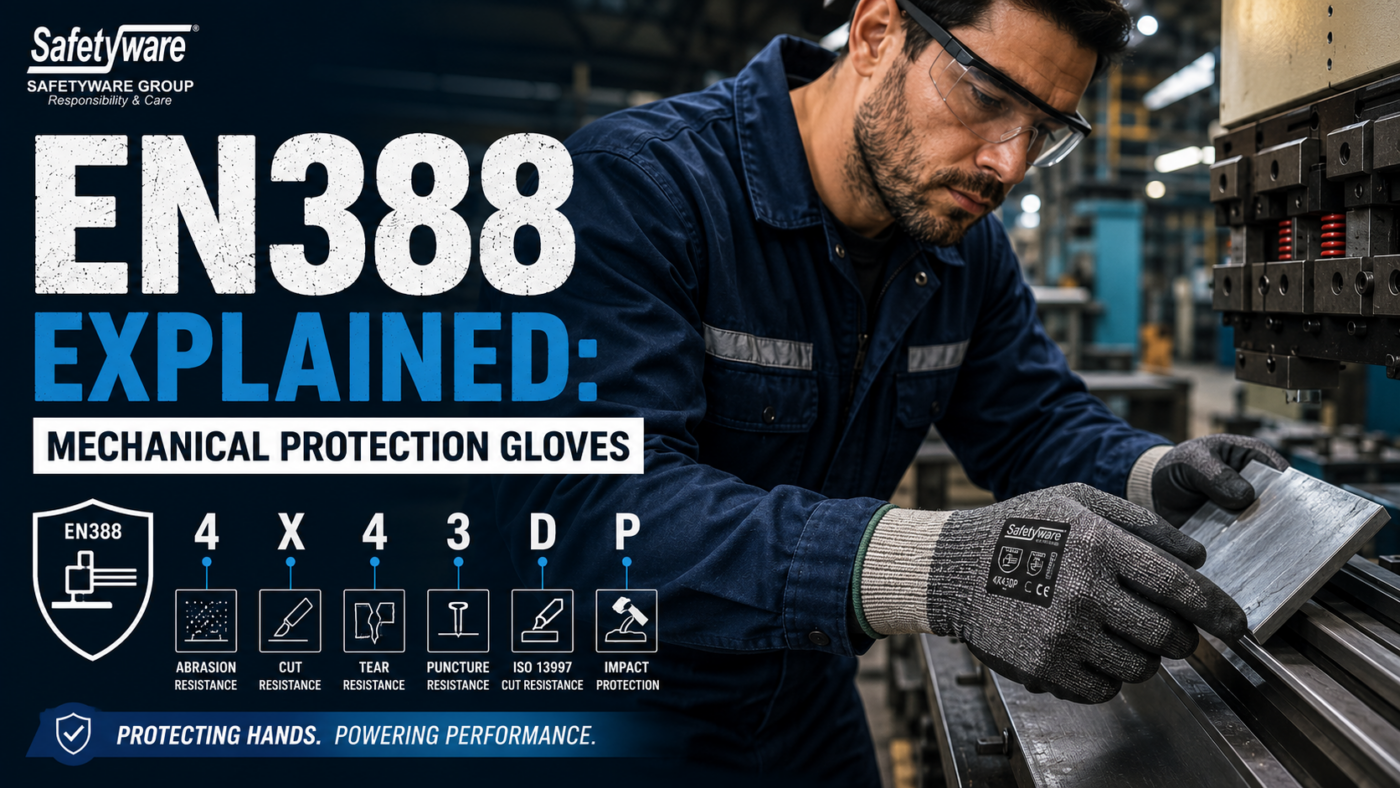
Whether you’re handling sharp metal sheets, operating machinery, carrying rough materials, or working in construction, choosing the right protective gloves is essential. One of the most important standards to understand is EN388, the European standard used to evaluate a glove’s resistance to common mechanical hazards.
An EN388 rating helps employers and workers compare gloves based on their performance against abrasion, blade cuts, tearing, puncture, and, in newer versions of the standard, impact protection. Understanding these ratings makes it easier to select gloves that provide the right level of protection for specific workplace risks.
In this guide, we’ll explain what EN388 means, how to read the performance markings, and how to choose the most suitable mechanical protection gloves for your job.
Why EN388 Matters in Workplace Safety
Selecting gloves with the appropriate EN388 rating helps reduce the risk of hand injuries caused by abrasion, cuts, tears, punctures, and impacts. By understanding the performance ratings and matching them to workplace hazards, employers can improve worker safety, maintain compliance with PPE requirements, and support productivity across a wide range of industries.
What Is EN388?
- European standard for mechanical protective gloves
- Used worldwide, not only in Europe
- Tests glove performance against common workplace hazards
- Allows easy comparison between different glove models
EN388 does not test for:
- Chemicals
- Heat
- Fire
- Electrical hazards
- Microorganisms
These require different standards such as:
- EN374
- EN407
- EN511
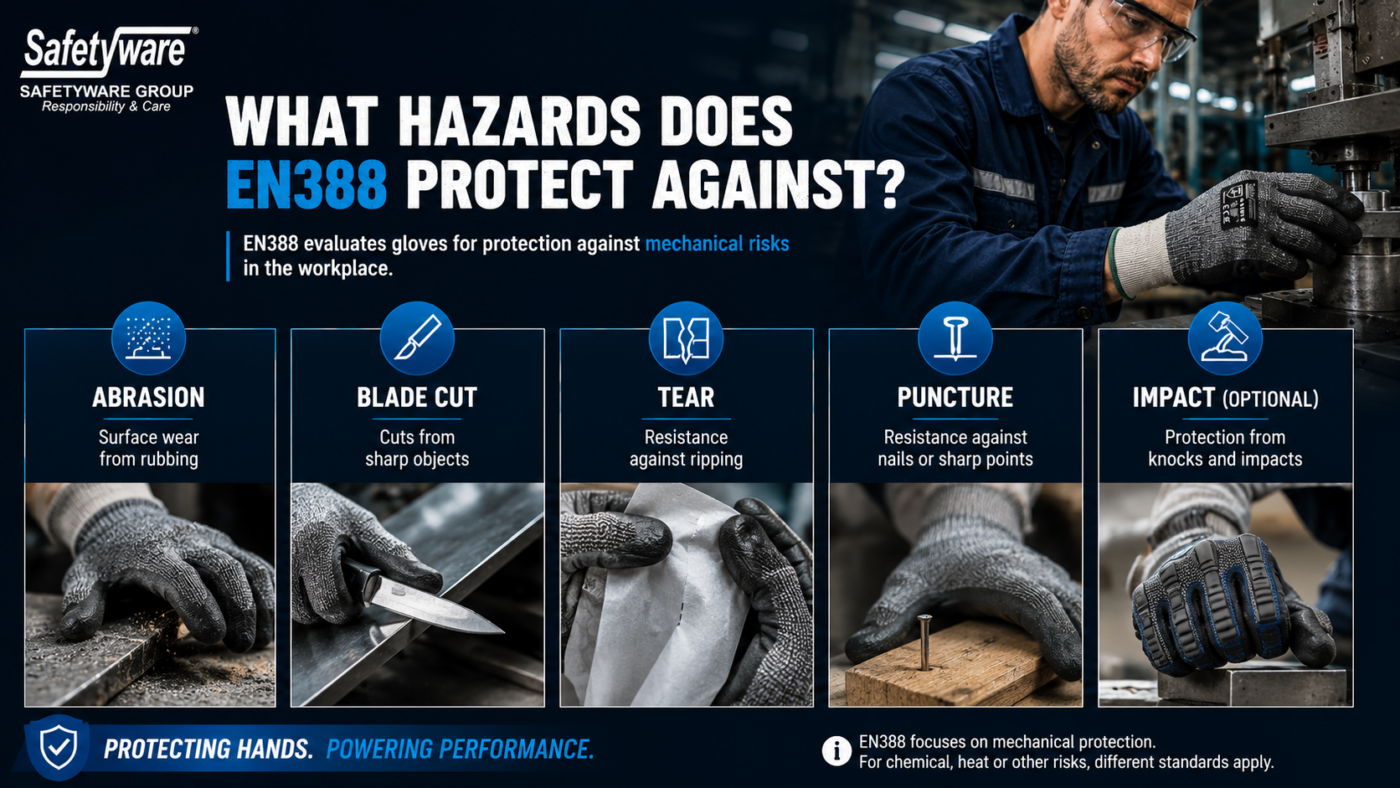
What Hazards Does EN388 Protect Against?
| Mechanical Hazard | What It Means |
| Abrasion | Surface wear from rubbing |
| Blade Cut | Cuts from sharp objects |
| Tear | Resistance against ripping |
| Puncture | Resistance against nails or sharp points |
| Impact (Optional) | Protection from knocks and impacts |
Understanding the EN388 Rating
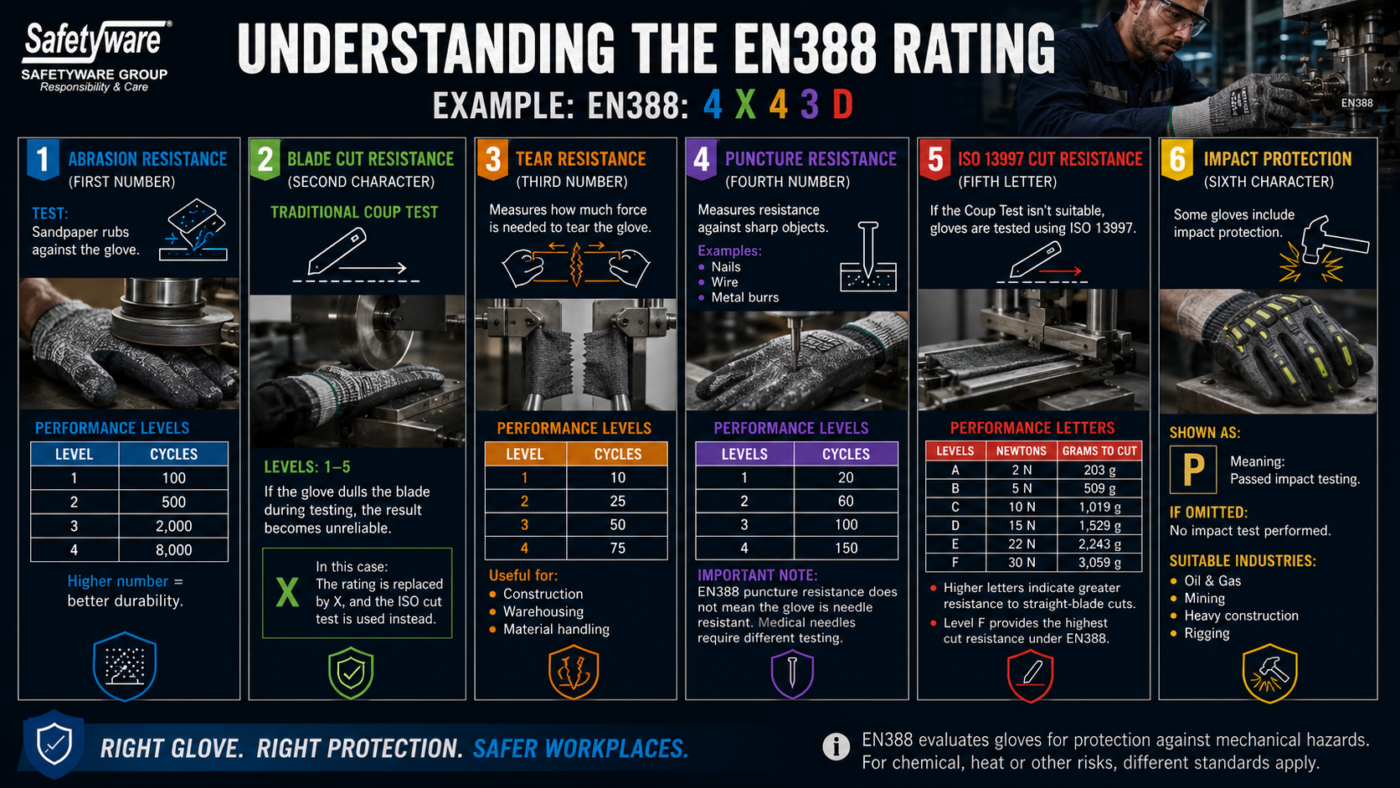
Example:
EN388: 4X43DP
Explain every character individually.
1. Abrasion Resistance (First Number)
Test:
Sandpaper rubs against the glove.
Performance Levels
| Level | Cycle |
| 1 | 100 |
| 2 | 500 |
| 3 | 2000 |
| 4 | 8000 |
Higher number = better durability.
2. Blade Cut Resistance (Second Character)
Traditional Coup Test
Levels:
1–5
Explain:
If the glove dulls the blade during testing, the result becomes unreliable.
In this case:
The rating is replaced by X, and the ISO cut test is used instead.
3. Tear Resistance (Third Number)
Measures how much force is needed to tear the glove.
Levels:
| Level | Cycles |
| 1 | 10 |
| 2 | 25 |
| 3 | 50 |
| 4 | 75 |
Useful for:
- Construction
- Warehousing
- Material handling
4. Puncture Resistance (Fourth Number)
Measures resistance against sharp objects.
Examples:
- Nails
- Wire
- Metal burrs
Levels:
| Levels | Cycles |
| 1 | 20 |
| 2 | 60 |
| 3 | 100 |
| 4 | 150 |
Important note:
EN388 puncture resistance does not mean the glove is needle resistant. Medical needles require different testing.
5. ISO 13997 Cut Resistance (Fifth Letter)
This is the most confusing part for buyers, so explain carefully.
If the Coup Test isn’t suitable, gloves are tested using ISO 13997.
Performance letters:
| Levels | Cycles |
| A | 2 newtons |
| B | 5 newtons |
| C | 10 newtons |
| D | 15 newtons |
| E | 22 newtons |
| F | 30 newtons |
- 2 newtons = 203 grams to cut
- 5 newtons = 509 grams to cut
- 10 newtons = 1019 grams to cut
- 15 newtons = 1529 grams to cut
- 22 newtons = 2243 grams to cut
- 30 newtons = 3059 grams to cut
Higher letters indicate greater resistance to straight-blade cuts.
Mention that Level F provides the highest cut resistance under EN388.
6. Impact Protection (Sixth Character)
Some gloves include impact protection.
Shown as:
- P
Meaning: Passed impact testing.
If omitted:
No impact test performed.
Suitable industries:
- Oil & Gas
- Mining
- Heavy construction
- Rigging
How to Read an EN388 Example
Example:
EN388: 4X43DP
Breakdown:
| Rating | Meaning |
| 4 | Excellent abrasion resistance |
| X | Coup cut test not applicable |
| 4 | High tear resistance |
| 3 | Good puncture resistance |
| D | High ISO cut resistance |
| P | Impact protection passed |
Which EN388 Rating Do Different Industries Need?
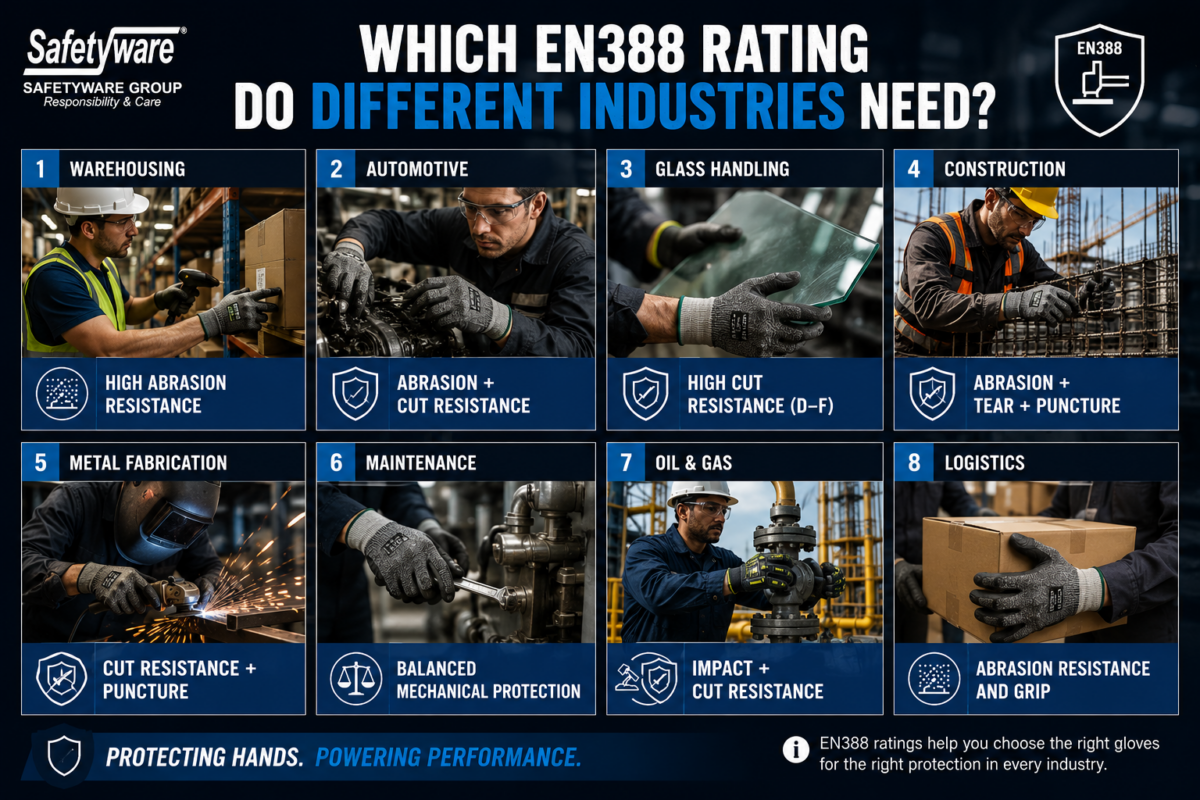
| Industry | Recommended Protection |
| Warehousing | High abrasion resistance |
| Automotive | Abrasion + cut resistance |
| Glass Handling | High cut resistance (D–F) |
| Construction | Abrasion + tear + puncture |
| Metal Fabrication | Cut resistance + puncture |
| Maintenance | Balanced mechanical protection |
| Oil & Gas | Impact + cut resistance |
| Logistics | Abrasion resistance and grip |
Common Misconceptions About EN388
Myth 1: Higher numbers are always better.
Fact:
Choose protection appropriate to the task. Excessively high cut resistance may reduce flexibility and comfort for precision work.
Myth 2: EN388 protects against every hazard.
Fact:
EN388 only covers mechanical risks. Separate standards apply for chemical, thermal, cold, electrical, and biological hazards.
Myth 3: All cut-resistant gloves provide the same protection.
Fact:
Cut resistance varies significantly between gloves. Always check the ISO 13997 letter rating (A–F) when working with sharp materials.
How to Choose the Right Gloves
Instead of choosing the glove with the highest ratings, match the glove to the hazards in your workplace.
Consider:
- Type of materials handled
- Presence of sharp edges
- Risk of punctures
- Required dexterity
- Working environment (dry, oily, or wet)
- Comfort for extended wear
A risk assessment should always be carried out before selecting personal protective equipment (PPE) to ensure the glove provides suitable protection without compromising productivity.
Find the Right EN388 Mechanical Protection Gloves at Safetyware
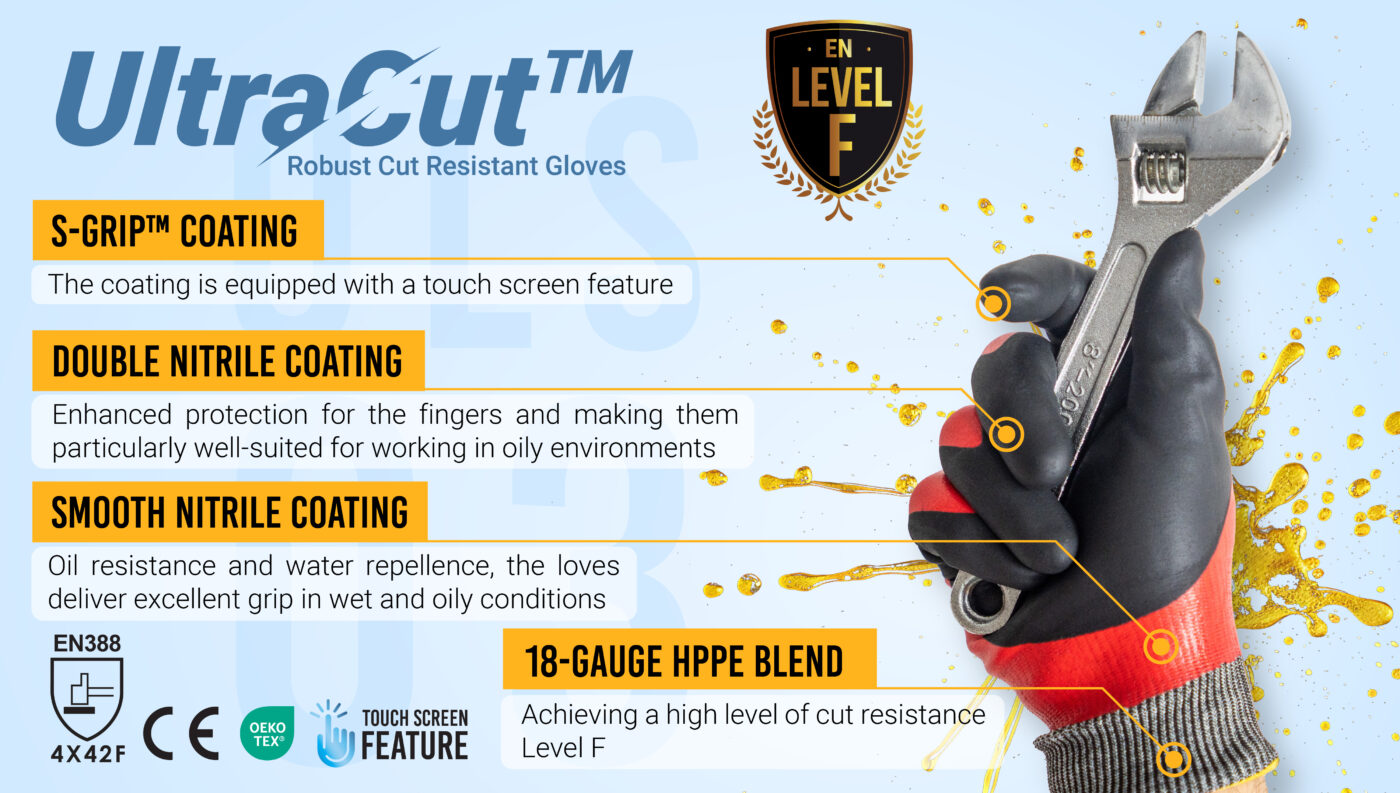
Choosing the right EN388-rated glove depends on the hazards present in your workplace. Whether you need protection against abrasion, cuts, punctures, or heavy-duty material handling, Safetyware offers a comprehensive range of EN388 mechanical protection gloves designed for different industries and applications. With multiple glove materials, coatings, and protection levels available, you can easily find a solution that matches your operational needs and workplace hazards.
👉 Read more on EN166 Eye Protection Standard Explained: A Beginner’s Guide
👉 Find out fullset catalogue for Safetyware Hand Protection
Frequently Asked Questions (FAQ)
1. What does EN388 mean on safety gloves?
EN388 is the European standard that evaluates gloves for protection against mechanical hazards such as abrasion, cuts, tears, punctures, and optional impact protection.
2. What is the highest EN388 cut resistance?
Under the ISO 13997 test, Level F is the highest cut resistance rating.
3. What does the “X” mean in an EN388 rating?
An X indicates that the test was not performed or is not applicable for that category, often because the Coup cut test result was invalid due to blade dulling.
4. Does EN388 protect against chemicals?
No. Chemical protection is covered by EN374, while EN388 only evaluates mechanical hazards.
📞 Need More Information?
Looking for reliable head protection solutions for your workplace?
Explore SAFETYWARE’s safety shoes and workplace PPE range at
👉Safetyware Catalogs
Our safety specialists can help evaluate workplace hazards, recommend suitable safety helmets, and support compliance with Malaysia workplace safety requirements.
If you need a quotation, feel free to contact us at:
📩 Email: [email protected]
📞 Tel: WhatsApp Us