Introduction
The chemical industry is one of the most hazardous working environments, exposing employees to risks such as chemical splashes, toxic vapours, corrosive substances, fire hazards, and confined space operations. Without the appropriate Personal Protective Equipment (PPE), these hazards can result in serious injuries, long-term health effects, or even fatalities.
Selecting the correct Chemical Industry PPE is therefore a critical part of every organization’s workplace safety program. Employers must conduct proper risk assessments, understand the chemicals being handled, and provide PPE that offers suitable protection for specific tasks.
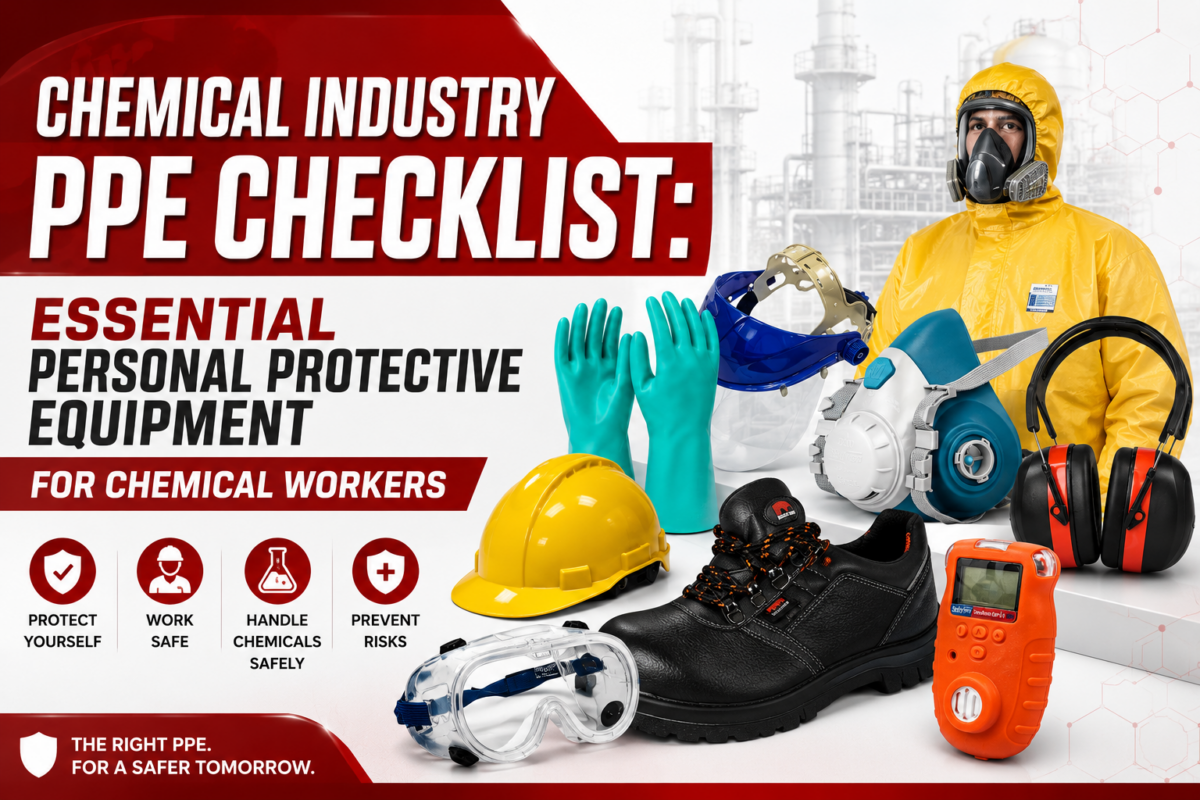
This Chemical Industry PPE Checklist explains the essential PPE commonly required in chemical plants, laboratories, manufacturing facilities, and chemical storage areas. It also provides practical guidance on PPE selection, inspection, maintenance, and compliance with relevant safety standards.
Why PPE Is Essential in the Chemical Industry
Unlike many workplaces where hazards are primarily physical, chemical facilities expose workers to multiple risks simultaneously. Employees may encounter corrosive liquids, hazardous gases, airborne particles, high temperatures, pressurized systems, and moving machinery during a single shift.
Appropriate PPE helps reduce exposure and minimizes the risk of injuries while supporting compliance with occupational safety regulations.
Common chemical workplace hazards include:
- Chemical splashes
- Toxic gases and vapours
- Corrosive liquids
- Hazardous dust and airborne particles
- Fire and explosion hazards
- Oxygen-deficient confined spaces
- High-pressure systems
- Slippery surfaces caused by spills
Because no single type of PPE protects against every hazard, employers should select equipment based on a comprehensive risk assessment.
Chemical Industry PPE Checklist
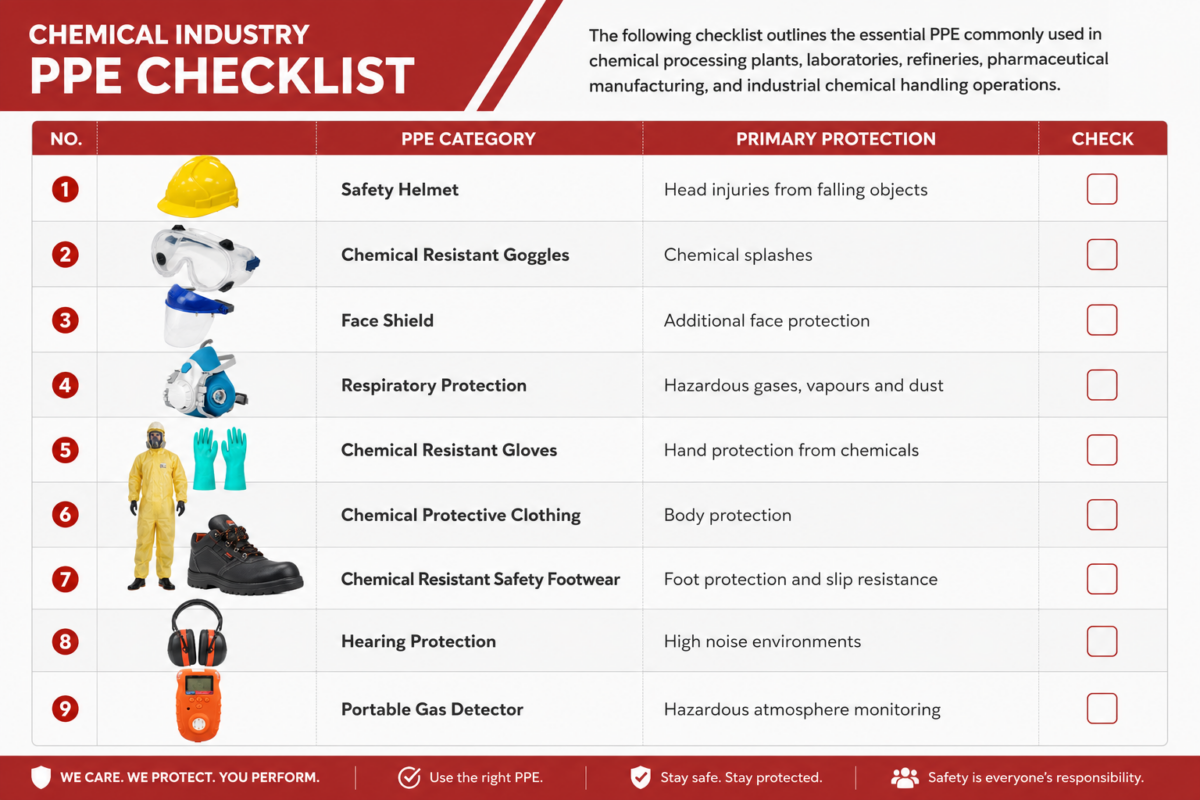
The following checklist outlines the essential PPE commonly used in chemical processing plants, laboratories, refineries, pharmaceutical manufacturing, and industrial chemical handling operations.
| PPE Category | Primary Protection |
|---|---|
| Safety Helmet | Head injuries from falling objects |
| Chemical Resistant Goggles | Chemical splashes |
| Face Shield | Additional face protection |
| Respiratory Protection | Hazardous gases, vapours and dust |
| Chemical Resistant Gloves | Hand protection from chemicals |
| Chemical Protective Clothing | Body protection |
| Chemical Resistant Safety Footwear | Foot protection and slip resistance |
| Hearing Protection | High noise environments |
| Portable Gas Detector | Hazardous atmosphere monitoring |
1. Safety Helmet
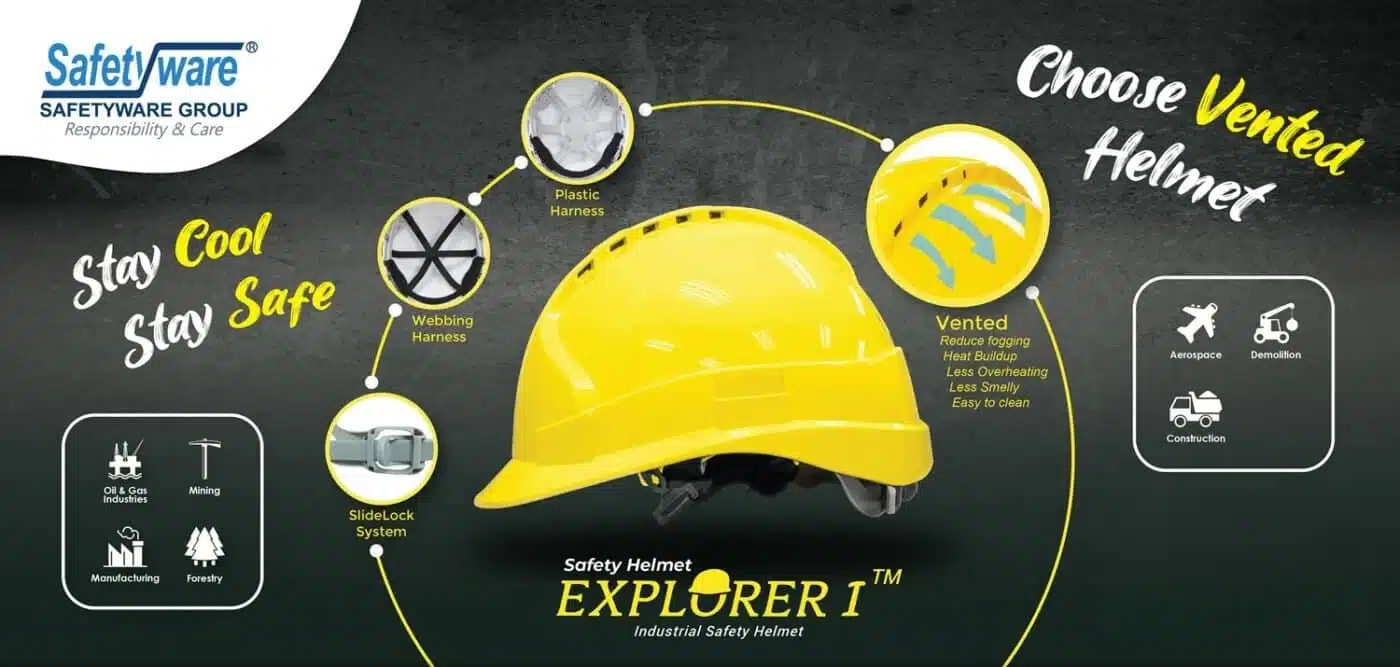
Although chemical hazards often receive the most attention, head injuries remain a significant risk in chemical plants due to overhead piping, maintenance activities, and moving equipment.
A certified safety helmet protects workers from:
- Falling objects
- Head impacts
- Limited electrical hazards (depending on helmet type)
Helmets should always be inspected regularly and replaced if they have sustained impact damage or show signs of deterioration.
👉Check for more info here: Safety Helmet Guide: Choose the Best Safety Helmet – Safetyware Group
2. Chemical Splash Goggles and Face Protection
Eye injuries can occur within seconds when handling hazardous chemicals.
Workers should wear chemical splash goggles that provide a sealed fit around the eyes to prevent liquids from entering.
For higher-risk applications such as chemical transfer, mixing, or pouring, goggles should be used together with a face shield to provide additional protection for the entire face.
Typical applications include:
- Chemical mixing
- Acid handling
- Laboratory work
- Tank filling
- Chemical cleaning operations
Remember that a face shield alone does not replace safety goggles.
👉Check for more info here: Why Eye Protection During Work is Critical – Safetyware Group
3. Respiratory Protection
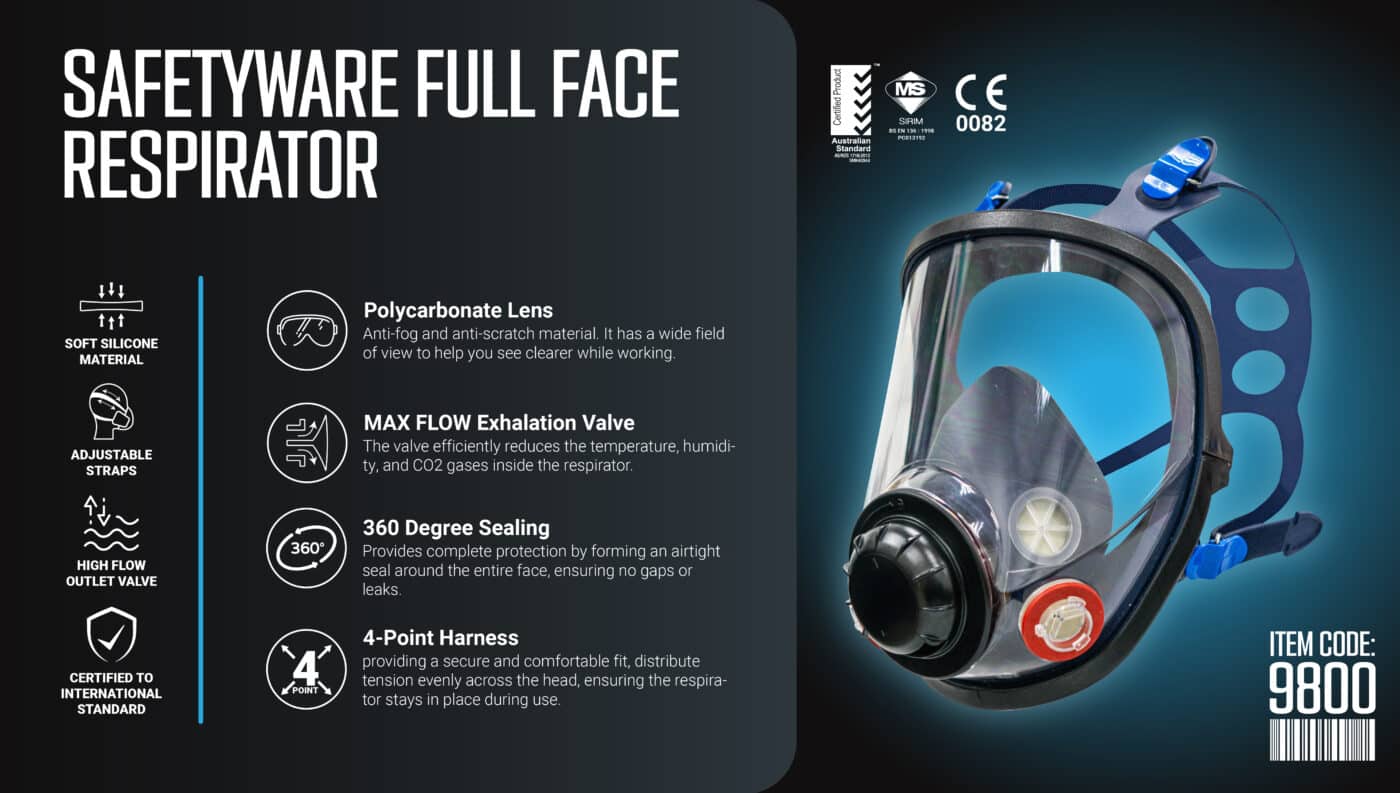
Many chemicals release hazardous vapours, gases, mists, or airborne particles that cannot be detected by sight or smell.
Depending on the workplace hazard assessment, suitable respiratory protection may include:
- Disposable respirators
- Half-face respirators
- Full-face respirators
- Powered Air Purifying Respirators (PAPR)
- Supplied-air respirators
The correct respirator should always be selected based on the identified airborne hazard, exposure level, and applicable respiratory protection program.
Fit testing, user training, and regular maintenance are essential to ensure effective protection.
👉Check for more info here: How to Choose Your Respiratory Filter Correctly – Safetyware Group
4. Chemical Resistant Gloves
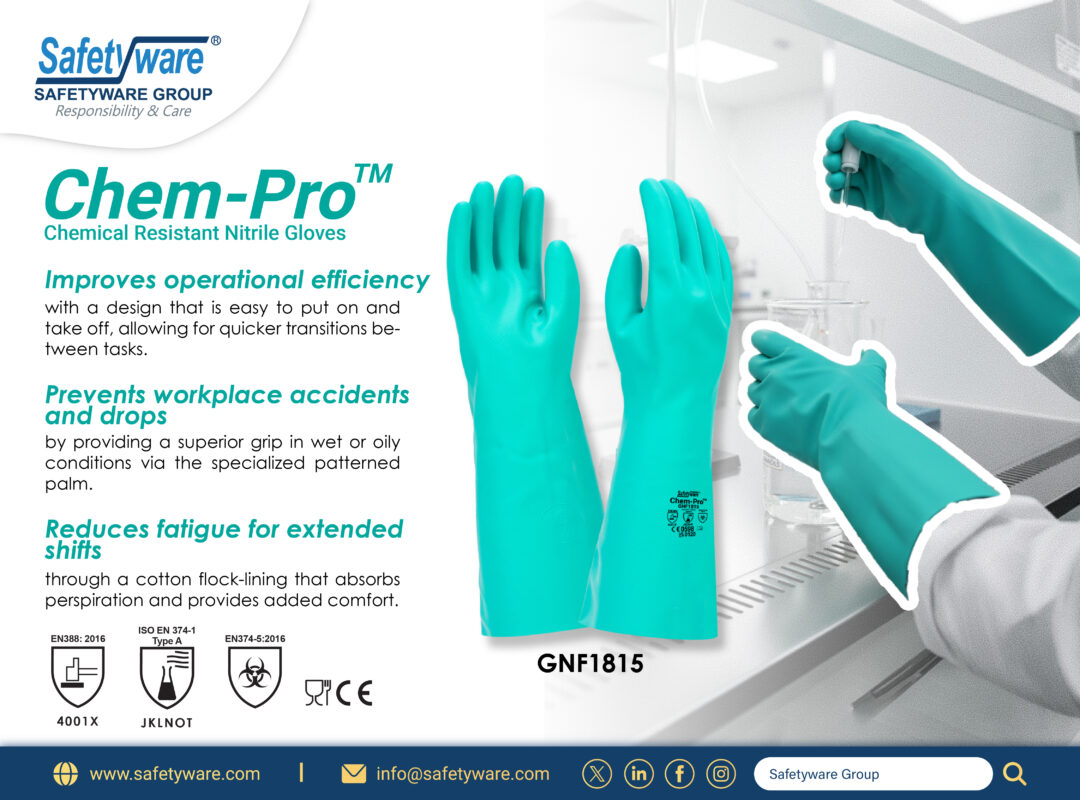
Hands are among the most frequently exposed parts of the body during chemical handling.
Choosing the correct chemical-resistant gloves depends on the specific chemical, concentration, exposure time, and working conditions.
Common glove materials include:
- Nitrile
- Neoprene
- Natural Rubber Latex
- PVC
- Butyl Rubber
- Viton®
Different glove materials offer varying levels of resistance to acids, solvents, oils, fuels, and other hazardous chemicals. Always refer to the manufacturer’s chemical resistance guide before selecting gloves.
👉Check for more info here: Chemical Resistant Gloves Malaysia | EN ISO 374-1 Guide
5. Chemical Protective Clothing
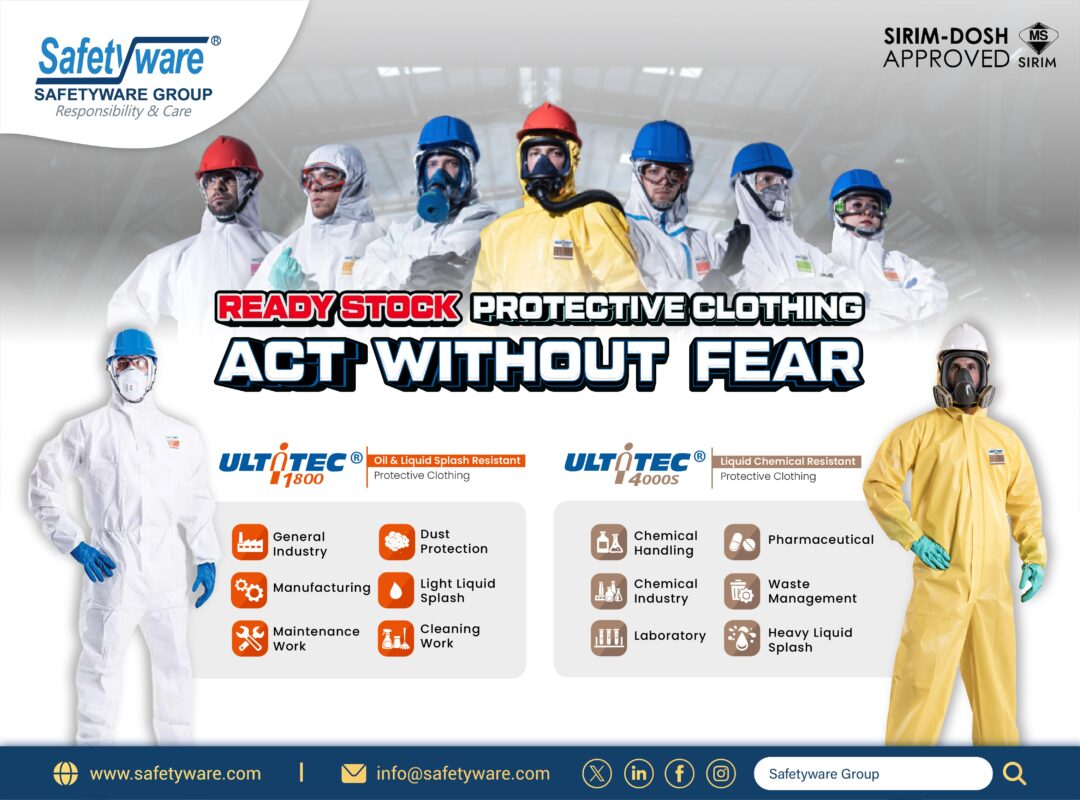
Protective clothing provides a barrier against chemical splashes, liquid penetration, hazardous particles, and certain biological contaminants.
Depending on the application, organizations may select:
- Chemical splash suits
- Disposable protective coveralls
- Reusable chemical suits
- Aprons
- Sleeve protectors
The level of protection should always correspond to the identified workplace hazards and risk assessment.
Protective clothing should be inspected before each use and replaced if damaged or contaminated.
👉Check for more info here: ULTITEC 5000 High Level Chemical & Liquid Jet Resistant Coverall – Safetyware Group
6. Chemical Resistant Safety Footwear
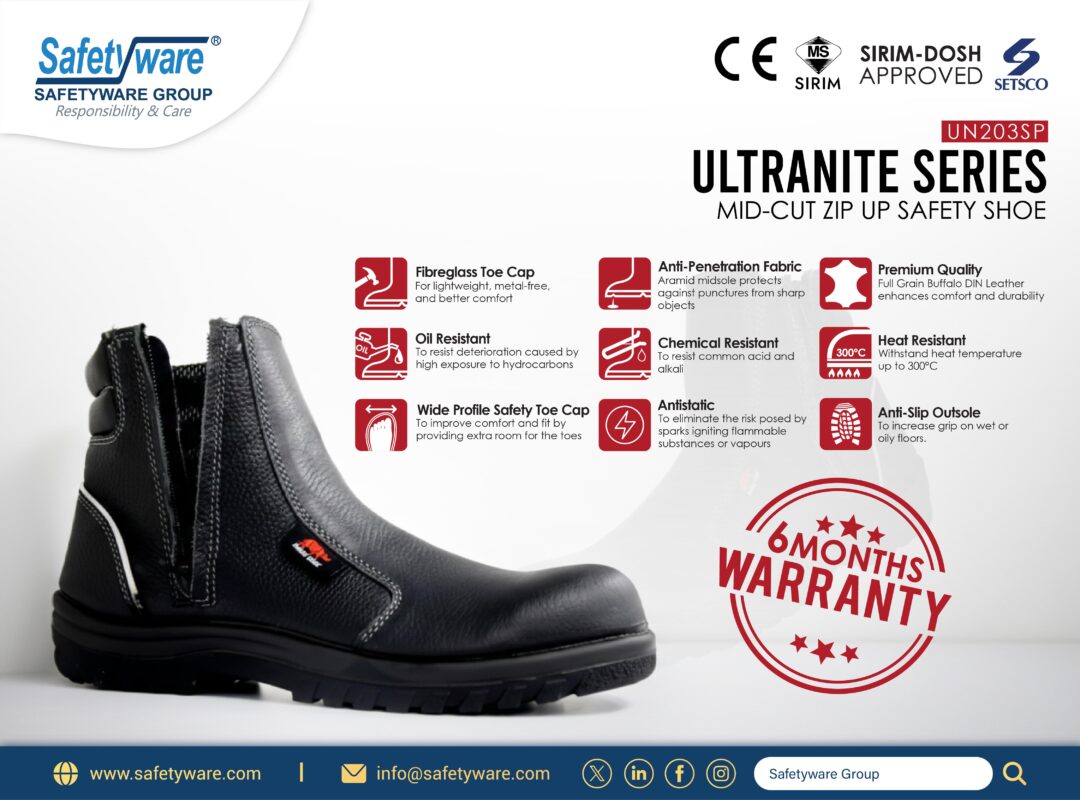
Chemical spills, slippery floors, falling objects, and sharp debris are common hazards in chemical plants. Wearing the right chemical resistant safety footwear helps protect workers from multiple workplace risks while improving stability in hazardous environments.
Depending on the work application, safety footwear should provide:
- Slip-resistant outsole
- Steel or composite toe cap
- Penetration-resistant midsole
- Chemical-resistant upper and outsole
- Anti-static or ESD protection (where required)
- Waterproof protection for wet environments
For employees working in chemical processing plants or liquid handling areas, footwear should also resist degradation from chemicals commonly used in the workplace.
👉Check for more info here: PU Sole vs Rubber Sole Safety Shoes: (2026 Guide)
7. Hearing Protection
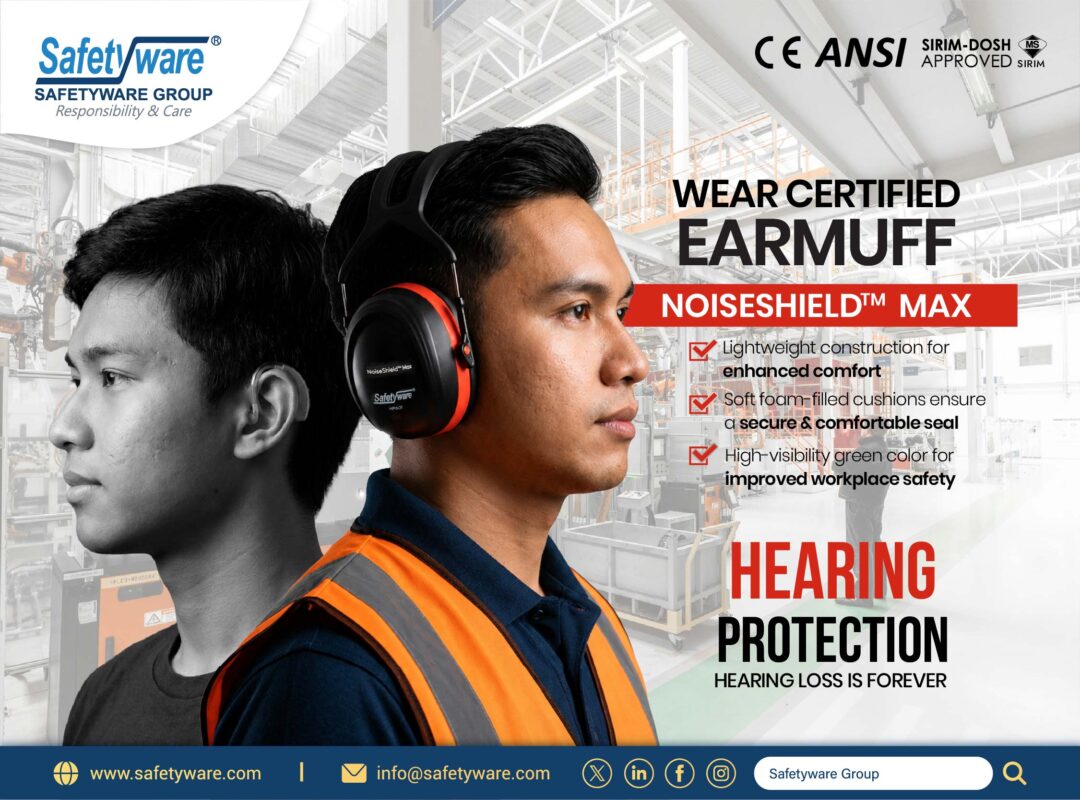
Many chemical manufacturing facilities operate pumps, compressors, generators, mixing equipment, and processing machinery that produce hazardous noise levels.
Prolonged exposure to excessive noise can result in permanent hearing damage if workers are not adequately protected.
Common hearing protection includes:
- Disposable earplugs
- Reusable earplugs
- Earmuffs
- Helmet-mounted earmuffs
Employers should conduct workplace noise assessments and provide hearing protection whenever exposure exceeds recommended limits.
👉Check for more info here: NEW!!! SAFETYWARE NoiseShield Series – Safetyware Group
8. Portable Gas Detectors
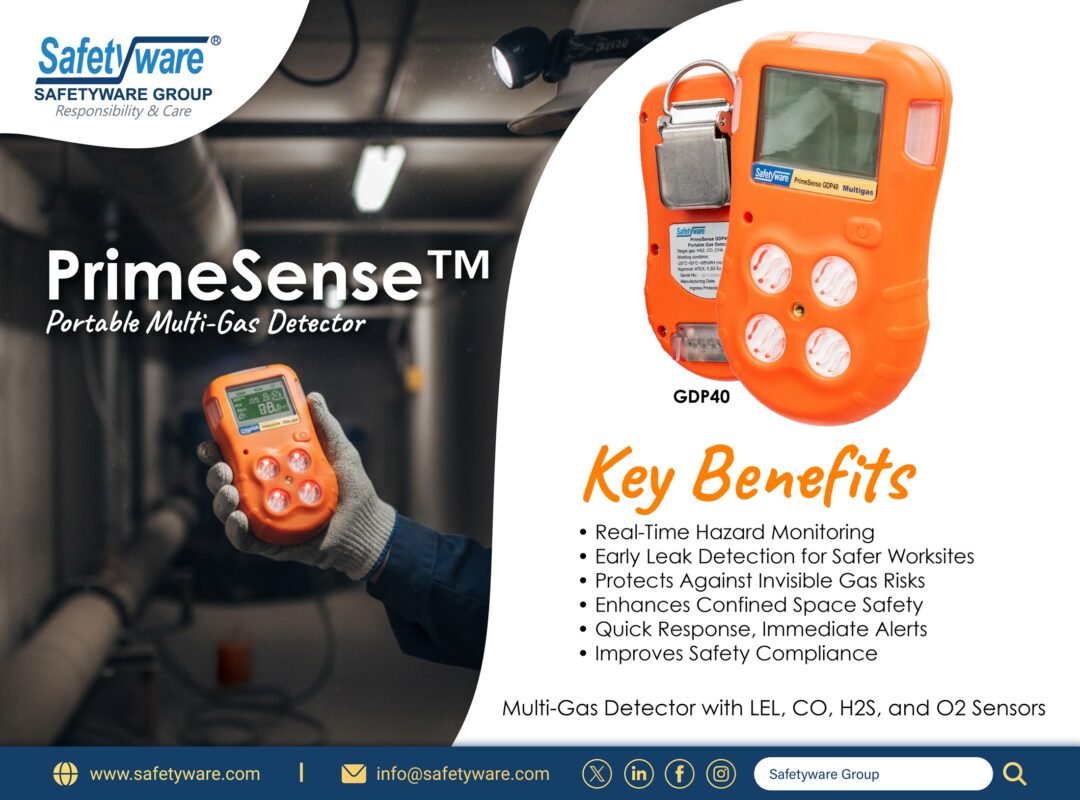
Many hazardous gases cannot be seen, smelled, or immediately detected by workers. This makes portable gas detectors an essential safety device, particularly in chemical plants, confined spaces, storage tanks, and processing facilities.
Gas detectors continuously monitor atmospheric conditions and provide early warning when dangerous gas concentrations are detected.
Typical gases monitored include:
- Oxygen (O₂)
- Carbon Monoxide (CO)
- Hydrogen Sulfide (H₂S)
- Combustible gases (LEL)
- Ammonia (NH₃)
- Chlorine (Cl₂)
- Sulfur Dioxide (SO₂)
- Volatile Organic Compounds (VOC)
Using gas detection equipment alongside appropriate respiratory protection significantly improves worker safety in hazardous environments.
👉Check for more info here: Portable Gas Detector Safety Guide
How to Choose the Right PPE for Chemical Work
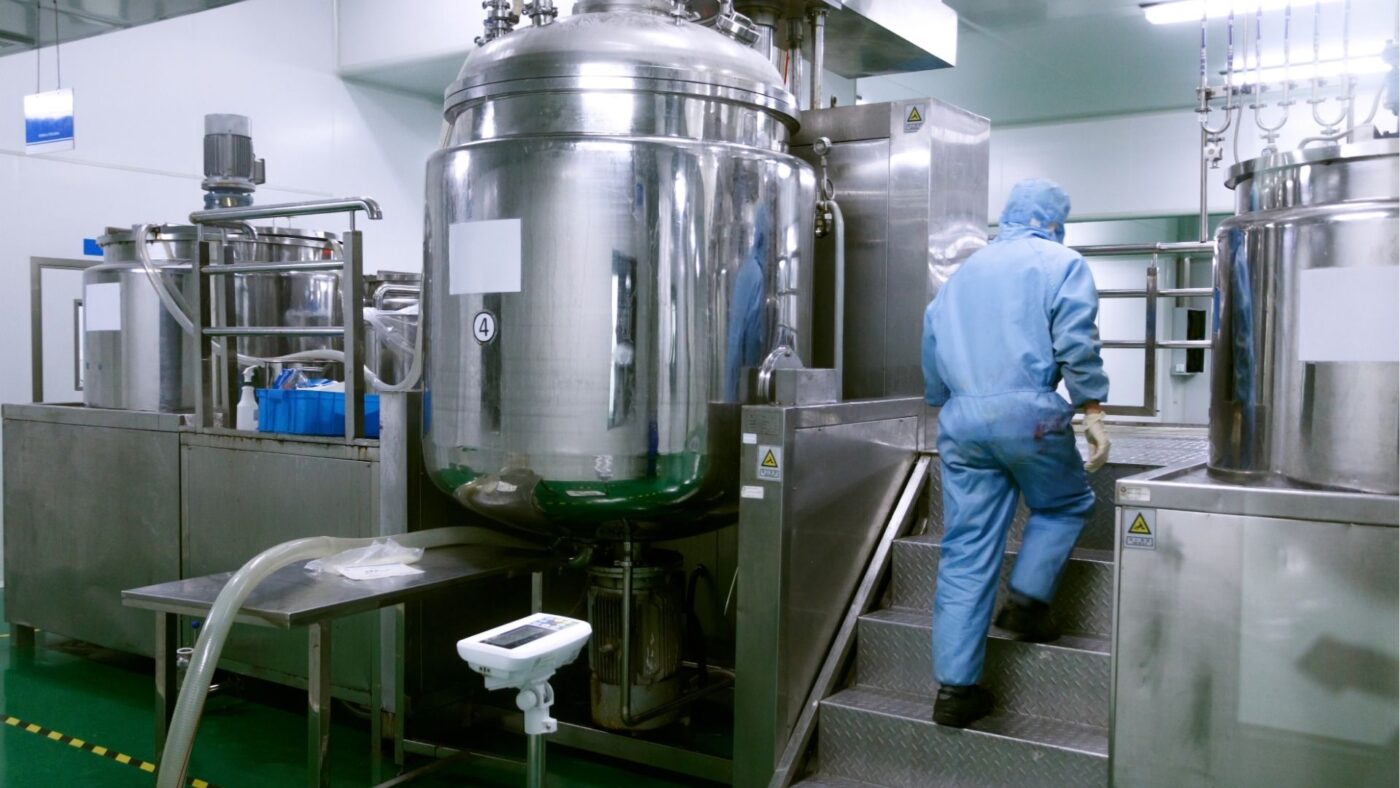
Selecting PPE should never be based solely on product specifications or price. The most effective PPE is the equipment that matches the hazards identified through a comprehensive workplace risk assessment.
When selecting PPE for chemical applications, consider the following factors:
Type of Chemical
Different chemicals react differently with PPE materials. Always check chemical compatibility before selecting gloves, protective clothing, or footwear.
Exposure Level
Consider whether workers face occasional splashes, continuous exposure, airborne vapours, or immersion. Higher exposure levels may require higher levels of protection.
Duration of Exposure
Longer exposure periods may require more durable PPE or materials with longer chemical breakthrough times.
Work Environment
Evaluate workplace conditions such as temperature, humidity, confined spaces, ventilation, and slip hazards, as these can influence PPE selection.
Applicable Safety Standards
Choose PPE that complies with recognized international standards, such as:
- EN Standards
- ISO Standards
- ANSI Standards
- ASTM Standards
Using certified PPE helps ensure reliable performance and supports workplace compliance.
Why Choose SAFETYWARE for Chemical Industry PPE?
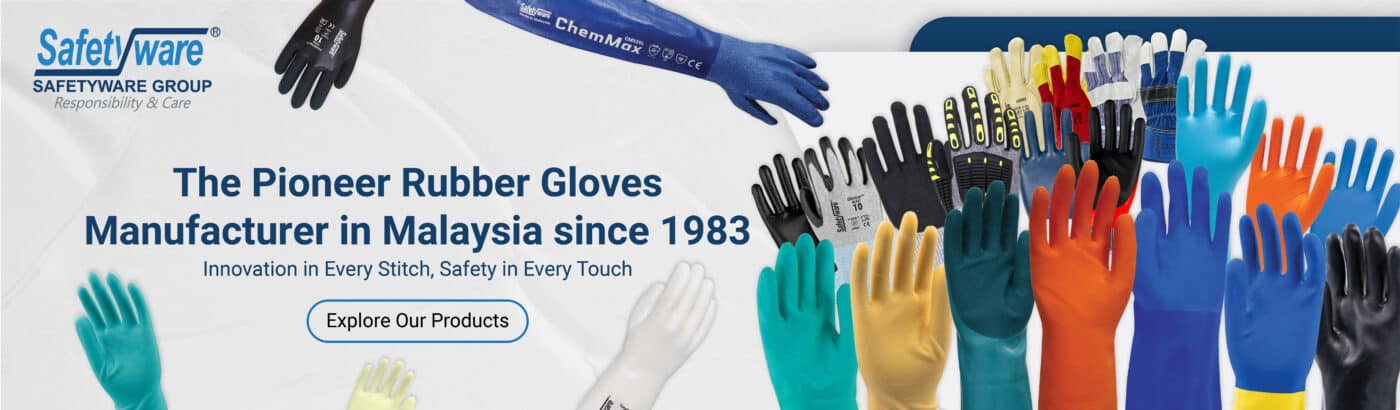
Protecting workers in chemical environments requires PPE that is reliable, comfortable, and suited to the specific hazards of the job.
SAFETYWARE offers a comprehensive range of PPE solutions designed to support chemical manufacturers, laboratories, pharmaceutical facilities, oil and gas operations, water treatment plants, and other industries handling hazardous substances.
Our product range includes:
- Chemical Resistant Gloves
- Chemical Protective Clothing
- Safety Helmets
- Safety Footwear
- Safety Goggles and Face Shields
- Respiratory Protection
- Hearing Protection
- Portable Gas Detectors
- Lockout Tagout (LOTO) Solutions
Beyond supplying quality PPE, SAFETYWARE also supports organizations through workplace safety education, product training, and technical guidance to help businesses improve their overall safety performance.
Conclusion
Working in the chemical industry presents unique hazards that require careful planning and the correct protective equipment. From chemical-resistant gloves and protective clothing to respirators, gas detectors, and safety footwear, every piece of PPE plays an important role in reducing workplace risks.
However, PPE should never be viewed as the only line of defense. Effective chemical safety begins with comprehensive risk assessments, proper hazard controls, employee training, and a strong workplace safety culture.
By following this Chemical Industry PPE Checklist, organizations can better protect their workforce, improve compliance with safety standards, and create a safer working environment for everyone.
Whether you operate a chemical manufacturing plant, laboratory, warehouse, or processing facility, investing in the right PPE is an investment in the health, safety, and long-term success of your business.
Frequently Asked Questions (FAQs)
1. What PPE is required in the chemical industry?
The required PPE depends on the specific hazards involved. Common PPE includes safety helmets, chemical-resistant gloves, chemical protective clothing, safety goggles, face shields, respirators, safety footwear, hearing protection, and portable gas detectors.
2. How do I choose the right chemical-resistant gloves?
Gloves should be selected based on the type of chemical, concentration, exposure time, and working conditions. Always refer to the manufacturer’s chemical resistance guide and Safety Data Sheet (SDS) before selecting gloves.
3. Why is respiratory protection important in chemical plants?
Some hazardous gases, vapors, and airborne particles cannot be detected by sight or smell. Appropriate respiratory protection helps reduce inhalation exposure and protects workers from harmful contaminants.
4. How often should chemical PPE be inspected?
Workers should visually inspect PPE before every use. Periodic inspections should also be carried out according to the manufacturer’s recommendations and company safety procedures. Damaged or contaminated PPE should be replaced immediately.
5. Is PPE alone enough to protect chemical workers?
No. PPE is the final layer of protection. Employers should also implement risk assessments, engineering controls, safe work procedures, employee training, emergency response planning, and regular workplace inspections to effectively manage chemical hazards.
Safetyware Group provide full range of PPE support!
Explore more industrial PPE solutions here:
Explore and Download our PPE and Safety Equipment Catalogue – Safetyware Group
wear wisely, work Safely – with Safetyware! ✨
If you need any support, feel free to contact us at:
📩 Email: [email protected]
📞 Tel: WhatsApp Us