Head injuries remain one of the most serious workplace hazards across many industries. Whether in construction, manufacturing, logistics, utilities, or maintenance work, workers face risks from falling objects, impact hazards, and accidental head contact.
Choosing the right ABS safety helmet is essential for reducing injury risks and improving workplace safety. In Malaysia, employers are required to provide suitable personal protective equipment (PPE) under occupational safety regulations. Understanding different safety helmet types, standards, and applications can help organizations select the best safety helmet for their workforce.
Why Head Protection PPE Is Important
Personal Protective Equipment serves as the final barrier between workers and workplace hazards. While engineering and administrative controls help reduce risks, PPE provides direct protection when hazards cannot be completely eliminated.
A properly selected construction safety helmet can:
- Protect against falling objects
- Reduce impact injuries
- Minimize electrical hazards
- Improve worker visibility
- Support compliance with safety regulations
Head protection remains one of the most important PPE categories because head injuries often result in severe consequences.
Common Workplace Hazards
Different industries expose workers to various head injury risks.
| Workplace Hazard | Potential Risk |
|---|---|
| Falling tools | Head trauma |
| Falling materials | Skull fractures |
| Low overhead structures | Impact injuries |
| Electrical contact | Electric shock |
| Moving machinery | Head collisions |
| Construction activities | Serious head injuries |
Industries that commonly require safety helmets include:
- Construction
- Manufacturing
- Warehousing
- Logistics
- Oil and Gas
- Utilities
- Mining
- Infrastructure Projects
Understanding Safety Helmet Types
Not all safety helmets are designed for the same purpose. Understanding safety helmet types helps employers select suitable protection.
Type I Safety Helmets
Designed to reduce impacts to the top of the head.
Common applications include:
- Construction sites
- General industry
- Warehousing
Type II Safety Helmets
Provide protection against both top and lateral impacts.
Common applications include:
- High-risk construction work
- Utilities
- Oil and gas operations
Vented Safety Helmets
Offer improved airflow and comfort in hot environments.
Suitable for:
- Outdoor construction
- Roadwork
- General industrial use
Non-Vented Safety Helmets
Provide additional protection where electrical hazards exist.
Suitable for:
- Electrical maintenance
- Utilities
- Power generation facilities
Why Choose an ABS Safety Helmet?
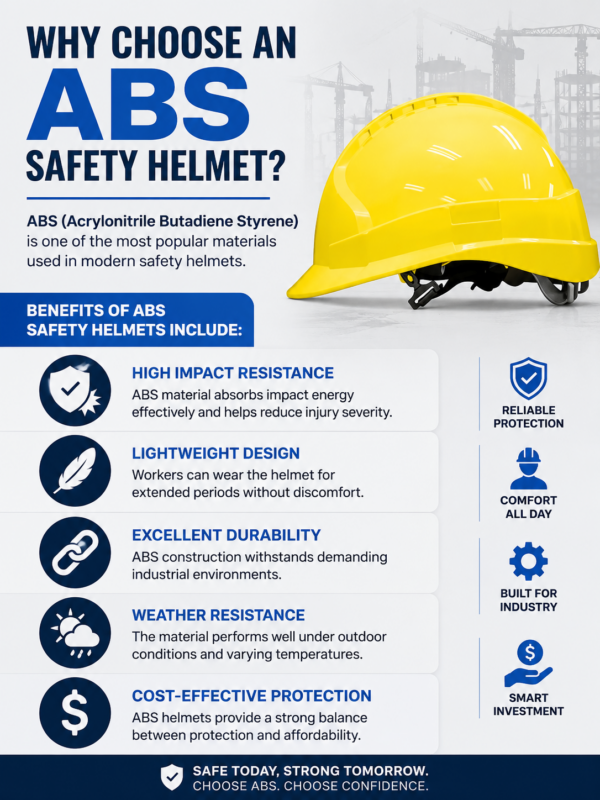
ABS (Acrylonitrile Butadiene Styrene) is one of the most popular materials used in modern safety helmets.
Benefits of ABS safety helmets include:
1. High Impact Resistance
ABS material absorbs impact energy effectively and helps reduce injury severity.
2. Lightweight Design
Workers can wear the helmet for extended periods without discomfort.
3. Excellent Durability
ABS construction withstands demanding industrial environments.
4. Weather Resistance
The material performs well under outdoor conditions and varying temperatures.
5. Cost-Effective Protection
ABS helmets provide a strong balance between protection and affordability.
How to Select the Right Safety Helmet
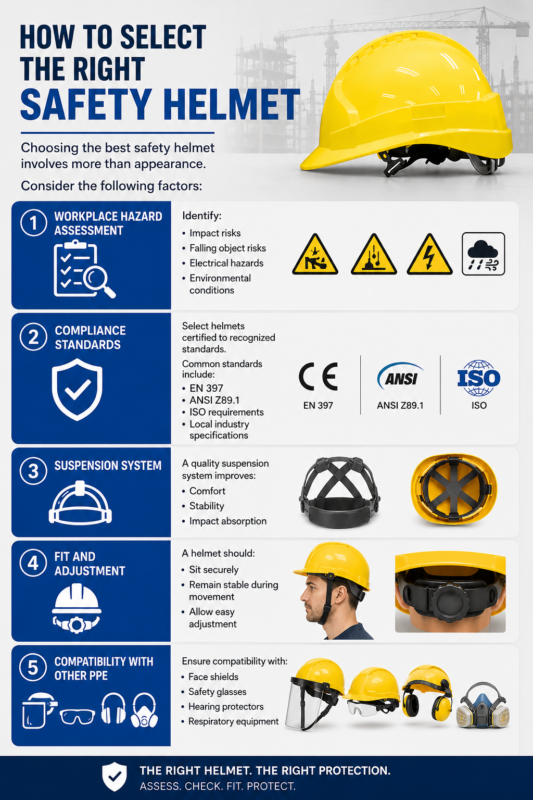
Choosing the best safety helmet involves more than appearance.
Consider the following factors:
Workplace Hazard Assessment
Identify:
- Impact risks
- Falling object risks
- Electrical hazards
- Environmental conditions
Compliance Standards
Select helmets certified to recognized standards.
Common standards include:
- EN 397
- ANSI Z89.1
- ISO requirements
- Local industry specifications
Suspension System
A quality suspension system improves:
- Comfort
- Stability
- Impact absorption
Fit and Adjustment
A helmet should:
- Sit securely
- Remain stable during movement
- Allow easy adjustment
Compatibility with Other PPE
Ensure compatibility with:
- Face shields
- Safety glasses
- Hearing protectors
- Respiratory equipment
International Standards
Organizations should select helmets meeting:
- EN 397
- ANSI Z89.1
- ISO requirements
Compliance helps reduce workplace incidents while supporting legal obligations.
Why Choose SAFETYWARE SAFETY HELMET?
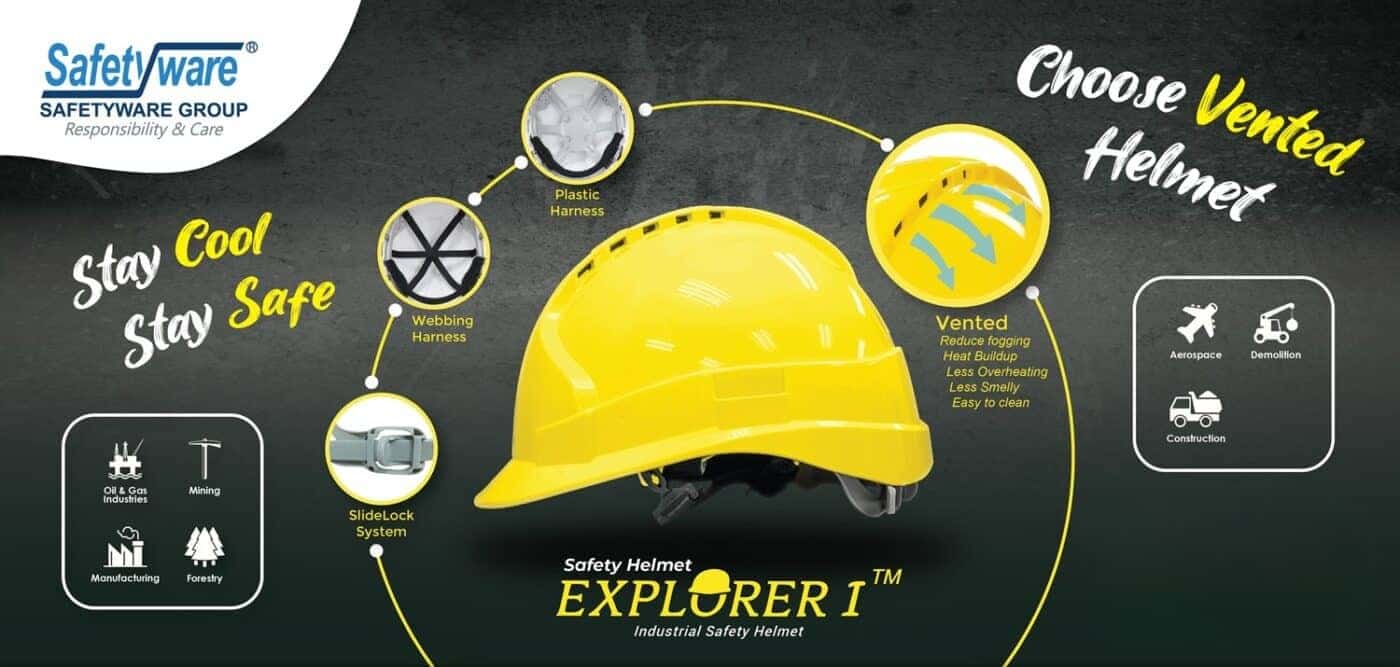
SAFETYWARE safety helmets are designed to provide reliable head protection, comfort, and durability for demanding workplace environments. Manufactured from high-impact ABS material, selected models such as the Explorer I feature an eight-point suspension system for enhanced comfort and stability during extended use. Certified to EN 397 and approved by SIRIM-DOSH, these safety helmets help organizations meet workplace safety requirements while protecting workers from impact hazards. Available in both vented and non-vented designs, SAFETYWARE safety helmets are suitable for construction, manufacturing, warehousing, utilities, and other industrial applications across Malaysia.
Conclusion
Selecting the right ABS safety helmet is an important step toward preventing workplace head injuries. The best safety helmet should match workplace hazards, comply with recognized standards, and provide long-term comfort for workers.
Organizations should conduct proper risk assessments, train employees on correct helmet usage, and regularly inspect PPE. By choosing suitable safety helmets and maintaining strong safety practices, employers can create safer and more productive workplaces.
Frequently Asked Questions
What is an ABS safety helmet?
An ABS safety helmet is a protective helmet manufactured from Acrylonitrile Butadiene Styrene material. It offers excellent impact resistance, durability, and lightweight comfort for industrial applications.
What is the best safety helmet for construction work?
The best safety helmet for construction depends on workplace hazards. Helmets certified to EN 397 or ANSI Z89.1 standards are commonly recommended for construction environments.
How often should safety helmets be replaced?
Safety helmets should be replaced according to manufacturer recommendations, after significant impacts, or when visible damage appears. Regular inspections help determine replacement needs.
What safety helmet standards should employers look for?
Employers should consider helmets certified to EN 397, ANSI Z89.1, ISO requirements, and other relevant industry standards depending on workplace hazards.
Who is responsible for PPE compliance in the workplace?
Employers must provide suitable PPE and training. Employees must wear PPE correctly and report damaged equipment according to workplace safety procedures.
📞 Need More Information?
Looking for reliable head protection solutions for your workplace?
Explore SAFETYWARE’s safety helmet solutions and workplace PPE range at
Safetyware Helmet Catalogs
Our safety specialists can help evaluate workplace hazards, recommend suitable safety helmets, and support compliance with Malaysia workplace safety requirements.
If you need a quotation, feel free to contact us at:
📩 Email: [email protected]
📞 Tel: WhatsApp Us