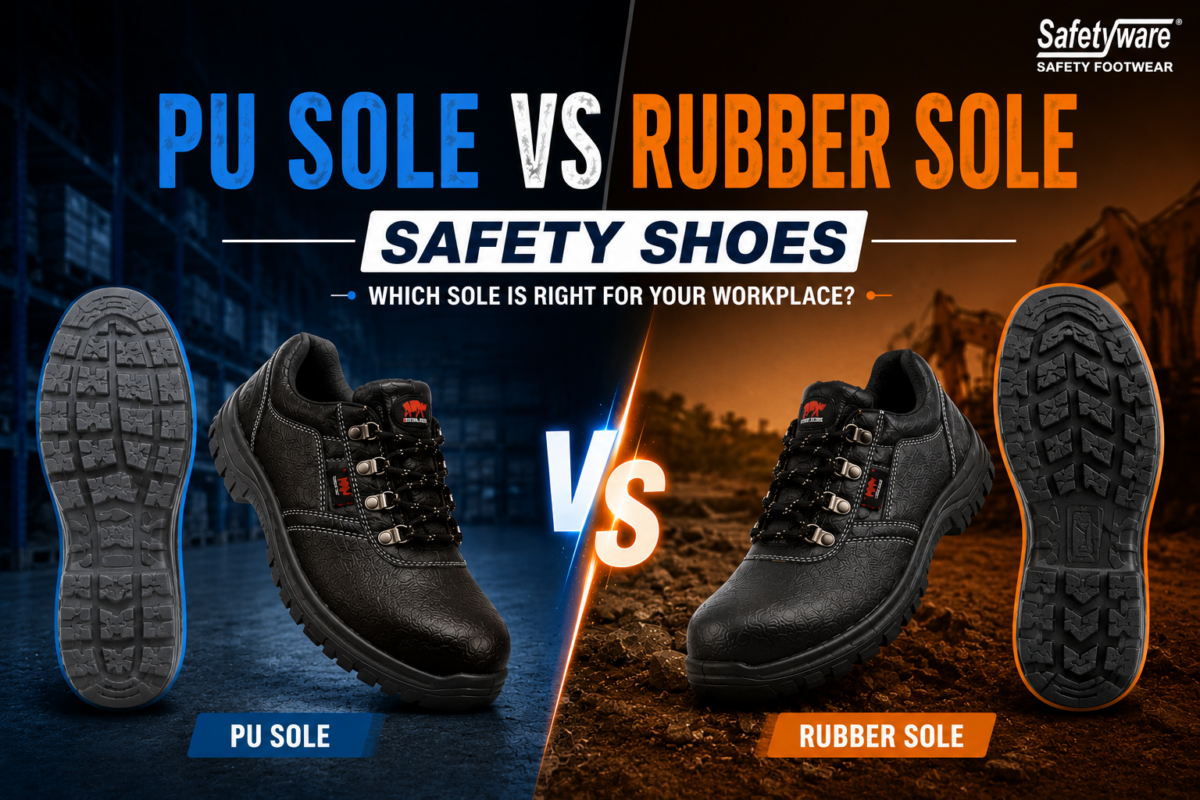
When choosing safety shoes, many workers focus on the toe cap, certification, or appearance. However, the sole material is equally important because it directly affects comfort, grip, durability, and protection in different working conditions.
The two most common sole materials used in industrial safety footwear are PU (Polyurethane) and rubber. While both provide reliable performance, they are designed for different workplace demands.
Choosing the wrong sole can lead to discomfort, faster wear, or reduced protection against workplace hazards. So, which one is better — PU sole or rubber sole safety shoes?
The answer depends on where and how you work.
Why Sole Material Matters in Safety Shoes ?
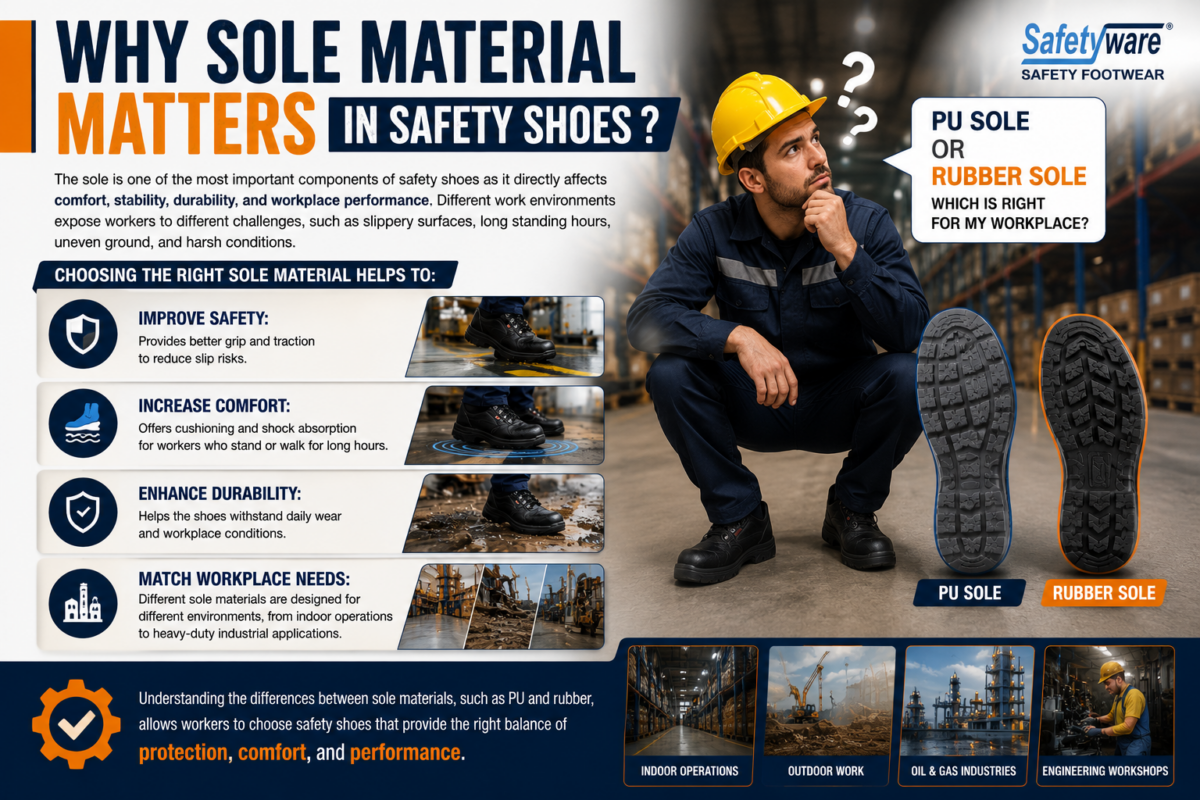
The sole is one of the most important components of safety shoes as it directly affects comfort, stability, durability, and workplace performance. Different work environments expose workers to different challenges, such as slippery surfaces, long standing hours, uneven ground, and harsh conditions.
Choosing the right sole material helps to:
- Improve safety: Provides better grip and traction to reduce slip risks.
- Increase comfort: Offers cushioning and shock absorption for workers who stand or walk for long hours.
- Enhance durability: Helps the shoes withstand daily wear and workplace conditions.
- Match workplace needs: Different sole materials are designed for different environments, from indoor operations to heavy-duty industrial applications.
Understanding the differences between sole materials, such as PU and rubber, allows workers to choose safety shoes that provide the right balance of protection, comfort, and performance.
Why Choose PU Sole Safety Shoes?
1. Designed for Long Working Hours
A typical warehouse, manufacturing, or logistics worker may spend 8 to 12 hours on their feet. Wearing heavy footwear for extended periods can increase foot fatigue. PU soles are lightweight and flexible, helping workers move more comfortably throughout their shift.
2. Better Walking Comfort
PU has natural cushioning properties that help absorb impact from every step. The softer structure provides a more comfortable walking experience compared with harder sole materials.
3. Lightweight Without Compromising Protection
Safety shoes are often associated with being heavy and uncomfortable. However, PU sole designs help reduce overall shoe weight while maintaining essential workplace protection. This makes them a popular choice for workers who need safety protection without sacrificing mobility.
Understanding Rubber Sole Safety Shoes
Rubber soles are known for their strength, grip, and resistance. They are commonly used in environments where workers face more challenging conditions. Compared with PU, rubber is denser and more resistant to extreme workplace exposure.
Why Choose Rubber Sole Safety Shoes?
1. Superior Grip on Challenging Surfaces
Workplaces such as construction sites, workshops, and outdoor areas may involve wet, oily, or uneven surfaces. Rubber soles provide excellent traction, helping workers maintain stability when walking on slippery floors.
2. Better Resistance Against Heat and Harsh Conditions
Rubber performs well in environments exposed to higher temperatures and demanding conditions.
3. Built for Tough Working Environments
Rubber soles are generally thicker and more rugged, making them suitable for workplaces where footwear experiences heavy daily abuse.
PU Sole vs Rubber Sole Safety Shoes: Key Differences
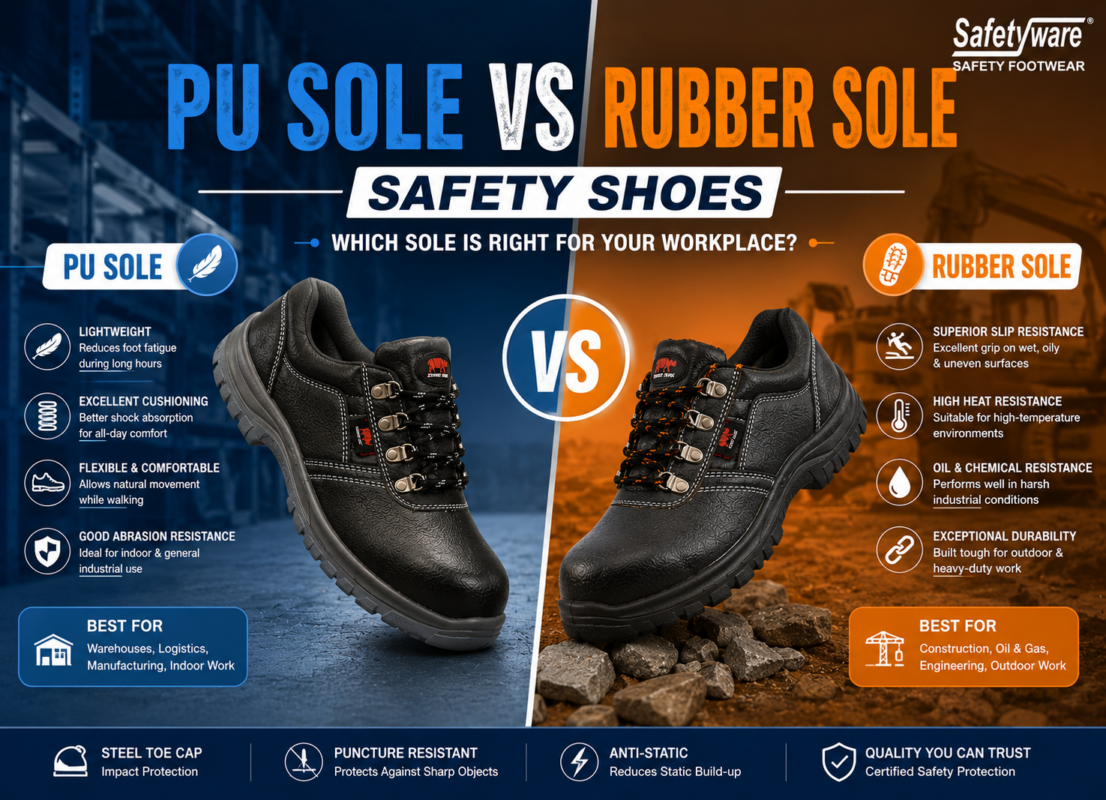
| Factor | PU Sole | Rubber Sole |
| Comfort | ⭐⭐⭐⭐⭐ Excellent | ⭐⭐⭐⭐ Good |
| Weight | Lightweight | Heavier |
| Flexibility | More flexible | More rigid |
| Shock absorption | Excellent | Good |
| Slip resistance | Good | Excellent |
| Heat resistance | Moderate | Excellent |
| Outdoor durability | Good | Excellent |
| Long walking hours | Better choice | Less suitable |
| Harsh environments | Limited | Better choice |
Common Applications of PU Sole Safety Shoes
PU sole safety shoes are commonly used in workplaces where workers spend long hours walking, standing, or performing indoor operations.
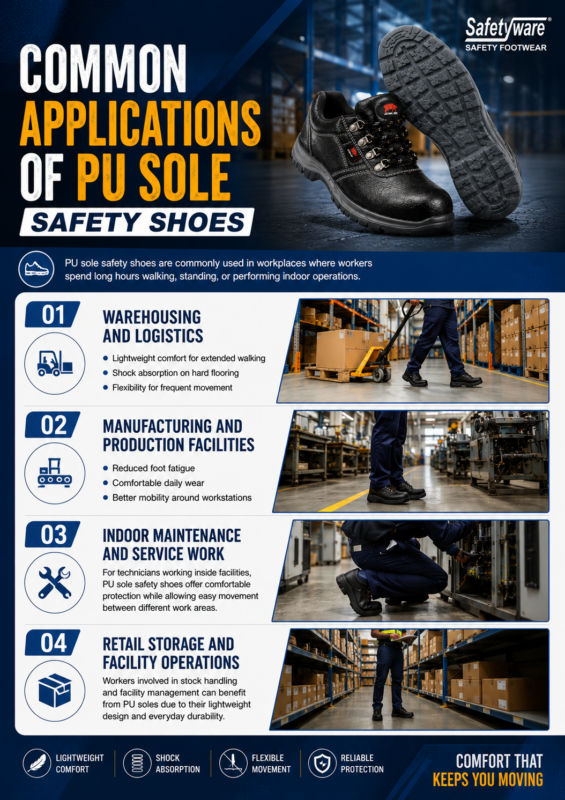
1. Warehousing and Logistics
Warehouse and logistics workers are frequently required to walk between storage areas, handle goods, and operate in large facilities.
PU sole safety shoes provide:
- Lightweight comfort for extended walking
- Shock absorption on hard flooring
- Flexibility for frequent movement
2. Manufacturing and Production Facilities
Workers on production lines often stand for several hours and perform repetitive movements.
PU soles help provide:
- Reduced foot fatigue
- Comfortable daily wear
- Better mobility around workstations
3. Indoor Maintenance and Service Work
For technicians working inside facilities, PU sole safety shoes offer comfortable protection while allowing easy movement between different work areas.
4. Retail Storage and Facility Operations
Workers involved in stock handling and facility management can benefit from PU soles due to their lightweight design and everyday durability.
Common Applications of Rubber Sole Safety Shoes
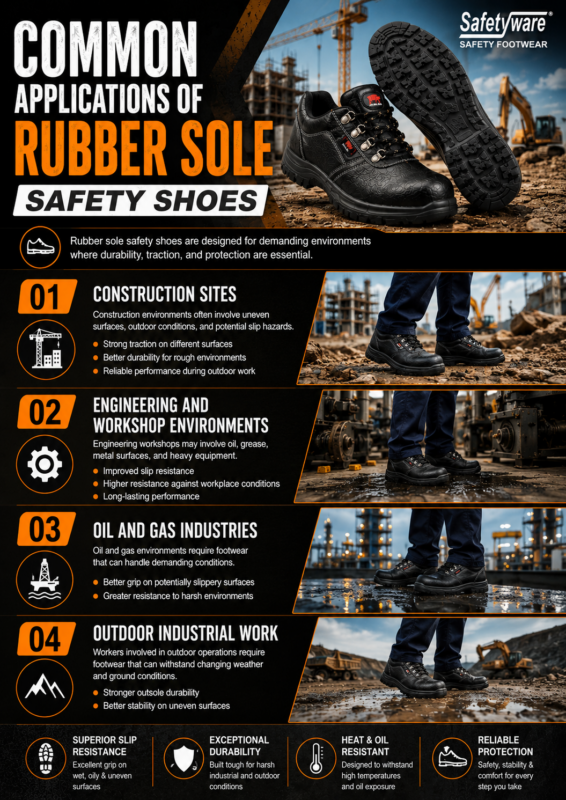
1. Construction Sites
Construction environments often involve uneven surfaces, outdoor conditions, and potential slip hazards.
Rubber sole safety shoes provide:
- Strong traction on different surfaces
- Better durability for rough environments
- Reliable performance during outdoor work
2. Engineering and Workshop Environments
Engineering workshops may involve oil, grease, metal surfaces, and heavy equipment.
Rubber soles are suitable because of:
- Improved slip resistance
- Higher resistance against workplace conditions
- Long-lasting performance
3. Oil and Gas Industries
Oil and gas environments require footwear that can handle demanding conditions.
Rubber sole safety shoes are preferred due to:
- Better grip on potentially slippery surfaces
- Greater resistance to harsh environments
4. Outdoor Industrial Work
Workers involved in outdoor operations require footwear that can withstand changing weather and ground conditions.
Rubber soles provide:
- Stronger outsole durability
- Better stability on uneven surfaces
Safetyware’s Commitment to Workplace Safety
Every workplace has unique hazards, which is why Safetyware focuses on developing safety footwear solutions that address different working conditions. From comfortable PU sole designs for everyday industrial use to durable rubber sole options for demanding environments, Safetyware helps workers find footwear that matches their safety requirements.
By combining quality materials with practical workplace needs, Safetyware continues to support safer and more efficient working environments across various industries.
👉 Read more on Composite Toe vs Steel Toe Safety Shoes
👉Explore more safety shoes in Safetyware
Frequently Asked Questions (FAQs)
1. Which is better: PU sole or rubber sole safety shoes?
Neither is universally better—the right choice depends on your working environment. PU sole safety shoes are lightweight, flexible, and comfortable for long hours of walking or standing, making them ideal for warehouses, logistics, and general manufacturing. Rubber sole safety shoes provide superior slip resistance, heat resistance, and durability, making them better suited for construction, engineering, and heavy industrial environments.
2. Are rubber sole safety shoes more slip-resistant than PU sole shoes?
Generally, yes. Rubber soles naturally provide better grip and traction, especially on wet, oily, or uneven surfaces. While many PU sole safety shoes also feature slip-resistant outsoles, rubber soles are often the preferred choice for workplaces where slip hazards are common.
3. Are rubber sole safety shoes heavier than PU sole safety shoes?
Yes. Rubber is naturally denser than polyurethane, so rubber sole safety shoes are usually heavier. However, this extra weight often comes with increased durability, better heat resistance, and improved traction, making them suitable for more demanding work environments.
4. Which safety shoe sole is better for construction work?
Rubber sole safety shoes are generally recommended for construction workers because they offer superior grip, higher heat resistance, and better durability on rough and uneven surfaces. These features help improve stability and protection in demanding outdoor environments.
📞 Need More Information?
Looking for reliable head protection solutions for your workplace?
Explore SAFETYWARE’s safety shoes and workplace PPE range at
👉Safetyware Safety Shoes Catalogs
Our safety specialists can help evaluate workplace hazards, recommend suitable safety helmets, and support compliance with Malaysia workplace safety requirements.
If you need a quotation, feel free to contact us at:
📩 Email: [email protected]
📞 Tel: WhatsApp Us