
Hazardous gases are one of the most dangerous workplace risks in industrial environments. Many toxic gases cannot be seen or smelled, making early detection extremely important for worker safety.
A portable gas detector helps monitor air quality and alerts workers when gas levels become dangerous. These devices play a critical role in protecting workers in confined spaces, chemical plants, oil and gas facilities, and manufacturing industries.
Understanding how portable gas detectors work helps employers improve workplace safety awareness and emergency preparedness.
What Is a Portable Gas Detector?
A portable gas detector is a compact handheld device used to monitor air quality around workers. It detects hazardous gases, oxygen levels, and dangerous atmospheric conditions.
When gas concentrations exceed safe limits, the detector immediately activates an alarm to warn users.
These devices help workers react quickly and move to safer areas before conditions become dangerous.
Portable gas detectors are commonly used in:
- Confined spaces
- Chemical plants
- Oil and gas industries
- Manufacturing facilities
- Wastewater treatment plants
- Mining operations
Why Portable Gas Detectors Are Important
Toxic gases can cause serious health risks and workplace accidents. Some gases may lead to poisoning, oxygen deficiency, fires, or explosions.
Portable gas detectors help prevent incidents by providing early warnings.
Key benefits include:
- Improves worker safety
- Detects invisible gas hazards
- Reduces exposure risks
- Supports emergency response
- Helps prevent explosions
- Enhances workplace compliance
Early detection can save lives in hazardous working environments.
How Portable Gas Detectors Work
Inside the detector, dedicated sensors monitor specific gases continuously.
The sensor reacts when gas molecules enter the device. This reaction generates readings based on gas concentration levels.
Once gas levels exceed safe limits, the detector activates:
- Audible alarm
- Visual warning
- Vibration alert
This immediate warning allows workers to evacuate or respond quickly.
Common Gases Detected by Portable Gas Detectors
Different gas detector models monitor different types of gases depending on workplace risks.
Common detectable gases include:
Oxygen (O₂)
Monitors oxygen deficiency or enrichment levels.
Carbon Monoxide (CO)
Detects toxic gas produced by incomplete combustion.
Hydrogen Sulfide (H₂S)
Identifies highly toxic gas commonly found in confined spaces.
Ammonia (NH₃)
Monitors hazardous gas exposure in chemical and industrial facilities.
Chlorine (Cl₂)
Detects dangerous chlorine gas leaks in processing plants.
Some advanced detectors can monitor four to five gases simultaneously.
These multi-gas detectors are ideal for:
- Confined space entry
- Chemical processing plants
- Oil and gas facilities
- Industrial maintenance work
Types of Portable Gas Detectors
There are two main types of portable gas detectors.
Single Gas Detector
A single gas detector monitors one specific gas only.
Key advantages include:
- Lightweight design
- Easy operation
- Compact size
- Cost-effective solution
These detectors are suitable for workplaces exposed to one primary gas hazard.
Multi-Gas Detector
A multi-gas detector can detect several gases simultaneously.
Benefits include:
- Monitors multiple hazards at once
- Suitable for high-risk industries
- Improves worker protection
- Ideal for confined spaces
Multi-gas detectors are widely used in industries with mixed gas exposure risks.
How to Choose the Right Portable Gas Detector
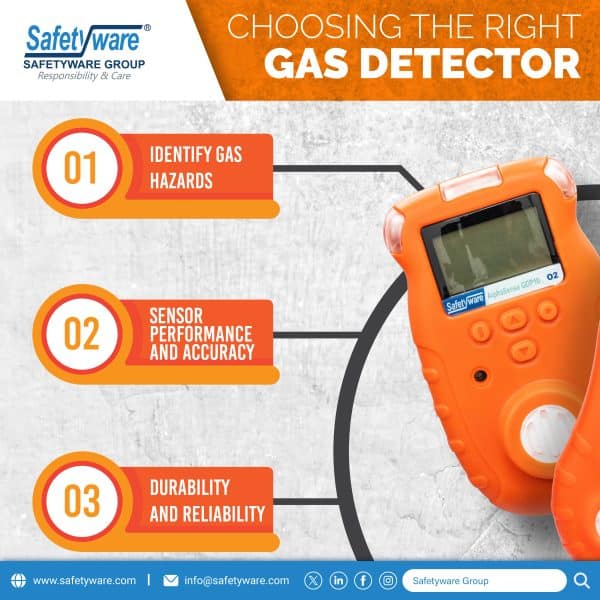
Selecting the correct gas detector depends on workplace hazards and operational conditions.
Important considerations include:
- Type of gases present
- Number of gases to monitor
- Workplace environment
- Confined space requirements
- Explosion risk areas
- Battery operating duration
Employers should conduct proper risk assessments before selecting a detector.
Importance of Gas Detector Calibration
Calibration ensures the detector provides accurate readings during operation.
Without calibration, gas detectors may produce incorrect results and fail to detect dangerous conditions.
Calibration is similar to a health check for the device.
Recommended practices include:
- Calibrate every six months
- Perform more frequent calibration in harsh environments
- Conduct regular bump tests
- Follow manufacturer recommendations
Proper maintenance improves reliability and worker safety.
Safetyware also provides professional gas detector calibration services to help maintain device accuracy.
Are Portable Gas Detectors Safe for Hazardous Areas?
Yes. Many portable gas detectors are designed for hazardous environments and carry explosion-proof certifications.
Safetyware gas detectors are designed with intrinsic safety approvals. This means the devices are engineered to prevent sparks that could trigger explosions.
These detectors are suitable for:
- Mines
- Oil and gas facilities
- Chemical plants
- Confined spaces
- High-risk industrial environments
Using certified equipment is essential for hazardous area safety compliance.
Common Industries Using Portable Gas Detectors
Portable gas detectors are widely used across many industries in Malaysia.
Industries include:
- Oil and gas
- Chemical processing
- Manufacturing
- Marine and shipbuilding
- Wastewater treatment
- Mining
- Utilities and maintenance
These industries often involve hazardous atmospheres that require continuous monitoring.
Why Choose SAFETYWARE Gas Detection Solutions
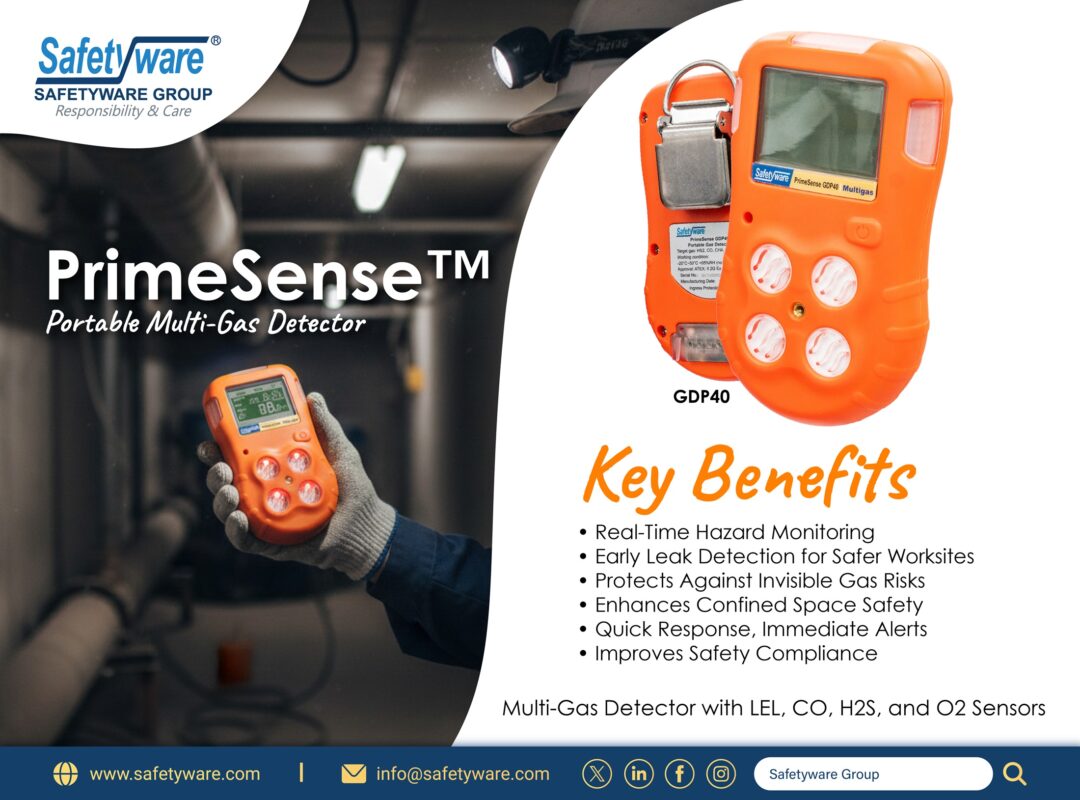
Safetyware offers reliable gas detection solutions designed for industrial safety applications.
Key advantages include:
- Reliable gas monitoring performance
- Suitable for hazardous environments
- Explosion-proof approved devices
- Professional calibration services
- Durable industrial design
- Trusted by safety professionals
Safetyware supports industries with practical and dependable safety solutions.
Conclusion
Portable gas detectors play an essential role in protecting workers from invisible gas hazards. Early gas detection helps prevent poisoning, oxygen deficiency, explosions, and workplace accidents.
Choosing the right detector, maintaining proper calibration, and conducting daily inspections improve workplace safety readiness.
Whether using single gas or multi-gas detectors, proper gas monitoring supports safer working environments across many industries.
Frequently Asked Questions (FAQs)
1. What is a portable gas detector used for?
A portable gas detector monitors air quality and detects hazardous gas exposure in workplaces.
2. What gases can portable gas detectors detect?
Common gases include oxygen, carbon monoxide, hydrogen sulfide, ammonia, and chlorine.
3. What is the difference between single gas and multi-gas detectors?
Single gas detectors monitor one gas only, while multi-gas detectors monitor several gases simultaneously.
4. How often should gas detectors be calibrated?
Calibration is generally recommended every six months or more frequently in harsh environments.
5. Are portable gas detectors safe for explosive environments?
Yes. Intrinsically safe detectors are designed for hazardous environments and help prevent ignition risks.
📞 Need More Information?
Your safety matters. If you have questions about which Gas Detector is right for your workplace, we’re here to help!
Visit our website: www.safetyware.com
Work safely, work confidently – with Safetyware! 🔪✨
Learn more from SAFETYWARE FAQ by clicking HERE!
If you need a quotation, feel free to contact us at:
📩 Email: [email protected]
📞 Tel: WhatsApp Us