Cotton gloves are commonly used in many workplaces because they are lightweight, comfortable, and affordable. However, many workers mistakenly believe cotton gloves can protect against every workplace hazard.
Different working environments expose workers to different risks. Using unsuitable gloves may increase injury risks and reduce workplace safety.
Understanding the limitations of cotton gloves helps employers and workers select proper hand protection for safer operations.
What Are Cotton Gloves?

Cotton gloves are lightweight gloves made from natural cotton fabric. They are commonly used for low-risk handling tasks and general applications.
These gloves are popular because they provide:
- Basic hand coverage
- Comfort during extended wear
- Breathability
- Low cost
- Lightweight usage
However, cotton gloves mainly provide minimal protection and are not designed for hazardous industrial environments.
Common Applications of Cotton Gloves
Cotton gloves are suitable for light-duty tasks such as:
- General housekeeping
- Product inspection
- Light assembly work
- Packaging operations
- Handling clean products
- Dust protection
They are often used where comfort and cleanliness are more important than heavy protection.
Why Cotton Gloves Cannot Be Used in All Workplaces
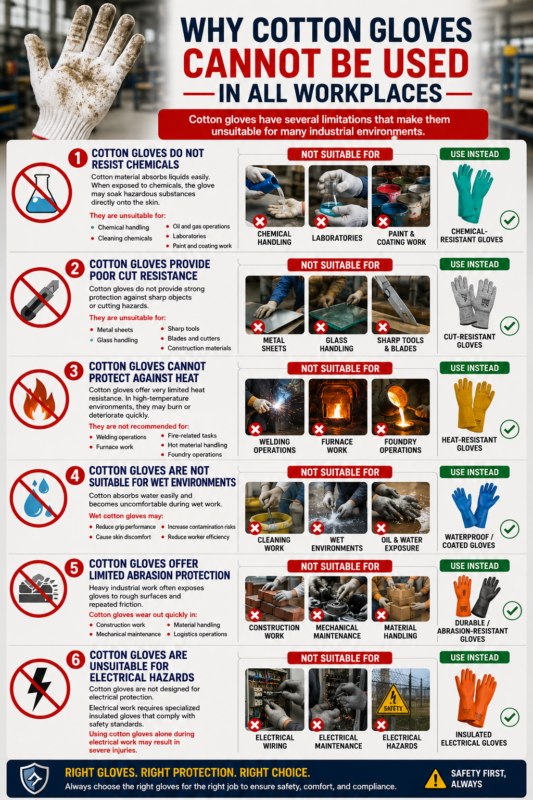
Cotton gloves have several limitations that make them unsuitable for many industrial environments.
1. Cotton Gloves Do Not Resist Chemicals
Cotton material absorbs liquids easily. When exposed to chemicals, the glove may soak hazardous substances directly onto the skin.
This creates serious risks in industries involving:
- Chemical handling
- Cleaning chemicals
- Oil and gas operations
- Laboratories
- Paint and coating work
Workers handling chemicals should use chemical-resistant gloves instead.
2. Cotton Gloves Provide Poor Cut Resistance
Cotton gloves do not provide strong protection against sharp objects or cutting hazards.
They are unsuitable for work involving:
- Metal sheets
- Glass handling
- Sharp tools
- Blades and cutters
- Construction materials
Using cotton gloves in these environments may increase hand injury risks.
3. Cotton Gloves Cannot Protect Against Heat
Cotton gloves offer very limited heat resistance. In high-temperature environments, they may burn or deteriorate quickly.
They are not recommended for:
- Welding operations
- Furnace work
- Fire-related tasks
- Hot material handling
- Foundry operations
Heat-resistant gloves are required for thermal protection.
4. Cotton Gloves Are Not Suitable for Wet Environments
Cotton absorbs water easily and becomes uncomfortable during wet work.
Wet cotton gloves may:
- Reduce grip performance
- Cause skin discomfort
- Increase contamination risks
- Reduce worker efficiency
Waterproof or coated gloves are more suitable for wet applications.
5. Cotton Gloves Offer Limited Abrasion Protection
Heavy industrial work often exposes gloves to rough surfaces and repeated friction.
Cotton gloves wear out quickly in:
- Construction work
- Mechanical maintenance
- Material handling
- Logistics operations
This reduces durability and increases replacement frequency.
6. Cotton Gloves Are Unsuitable for Electrical Hazards
Cotton gloves are not designed for electrical protection.
Electrical work requires specialized insulated gloves that comply with safety standards.
Using cotton gloves alone during electrical work may result in severe injuries.
Risks of Using Wrong Safety Gloves
Using unsuitable gloves may cause:
- Increased workplace injuries
- Reduced worker productivity
- Poor grip performance
- Higher accident risks
- Compliance issues
- Increased replacement costs
Proper glove selection improves both safety and operational efficiency.
Recommended Safety Gloves for Different Workplaces
| Safety Glove Type | Suitable For | Key Benefits |
|---|---|---|
| Cut Resistant Gloves | • Metal handling• Glass work• Sharp material handling | • Improved cut protection• Better durability• Enhanced worker safety |
| Chemical Resistant Gloves | • Chemical plants• Laboratories• Cleaning operations | • Chemical splash protection• Better hand safety• Resistance against hazardous substances |
| Nitrile Coated Gloves | • Mechanical work• Warehouse operations• Manufacturing industries | • Improved grip• Oil resistance• Better abrasion protection |
| Heat Resistant Gloves | • Welding• Hot material handling• Furnace operations | • Thermal protection• Improved worker safety• Durable heat resistance |
| Electrical Insulated Gloves | • Electrical maintenance• Utility work• High-voltage environments | • Electrical hazard protection• Compliance with electrical safety standards |
Choosing Proper Gloves Improves Workplace Safety
The right safety gloves help:
- Reduce workplace injuries
- Improve worker comfort
- Increase productivity
- Enhance operational efficiency
- Support safety compliance
Different industries require different glove solutions based on operational hazards.
Why Choose SAFETYWARE Safety Gloves

Safetyware offers a wide range of industrial safety gloves suitable for different workplace applications.
Key advantages include:
- Reliable hand protection solutions
- Compliance with international standards
- Durable industrial performance
- Comfortable and ergonomic designs
- Suitable for Malaysia industries
- Trusted by safety professionals
Safetyware supports safer workplaces through practical PPE solutions.
Conclusion
Cotton gloves are useful for light-duty and low-risk applications. However, they are not suitable for every workplace hazard.
Different working environments require specialized gloves designed for chemical resistance, cut protection, heat resistance, electrical safety, or wet conditions.
Choosing the right gloves helps reduce injuries, improve compliance, and create safer workplaces.
Proper hand protection is essential for both worker safety and operational efficiency.
Frequently Asked Questions (FAQs)
1. Are cotton gloves suitable for industrial work?
Cotton gloves are suitable only for light-duty and low-risk tasks.
2. Can cotton gloves protect against chemicals?
No. Cotton absorbs chemicals and does not provide chemical resistance.
3. What gloves should be used for cut protection?
Cut-resistant gloves are recommended for handling sharp materials and tools.
4. Are cotton gloves suitable for welding work?
No. Welding work requires heat-resistant gloves designed for high temperatures.
5. Why is glove selection important?
Proper glove selection reduces workplace injuries and improves worker safety.
📞 Need More Information?
Your safety matters. If you have questions about which Gloves is right for your workplace, we’re here to help!
Visit our website: www.safetyware.com
Wear safely, work confidently – with Safetyware! 🔪✨
Learn more from SAFETYWARE Gloves by clicking HERE!
If you need a quotation, feel free to contact us at:
📩 Email: [email protected]
📞 Tel: WhatsApp Us