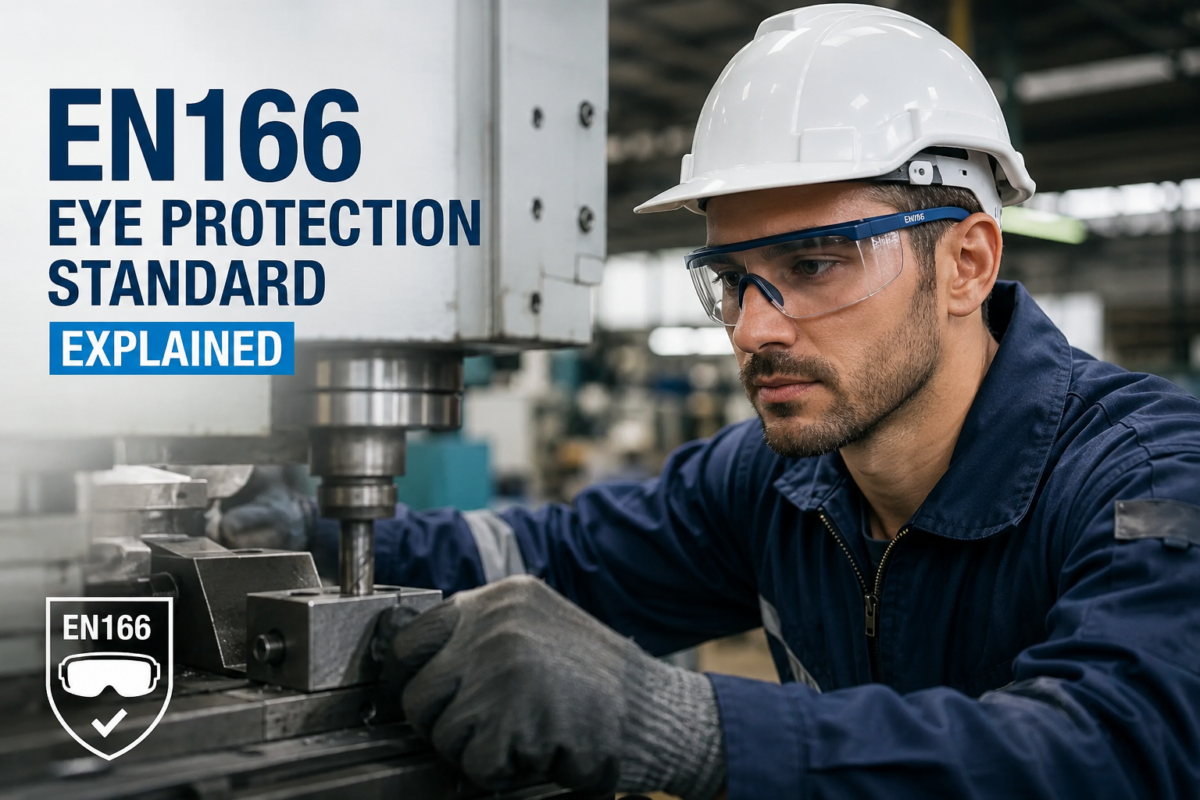
Eye injuries remain one of the most common workplace accidents across industries such as manufacturing, construction, engineering, laboratories, and logistics. Flying particles, dust, chemicals, sparks, and other hazards can cause serious eye damage if proper protection is not used.
To ensure safety eyewear provides reliable protection, products are tested and certified according to recognized safety standards. One of the most widely adopted standards in Europe is EN166, which specifies the requirements for personal eye protection.
Understanding the EN166 standard can help employers and workers select suitable safety glasses, goggles, and face shields for their specific workplace risks.
What Is EN166?
EN166 is a European standard that defines the general requirements for personal eye protection equipment. It establishes testing methods, performance requirements, optical quality standards, and marking systems for protective eyewear.
The standard applies to:
- Safety spectacles
- Safety goggles
- Face shields
- Welding eye protection
- Industrial eye protection equipment
Products that comply with EN166 have undergone testing to ensure they can provide adequate protection against specified workplace hazards.
Why Is EN166 Important?
Choosing eyewear that complies with EN166 helps ensure that workers receive protection that has been independently tested and certified.
Key benefits include:
- Improved workplace safety
- Consistent product quality
- Compliance with safety regulations
- Reduced risk of eye injuries
- Easier selection of suitable protective equipment
Without certified eye protection, workers may be exposed to risks that ordinary eyewear cannot withstand.
Understanding EN166 Markings
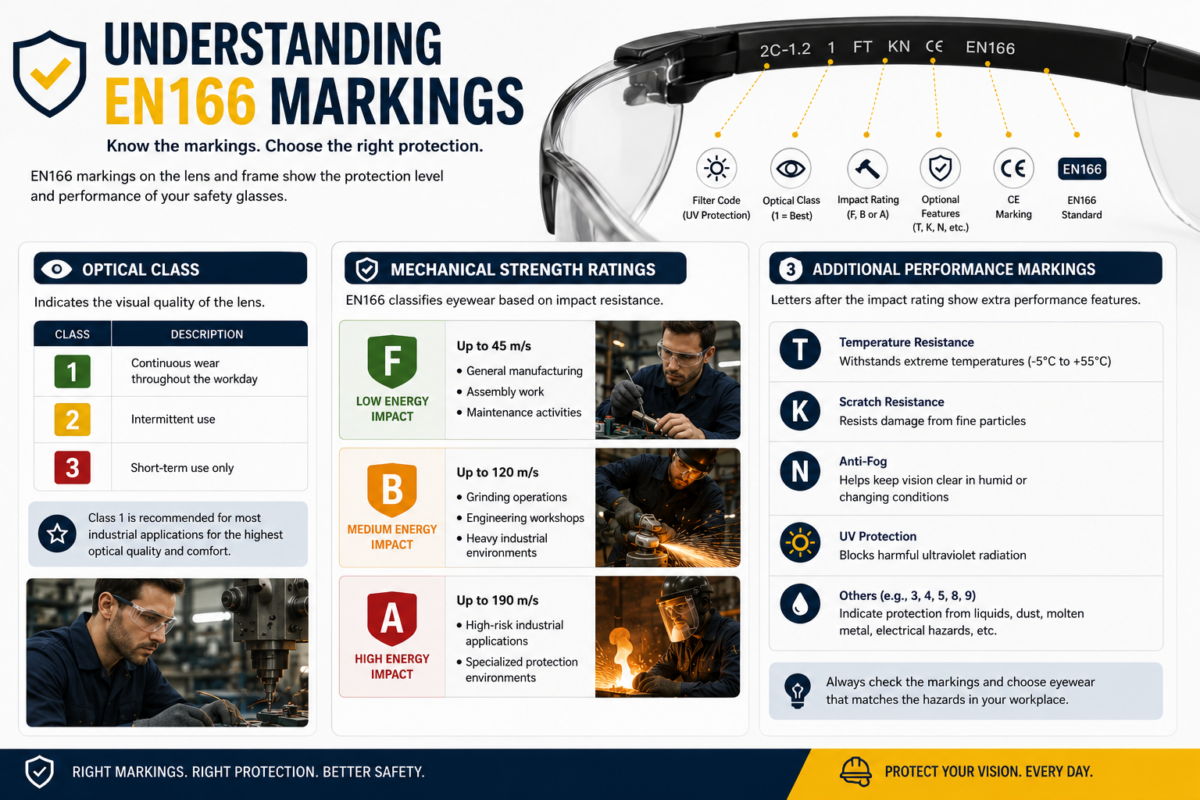
One of the most important aspects of EN166 is the marking system found on the lens and frame. These markings indicate the protection level and performance characteristics of the eyewear.
Optical Class (EN166)
Optical class indicates the visual quality of the lens.
| Class | Description |
| 1 | Continuous wear throughout the workday |
| 2 | Intermittent use |
| 3 | Short-term use only |
For most industrial applications, Class 1 eyewear is recommended because it provides the highest optical quality and comfort for prolonged use.
Mechanical Strength Ratings (EN166)
EN166 classifies eye protection according to its resistance to impacts.
| Marking | Protection Level |
| S | Increased robustness |
| F | Low-energy impact |
| B | Medium-energy impact |
| A | High-energy impact |
F – Low Energy Impact
Eyewear marked with F can withstand impacts from small particles travelling at approximately 45 m/s.
Suitable for:
- General manufacturing
- Assembly work
- Maintenance activities
B – Medium Energy Impact
Eyewear marked with B offers higher impact resistance, protecting against particles travelling at approximately 120 m/s.
Suitable for:
- Grinding operations
- Engineering workshops
- Heavy industrial environments
A – High Energy Impact
The highest impact rating under EN166, capable of resisting particles travelling at approximately 190 m/s.
Typically used in:
- High-risk industrial applications
- Specialized protection environments
Other Eye Protection Standards
Although EN166 is one of the most widely recognized standards for safety eyewear in Europe, several other countries have their own certification standards. These standards share the same goal of ensuring eye protection provides reliable protection against workplace hazards, although their testing methods and marking systems may differ.
1. ANSI/ISEA Z87.1 (United States)
Region: United States
ANSI/ISEA Z87.1 is the primary standard for occupational and educational eye and face protection in the U.S. It specifies requirements for impact resistance, optical quality, splash protection, dust protection, and other hazards.
Common markings include:
- Z87 – Basic impact protection
- Z87+ – High-impact protection
- D3 – Splash and droplet protection
- D4 – Dust protection
- D5 – Fine dust protection
This standard is widely used in construction, manufacturing, oil and gas, and industrial workplaces across North America.
How to Choose EN166 Safety Glasses
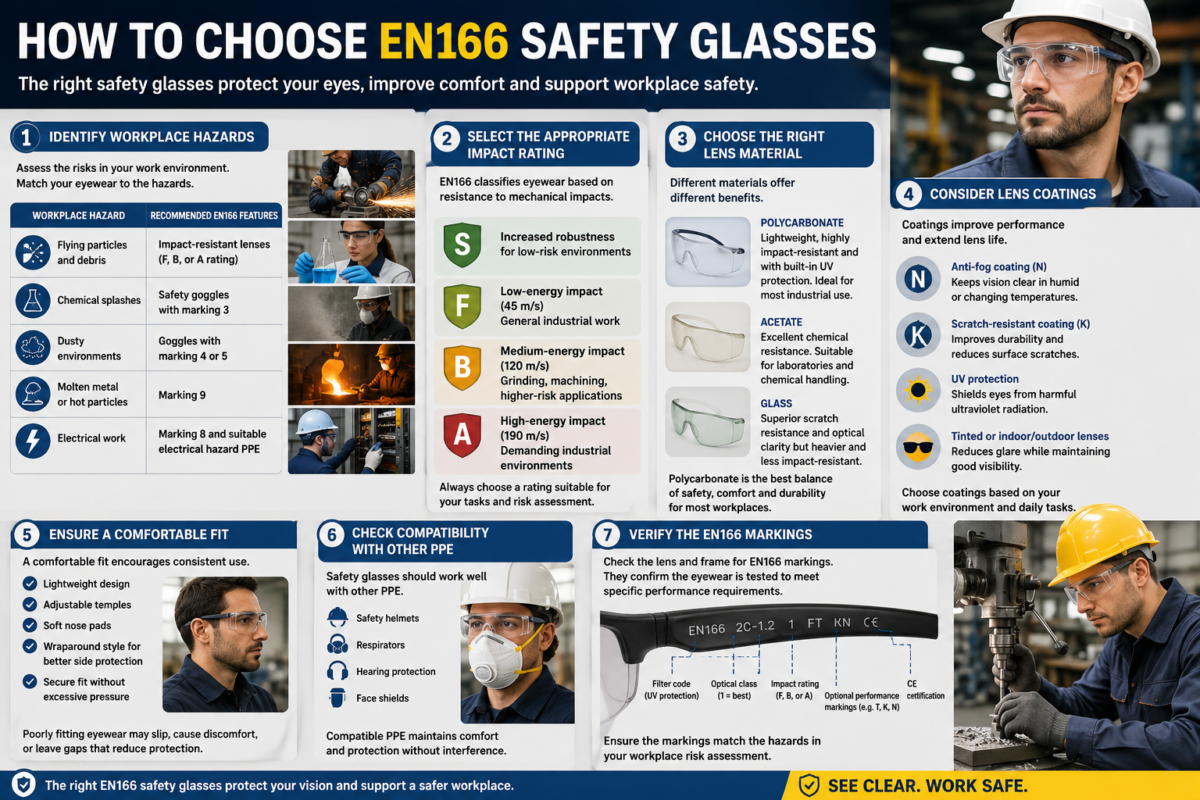
Selecting the right EN166 safety glasses involves more than simply choosing any product with an EN166 marking. The eyewear should match the specific hazards in your workplace while providing comfort and compatibility with other personal protective equipment (PPE). Here are the key factors to consider:
1. Identify Workplace Hazards
Start by assessing the risks present in your work environment. Different tasks require different levels of protection.
| Workplace Hazard | Recommended EN166 Features |
| Flying particles and debris | Impact-resistant lenses (F, B, or A rating) |
| Chemical splashes | Safety goggles with marking 3 |
| Dusty environments | Goggles with marking 4 or 5 |
| Molten metal or hot particles | Marking 9 |
| Electrical work | Marking 8 and suitable electrical hazard PPE |
Choosing eyewear that matches the actual workplace hazards helps ensure adequate protection without compromising comfort.
2. Select the Appropriate Impact Rating
EN166 classifies safety eyewear based on its resistance to mechanical impacts.
- S – Increased robustness for low-risk environments
- F – Low-energy impact, suitable for general industrial work
- B – Medium-energy impact for higher-risk applications such as grinding and machining
- A – High-energy impact for demanding industrial environments
Always select an impact rating appropriate for your work activities and risk assessment.
3. Choose the Right Lens Material
Different lens materials offer varying benefits:
- Polycarbonate: Lightweight, highly impact-resistant, and provides built-in UV protection. This is the most common choice for industrial safety glasses.
- Acetate: Offers excellent chemical resistance, making it suitable for laboratories and chemical handling.
- Glass: Provides superior scratch resistance and optical clarity but is heavier and less impact-resistant than polycarbonate.
For most workplaces, polycarbonate lenses provide the best balance of safety, comfort, and durability.
4. Consider Lens Coatings
Lens coatings can improve performance and extend the life of your safety glasses.
Look for features such as:
- Anti-fog coating (N) – Helps maintain clear vision in humid or changing temperatures.
- Scratch-resistant coating (K) – Improves durability by reducing surface scratches.
- UV protection – Shields the eyes from harmful ultraviolet radiation.
- Tinted or indoor/outdoor lenses – Reduces glare while maintaining good visibility.
Selecting the right coating depends on your work environment and daily tasks.
5. Ensure a Comfortable Fit
Comfort encourages workers to wear safety glasses consistently throughout the day.
Consider features such as:
- Lightweight design
- Adjustable temples
- Soft nose pads
- Wraparound style for improved side protection
- Secure fit without excessive pressure
Poorly fitting eyewear may slip, cause discomfort, or leave gaps that reduce protection.
6. Verify the EN166 Markings
Before purchasing, inspect the lens and frame for the appropriate EN166 markings. These markings indicate the eyewear has been tested to meet specific performance requirements, including optical quality, impact resistance, and protection against particular hazards. Always ensure the markings correspond to the hazards identified in your workplace risk assessment.
Safetyware Eye & Face Protection: Your Trusted PPE Brand
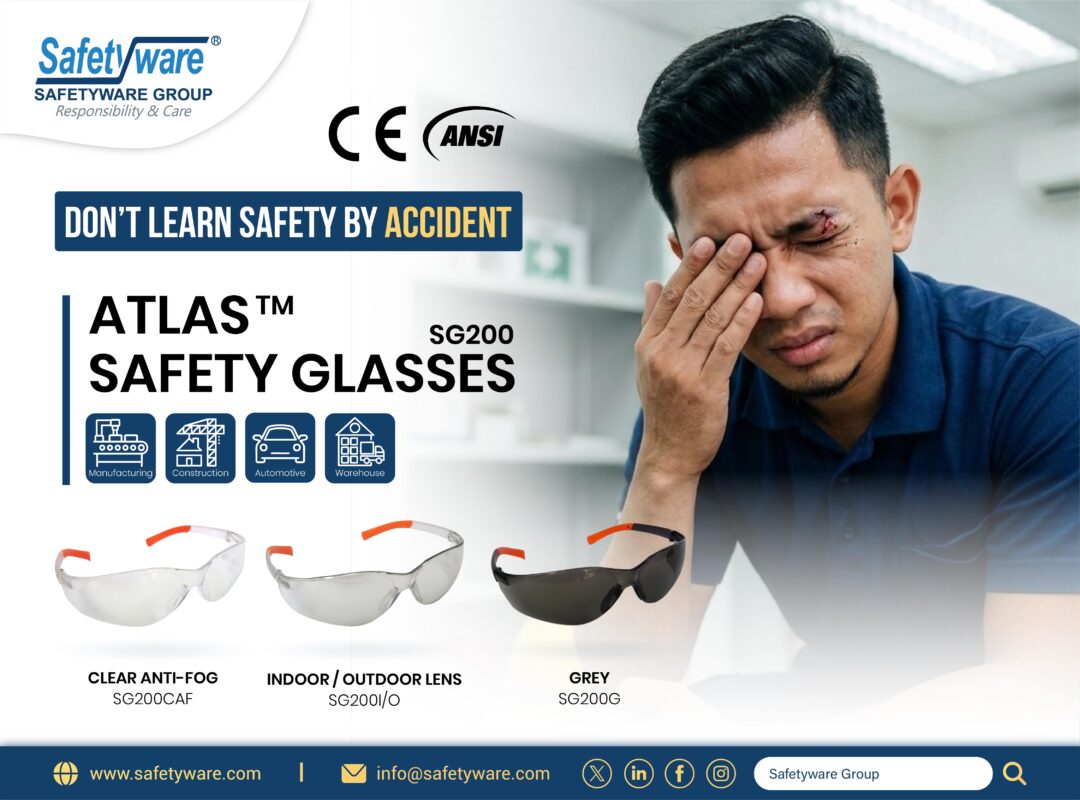
Choosing the right safety glasses is an important step in protecting your vision at work. Whether you need protection against flying particles, dust, chemical splashes, or UV exposure, selecting EN166-certified safety eyewear that matches your workplace hazards can significantly reduce the risk of eye injuries.
At Safetyware, we offer a comprehensive range of EN166-compliant safety glasses, safety goggles, and face protection from trusted brands to suit various industries, including manufacturing, construction, laboratories, engineering, logistics, and oil & gas. Our selection includes features such as:
- Impact-resistant polycarbonate lenses
- Anti-fog and scratch-resistant coatings
- UV protection for outdoor work
- Wraparound safety glasses for enhanced side coverage
- Chemical splash goggles for hazardous environments
- Lightweight designs for all-day comfort
Whether you’re purchasing PPE for yourself or equipping an entire workforce, Safetyware’s team can help you choose eye protection that meets the required safety standards and is suitable for your specific working environment.
👉 Explore different safety glasses at Safetyware
👉 Read more about European Standard
Frequently Asked Questions (FAQs)
1. What does EN166 mean on safety glasses?
EN166 is the European standard for personal eye protection. It specifies the minimum requirements for optical quality, impact resistance, and protection against workplace hazards such as flying particles, dust, chemicals, and molten metal. Safety glasses marked with EN166 have been tested to meet these performance requirements.
2. Is EN166 the same as ANSI Z87.1?
No. EN166 and ANSI/ISEA Z87.1 are different safety standards. EN166 is the European standard, while ANSI/ISEA Z87.1 is used primarily in the United States. Although both standards evaluate impact resistance and eye protection performance, they use different testing methods and marking systems.
3. How do I know if my safety glasses are EN166 certified?
Check the markings on both the lens and the frame. Genuine EN166-compliant safety glasses will display markings such as EN166, the optical class, impact resistance rating (S, F, B, or A), and any additional protection markings. These markings indicate the eyewear has been tested according to the EN166 standard.
4. What is the difference between safety glasses and safety goggles under EN166?
Safety glasses protect against general impact hazards and provide good ventilation, while safety goggles form a seal around the eyes to offer additional protection against dust, fine particles, and chemical splashes. The best choice depends on the hazards in your work environment.
📞 Need More Information?
Looking for reliable head protection solutions for your workplace?
Explore SAFETYWARE’s safety shoes and workplace PPE range at
👉Safetyware Safety Shoes Catalogs
Our safety specialists can help evaluate workplace hazards, recommend suitable safety helmets, and support compliance with Malaysia workplace safety requirements.
If you need a quotation, feel free to contact us at:
📩 Email: [email protected]
📞 Tel: WhatsApp Us