Introduction
Every year, workplace incidents continue to impact businesses despite improvements in safety regulations, technology, and personal protective equipment (PPE). While organizations invest heavily in safety programs, many still struggle to reduce workplace accidents, improve employee engagement, and build a lasting culture of safety.
The missing element is often safety leadership.
Safety leadership is more than enforcing rules or ensuring compliance. It is the ability to influence people, inspire safe behaviours, and create an environment where every employee feels responsible for protecting themselves and those around them. Organizations with strong safety leadership don’t just achieve better compliance—they build resilient teams, improve operational performance, and create workplaces where safety becomes part of everyday decision-making.
As industries across Malaysia and the world face new challenges such as mental well-being, psychosocial risks, human factors, artificial intelligence (AI) in EHS, and increasing ESG expectations, effective leadership has become one of the most important investments an organization can make.
This guide explains what safety leadership is, why it matters, and how organizations can strengthen their leadership capabilities to create safer and more sustainable workplaces.
What Is Safety Leadership?

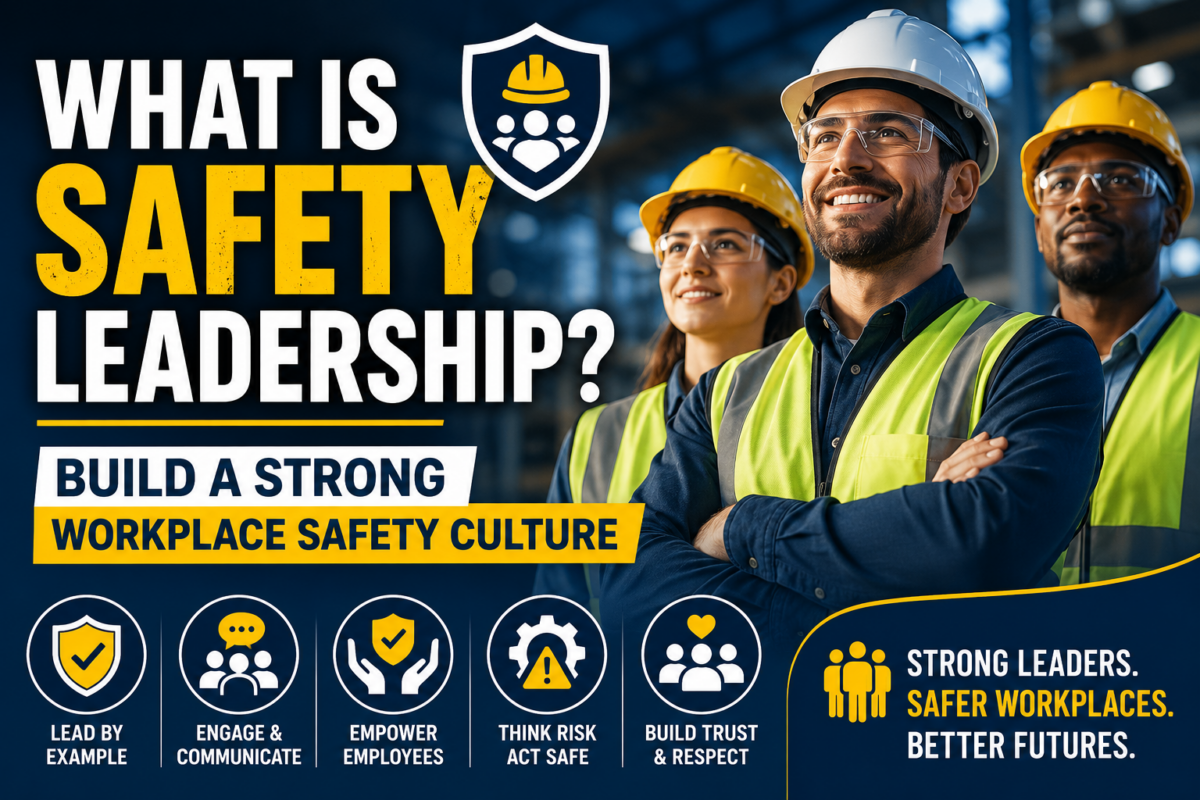
Safety leadership is the ability of leaders at every level of an organization to influence attitudes, behaviours, and decisions that prioritize workplace safety. Rather than simply enforcing rules, safety leaders lead by example, communicate openly, build trust, and encourage employees to actively participate in creating a safer work environment.
Unlike traditional management, which often focuses on procedures and compliance, safety leadership focuses on people. It recognizes that workplace safety is driven by behaviours, communication, accountability, and continuous improvement.
Effective safety leaders don’t simply ask employees to work safely—they demonstrate safe behaviours themselves. They encourage open discussions about risks, welcome feedback, investigate incidents without assigning blame, and empower employees to stop unsafe work when necessary.
Key Principles of Safety Leadership
Successful safety leadership is built on several core principles:
- Lead by example by consistently demonstrating safe work practices.
- Communicate openly so employees feel comfortable reporting hazards and near misses.
- Build trust by listening to workers and acting on safety concerns.
- Encourage participation by involving employees in risk assessments and safety improvements.
- Promote continuous learning through regular training, coaching, and feedback.
- Recognize positive behaviours to reinforce a proactive safety culture.
When these principles become part of everyday operations, safety evolves from a compliance requirement into a shared organizational value.
Why Is Safety Leadership Important?
Many organizations believe that complying with regulations is enough to create a safe workplace. While compliance provides an essential foundation, it represents only the minimum standard required by law.
A strong safety culture depends on leadership.
Research consistently shows that organizations with effective safety leaders experience fewer workplace incidents, higher employee engagement, improved communication, and stronger operational performance. Employees are more likely to follow procedures, report hazards, and participate in safety initiatives when they see their leaders actively demonstrating a commitment to safety.
Safety leadership also plays a critical role in preventing incidents before they occur. Leaders who conduct regular workplace observations, encourage open conversations, and respond quickly to potential hazards create an environment where risks are identified and controlled early.
Benefits of Strong Safety Leadership
Organizations that invest in leadership development often experience:
- Reduced workplace injuries and incidents
- Stronger safety culture across all departments
- Better employee engagement and morale
- Increased trust between management and workers
- Improved communication and teamwork
- Higher reporting of hazards and near misses
- Better compliance with occupational safety regulations
- Improved operational efficiency and productivity
- Reduced costs associated with accidents and downtime
- Greater organizational resilience during periods of change
Perhaps most importantly, strong safety leadership creates workplaces where employees feel valued, respected, and empowered to contribute to a safer working environment.
As modern workplaces continue to evolve, leadership is becoming one of the most significant factors influencing long-term business success. Organizations that develop effective safety leaders today will be better prepared to manage future workplace challenges and build sustainable safety cultures for years to come.
7 Characteristics of Effective Safety Leaders
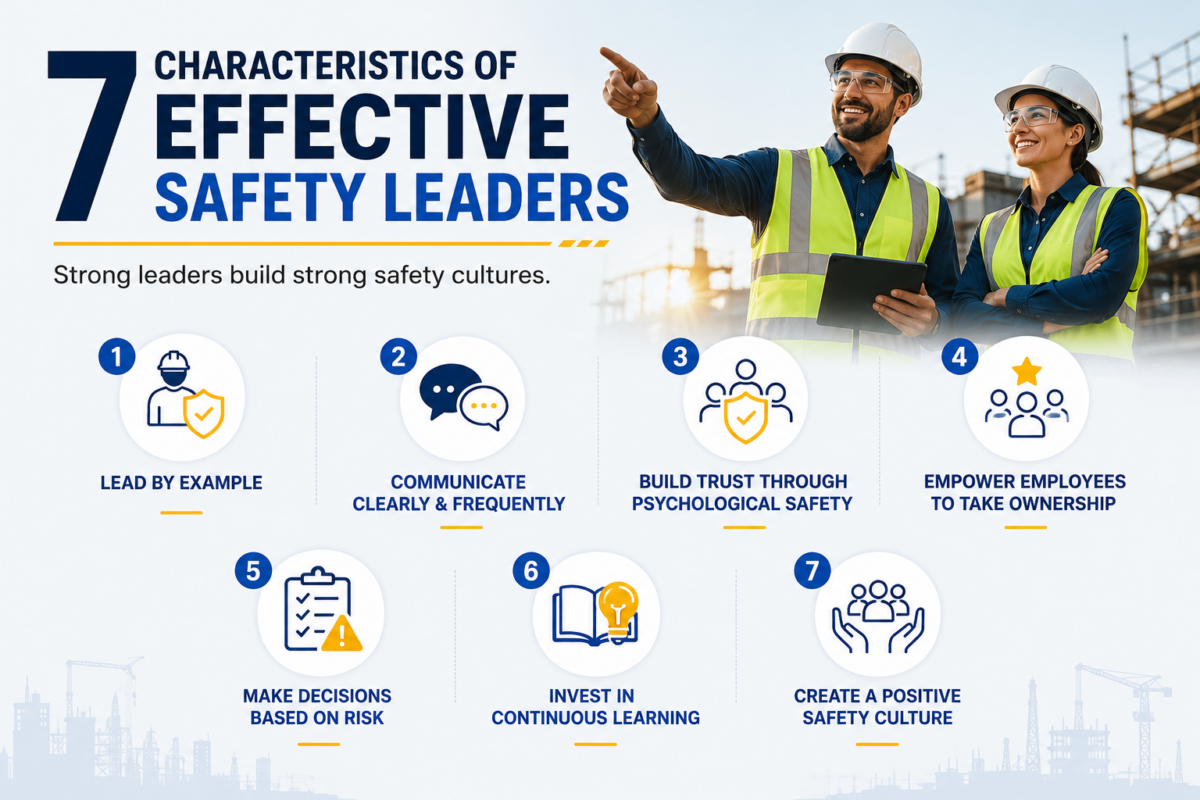
Strong safety leadership is not defined by job title or seniority. It is demonstrated through everyday actions, decisions, and interactions with employees. The following characteristics are commonly found in organizations with mature safety cultures.
1. Lead by Example
Employees naturally observe and follow the behaviour of their leaders. Leaders who consistently wear the correct PPE, follow safety procedures, and comply with workplace rules demonstrate that safety applies to everyone, regardless of position.
When leaders prioritize safety in their own actions, employees are more likely to adopt the same behaviours.
2. Communicate Clearly and Frequently
Effective communication is one of the most important leadership skills in workplace safety.
Great safety leaders:
- Share safety expectations clearly.
- Conduct regular toolbox talks.
- Encourage two-way communication.
- Listen actively to employee concerns.
- Provide constructive feedback.
Open communication helps identify hazards early and builds trust across the organization.
3. Build Trust Through Psychological Safety
Employees should feel comfortable reporting hazards, unsafe conditions, and near misses without fear of blame or punishment.
Creating psychological safety encourages workers to speak up before incidents occur. Organizations with open reporting cultures often identify risks earlier and continuously improve their safety performance.
4. Empower Employees to Take Ownership
Safety is everyone’s responsibility—not just the safety department’s.
Effective leaders involve employees in:
- Hazard identification
- Risk assessments
- Safety inspections
- Incident investigations
- Continuous improvement initiatives
When employees are empowered to contribute, they become active participants in maintaining a safe workplace rather than passive followers of safety rules.
5. Make Decisions Based on Risk
Every operational decision has the potential to affect workplace safety.
Strong safety leaders consider:
- Potential hazards
- Human factors
- Operational impacts
- Employee well-being
- Long-term consequences
By integrating risk-based thinking into daily operations, leaders can prevent incidents before they happen instead of reacting afterward.
6. Invest in Continuous Learning
Workplace risks evolve as industries adopt new technologies, regulations, and work practices.
Effective leaders promote continuous learning through:
- Safety leadership training
- Skills development
- Lessons learned from incidents
- Industry best practices
- Regular safety workshops
Organizations that continuously develop their leaders are better prepared for future workplace challenges.
7. Create a Positive Safety Culture
Perhaps the most important responsibility of a safety leader is creating a workplace where safety becomes a shared value rather than a mandatory requirement.
A positive safety culture is built when leaders consistently:
- Recognize safe behaviours.
- Celebrate safety achievements.
- Encourage teamwork.
- Demonstrate accountability.
- Continuously improve workplace conditions.
Over time, these actions create a culture where employees instinctively make safer decisions and look out for one another.
Examples of Safety Leadership in the Workplace
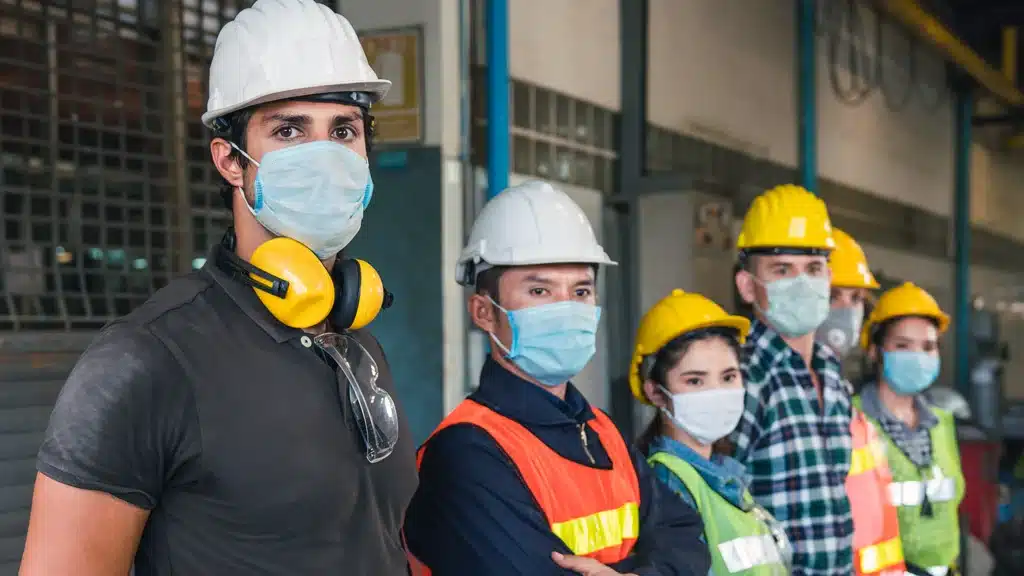
Safety leadership can be demonstrated through simple yet impactful daily actions. Here are a few examples:
Construction Industry
A site manager begins every shift with a toolbox meeting, discusses the day’s high-risk activities, verifies that workers are wearing the correct PPE, and encourages everyone to raise safety concerns before work begins.
Manufacturing
A production supervisor notices an employee bypassing a machine guard. Instead of immediately issuing a warning, the supervisor investigates why the behaviour occurred, provides coaching, and works with the team to eliminate the root cause.
Warehouse and Logistics
A warehouse manager encourages workers to report near misses involving forklifts and implements improved traffic management based on employee feedback, reducing the likelihood of future incidents.
Office and Corporate Environment
A department manager recognizes signs of employee fatigue and work-related stress, adjusts workloads where necessary, and promotes mental well-being as part of the organization’s overall safety strategy.
These examples show that effective safety leadership is not limited to major decisions. Small, consistent actions taken every day can significantly influence workplace safety culture and employee behaviour.
How to Strengthen Safety Leadership in Your Organization
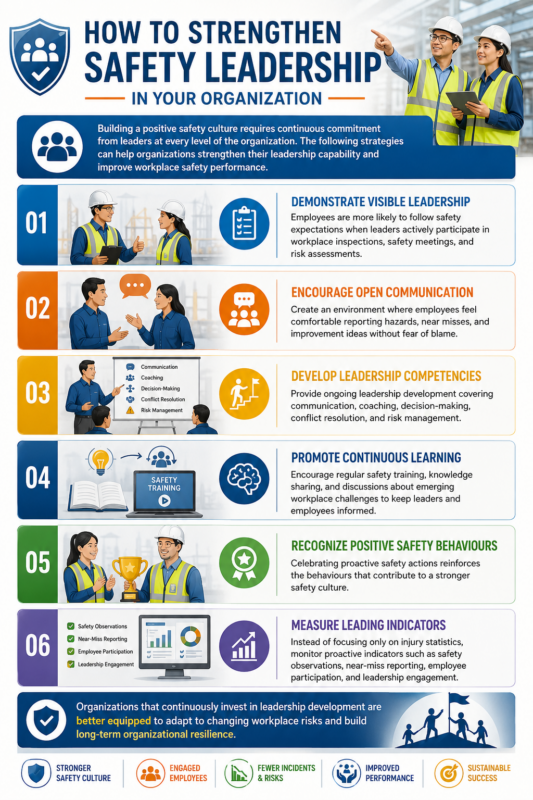
Building a positive safety culture requires continuous commitment from leaders at every level of the organization. The following strategies can help organizations strengthen their leadership capability and improve workplace safety performance.
Demonstrate Visible Leadership
Employees are more likely to follow safety expectations when leaders actively participate in workplace inspections, safety meetings, and risk assessments.
Encourage Open Communication
Create an environment where employees feel comfortable reporting hazards, near misses, and improvement ideas without fear of blame.
Develop Leadership Competencies
Provide ongoing leadership development covering communication, coaching, decision-making, conflict resolution, and risk management.
Promote Continuous Learning
Encourage regular safety training, knowledge sharing, and discussions about emerging workplace challenges to keep leaders and employees informed.
Recognize Positive Safety Behaviours
Celebrating proactive safety actions reinforces the behaviours that contribute to a stronger safety culture.
Measure Leading Indicators
Instead of focusing only on injury statistics, monitor proactive indicators such as safety observations, near-miss reporting, employee participation, and leadership engagement.
Organizations that continuously invest in leadership development are better equipped to adapt to changing workplace risks and build long-term organizational resilience.
Learn More at the SAFETY360 Leadership in EHS Event

Developing effective safety leadership requires more than understanding regulations—it requires practical knowledge, meaningful discussions, and the ability to adapt to emerging workplace challenges.
The SAFETY360 Leadership in EHS event is designed to help organizations explore how leadership shapes workplace safety culture, strengthens employee engagement, and supports sustainable business performance.
During the event, participants will gain valuable insights into topics including:
- Building a positive workplace safety culture
- Leadership communication and trust
- Human factors in workplace safety
- Mental well-being and employee resilience
- Managing psychosocial risks
- The growing role of AI in EHS
- ESG expectations and sustainable leadership
- Preparing organizations for the future of workplace safety
Whether you are an EHS Manager, Safety Officer, HR professional, Factory Manager, Operations Leader, or business owner, Safety360 provides an opportunity to learn from industry experts, exchange ideas with peers, and discover practical strategies that can be implemented within your organization.
If your organization is committed to strengthening its safety culture and preparing for the future of EHS, we invite you to join the upcoming SAFETY360 Leadership in EHS event. Stay connected with SAFETYWARE for the latest event updates, speaker announcements, and registration details.
Conclusion
Creating a safer workplace requires more than compliance, inspections, or written procedures. It requires leaders who inspire safe behaviours, encourage open communication, and build a culture where every employee takes ownership of workplace safety.
As workplaces continue to evolve, organizations must prepare for emerging challenges such as mental well-being, psychosocial risks, human factors, artificial intelligence in EHS, and growing ESG expectations. Developing strong safety leadership today will help organizations become more resilient, improve employee engagement, and reduce workplace risks in the future.
At the same time, effective leadership must be supported by the right personal protective equipment. When organizations combine strong leadership with certified, task-appropriate PPE, they create multiple layers of protection that safeguard both people and business performance.
Whether you are strengthening an existing safety program or beginning your organization’s safety culture journey, investing in leadership development is one of the most valuable steps you can take toward achieving a safer, healthier, and more sustainable workplace.
Frequently Asked Questions
1. What is safety leadership?
Safety leadership is the ability to influence employees to prioritize workplace safety through positive behaviours, effective communication, and leading by example. It focuses on building a strong safety culture rather than simply enforcing compliance.
2. Why is safety leadership important?
Effective safety leadership helps reduce workplace incidents, improve employee engagement, strengthen communication, encourage hazard reporting, and create a positive safety culture that supports long-term business success.
3. What is the difference between safety leadership and safety management?
Safety management focuses on policies, procedures, and regulatory compliance, while safety leadership focuses on influencing people, building trust, and encouraging safe behaviours throughout the organization. Both are essential for an effective workplace safety program.
4. How can organizations improve safety leadership?
Organizations can strengthen safety leadership by providing leadership training, encouraging open communication, involving employees in safety initiatives, recognizing positive safety behaviours, conducting regular workplace observations, and promoting continuous learning.
5. What are the qualities of a good safety leader?
A good safety leader leads by example, communicates clearly, builds trust, empowers employees, makes informed decisions, promotes continuous improvement, and demonstrates a genuine commitment to protecting people.
6. Why is PPE still important if an organization has strong safety leadership?
Safety leadership helps prevent unsafe behaviours, while PPE provides the final layer of protection against workplace hazards. Combining both significantly reduces the likelihood and severity of workplace injuries.
Call to Action
Build Stronger Safety Leaders. Create Safer Workplaces.
Developing a positive safety culture starts with informed and committed leaders. If your organization is looking to strengthen its leadership capability, improve workplace safety performance, and prepare for future EHS challenges, SAFETY360 Leadership in EHS is the ideal platform to begin.
Join industry experts and safety professionals as they share practical insights on safety leadership, human factors, mental well-being, psychosocial risks, AI in EHS, ESG expectations, and strategies for building resilient organizations.
Alongside leadership development, SAFETYWARE also provides a comprehensive range of certified PPE solutions to help organizations protect their workforce across every industry.
Explore our PPE solutions:
https://safetyware.com/product-category/personal-protective-equipment-ppe/
Stay connected with SAFETYWARE for upcoming Safety360 event announcements, registration details, and future workplace safety resources.
📞 Need More Information?
Looking for reliable Safety related Training for your workplace?
Contact to Safetyware EHS Consultancy at
👉Safetyware EHS Consultancy
We provide the most comprehensive safety solutions in Malaysia, combining training, assessment, and consultancy to help organizations build safer, healthier, and more compliant workplaces.
If you need a quotation, feel free to contact us at:
📩 Email: [email protected]
📞 Tel: WhatsApp Us