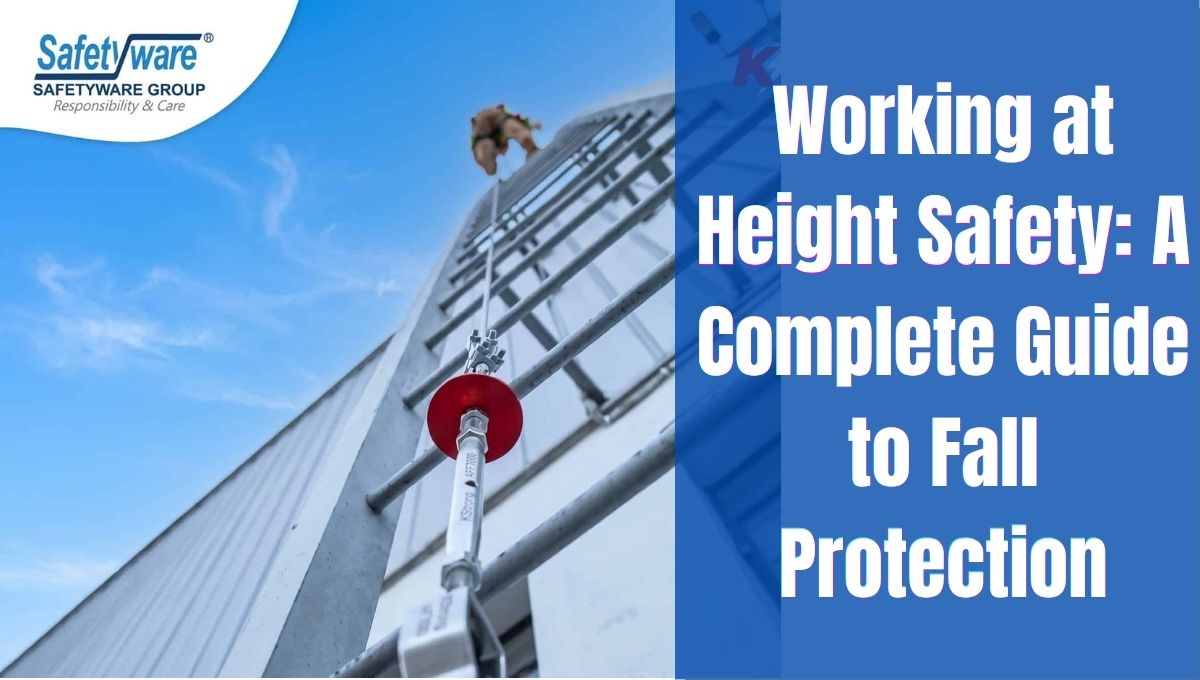
Falls from height remain one of the leading causes of serious workplace injuries and fatalities worldwide. Whether working on construction sites, building maintenance, roofing, telecommunications, or industrial facilities, employees who perform tasks above ground level face significant risks every day.
Implementing an effective fall protection system is one of the most important steps employers can take to protect workers and comply with workplace safety requirements. From selecting the right safety harness and shock-absorbing lanyard to providing proper training and equipment inspections, every component plays a critical role in preventing falls.
This guide explains the fundamentals of working at height, the different types of fall protection equipment, and how organizations can create safer workplaces.
What Is Fall Protection?
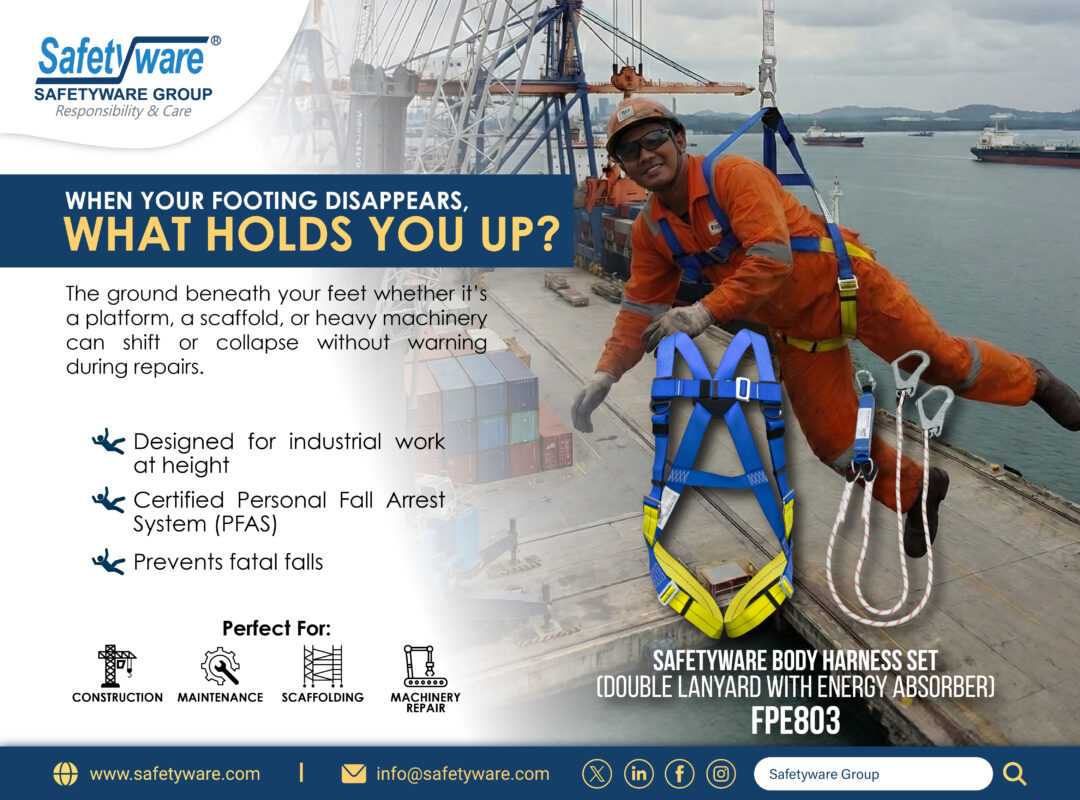
Fall protection refers to a combination of equipment, procedures, and safe work practices designed to prevent workers from falling or to minimize injury if a fall occurs.
A complete fall protection system includes:
- Risk assessment
- Safe work procedures
- Proper anchor points
- Certified fall protection equipment
- Employee training
- Equipment inspection and maintenance
Together, these measures help reduce the likelihood and severity of fall-related incidents.
Why Working at Height Is So Dangerous
Working at height presents unique hazards that can quickly lead to serious injuries if proper precautions are not taken.
Common risks include:
- Falls from roofs and scaffolding
- Falling through roof openings
- Ladder accidents
- Slips and trips near edges
- Unstable working platforms
- Incorrect use of fall protection equipment
Even a fall from a relatively low height can result in severe injuries. This is why planning, training, and the correct PPE are essential.
Essential Fall Protection Equipment
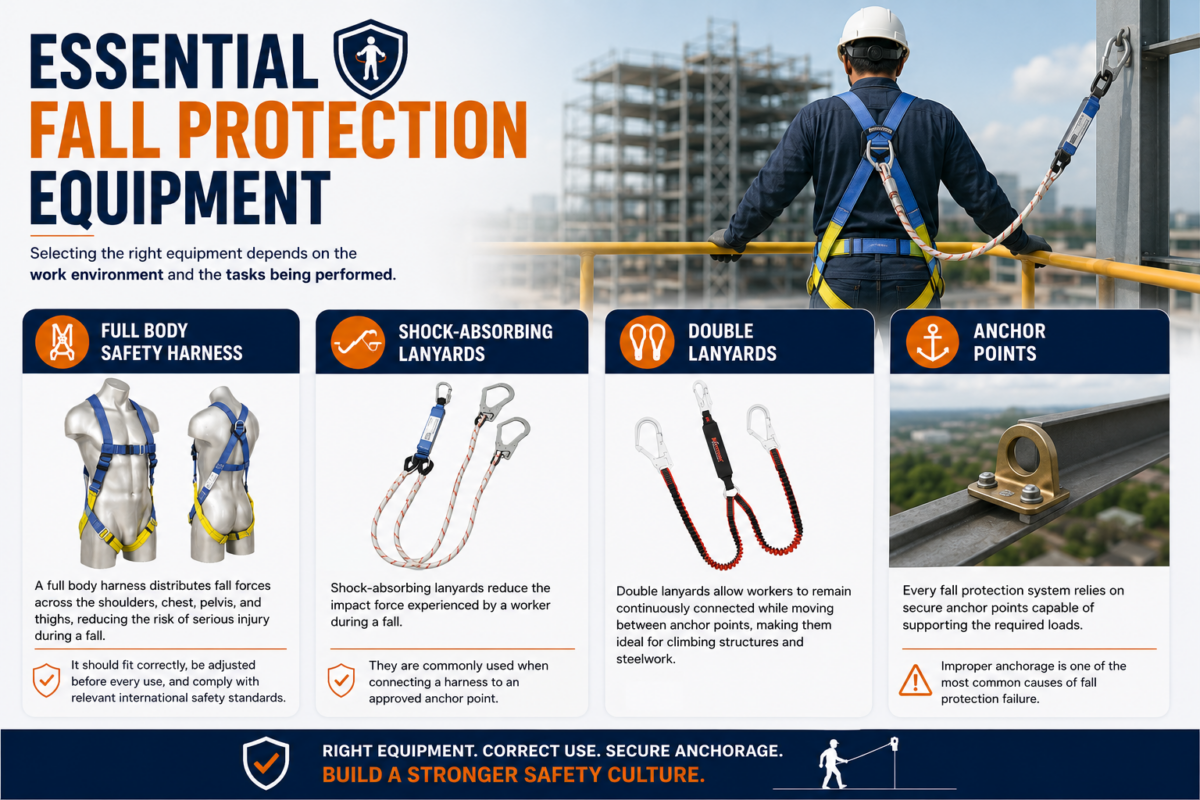
Selecting the right equipment depends on the work environment and the tasks being performed.
Full Body Safety Harness
A full body harness distributes fall forces across the shoulders, chest, pelvis, and thighs, reducing the risk of serious injury during a fall.
It should fit correctly, be adjusted before every use, and comply with relevant international safety standards.
Shock-Absorbing Lanyards
Shock-absorbing lanyards reduce the impact force experienced by a worker during a fall.
They are commonly used when connecting a harness to an approved anchor point.
Double Lanyards
Double lanyards allow workers to remain continuously connected while moving between anchor points, making them ideal for climbing structures and steelwork.
Anchor Points
Every fall protection system relies on secure anchor points capable of supporting the required loads.
Improper anchorage is one of the most common causes of fall protection failure.
How to Choose the Right Fall Protection Equipment
Before selecting equipment, employers should conduct a workplace risk assessment.
Consider the following:
- Working height
- Available anchor points
- Type of work performed
- Worker movement
- Potential fall distance
- Environmental conditions
- Equipment compatibility
Choosing the right combination of harness, lanyard, connectors, and anchorage helps create a complete and effective fall protection system.
Fall Protection Inspection Checklist
Workers should inspect their equipment before every use.
Check for:
- Cuts or frayed webbing
- Damaged stitching
- Broken buckles
- Corrosion
- Cracks or deformation
- Missing labels
- Signs of previous fall impact
Any equipment that has arrested a fall should be removed from service immediately unless recertified according to the manufacturer’s recommendations.
Best Practices for Working at Height
Organizations can reduce workplace risks by following these best practices:
- Conduct a risk assessment before starting work.
- Select the correct fall protection equipment.
- Inspect equipment before every use.
- Ensure anchor points are properly installed.
- Train workers regularly.
- Supervise high-risk work activities.
- Never modify certified PPE.
- Replace damaged equipment immediately.
Creating a proactive safety culture is just as important as providing quality PPE.
Visit SAFETYWARE at ARCHIDEX 2026
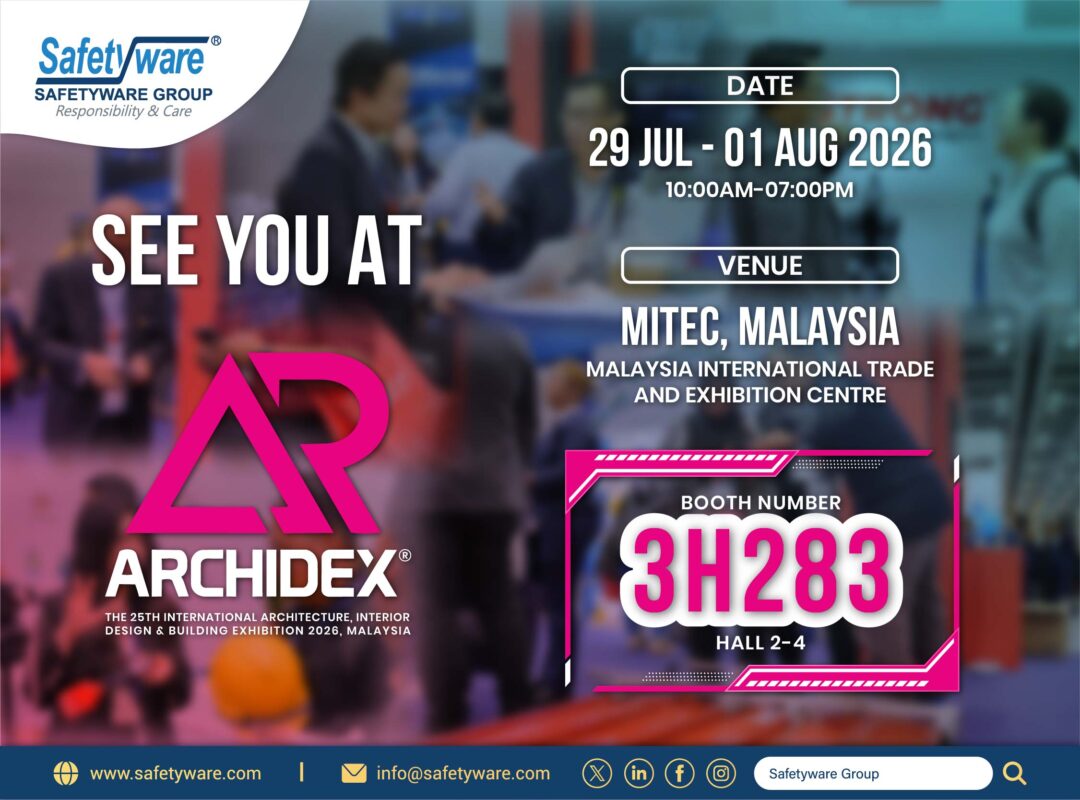
If you’re planning to attend ARCHIDEX 2026, we invite you to visit SAFETYWARE at Hall 2–4, Booth 3H283.
Our team will be showcasing a comprehensive range of fall protection solutions, including:
- Full Body Safety Harnesses
- Shock Absorbing Lanyards
- Double Lanyards
- Anchorage Solutions
- Height Safety Accessories
Whether you’re an architect, contractor, safety officer, consultant, or project manager, our specialists will be available to discuss practical working-at-height solutions and recommend equipment suitable for your workplace.
We look forward to meeting you at MITEC Kuala Lumpur from 29 July to 1 August 2026.
Event Detail
- Event: ARCHIDEX 2026 – The 25th International Architecture, Interior Design & Building Exhibition
- Date: 29 July – 1 August 2026
- Venue: Malaysia International Trade and Exhibition Centre
- Booth: Hall 2–4, Booth 3H283
- Official Website: ARCHIDEX 2026
Why Choose SAFETYWARE Fall Protection Solutions?

Working safely at height requires more than simply wearing a harness. It requires reliable equipment, proper training, and expert guidance.
SAFETYWARE offers a range of fall protection equipment designed to support construction, industrial, utilities, maintenance, and infrastructure projects. Our solutions are selected to help organizations improve workplace safety while supporting compliance with international safety standards.
Combined with our expertise in workplace safety and comprehensive PPE range, SAFETYWARE helps businesses create safer working environments for employees working at height.
Frequently Asked Questions
What is fall protection?
Fall protection is a system of equipment and safe work practices that prevents workers from falling or reduces injury if a fall occurs.
When is a safety harness required?
A safety harness should be used whenever workers are exposed to fall hazards and other collective protection measures cannot adequately eliminate the risk.
How often should a safety harness be inspected?
A visual inspection should be carried out before every use, while periodic inspections should be performed by a competent person according to the manufacturer’s recommendations and company procedures.
What is the difference between a harness and a lanyard?
A safety harness is worn by the worker to distribute fall forces, while a lanyard connects the harness to a secure anchor point and may include an energy absorber to reduce impact during a fall.
Why is fall protection important?
Effective fall protection helps prevent serious injuries and fatalities, improves workplace safety, supports legal compliance, and protects both workers and employers from the consequences of fall-related incidents.
Safetyware Group provide full range of PPE support!
Explore more industrial PPE solutions here:
Comprehensive Workplace Safety Equipment, PPE & Signage – Safetyware Group
wear wisely, work Safely – with Safetyware! ✨
If you need any support, feel free to contact us at:
📩 Email: [email protected]
📞 Tel: WhatsApp Us