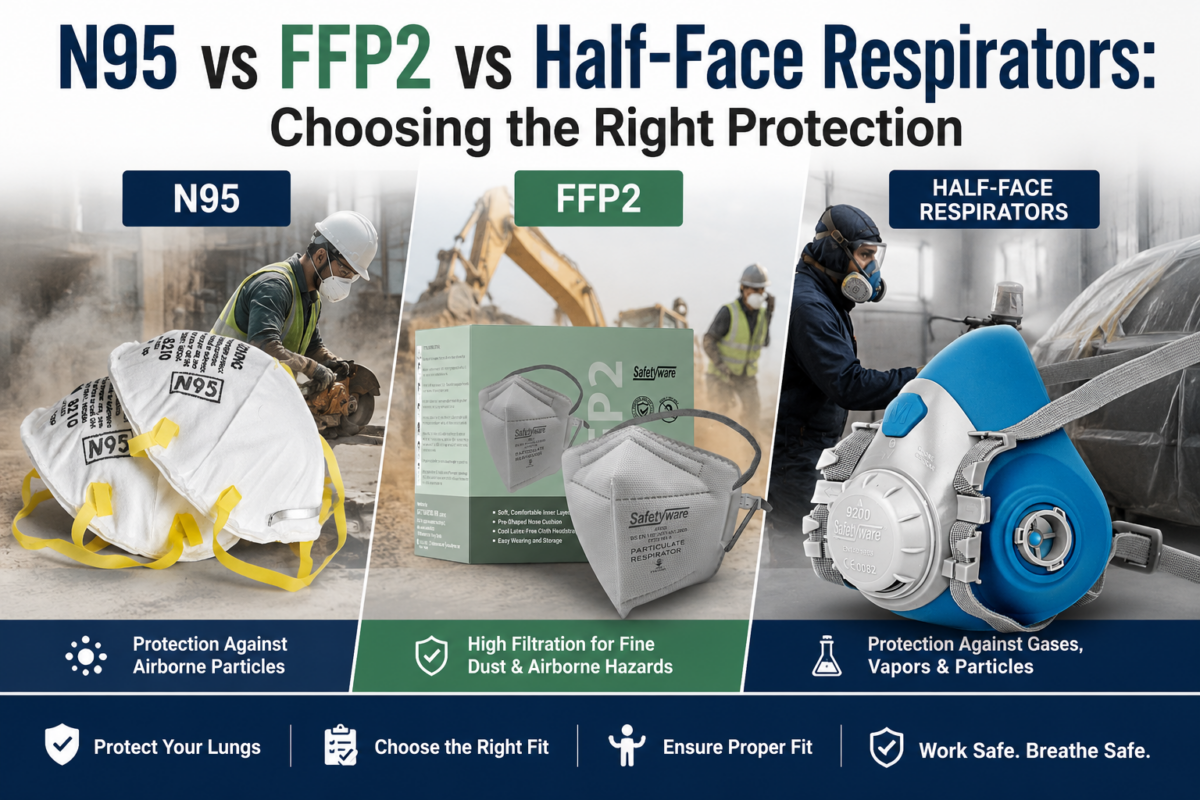
Respiratory hazards exist in many industries, from construction and manufacturing to healthcare and chemical handling. Dust, fumes, mists, airborne particles, and hazardous vapours can all pose serious health risks when inhaled. Choosing the right respirator is essential for protecting workers. However, many people are unsure whether an N95 respirator, FFP2 mask, or half-face respirator is the better option.
Although all three are designed for protection, they differ in certification standards, filtration efficiency, reusable design, and the types of hazards they are intended to protect against. This guide explains the key differences between N95, FFP2, and half-face respirators to help you choose the most suitable respiratory protection for your workplace.
Why Respiratory Protection Matters
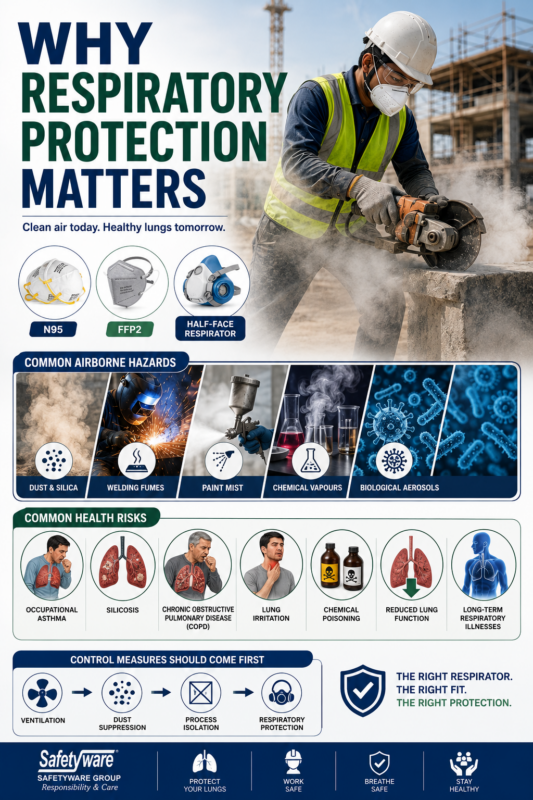
Many airborne hazards cannot be seen with the naked eye. Fine dust, silica particles, welding fumes, paint mist, biological aerosols, and chemical vapours may appear harmless, but prolonged exposure can lead to serious respiratory diseases. Unlike visible debris that settles quickly, microscopic particles can remain suspended in the air for hours and be inhaled deep into the lungs.
Common health risks include:
- Occupational asthma
- Silicosis
- Chronic obstructive pulmonary disease (COPD)
- Lung irritation
- Chemical poisoning
- Reduced lung function
- Long-term illnesses
According to safety guidelines, respiratory protective equipment (RPE) should be selected only after implementing other control measures such as ventilation, dust suppression, or process isolation. When these controls cannot adequately reduce exposure, workers must wear a protective mask that matches the specific airborne hazard.
Understanding Respirator Standards
One of the biggest sources of confusion is that respirators are recognized under different international standards. Although many products appear similar, their performance is tested using different testing methods and regulatory requirements.
NIOSH (United States)
The National Institute for Occupational Safety and Health (NIOSH) certifies respirators used primarily in the United States. NIOSH classifies particulate filters based on their resistance to oil and filtration efficiency.
The three filter series are:
| Series | Oil Resistance | Typical Applications |
| N | Not resistant to oil | General industrial dust, woodworking, healthcare |
| R | Somewhat resistant to oil | Limited exposure to oil-based aerosols |
| P | Oil-proof | Industrial environments with oily aerosols |
EN149 (Europe)
In Europe, disposable filtering facepiece respirators are certified under EN149. Instead of the NIOSH classification system, EN149 uses three protection classes:
- FFP1 – minimum 80% filtration
- FFP2 – minimum 94% filtration
- FFP3 – minimum 99% filtration
FFP2 mask are often compared with N95 because both provide a similar level of protection against airborne particles, although they are tested using different certification standards.
Unlike NIOSH, EN149 also evaluates additional factors such as total inward leakage, ensuring that both the filter material and fit contribute to overall performance.
What is an N95 Respirator?
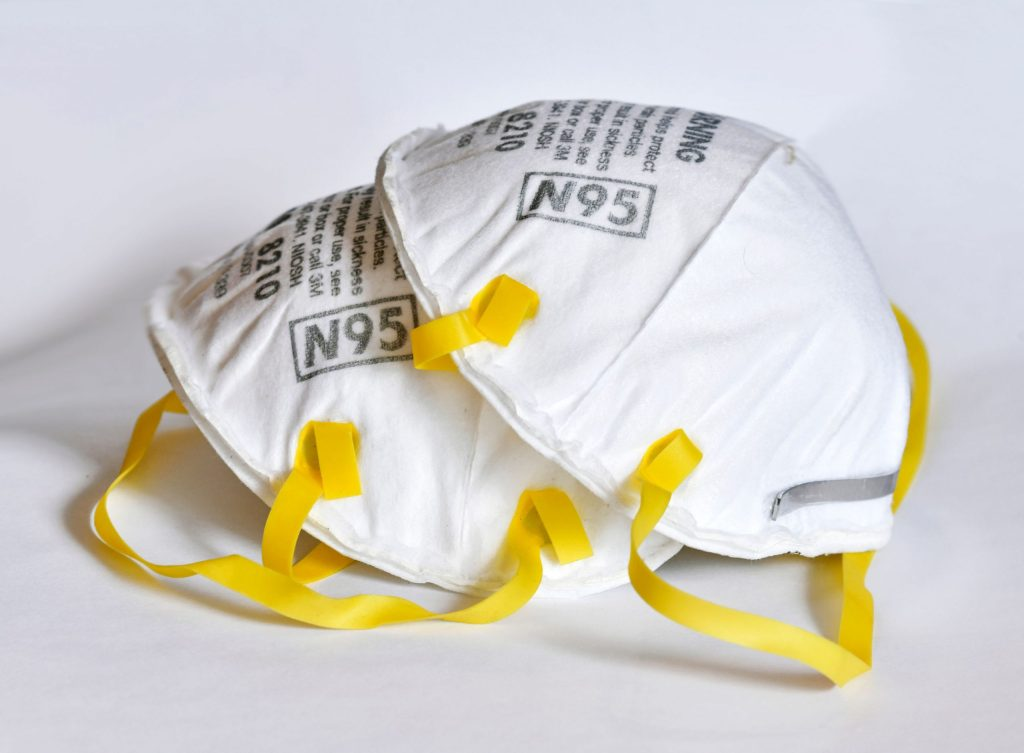
An N95 is a disposable mask certified by the U.S. National Institute for Occupational Safety and Health (NIOSH). The “95” means it filters at least 95% of airborne particles when properly fitted.
N95 are commonly used in:
- Construction
- Healthcare
- Manufacturing
- Warehouses
- Woodworking
- Mining
Advantages:
- Lightweight
- Comfortable for daily use
- High filtration efficiency
- No maintenance required
- Affordable
Limitations:
- Disposable
- Cannot filter organic vapours or gases
- Requires a proper face seal
What is an FFP2 Respirator?
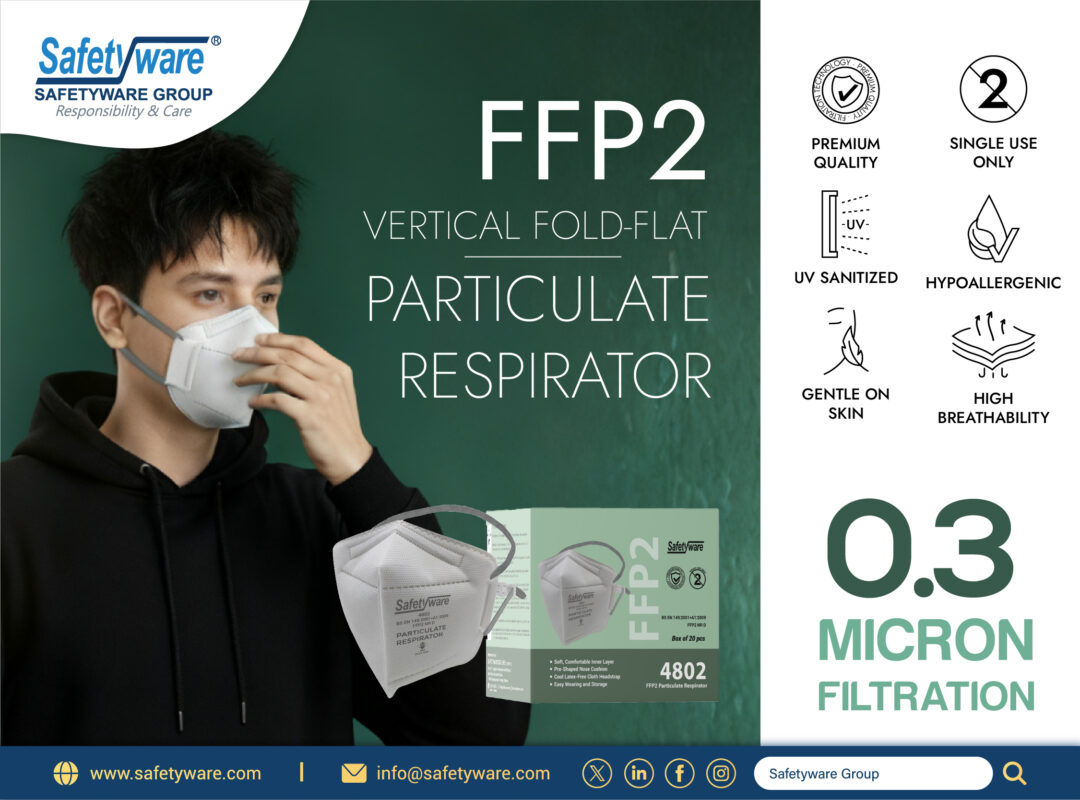
FFP2 stands for Filtering Face Piece Class 2, is under the European EN149 standard. Like the N95, it is a mask designed to protect against airborne particles. FFP2 masks have a minimum filtration efficiency of approximately 94%.
They are widely used in:
- Pharmaceutical industries
- Construction
- Manufacturing
- Agriculture
- Healthcare
- General industrial work
Advantages:
- High particle filtration
- Lightweight
- Comfortable
- European recognized
- Widely accepted
Limitations:
- Disposable
- Not suitable for gases or chemical vapours
- Fit is critical for effective protection
What is a Half-Face Respirator?
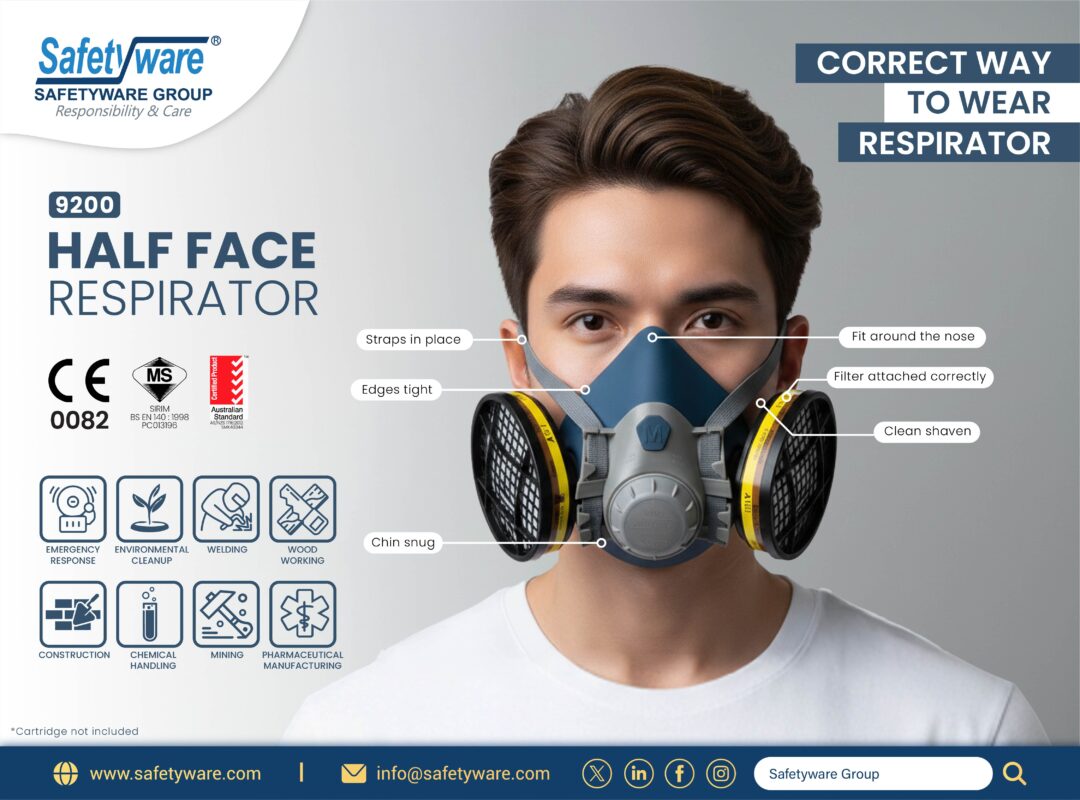
Unlike disposable mask, a half-face respirator is a reusable respirator that uses replaceable filter cartridges.
Instead of filtering only dust, it can protect against:
- Fine particles
- Chemical vapours
- Organic vapours
- Acid gases
- Certain toxic fumes (depending on the filter selected)
Half-face respirators are commonly used in:
- Spray painting
- Chemical handling
- Laboratories
- Oil and gas
- Mining
- Metal fabrication
- Welding
- Industrial manufacturing
Advantages:
- Reusable
- Higher level of protection
- Replaceable filters
- Can protect against both particles and gases
- Cost-effective for long-term use
Limitations:
- Higher initial cost
- Requires cleaning and maintenance
- Heavier
- Must use the correct filter
N95 vs FFP2 vs Half-Face Respirators Comparison
| Feature | N95 | FFP2 | Half-Face Respirator |
| Type | Disposable | Disposable | Reusable |
| Certification | NIOSH | EN149 | Depends on filter/cartridge |
| Particle Filtration | ≥95% | ≥94% | Depends on filter (e.g., P100, P2, P3) |
| Gas Protection | No | No | Yes (with suitable cartridges) |
| Chemical Vapours | No | No | Yes |
| Maintenance | None | None | Regular cleaning required |
| Replaceable Filters | No | No | Yes |
| Best For | Dust and airborne particles | Dust and airborne particles | Dust, fumes, vapours, and gases |
How to Choose the Right Respirator
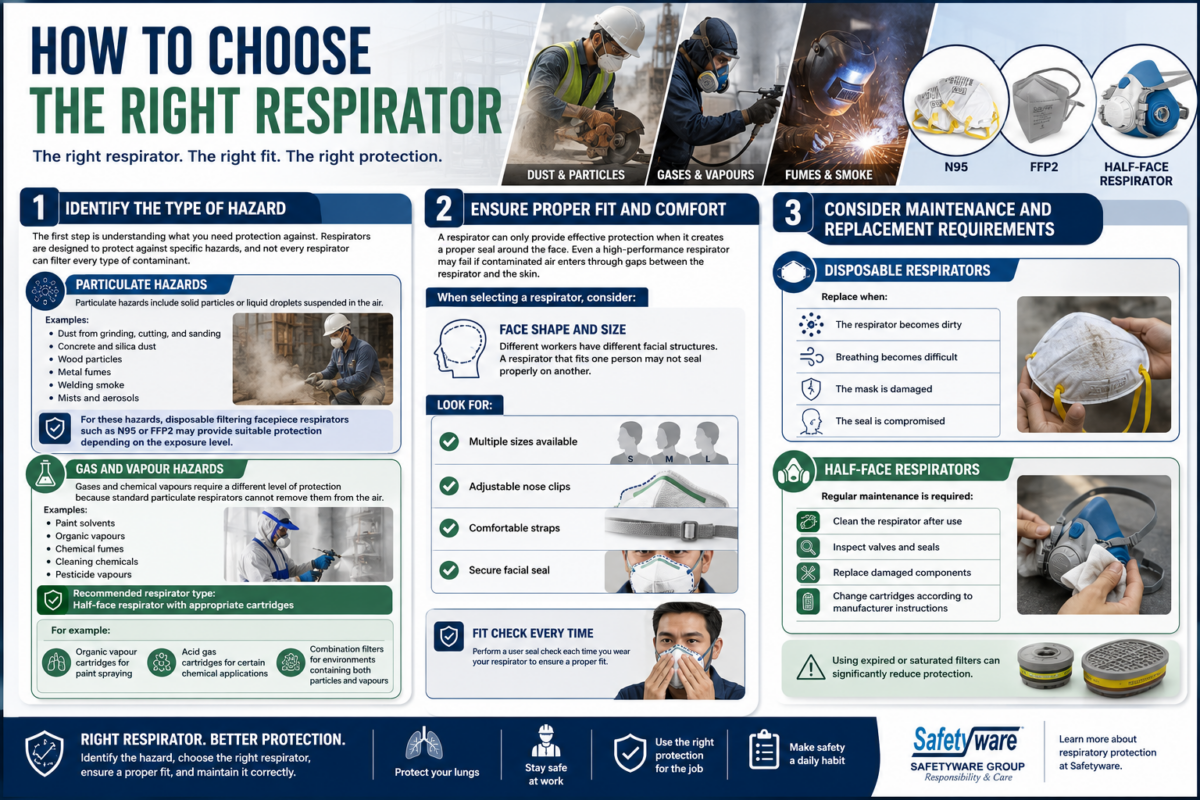
1. Identify the Type of Hazard
The first step is understanding what you need protection against. Respirators are designed to protect against specific hazards, and not every respirator can filter every type of contaminant. Particulate hazards include solid particles or liquid droplets suspended in the air.
Examples:
- Dust from grinding, cutting, and sanding
- Concrete and silica dust
- Wood particles
- Metal fumes
- Welding smoke
- Mists and aerosols
For these hazards, disposable masks such as N95 or FFP2 may provide suitable protection depending on the exposure level.
Gas and Vapour Hazards
Gases and chemical vapours require a different level of protection because standard particulate respirators cannot remove them from the air.
Examples:
- Paint solvents
- Organic vapours
- Chemical fumes
- Cleaning chemicals
- Pesticide vapours
For these environments, workers need respirators equipped with the correct chemical cartridges.
Recommended respirator type:
Half-face respirator with appropriate filter:
- Organic vapour cartridges for paint spraying
- Acid gas cartridges for certain chemical applications
- Combination filters for environments containing both particles and vapours
2. Ensure Proper Fit and Comfort
A respirator can only provide effective protection when it creates a proper seal around the face. Even a high-performance respirator may fail if contaminated air enters through gaps between the respirator and the skin.
When selecting a respirator, consider:
Face Shape and Size as different workers have different facial structures. A respirator that fits one person may not seal properly on another.
Look for:
- Multiple sizes available
- Adjustable nose clips
- Comfortable straps
- Secure facial seal
3. Consider Maintenance and Replacement Requirements
Disposable Respirators Replace when:
- The masks becomes dirty
- Breathing becomes difficult
- The mask is damaged
- The seal is compromised
Half-Face Respirators Regular maintenance is required:
- Clean after use
- Inspect valves and seals
- Replace damaged components
- Change filter according to manufacturer instructions
Using expired or soaked filters can significantly reduce protection.
Recommended Respiratory Protection from Safetyware
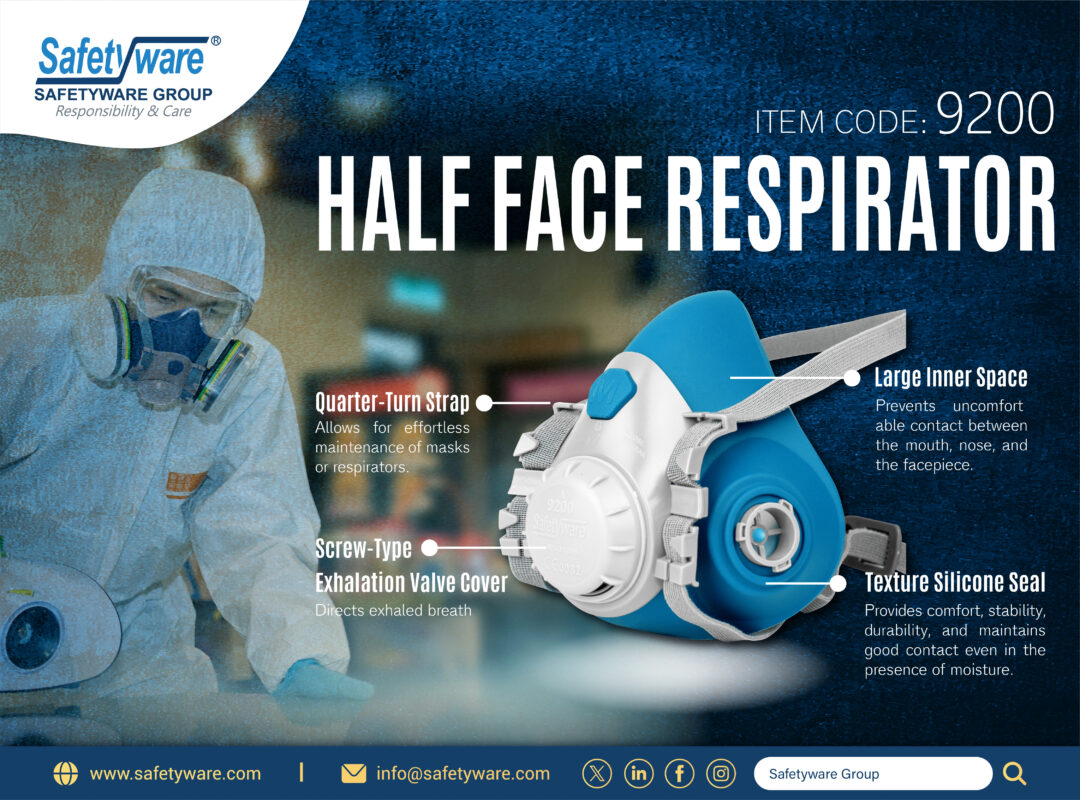
Choosing the right respirator is essential to ensure workers receive the appropriate level of protection against workplace hazards. At Safetyware, we provide a wide range of certified respiratory protection solutions designed for different industries, including construction, manufacturing, healthcare, chemical handling, and general workplace applications.
Whether your workplace requires protection against airborne particles, dust, fumes, or chemical vapours, selecting the correct respirator helps improve worker safety, comfort, and compliance.
👉 Explore more on Safetyware Respirators Catalogs
👉 Read more on “What Is the Difference Between FFP1, FFP2, and FFP3 Respirators?”
Final Thought
Choosing the right respirator requires more than selecting an N95, FFP2, or half-face respirator based on appearance or price. The correct choice depends on identifying the workplace hazard, understanding the required protection level, ensuring proper fit, and selecting the appropriate filter or cartridge.
For general airborne particle protection, N95 and FFP2 respirators are commonly used due to their lightweight design and high filtration efficiency. However, when workers face chemical vapours, gases, or complex industrial hazards, a half-face respirator with the correct cartridge provides a more suitable solution.
📞 Need More Information?
Looking for reliable head protection solutions for your workplace?
Explore SAFETYWARE’s safety shoes and workplace PPE range at
👉Safetyware Catalogs
Our safety specialists can help evaluate workplace hazards, recommend suitable safety helmets, and support compliance with Malaysia workplace safety requirements.
If you need a quotation, feel free to contact us at:
📩 Email: [email protected]
📞 Tel: WhatsApp Us