
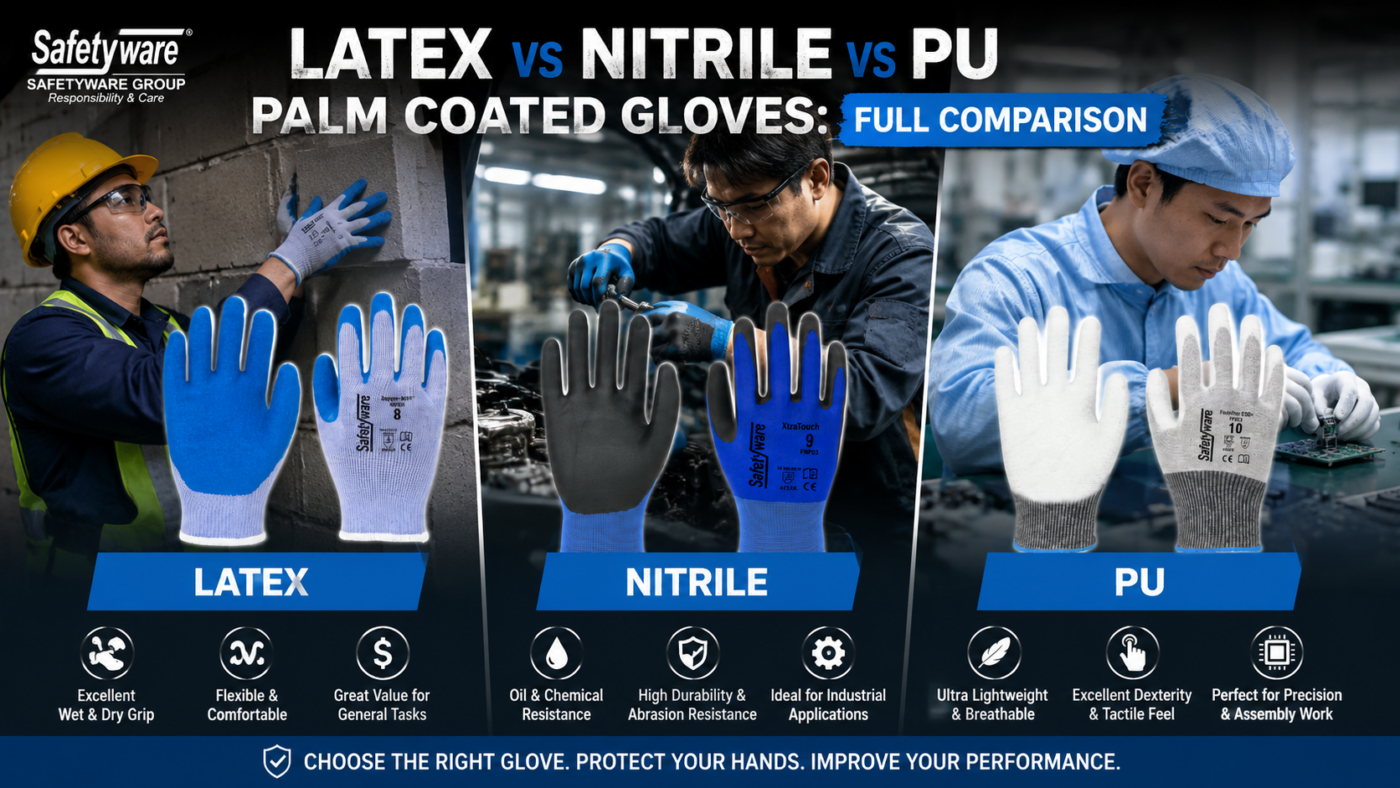
When choosing industrial hand protection, latex, nitrile, and PU palm coated gloves are among the most commonly used options. Although they may look similar, each coating offers different levels of grip, abrasion resistance, flexibility, chemical resistance, and comfort. Palm coated gloves are among the most widely used hand protection products across industries such as manufacturing, construction, warehousing, logistics, automotive, electronics, and general maintenance.
Each material offers unique advantages and is designed for different working environments. Selecting the right coating helps improve worker safety, productivity, and glove lifespan while reducing replacement costs. This guide compares latex vs nitrile vs PU palm coated gloves, explaining how each coating works, their strengths and limitations, and which industries benefit most from each type.
What Are Palm Coated Gloves?
Explain:
- Only the palm and fingers are coated.
- Back of glove remains knitted.
- Improves ventilation.
- Provides grip without sacrificing flexibility.
Common liners:
- Polyester
- Nylon
- HPPE
- Cotton
- Spandex blends
Benefits:
- Better grip
- Less sweating
- Lightweight
- Improved dexterity
- Cost-effective
Why Palm Coating Matters?
- Grip
- Durability
- Oil resistance
- Chemical resistance
- Comfort
- Flexibility
- Wear life
- Worker productivity
Example:
A warehouse worker handling dry cartons requires a different glove than a mechanic handling oily engine parts.
Types of Palm Coatings
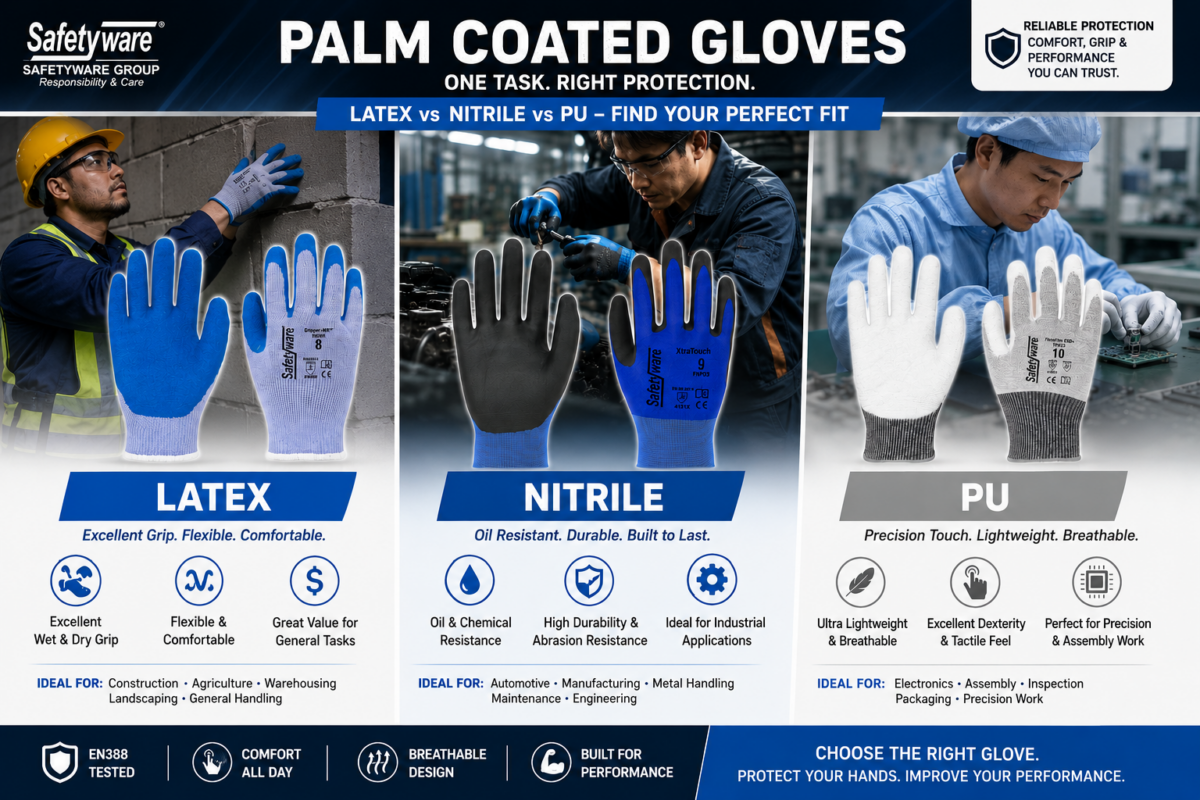
Latex Coated Gloves
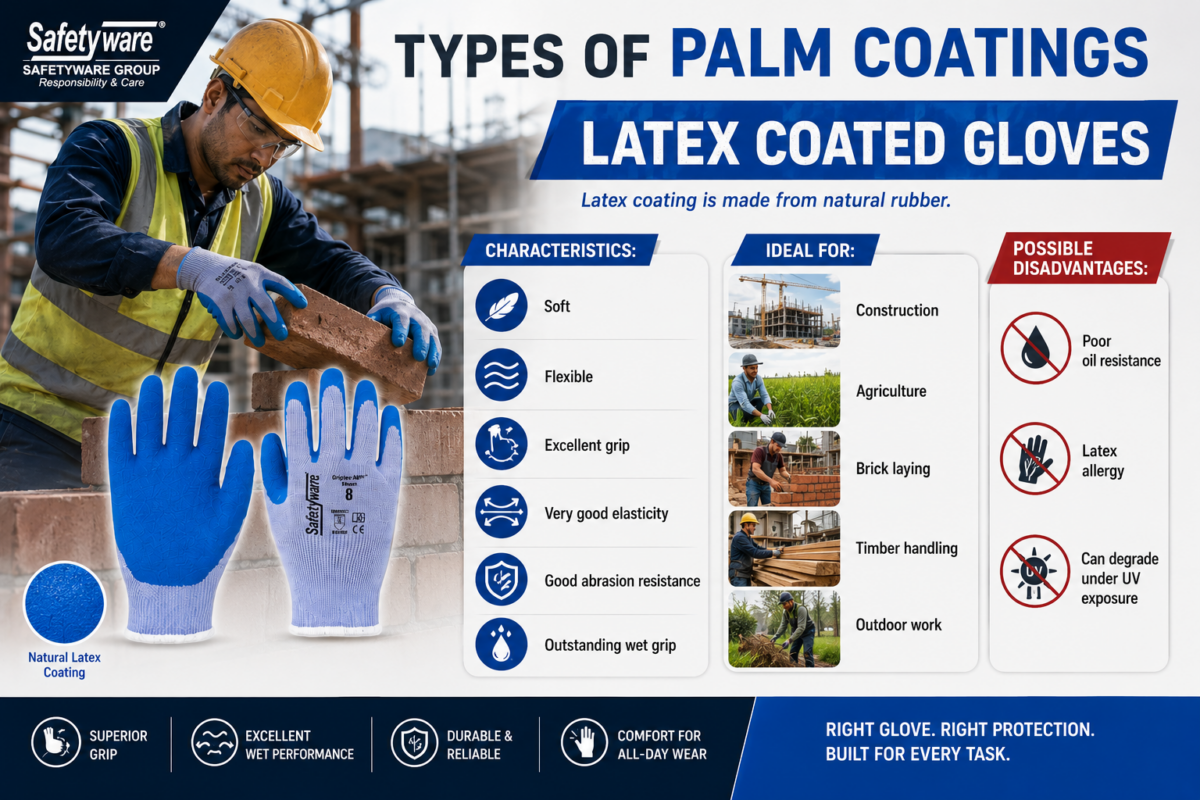
Latex coating is made from natural rubber.
Characteristics:
- Soft
- Flexible
- Excellent grip
- Very good elasticity
- Good abrasion resistance
- Outstanding wet grip
Ideal for:
- Construction
- Agriculture
- Brick laying
- Timber handling
- Outdoor work
Possible disadvantages:
- Poor oil resistance
- Latex allergy
- Can degrade under UV exposure
Nitrile Coated Gloves
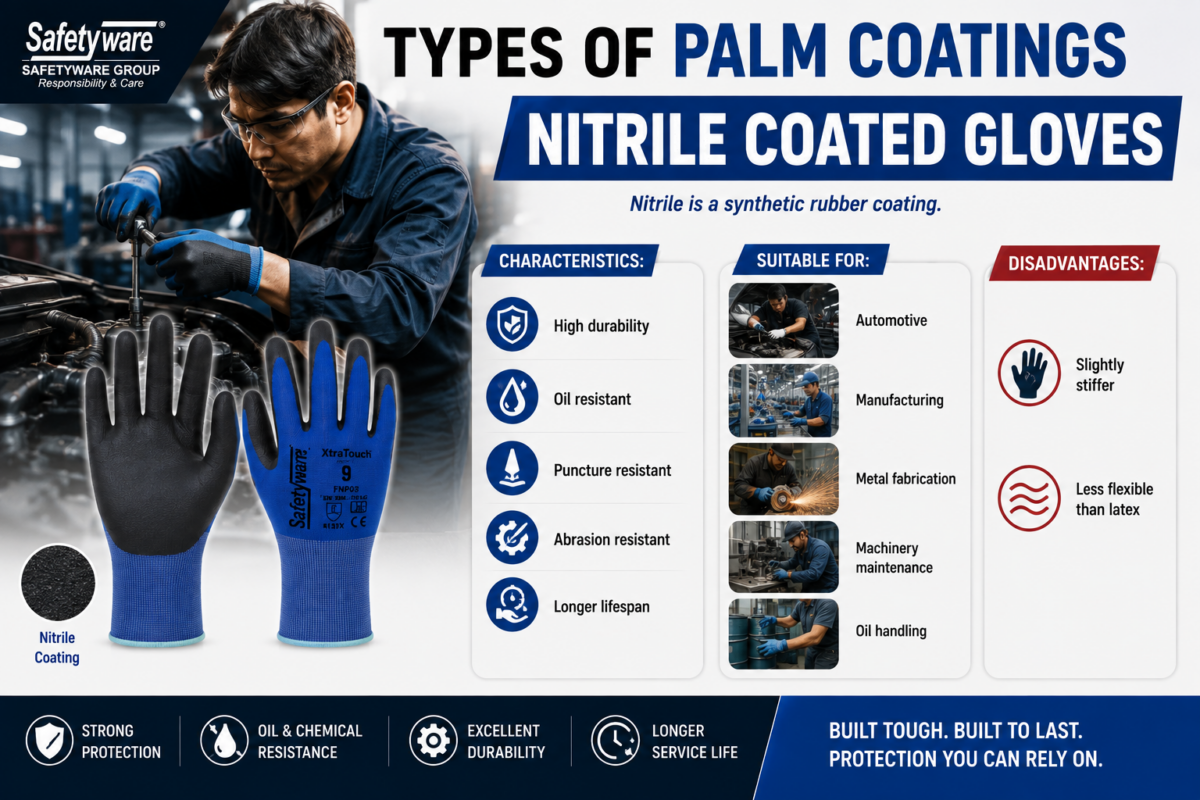
Nitrile is a synthetic rubber coating.
Characteristics:
- High durability
- Oil resistant
- Puncture resistant
- Abrasion resistant
- Longer lifespan
Suitable for:
- Automotive
- Manufacturing
- Metal fabrication
- Machinery maintenance
- Oil handling
Disadvantages:
- Slightly stiffer
- Less flexible than latex
PU (Polyurethane) Coated Gloves
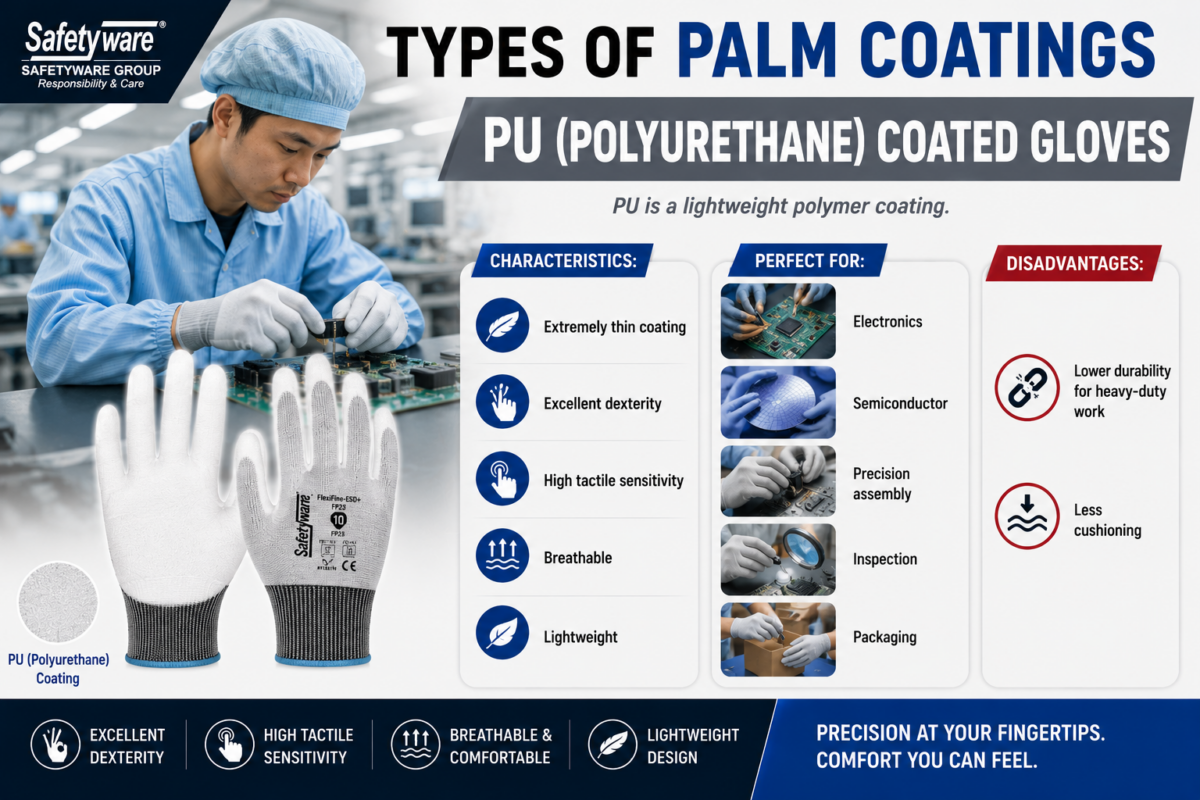
PU is a lightweight polymer coating.
Characteristics:
- Extremely thin coating
- Excellent dexterity
- High tactile sensitivity
- Breathable
- Lightweight
Perfect for:
- Electronics
- Semiconductor
- Precision assembly
- Inspection
- Packaging
Disadvantages:
- Lower durability for heavy-duty work
- Less cushioning
Latex vs Nitrile vs PU Comparison Table
| Feature | Latex | Nitrile | PU |
| Dry Grip | Excellent | Very Good | Good |
| Wet Grip | Excellent | Good | Fair |
| Oily Grip | Poor | Excellent | Fair |
| Abrasion Resistance | Good | Excellent | Good |
| Puncture Resistance | Good | Excellent | Fair |
| Dexterity | Good | Good | Excellent |
| Comfort | Excellent | Very Good | Excellent |
| Breathability | Good | Good | Excellent |
| Flexibility | Excellent | Good | Excellent |
| Durability | Good | Excellent | Moderate |
| Cost | Low | Medium | Medium |
Chemical Resistance Comparison
Palm-coated gloves provide mechanical protection rather than full chemical protection. However, the coating material influences how well the gloves tolerate incidental contact with certain substances.
| Substance | Latex | Nitrile | PU |
| Mild Cleaning Chemicals | Moderate | Good | Moderate |
| Grease | Poor | Excellent | Fair |
| Hydraulic Oils | Poor | Excellent | Limited |
| Petroleum Products | Poor | Excellent | Limited |
Latex Coated Gloves
Latex may tolerate brief exposure to some diluted cleaning agents, but it performs poorly against petroleum-based products, oils, and grease.
Nitrile Coated Gloves
Nitrile offers the best resistance to oils, grease, hydraulic fluids, and many petroleum-based substances. This makes it the preferred coating for automotive workshops, machinery maintenance, and manufacturing.
PU Coated Gloves
PU coatings provide only limited resistance to chemicals and oils. They are designed primarily for precision handling rather than chemical exposure.
Important: Palm-coated gloves should not be used as a substitute for chemical-resistant gloves when handling hazardous chemicals. Always select gloves certified for chemical protection, such as those meeting EN ISO 374, when chemical exposure is expected.
Industry Recommendations
| Industry | Recommended Coating |
| Construction | Latex |
| Agriculture | Latex |
| Warehousing | Latex / Nitrile |
| Logistics | Latex / Nitrile |
| Automotive | Nitrile |
| Oil & Gas | Nitrile |
| Metal Fabrication | Nitrile |
| Electronics | PU |
| Semiconductor | PU |
| Precision Assembly | PU |
| Packaging | PU |
| Maintenance | Nitrile |
How to Choose the Right Palm Coated Gloves
Consider:
- Working environment
- Dry or wet conditions
- Presence of oils or grease
- Level of abrasion
- Required dexterity
- EN388 rating
- Glove size and fit
- Comfort for extended wear
- Cost versus expected lifespan
How EN388 Helps You Choose Between Latex, Nitrile, and PU Gloves
Different industries require different levels of mechanical protection.
For Construction and Heavy Material Handling
Workers commonly face:
- Rough surfaces
- Abrasion from concrete and bricks
- Sharp edges
- Heavy handling tasks
- A glove with a higher EN388 abrasion and tear resistance rating is preferred.
Common choice:
- Latex-coated gloves for excellent grip
- Nitrile-coated gloves for higher durability and abrasion resistance
Check the EN388 Rating
The EN388 rating indicates the glove’s mechanical protection performance.
It helps users compare:
- Abrasion resistance
- Cut resistance
- Tear resistance
- Puncture resistance
A glove with a higher EN388 rating may provide better protection against workplace hazards.
👉 Read more on EN388 Explained: Mechanical Protection Gloves
Common Mistakes When Choosing Coated Gloves
Examples:
- Using PU gloves for heavy construction
- Using latex gloves around petroleum oils
- Ignoring EN388 ratings
- Choosing gloves based only on price
- Wearing oversized gloves
- Using worn or damaged gloves beyond their service life
Choosing the Right Palm Coated Gloves from Safetyware
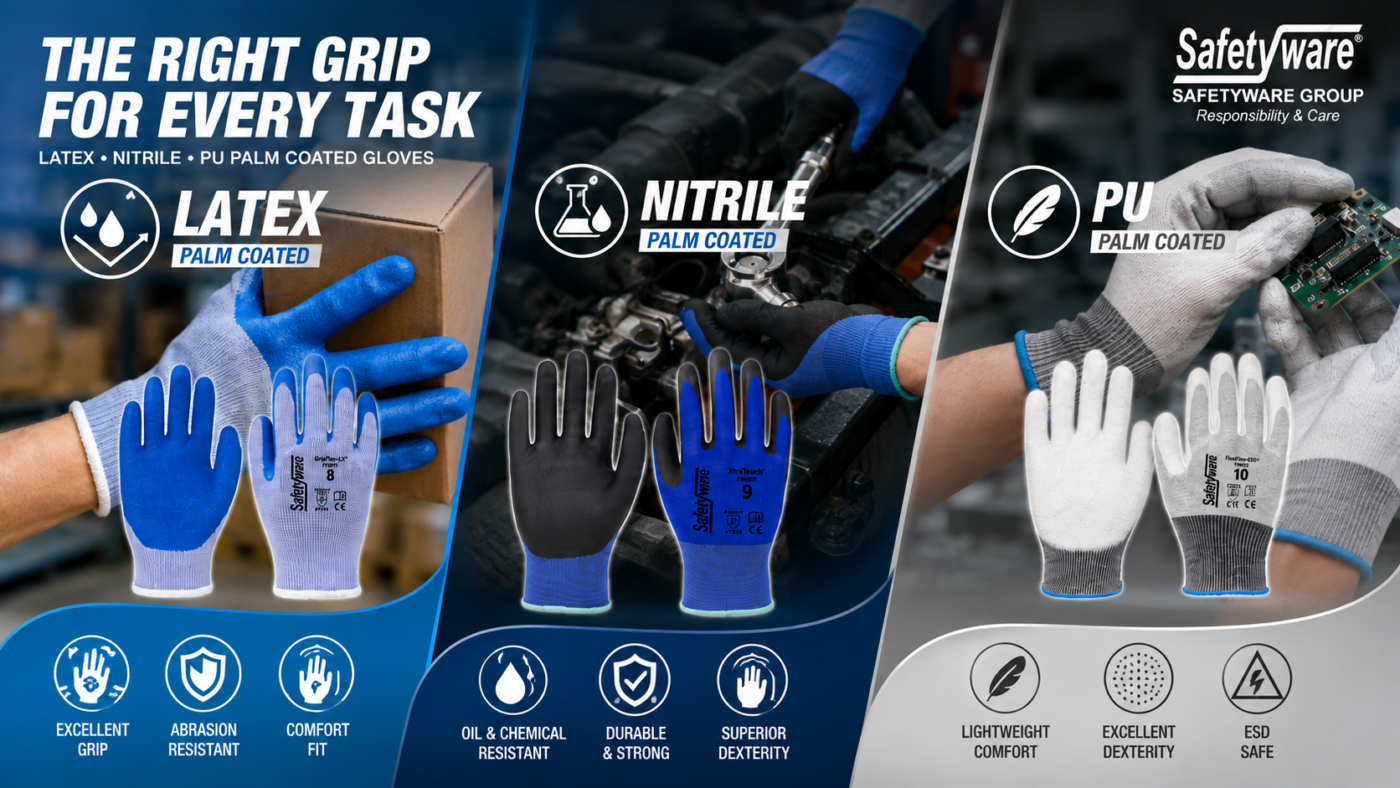
Understanding the differences between latex, nitrile, and PU palm coated gloves helps you select the right protection for your workplace. However, the coating type alone does not determine glove performance. Factors such as EN388 mechanical protection ratings, liner materials, coating design, and application requirements must also be considered.
At Safetyware, we offer a range of palm coated gloves designed to meet different workplace requirements, from general material handling to precision assembly and industrial applications.
Whether you need excellent grip, superior durability, or maximum dexterity, selecting the right glove ensures better hand protection, improved productivity, and longer glove service life.
👉 Explore more on Safetyware Hand Protection catalogue
👉 Read more on EN388 Explained: Mechanical Protection Gloves
Frequently Asked Questions (FAQs)
1. Are nitrile coated gloves waterproof?
No. Palm-coated nitrile gloves are generally water-resistant only on the coated palm area. The knitted back remains breathable and allows water to pass through.
2. Which coating has the best grip?
Latex provides excellent grip in both dry and wet conditions, while nitrile performs better on oily surfaces.
3. Which coating lasts the longest?
Nitrile-coated gloves typically offer the longest service life due to their superior abrasion and puncture resistance.
4. Why are PU gloves commonly used in electronics manufacturing?
Their thin coating provides exceptional tactile sensitivity and precision, making them ideal for handling small and delicate components.
5. Can palm coated gloves protect against chemicals?
Palm-coated gloves are designed primarily for mechanical protection. For handling hazardous chemicals, use gloves specifically certified for chemical resistance under standards such as EN ISO 374.
📞 Need More Information?
Looking for reliable Hand protection solutions for your workplace?
Explore SAFETYWARE’s safety shoes and workplace PPE range at
👉Safetyware Catalogs
Our safety specialists can help evaluate workplace hazards, recommend suitable safety helmets, and support compliance with Malaysia workplace safety requirements.
If you need a quotation, feel free to contact us at:
📩 Email: [email protected]
📞 Tel: WhatsApp Us