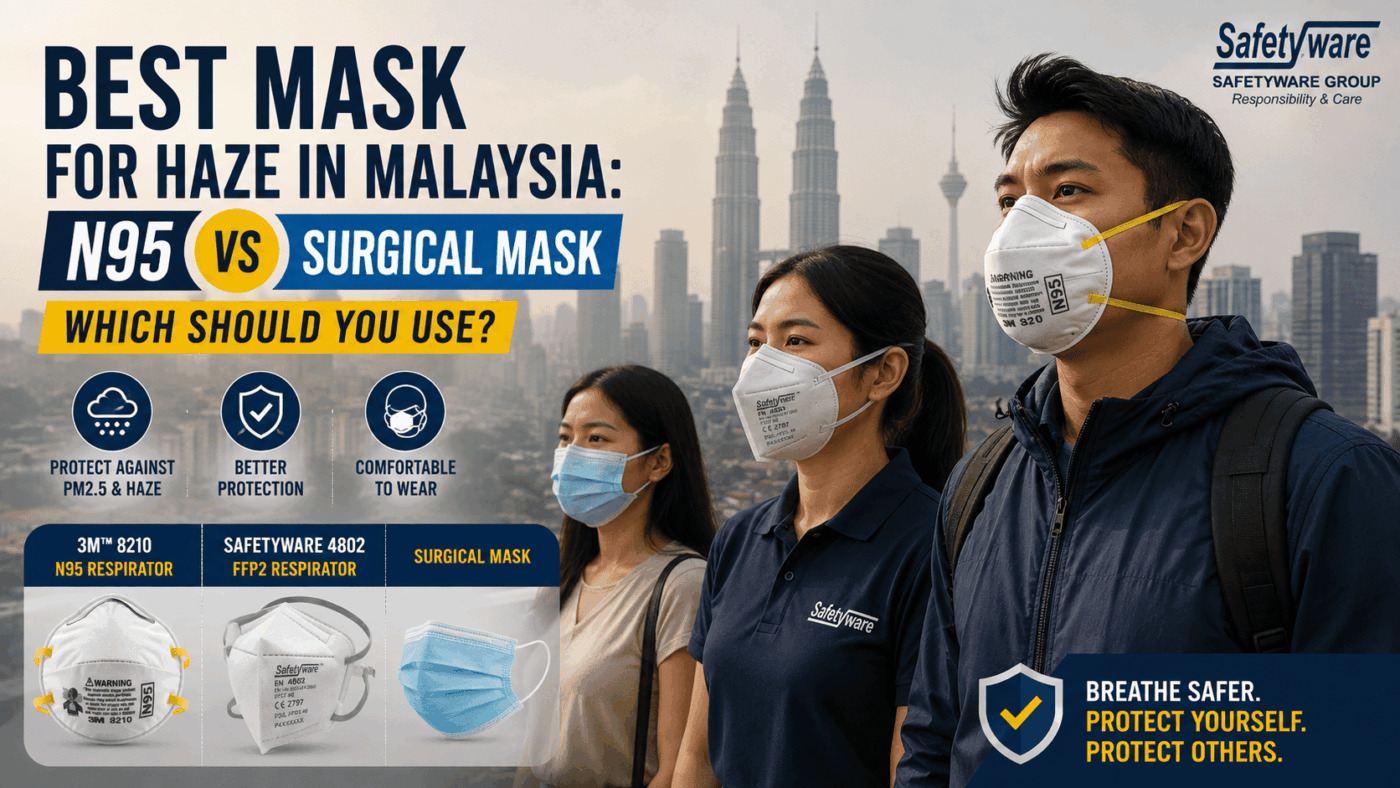
Haze is back in parts of Malaysia, and air quality can change quickly depending on weather conditions, wind direction and the concentration of airborne pollutants. During haze conditions, many people reach for a face mask before heading outdoors—but not every mask provides the same level of protection against fine airborne particles. Should you wear a normal surgical mask, or should you choose an N95 respirator?
Malaysia’s Ministry of Health specifically states that an N95 respirator may be used during haze because it filters small airborne particles and can reduce exposure to haze. However, the MOH also emphasizes that an N95 is effective only when it is used correctly.
Read more on Ministry of Health Malaysia for Usage Of Personal Protection During Haze
This distinction is particularly important during periods of deteriorating air quality. On 11 August 2026, Malaysian media reported concerns from health experts that fine inhalable particles can penetrate deep into the body and cause health problems even when haze levels are still considered moderate.
Read more on the latest Malaysia updates on Haze.
Why Haze and PM2.5 Can Be Harmful
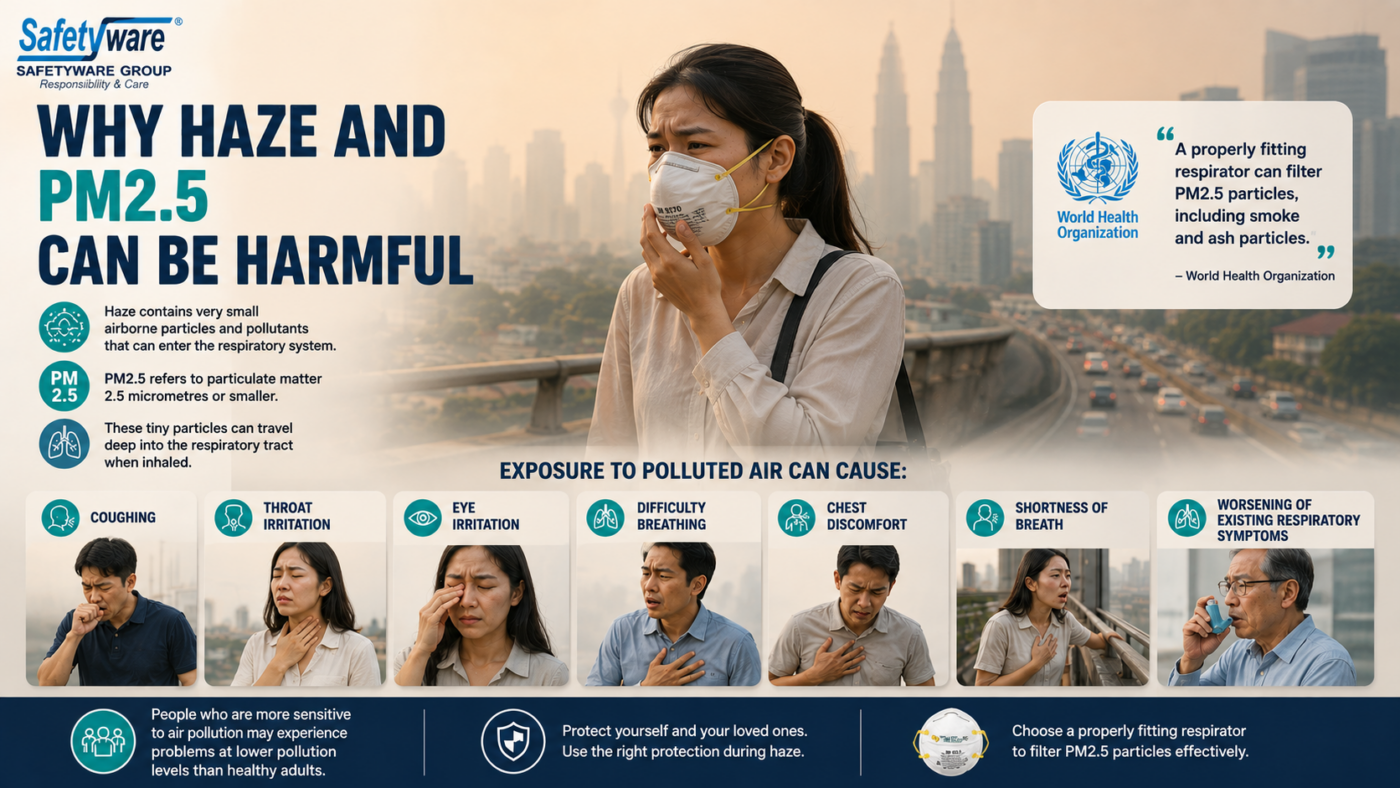
Haze is more than just reduced visibility or an unpleasant smell. It can contain very small airborne particles and other pollutants that can enter the respiratory system.
One of the main concerns is PM2.5, which refers to particulate matter with a diameter of 2.5 micrometres or smaller. Because these particles are extremely small, they can travel deep into the respiratory tract when inhaled.
Exposure to polluted air can cause symptoms such as:
- Coughing
- Throat irritation
- Eye irritation
- Difficulty breathing
- Chest discomfort
- Shortness of breath
- Worsening of existing respiratory symptoms
People who are more sensitive to air pollution may experience problems at lower pollution levels than healthy adults. The World Health Organization explains that a properly fitting respirator can filter PM2.5 particles, including smoke and ash particles.
What Does Malaysia’s Air Pollutant Index (API) Mean?
Malaysia uses the Air Pollutant Index (API) to communicate ambient air quality to the public.
According to the Department of Environment (DOE), the API provides an easy-to-understand indication of air quality and its potential effects on human health. The index is categorized from good through hazardous and is also linked to action criteria under Malaysia’s National Haze Action Plan.
For haze conditions, it is important not to rely solely on how the sky looks or how strong the haze smells. Fine particles may still be present even when visibility does not appear extremely poor.
This is why checking Malaysia’s official API readings and following health advisories is important during haze episodes.
API Range Categories
- 0–50: Good
- 51–100: Moderate
- 101–200: Unhealthy
- 201–300: Very unhealthy
- 300+: Hazardous
Does a Surgical Mask Protect Against Haze?
A surgical mask can provide some basic protection against larger droplets and particles, but it is not designed to function as a tight-fitting particulate respirator.
This is the key difference.
Surgical masks are generally loose-fitting. Air can enter around the sides of the mask instead of passing entirely through the filter material.
For haze, the concern is particularly focused on very small airborne particles such as PM2.5. A surgical mask may therefore be useful for general everyday protection, but it should not be considered the first choice when the objective is reducing inhalation of fine haze particles.
The CDC/NIOSH similarly distinguishes ordinary masks such as surgical masks from tight-fitting respirators. Surgical masks are not designed to seal against the face or provide the same type of filtration and protection against very small smoke particles as an N95 respirator.
What Is an N95 Face Mask?
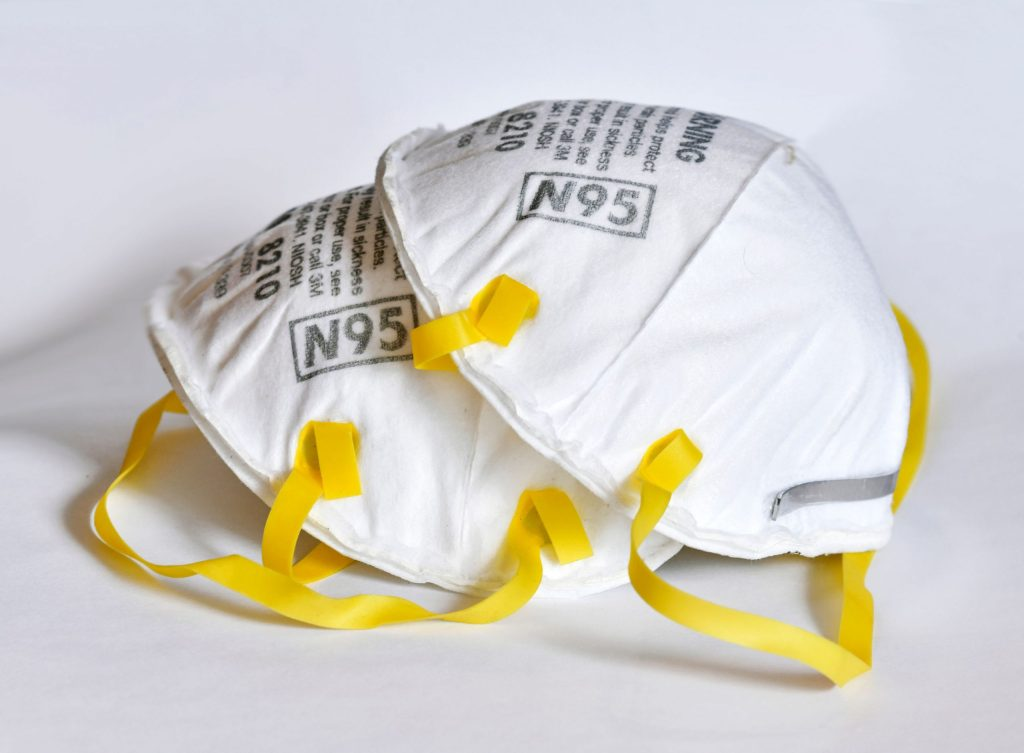
An N95 face mask, more accurately called an N95 respirator, is a type of particulate-filtering respiratory protection designed to help reduce the wearer’s exposure to airborne particles.
Unlike a standard surgical mask, an N95 respirator is designed to form a close seal around the wearer’s nose and mouth when correctly fitted. This helps reduce the amount of unfiltered air entering around the edges of the respirator.
The “N95” designation refers to the NIOSH (National Institute for Occupational Safety and Health) classification. A certified N95 respirator is designed to filter at least 95% of airborne particles under the applicable NIOSH test conditions.
Does an N95 Respirator Protect Against Haze?
Yes. An appropriate N95 particulate respirator can help reduce exposure to fine airborne particles during haze.
Malaysia’s Ministry of Health specifically identifies the N95 respirator as a suitable form of protection during haze. MOH explains that respirators provide better protection than surgical masks because they provide a better seal around the face and are designed with filtration suitable for fine particles.
However, an important point is often overlooked:
An N95 only works properly when it fits correctly. Even a high-quality respirator can provide reduced protection if air leaks around the edges.
The wearer should ensure that:
- The respirator covers both the nose and mouth.
- The respirator sits securely against the face.
- There are no obvious gaps around the edges.
- The nose area is properly adjusted where applicable.
- The respirator is not damaged or deformed.
- Facial hair does not interfere with the sealing surface.
MOH notes that facial hair, including beards and moustaches, can interfere with the respirator seal and allow contaminated air to leak into the facepiece.
N95 vs Surgical Mask for Haze
If you are comparing an N95 respirator and a surgical mask specifically for haze protection, the most important difference is particulate filtration combined with fit and sealing.
| Feature | N95 Respirator | Surgical Mask |
| Designed as particulate respirator | Yes | No |
| Designed to filter fine airborne particles | Yes | Not designed for this purpose |
| Tight facial seal | Yes, when correctly fitted | Generally no |
| Suitable for haze particle protection | Yes | Not recommended as primary protection |
| Requires correct fitting | Yes | Correct positioning still important |
| Common use | Haze, dust and particulate hazards | Droplet/splash and medical applications |
| Best choice for haze exposure | Yes | No |
The Ministry of Health’s haze guidance clearly recommends respirators rather than surgical masks for protection against the small airborne particles associated with haze.
What About FFP2 Masks?
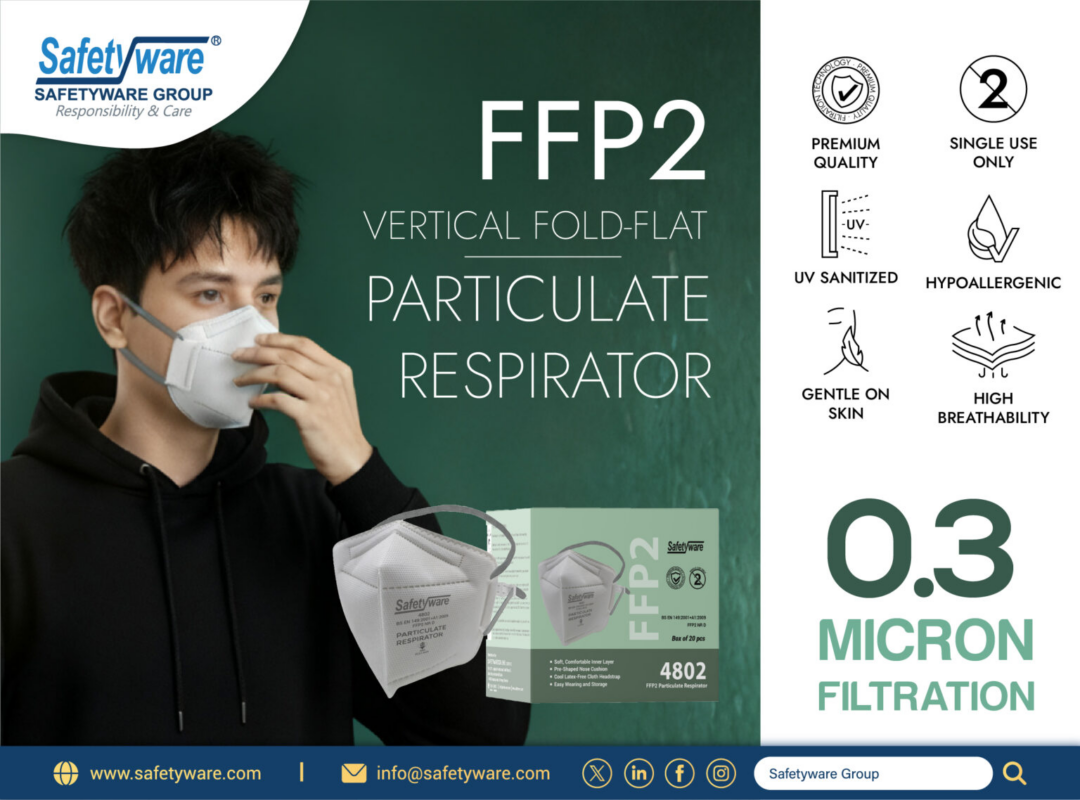
FFP2 respirators are another type of particulate filtering respirator commonly used for airborne particle protection. N95 and FFP2 are different certification standards, however both are particulate respirator classifications designed for high-efficiency filtration of airborne particles.
FFP2 stands for Filtering Face Piece Class 2, is under the European EN149 standard. Like the N95, it is a mask designed to protect against airborne particles. FFP2 masks have a minimum filtration efficiency of approximately 94%.
In Europe, disposable filtering facepiece respirators are certified under EN149. Instead of the NIOSH classification system, EN149 uses three protection classes:
- FFP1 – minimum 80% filtration
- FFP2 – minimum 94% filtration
- FFP3 – minimum 99% filtration
FFP2 masks are often compared with N95 because both provide a similar level of protection against airborne particles, although they are tested using different certification standards.
For consumers shopping for a haze mask in Malaysia, the important considerations are the applicable certification, filtration performance, proper fit and whether the respirator is appropriate for the intended exposure.
Safetyware offers particulate respirators certified to standards including EN 149 FFP2, SIRIM-DOSH FFP2 and US NIOSH N95, depending on the model.
N95 vs FFP2 for Haze: Which One Should You Choose?
Both N95 and FFP2 particulate respirators can be suitable choices for particle exposure when they are properly certified, correctly fitted and appropriate for the task.
The main difference is their certification system:
- N95 – a US NIOSH respirator classification.
- FFP2 – a European EN 149 respirator classification.
- SIRIM-DOSH FFP2 – a Malaysian approval/certification route for applicable products.
Safetyware’s particulate respirator range includes models certified to various international standards, including NIOSH N95 and EN 149 FFP2.
How to Wear an N95 Correctly?
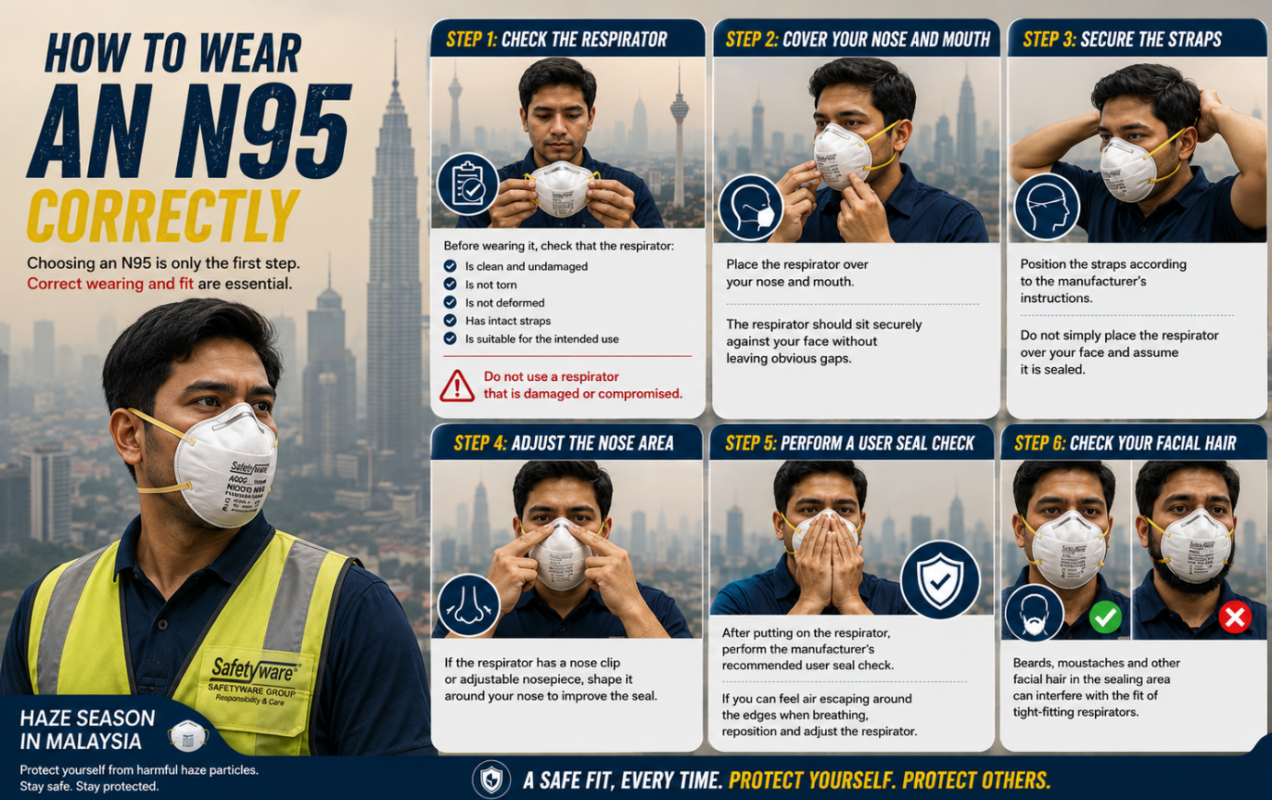
Choosing an N95 is only the first step. Correct wearing and fit are essential.
Step 1: Check the Respirator
Before wearing it, check that the respirator:
- Is clean and undamaged
- Not torn
- Not deformed
- Has intact straps
- Is suitable for the intended use
Step 2: Cover Your Nose and Mouth
Place the mask over your nose and mouth.
The mask should sit securely against your face without leaving obvious gaps.
Step 3: Secure the Straps
Position the straps according to the manufacturer’s instructions.
Do not simply place the mask over your face and assume it is sealed.
Step 4: Adjust the Nose Area
If the respirator has a nose clip or adjustable nosepiece, shape it around your nose to improve the seal.
Step 5: Perform a User Seal Check
After putting on the respirator, perform the manufacturer’s recommended user seal check.
If you can feel air escaping around the edges when breathing, reposition and adjust the mask.
Step 6: Check Your Facial Hair
Beards, moustaches and other facial hair in the sealing area can interfere with the fit of tight-fitting respirators.
For workplace use, formal fit testing should be carried out where required. Malaysia’s Ministry of Health specifically recommends fit testing for employees who need to use respirators during haze.
Who Should Take Extra Precautions During Haze?
Haze can affect everyone, but some groups may be more vulnerable to its effects.
Extra precautions may be particularly important for:
- Children
- Older adults
- Pregnant people
- People with asthma
- People with chronic respiratory conditions
- People with heart conditions
- People who are sensitive to dust or air pollution
- People who spend long periods working outdoors
Malaysia’s Ministry of Health specifically identifies old people, people with lung or heart conditions, people with asthma or emphysema, pregnant people and children among those who require additional precautions when using N95 respirators.
Important: N95 Respirators Are Not Suitable for Everyone
Although an N95 can reduce exposure to airborne particles, breathing through a tight-fitting respirator can require more effort. MOH notes that some people may experience discomfort, tiredness or headache when wearing an N95 because of increased breathing resistance.
People with chronic heart or lung conditions who experience discomfort should seek medical advice. If you experience significant difficulty breathing, chest pain or other concerning symptoms, stop the activity and seek appropriate medical attention.
A respirator is also not a substitute for reducing exposure. When haze conditions are poor, staying indoors and reducing strenuous outdoor activity remain important protective measures.
Where to Buy N95 and FFP2 Respirators in Malaysia
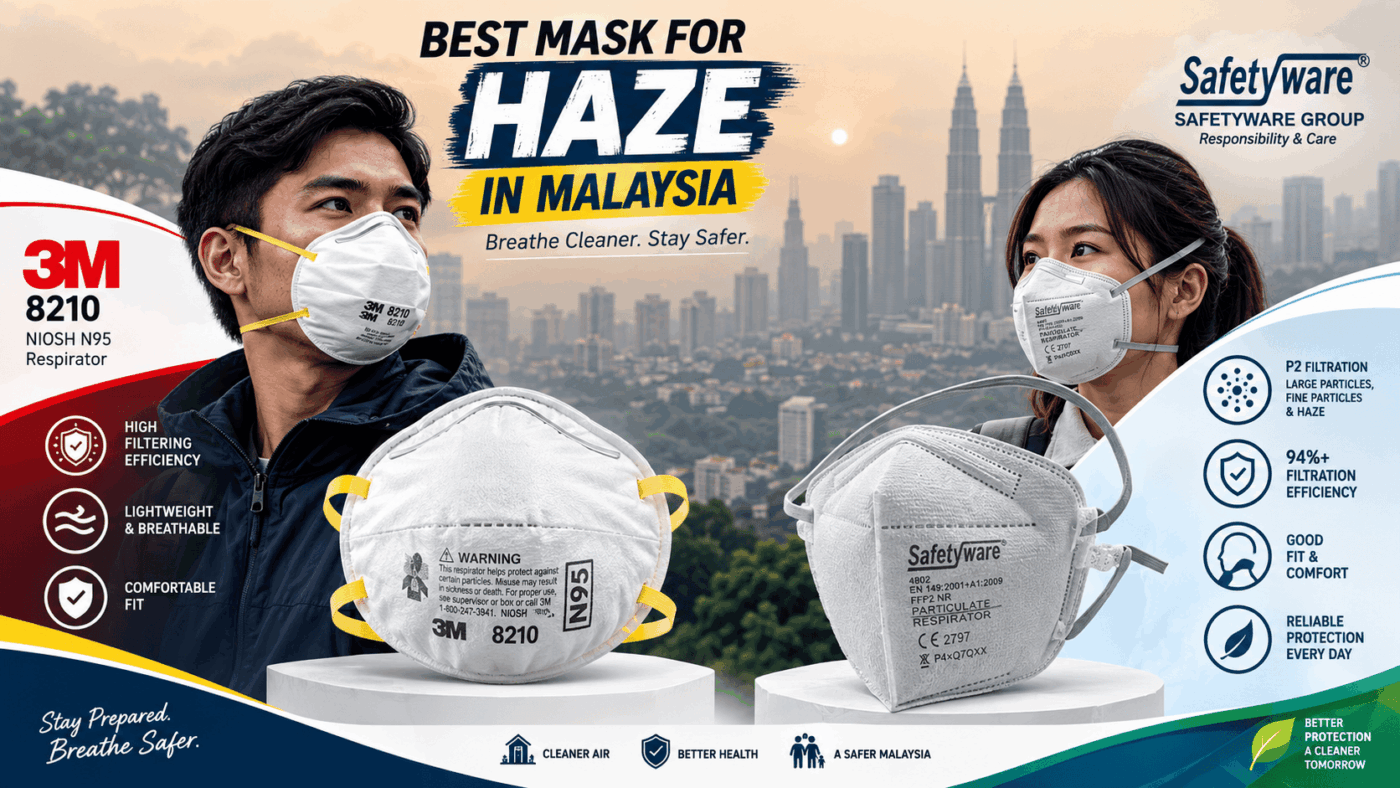
If you are looking for a mask for haze in Malaysia, choose a genuine particulate respirator from a reputable supplier and check the applicable certification. Safetyware provides a range of particulate respirators designed for airborne particle protection, including N95 and FFP2 models.
👉 Shop for N95 Respirators from Safetyware in Shopee
👉 Shop for FFP2 Respirators from Safetyware in Shopee
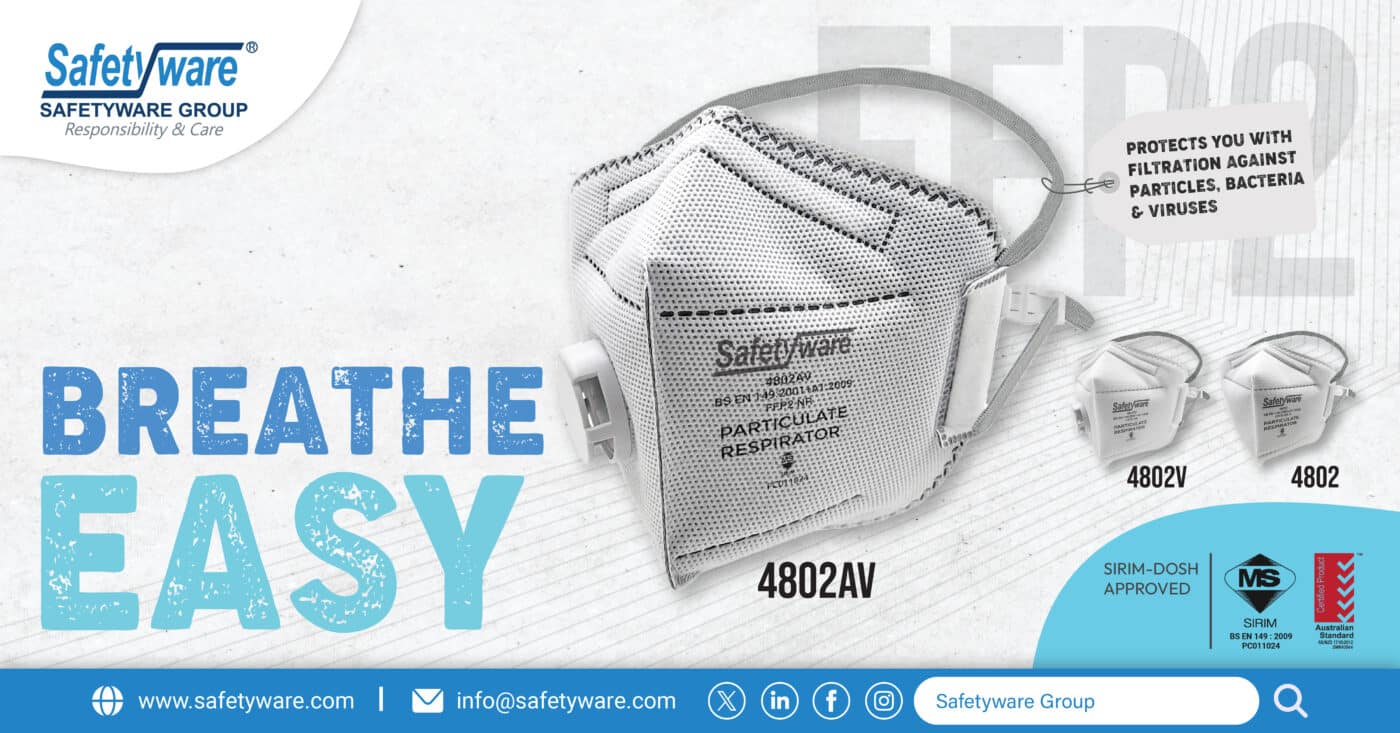
Check out full Respirator catalogue at Safetyware
Read more about N95 vs FFP2 vs Half-Face Respirators: Choosing the Right Protection
Frequently Asked Questions About Masks for Haze
Is N95 better than a surgical mask for haze?
Yes. For haze-related fine particulate exposure, an N95 respirator is the more appropriate choice. Malaysia’s Ministry of Health states that surgical masks do not prevent inhalation of the small airborne particles associated with haze and recommends respirators such as N95.
Can I use an FFP2 mask for haze?
A properly certified FFP2 particulate respirator can be used for protection against airborne particles. Check the product’s applicable certification and ensure that the respirator fits correctly.
Does a surgical mask block PM2.5?
A standard surgical mask is not designed to provide the same particulate protection and facial seal as a tight-fitting particulate respirator. Malaysia’s Ministry of Health specifically advises that surgical masks do not prevent inhalation of the small airborne particles associated with haze.
Where can I buy N95 or FFP2 masks in Malaysia?
Safetyware offers N95 and FFP2 particulate respirators through its official online store, with selected products also available through its Shopee Malaysia store.
👉 Shop for N95 Respirators from Safetyware in Shopee
👉 Shop for FFP2 Respirators from Safetyware in Shopee
📞 Need More Information?
Looking for reliable Respiratory protection solutions for your workplace?
Explore SAFETYWARE’s Respiratory protection full range at
👉Safetyware Catalogs
Our safety specialists can help evaluate workplace hazards, recommend suitable safety helmets, and support compliance with Malaysia workplace safety requirements.
If you need a quotation, feel free to contact us at:
📩 Email: [email protected]
📞 Tel: WhatsApp Us