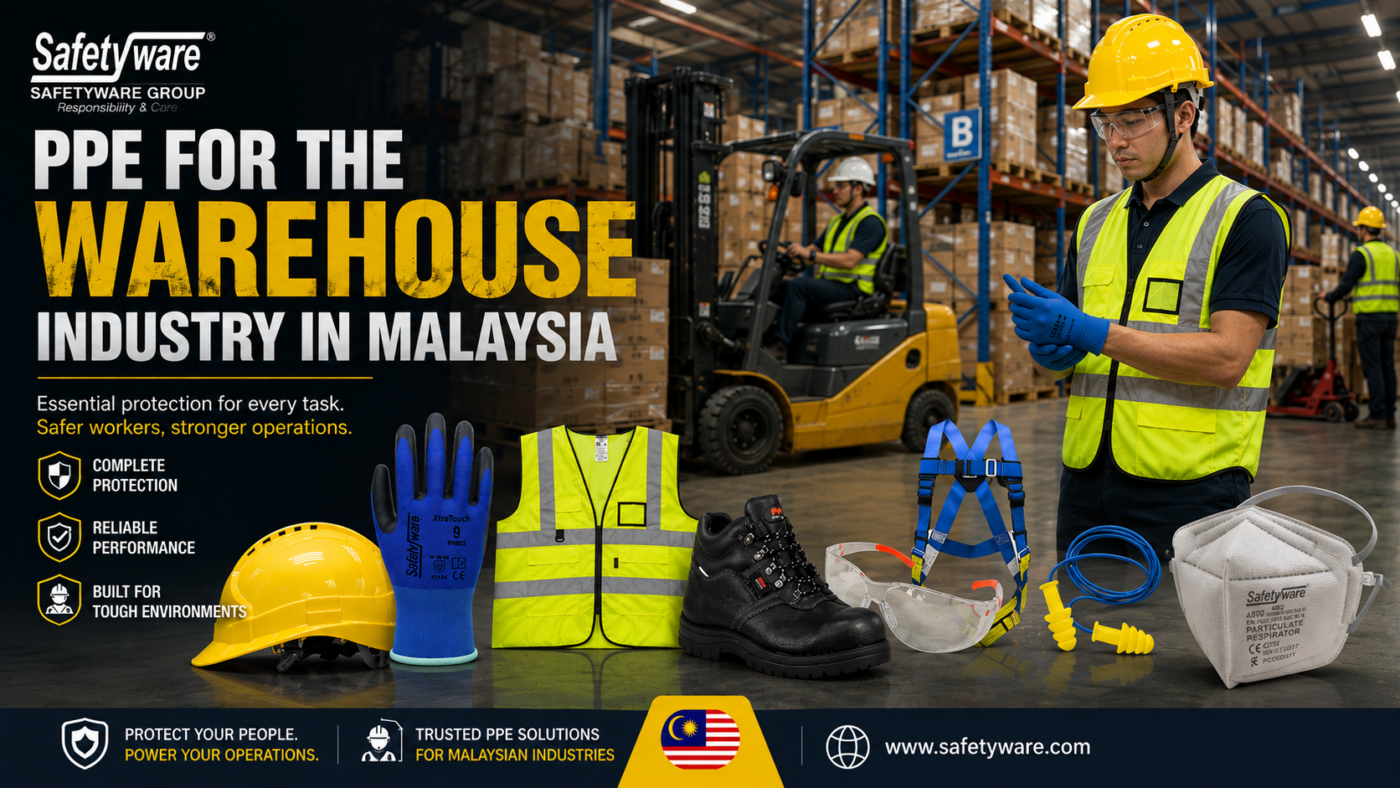
Warehouses are among the busiest workplaces in Malaysia, supporting industries such as e-commerce, manufacturing, retail, logistics, food distribution, pharmaceuticals, and third-party logistics (3PL). While warehouses may not appear as hazardous as construction sites, they present numerous workplace risks that can lead to serious injuries if proper personal protective equipment (PPE) is not used.
Every day, warehouse workers handle heavy goods, operate forklifts, work at heights, load and unload trucks, and move around areas with constant pedestrian and vehicle traffic. Choosing the right personal protective equipment helps reduce workplace accidents, improves employee safety, ensures compliance with Malaysian occupational safety requirements, and enhances productivity.
In this guide, we’ll explore the common hazards in Malaysian warehouses, the PPE required for different warehouse tasks, and best practices for selecting suitable protective equipment.
Why PPE is Important in Warehouses
Warehouse workers encounter various hazards throughout their daily operations.
These include:
- Falling cartons and pallets
- Forklift collisions
- Slippery floors
- Sharp packaging materials
- Manual lifting injuries
- Flying debris
- Dust exposure
- Loud machinery
- Chemical spills
- Working at loading bays
- Working at heights
- Poor visibility in busy traffic zones
Without suitable PPE, these hazards can cause:
- Head injuries
- Foot injuries
- Eye injuries
- Hand cuts
- Hearing damage
- Respiratory problems
- Chemical burns
- Musculoskeletal injuries
Proper personal protective equipment serves as the last line of defense after engineering and administrative controls.
Common Hazards Found in Warehouses
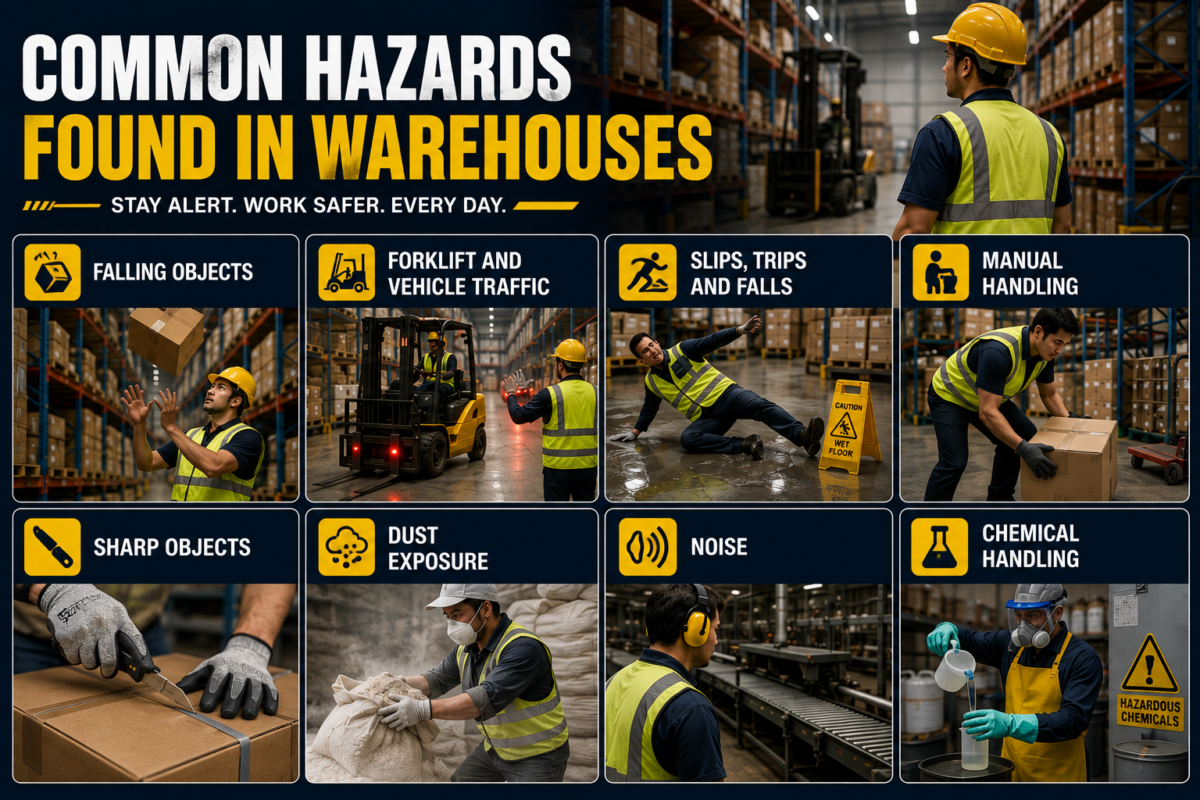
Falling Objects
Examples:
- Boxes falling from racks
- Pallets collapsing
- Loose inventory
- Dropped tools
Potential injuries:
- Head injuries
- Shoulder injuries
- Broken bones
Recommended:
- Safety helmets
- Safety shoes
Forklift and Vehicle Traffic
Warehouse vehicles include:
- Forklifts
- Reach trucks
- Pallet stackers
- Electric pallet trucks
Hazards include:
- Collision
- Crushing
- Reversing accidents
Recommended:
- High visibility safety vest
- Safety shoes
- Safety helmet
Slips, Trips and Falls
Common causes:
- Wet floors
- Oil spills
- Plastic wrapping
- Uneven flooring
- Loose cables
Recommended :
- Slip-resistant safety shoes
Manual Handling
Workers frequently:
- Lift cartons
- Carry sacks
- Push trolleys
- Move pallets
Risks include:
- Hand injuries
- Foot injuries
Recommended:
- Safety gloves
- Safety shoes
Sharp Objects
Warehouse workers often handle:
- Cartons
- Metal shelving
- Plastic straps
- Stretch film cutters
- Utility knives
Recommended PPE:
- Cut-resistant gloves
- Safety glasses
Dust Exposure
Common in:
- Paper warehouses
- Cement storage
- Chemical warehouses
- Agricultural warehouses
Possible health effects:
- Coughing
- Allergies
- Respiratory irritation
Recommended:
- Dust masks
- Respirators
Noise
Sources:
- Conveyor systems
- Compressors
- Forklifts
- Packaging machines
Recommended PPE:
- Earplugs
- Earmuffs
Chemical Handling
Certain warehouses store:
- Cleaning chemicals
- Industrial chemicals
- Solvents
- Paint
- Lubricants
Recommended:
- Chemical-resistant gloves
- Chemical goggles
- Face shields
- Respirators
- Chemical-resistant boots
Essential PPE for Warehouse Workers
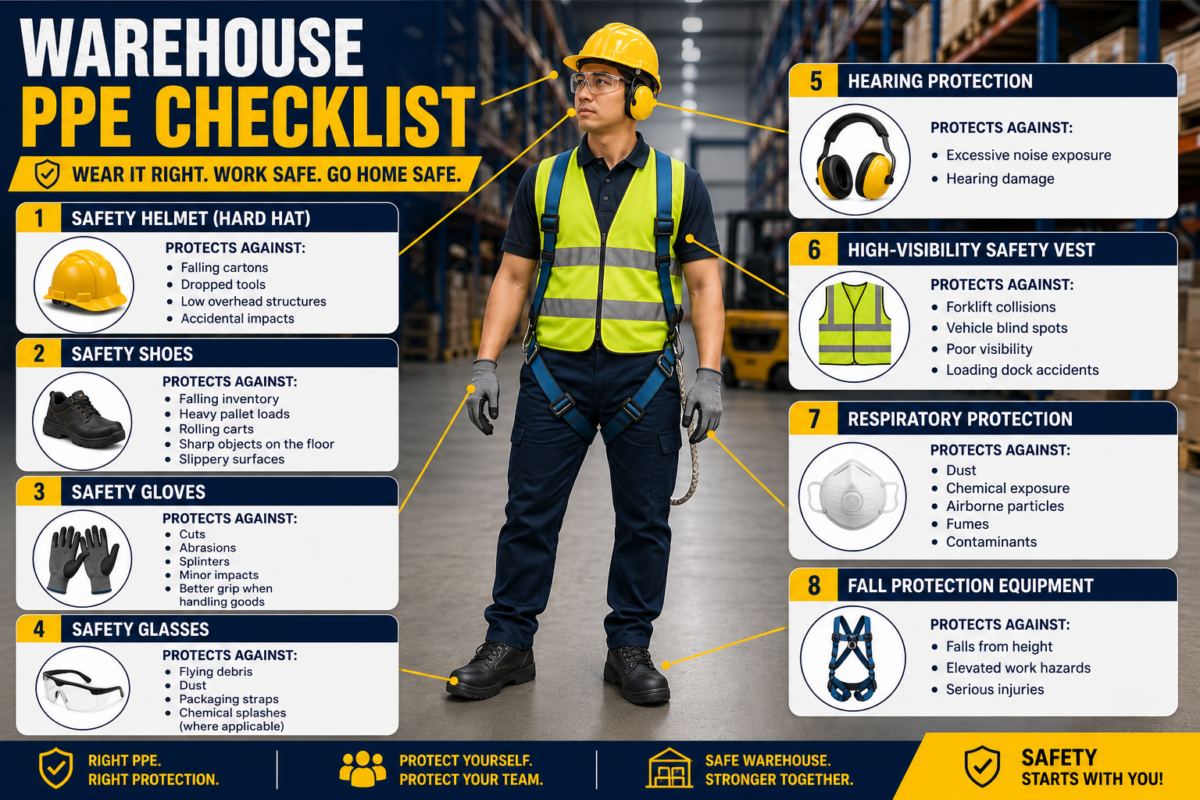
1. Safety Helmet
Protects workers against:
- Falling objects
- Accidental bumps
- Low ceilings
- Overhead storage
Suitable for:
- Loading bays
- High rack warehouses
- Construction material warehouses
2. Safety Shoes
Warehouse workers spend long hours walking—often between 10,000 and 20,000 steps per shift—while lifting goods, operating equipment, and navigating busy aisles. Proper safety footwear protects against impact injuries, slips, punctures, and fatigue.
Hazards Protected Against:
- Falling cartons
- Heavy pallets
- Rolling pallet jacks
- Forklift wheel contact
- Sharp objects on the floor
- Wet and oily surfaces
Recommended Features:
- Stee or composite toe cap
- Slip-resistant outsole
- Anti-static (ESD where required)
- Shock-absorbing heel
- Oil-resistant sole
- Lightweight construction
- Puncture-resistant midsole
Suitable Applications
- Logistics warehouses
- Distribution centres
- E-commerce fulfilment centres
- Cold storage
- Manufacturing warehouses
3. Safety Gloves
Different warehouse tasks require different glove types.
General Handling Gloves for:
- Picking
- Packing
- Loading
Cut-Resistant Gloves suitable for:
- Using box cutters
- Handling sheet metal
- Opening cartons
Grip Gloves suitable for:
- Carrying boxes
- Handling slippery products
4. High Visibility Safety Vest
High-visibility clothing helps forklift operators quickly identify pedestrians, reducing the risk of collisions in busy warehouse environments.
Recommended for:
- Loading bays
- Outdoor warehouses
- Logistics centres
- Distribution hubs
5. Safety Glasses
Protect against:
- Dust
- Flying debris
- Broken straps
- Packaging fragments
Recommended for:
- Packaging
- Warehouse maintenance
- Machine operation
6. Hearing Protection
Required where noise exceeds occupational exposure limits.
Suitable PPE:
- Earplugs
- Earmuffs
Applications:
- Conveyor areas
- Machinery rooms
- Packaging lines
7. Respiratory Protection
Dust masks and respirators protect workers from airborne particles and hazardous contaminants.
Common applications:
- Bulk powder storage
- Cement warehouses
- Flour warehouses
- Agricultural products
- Chemical storage
8. Fall Protection Equipment
Required when workers perform tasks at height.
Includes:
- Full-body harness
- Shock-absorbing lanyard
- Self-retracting lifeline (SRL)
- Anchorage connectors
- Helmet with chin strap
Suitable applications:
- Mezzanine work
- High rack maintenance
- Stock retrieval at height
- Roof maintenance
How to Choose the Right PPE for Warehouse Workers
When selecting PPE, employers should consider:
- Workplace risk assessment
- Type of warehouse operations
- Frequency of exposure to hazards
- Comfort for prolonged wear
- Proper sizing and fit
- Relevant safety certifications
- Durability and maintenance requirements
- Compatibility between different PPE items
PPE Safety Inspection and Maintenance
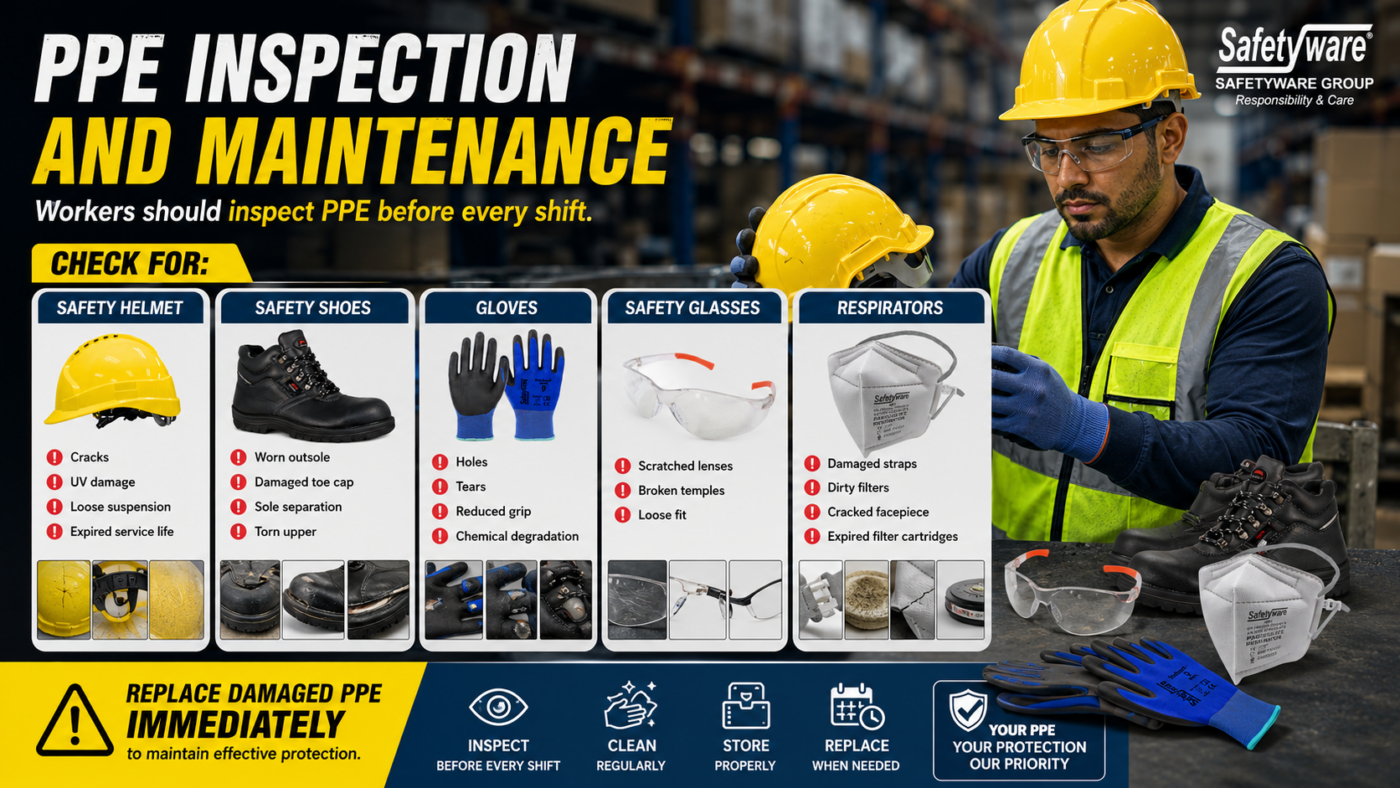
Workers should inspect PPE before every shift. Check for:
Safety Helmet:
- Cracks
- UV damage
- Loose suspension
- Expired service life
Safety Shoes:
- Worn outsole
- Damaged toe cap
- Sole separation
- Torn upper
Gloves:
- Holes
- Tears
- Reduced grip
- Chemical degradation
Safety Glasses:
- Scratched lenses
- Broken temples
- Loose fit
Respirators:
- Damaged straps
- Dirty filters
- Cracked facepiece
- Expired filter cartridges
Replace damaged PPE immediately to maintain effective protection.
Best Practices for Warehouse PPE Safety
Employers should:
- Conduct regular risk assessments.
- Provide appropriate PPE for each job task.
- Train workers on correct PPE use.
- Ensure PPE fits each employee properly.
- Replace worn or damaged PPE promptly.
- Enforce PPE compliance through supervision.
- Keep PPE clean and stored correctly.
- Review PPE requirements whenever warehouse processes change.
Safetyware PPE Solutions for the Warehouse Industry
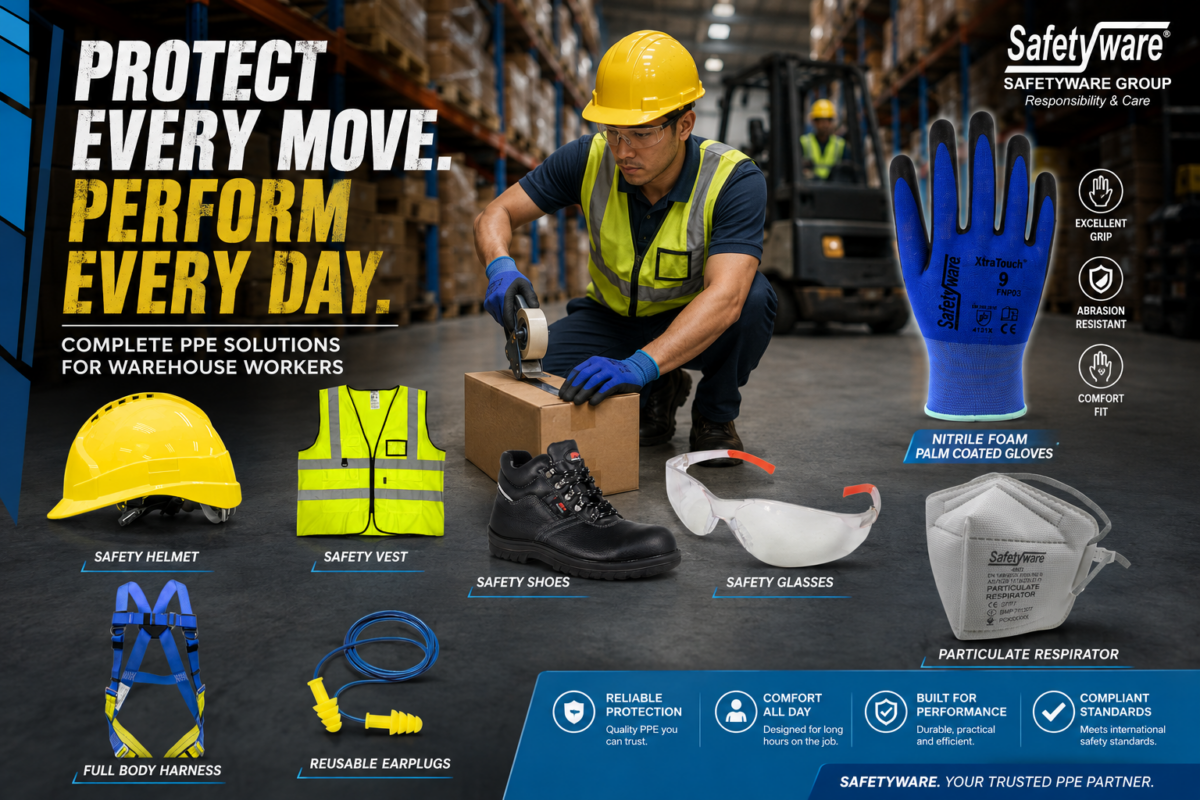
Creating a safer warehouse starts with selecting PPE that matches the specific hazards employees face. Whether your workers are picking orders, operating forklifts, handling heavy pallets, performing maintenance, or managing chemical storage areas, the right protective equipment helps reduce injuries and improve workplace safety.
As a leading Malaysian PPE manufacturer and supplier, Safetyware offers a comprehensive range of workplace safety solutions for warehouse and logistics operations. The portfolio includes head-to-toe PPE, facility safety products, technical services, and safety training to help businesses build safer and more compliant workplaces.
👉 Explore more on Safetyware full Catalogues
👉 Read more on Warehouse PPE Checklist: A Complete Guide to Workplace Safety
Frequently Asked Questions (FAQs)
1. Is PPE mandatory for warehouse workers in Malaysia?
Yes. Employers in Malaysia are responsible for providing suitable PPE when workplace hazards cannot be eliminated through engineering or administrative controls. Warehouse operators should conduct a risk assessment to determine the appropriate PPE based on the tasks and hazards present.
2. How often should PPE be inspected?
PPE should be inspected before every use and maintained according to the manufacturer’s recommendations. Damaged, worn, or expired PPE should be replaced immediately to ensure effective protection.
3. What PPE is required in a warehouse?
The required PPE depends on the nature of the work. Common PPE for warehouse workers includes:
- Safety helmet
- Safety shoes
- Safety gloves
- High-visibility safety vest
- Safety glasses
- Hearing protection
- Respiratory protection
- Fall protection equipment (for work at height)
Employers should provide PPE based on the results of a workplace risk assessment.
4. Where can I buy warehouse PPE in Malaysia?
Businesses looking for warehouse PPE in Malaysia can choose from a wide range of certified products offered by Safetyware, including safety helmets, safety shoes, safety gloves, high-visibility clothing, eye protection, respiratory protection, hearing protection, fall protection equipment, and warehouse safety solutions. Safetyware also provides PPE consultation to help employers select suitable equipment based on their workplace hazards.
📞 Need More Information?
Looking for reliable Full warehouse protection solutions for your workplace?
Explore SAFETYWARE’s safety shoes and workplace PPE range at
👉Safetyware Catalogs
Our safety specialists can help evaluate workplace hazards, recommend suitable safety helmets, and support compliance with Malaysia workplace safety requirements.
If you need a quotation, feel free to contact us at:
📩 Email: [email protected]
📞 Tel: WhatsApp Us