Safety Footwear Standards Guide: ISO 20345, DOSH-SIRIM and RHINO SHOE Selection
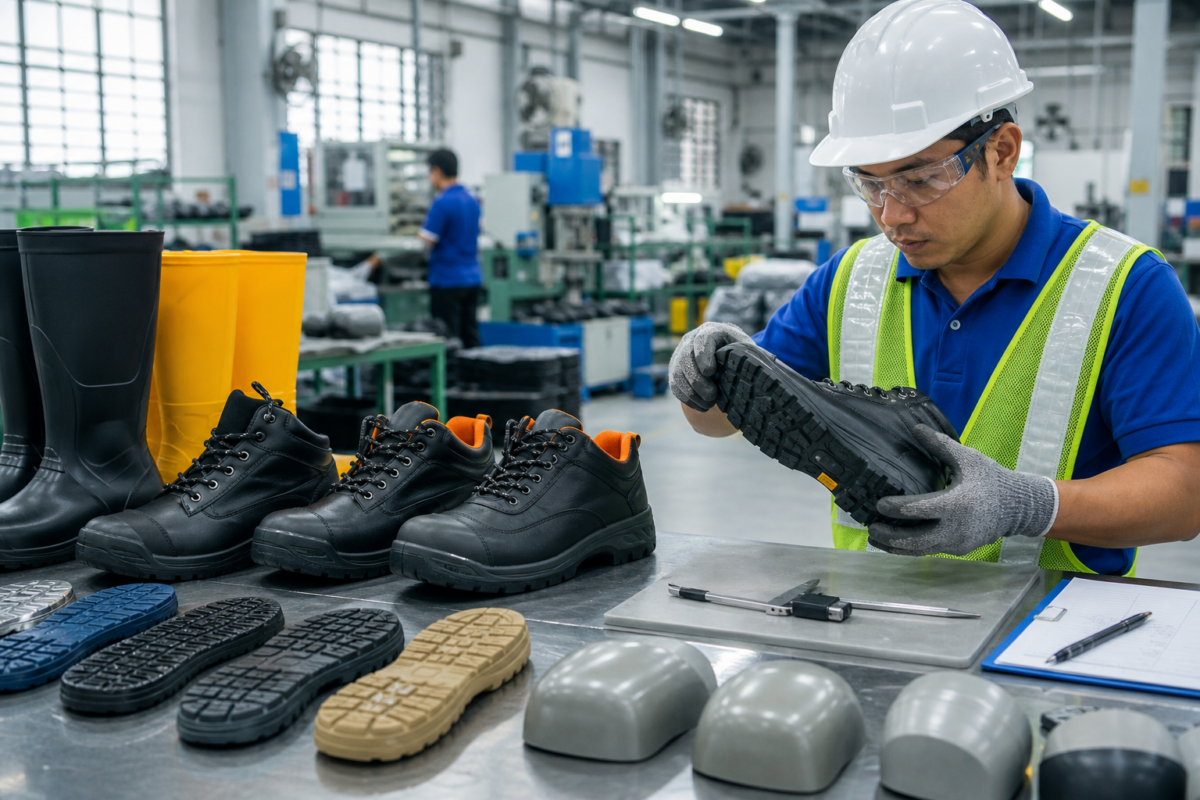
Safetyware is a major safety footwear manufacturer in Malaysia and produces a wide range of RHINO SHOE safety footwear, including industrial safety shoes and PVC boots. The right model depends on the workplace, not simply whether the shoe has a safety toe cap.
How to choose safety footwear
| Workplace condition | Selection cue | Safetyware pathway |
|---|---|---|
| Factory, warehouse and logistics | Toe protection, slip resistance, comfort, outsole durability | Safety footwear and RHINO SHOE |
| Wet, chemical or hygiene areas | PVC boot material, waterproofing, easy cleaning, sole grip | Industrial PVC boots and hygiene footwear |
| Fire and emergency response | Fireman boot specification, heat, penetration and emergency use needs | Fire protection and HARVIK fireman boots enquiries |
| Outdoor construction and utility work | Outsole traction, ankle support, penetration resistance and durability | Safety shoes, safety boots and worksite PPE |
What ISO 20345 contributes
ISO 20345 covers general safety footwear requirements such as basic and optional performance requirements for mechanical risks, slip resistance, thermal risks and ergonomic behaviour. Buyers should still request product documentation and confirm whether special job-related risks require additional evidence.
For Malaysia, DOSH lists foot protection under PPE approval requirements and maintains approved lists for foot protection products. A procurement team should therefore check model details, expiry, certification and actual workplace use before issuing footwear.
Related Safetyware pathways
FAQ
Is a steel toe cap enough?
No. Toe protection is important, but slips, water, chemicals, puncture risk, heat, comfort and outsole durability often decide whether the footwear is suitable.
Why does fit matter for safety shoes?
Poor fit can cause discomfort, fatigue and inconsistent use. Trial size ranges and wearer feedback are especially useful for large workforce rollouts.
Official references
- ISO 20345:2021 safety footwear overview
- DOSH Malaysia approved foot protection list
- DOSH Malaysia PPE approval information
Need help matching standards to products?
Share the task, hazard, target country, preferred standard, quantity and documentation needs through the Safetyware inquiry form. Safetyware can help route product, training, documentation and service enquiries to the right team.