Respirator Fit Testing Guide for Malaysia and Singapore Workplaces
A respirator cannot protect well if it cannot seal to the face. That is why fit testing is especially important for workers exposed to dust, fumes, aerosols, chemicals, solvents, maintenance environments and emergency response situations.
Qualitative vs quantitative fit testing
| Method | How it works | Best use |
|---|---|---|
| Qualitative fit test | Pass or fail result based on whether the wearer detects a test agent. | Common for some tight-fitting respirator scenarios where a numerical fit factor is not required. |
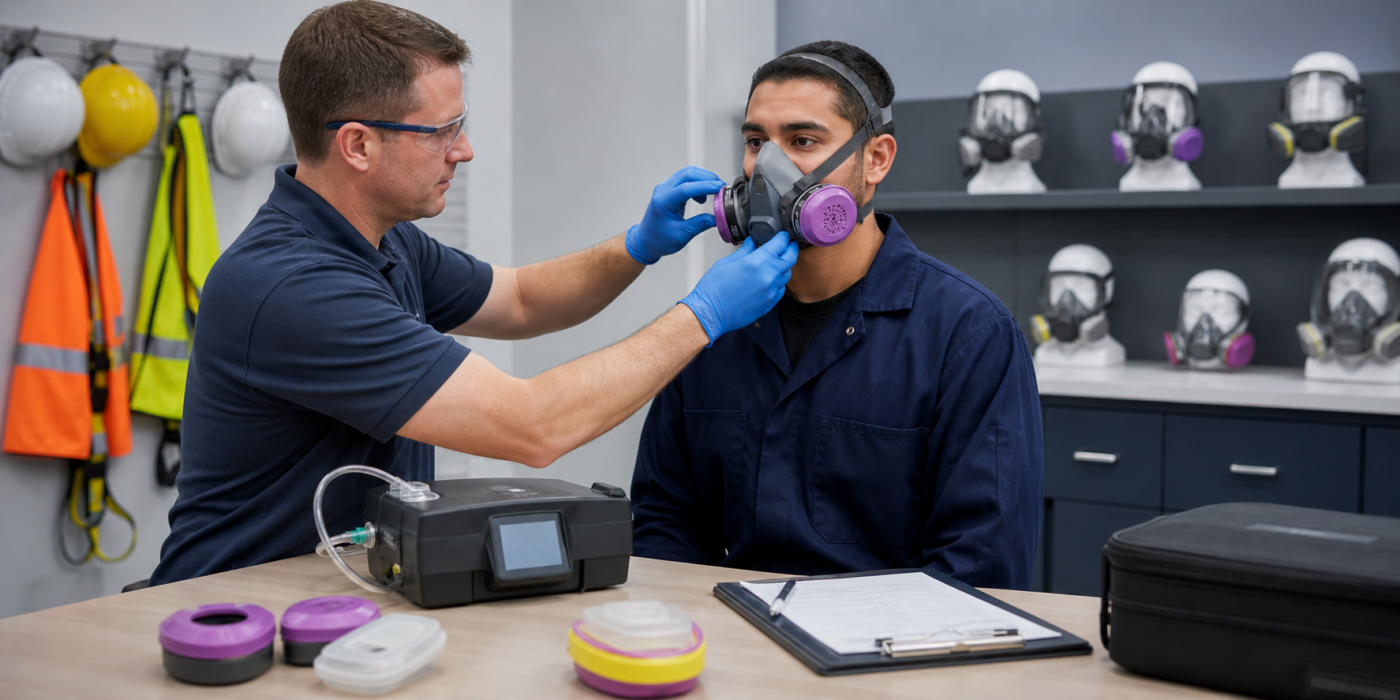
| Quantitative fit test | Uses an instrument to measure leakage and calculate a numerical fit factor. | Useful where documented numerical evidence, higher protection factors or more controlled comparison are needed. |
| User seal check | Quick check performed by the wearer each time the respirator is donned. | Daily use support; it does not replace a formal fit test. |
What a good programme records
Record the wearer, respirator make, model, style and size, fit test method, date, result and any limitations. Re-test when a different facepiece is used or when physical changes could affect fit, such as facial hair changes, dental changes, surgery or significant weight change.
Safetyware supports respirator selection through the respiratory protection category, while Safetyware Academy can support EHS training pathways. For fit-testing service enquiries, use the quantitative fit testing Malaysia page.
Related Safetyware pathways
FAQ
Does every respirator need fit testing?
Fit testing is for tight-fitting respirators that rely on a face seal. Loose-fitting hoods and some powered systems do not seal to the face in the same way, but they still require correct selection and training.
Can facial hair affect respirator fit?
Yes. Facial hair under the sealing surface can prevent a tight seal. Workers may need a different solution if shaving is not possible or appropriate.
Official references
- NIOSH fit testing overview
- OSHA respiratory protection standard
- Singapore WSH Council risk management resources
Need help matching standards to products?
Share the task, hazard, target country, preferred standard, quantity and documentation needs through the Safetyware inquiry form. Safetyware can help route product, training, documentation and service enquiries to the right team.