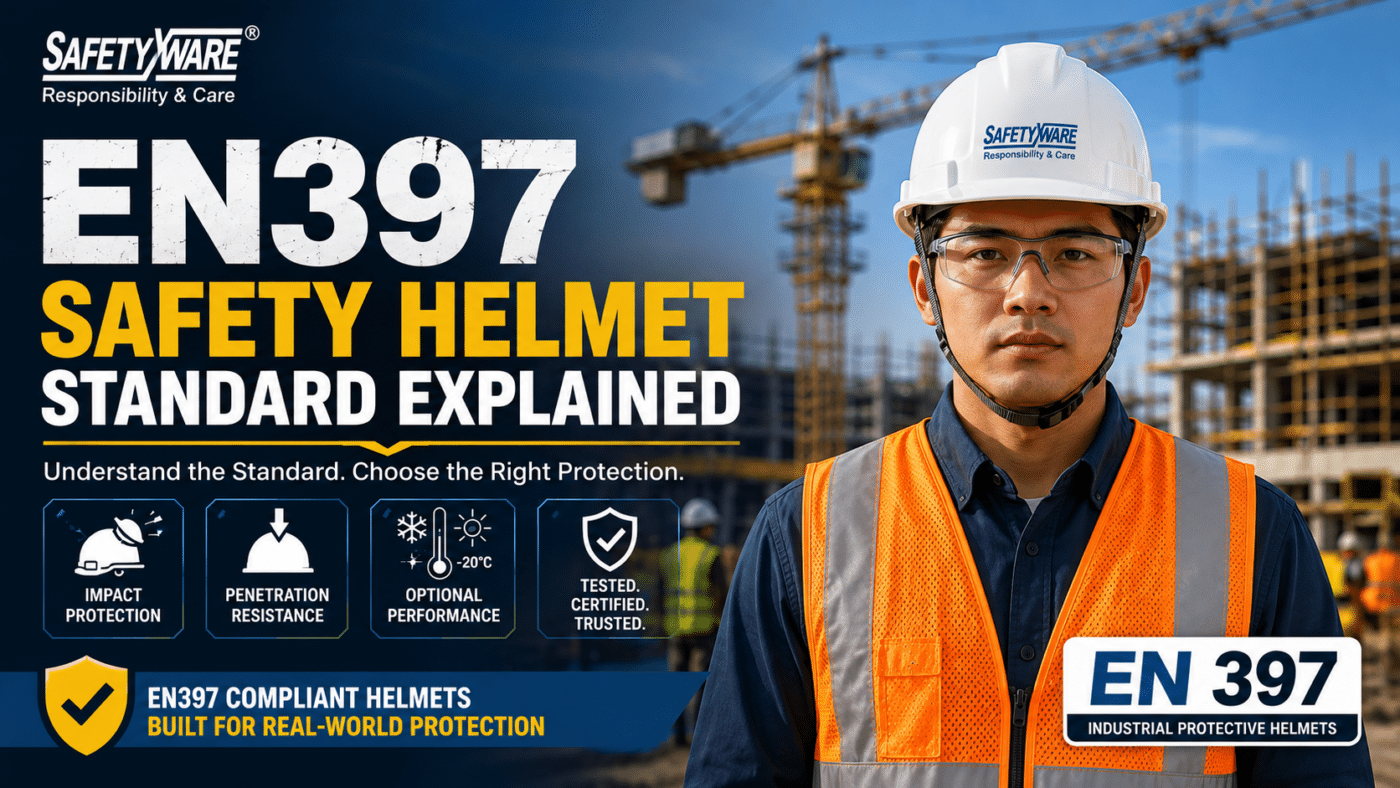
Safety helmets are one of the most important types of personal protective equipment (PPE) used in construction, manufacturing, logistics, utilities, oil and gas, and other industrial workplaces. But simply wearing a hard hat does not automatically mean that it provides the appropriate level of protection. One of the most widely recognised standards for industrial safety helmets is EN397.
The EN 397 standard specifies requirements for the design, performance, testing and marking of industrial protective helmets. It is primarily intended to help protect workers against head injuries caused by impacts and falling objects. For employers and safety professionals in Malaysia, understanding EN397 is particularly important when selecting helmets, checking product certifications and ensuring that PPE is suitable for the hazards present in the workplace.
What Is EN397 Safety Helmet?

EN 397 is a European standard for industrial protective helmets.
The standard establishes requirements for important aspects of helmet performance, including:
- Impact or shock absorption
- Resistance to penetration
- Physical properties and construction
- Flammability
- Fit and adjustment
- Helmet marking
- Additional performance requirements for specific applications
The standard is designed primarily for industrial environments where workers may be exposed to hazards such as falling objects and impacts to the head.
EN 397 should not be confused with standards for other types of head protection. For example, EN 812 applies to industrial bump caps, which are intended for protection against impacts with stationary objects and are not a substitute for an industrial safety helmet where there is a risk of falling objects.
Why Does EN397 Matter?
EN 397 provides a recognised standard for industrial safety helmet performance and protection. It helps employers and workers identify helmets that have been tested against defined requirements for hazards such as impact and penetration.
For workplaces, EN 397 matters because it:
- Helps protect workers against common head-impact hazards.
- Provides a recognised safety benchmark for industrial helmets.
- Supports informed PPE selection based on workplace risks.
- Helps verify helmet performance through standardised testing.
- Makes it easier to compare products based on defined safety requirements.
However, an EN 397 marking alone does not mean every helmet offers the same protection. Employers should also check the standard edition, additional performance requirements, certification and applicable Malaysian DOSH/SIRIM approval before purchasing.
EN397:2012+A1:2012 vs EN397:2025
If you are purchasing safety helmets in 2026, it is important to understand that EN 397 has been updated.
| Feature | EN 397:2012+A1:2012 | EN 397:2025 |
| Status | Superseded | Current European edition |
| Helmet classification | No Type 1/Type 2 system | Introduces Type 1 and Type 2 |
| Crown impact protection | Mandatory | Mandatory |
| Penetration resistance | Mandatory | Mandatory |
| Off-crown impact protection | Not part of mandatory testing | Type 2 includes additional impact protection |
| High-energy crown impact | Not included as a separate requirement | Type 2 requirement |
| Chin strap | Optional, with release requirements if fitted | Type 1 optional; Type 2 mandatory |
| Special-temperature performance | Optional | Additional claimed performance requirements |
| Marking | Required | Updated requirements |
EN 397:2025 introduces a Type 1 / Type 2 classification. Type 1 is primarily intended for protection against impacts on the crown of the helmet, while Type 2 provides broader impact protection, including off-crown impacts and additional high-energy crown impact protection.
For Malaysian buyers, however, the practical approach is to check the actual certification and DOSH/SIRIM approval applicable to the specific helmet model, rather than assuming that every helmet labelled “EN 397” is certified to the latest 2025 edition.
What Does EN397 Test?
EN 397 covers several aspects of industrial helmet performance.
1. Shock Absorption
One of the main purposes of an industrial safety helmet is to reduce the force transmitted to the wearer’s head when an object strikes the helmet.
Under the previous EN 397:2012+A1:2012 requirements, the helmet was subjected to a crown impact test using a 5 kg striker with approximately 49 J of impact energy, with the transmitted force required to remain within the specified limit of 5 kN.
This test represents the helmet’s ability to absorb and dissipate impact energy rather than allowing the full force to be transferred directly to the wearer’s head. EN 397:2025 changes the testing approach and introduces different impact requirements for Type 1 and Type 2 helmets.
Why shock absorption matters?
A helmet may look strong from the outside, but its protective performance depends on the interaction between:
- Helmet shell
- Suspension or harness
- Fit and adjustment
- Material properties
- Helmet design
A properly certified helmet is tested as a complete protective system rather than simply being judged by the thickness or appearance of the shell.
2. Penetration Resistance
EN 397 also tests the helmet’s ability to resist penetration by a sharp object.
Under the previous edition, a 3 kg pointed striker was dropped from a height of 1 metre. The striker must not make contact with the headform.
This test is important because workplace hazards are not always limited to blunt impacts.
Examples of potential hazards include:
- Falling tools
- Sharp construction materials
- Metal components
- Objects falling from scaffolding
- Machinery components
A helmet that passes penetration testing provides an additional barrier between these hazards and the worker’s head.
3. Flammability
EN 397 also includes requirements related to the behaviour of the helmet shell when exposed to flame. The purpose is to ensure that the helmet does not continue to burn or behave dangerously after exposure to the specified flame test.
However, EN 397 certification does not mean that a helmet is automatically suitable for every fire-related application. Workers exposed to significant heat, molten metal, flames or specialised thermal hazards may require additional PPE and a helmet with specific performance claims.
4. Fit, Adjustment and Ergonomics
A safety helmet needs to stay correctly positioned on the worker’s head to provide effective protection.
EN 397 therefore includes requirements relating to helmet sizing, adjustment and ergonomics.
The suspension system should allow the helmet to be adjusted so that it fits securely and comfortably.
Common adjustment systems include:
- Ratchet adjustment
- Slide adjustment
- Webbing suspension
- Plastic suspension systems
A helmet that is too loose, incorrectly adjusted or poorly fitted may move during work and reduce the effectiveness of the protection.
What Are the Optional EN397 Requirements?
Not every EN 397 helmet provides every optional performance characteristic. Some additional requirements apply only when the manufacturer specifically claims that the helmet meets them. Depending on the edition and certification, these may include protection relating to:
Low-temperature performance
Helmets can be tested for performance at temperatures such as -20°C or -30°C, depending on the claimed rating. This is particularly relevant for workers operating in cold environments.
High-temperature performance
Additional testing may be available for helmets intended for elevated-temperature environments.
Electrical insulation
Some industrial helmets may have additional electrical insulation performance. However, an EN 397 helmet should not automatically be assumed to provide electrical protection. Always check the helmet’s specific markings, certification and manufacturer’s technical documentation.
Molten metal protection
Special performance requirements may apply where there is a risk of molten metal splash. This is particularly relevant to certain foundry and metal-processing applications.
EN397 and Safety Helmets in Malaysia
For Malaysian workplaces, EN 397 is commonly encountered when selecting industrial safety helmets. The Department of Occupational Safety and Health (DOSH/JKKP) maintains approval information for head protection products. Its current listings include industrial helmets certified to EN 397:2012+A1:2012, demonstrating that this edition continues to appear in Malaysian approval records even though it has been superseded by EN 397:2025 in Europe.
For example, the DOSH head-protection database includes industrial helmets from various manufacturers with EN 397:2012+A1:2012 listed as the applicable standard. Therefore, Malaysian employers should not select a helmet based on the words “EN 397” alone. Instead, check the complete product certification and local approval requirements applicable to the workplace.
Is EN397 the Same as SIRIM-DOSH Approval?
No. EN 397 is a technical product standard specifying performance and testing requirements for industrial safety helmets. SIRIM and DOSH approval relate to the certification and regulatory requirements applicable to PPE in Malaysia.
A helmet may be tested to EN 397, while Malaysian employers may also need to verify that the specific model has the appropriate local approval.
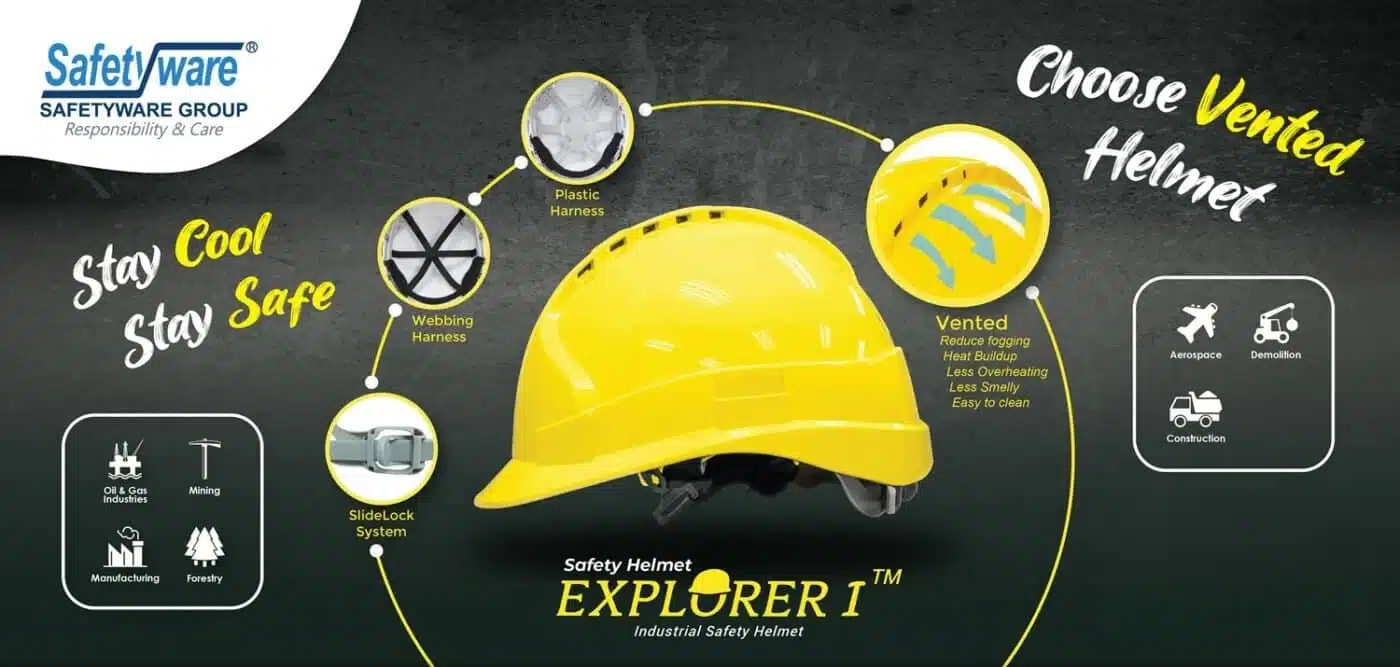
For example, Safetyware’s Explorer I safety helmet is listed as EN 397 compliant and SIRIM-DOSH approved for industrial use in Malaysia. Safetyware’s certification documentation for its Explorer I range has also included certification to BS EN 397:2012+A1:2012.
How to Choose an EN397 Safety Helmet
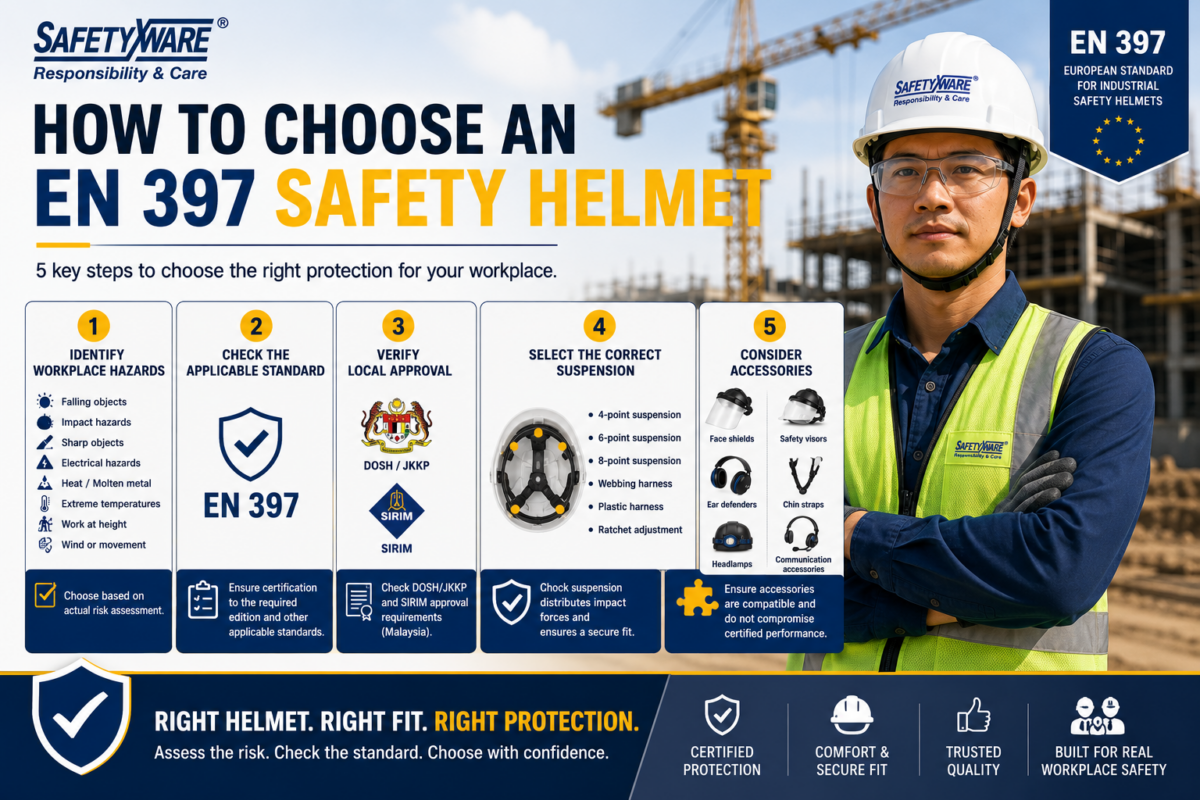
Choosing the right helmet involves more than checking whether EN 397 appears on the product label.
1. Identify the Workplace Hazards
Consider:
- Falling objects
- Impact hazards
- Sharp objects
- Electrical hazards
- Heat
- Molten metal
- Extreme temperatures
- Work at height
- Wind or movement
The helmet should be selected according to the actual risk assessment.
2. Check the Applicable Standard
Confirm whether the product is certified to the required edition of EN 397 and whether additional standards or requirements apply.
3. Verify Local Approval
For Malaysia, check the relevant DOSH/JKKP and SIRIM certification or approval requirements.
4. Select the Correct Suspension
A good suspension system helps distribute impact forces and provides a secure fit.
Common options include:
- 4-point suspension
- 6-point suspension
- 8-point suspension
- Webbing harness
- Plastic harness
- Ratchet adjustment
5. Consider Accessories
Depending on the work environment, a helmet may need to accommodate:
- Face shields
- Safety visors
- Ear defenders
- Chin straps
- Headlamps
- Communication accessories
Make sure accessories are compatible with the helmet and do not compromise its certified performance.
How to Inspect an EN397 Safety Helmet
Even a certified helmet must be inspected regularly.
Before each shift, check for:
- Cracks
- Cuts
- Deformation
- Deep scratches
- Chemical damage
- UV degradation
- Damaged suspension
- Broken straps
- Loose components
- Damaged adjustment mechanisms
- Missing accessories or components
If the helmet has suffered a significant impact, remove it from service and replace it, even if there is no obvious visible damage.
Find your EN397 Safety Helmet at Safetyware
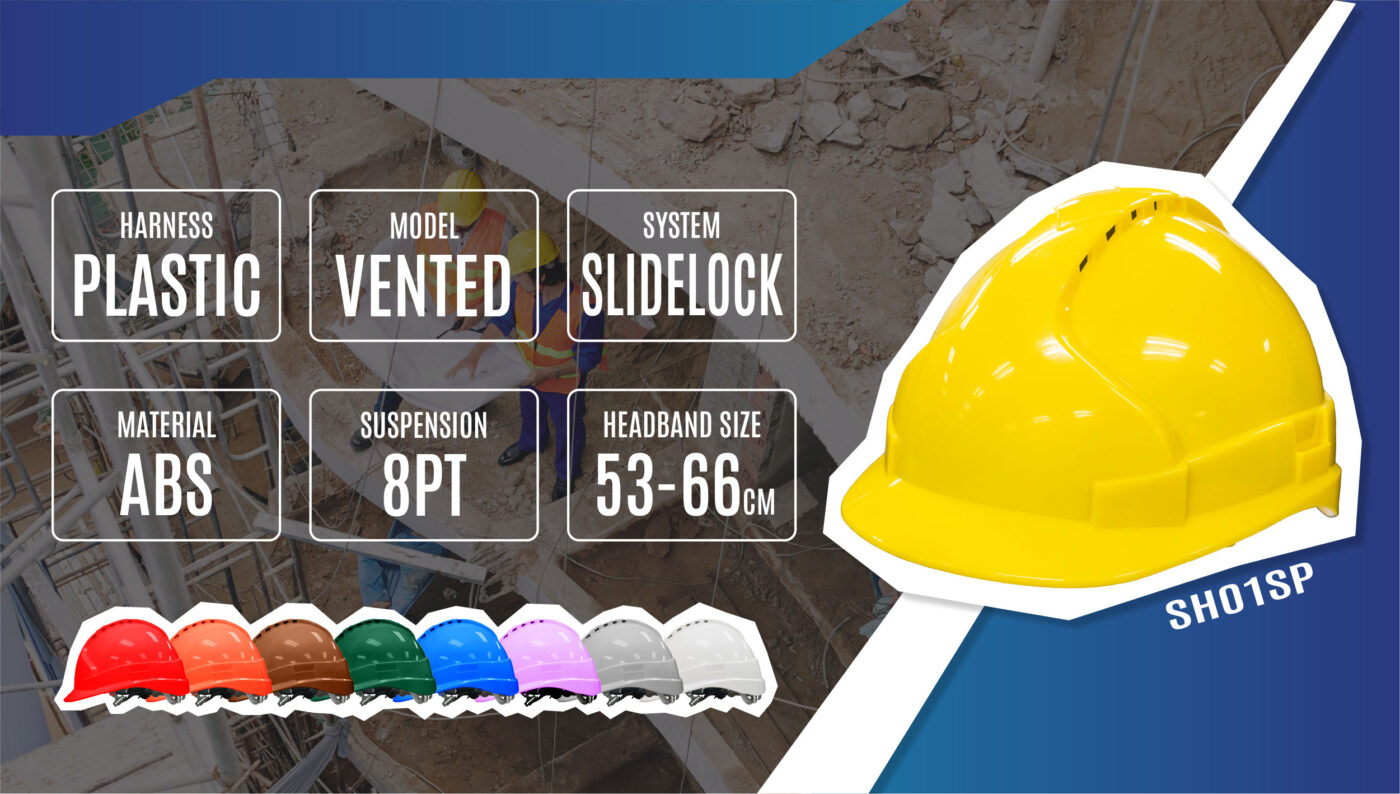
Safetyware offers industrial safety helmets designed for applications including construction, manufacturing, logistics, electrical work and other industrial environments.
SAFETYWARE Explorer I Safety Helmet features an ABS shell, an 8-point suspension system and ratchet adjustment, and is listed as EN 397 compliant and SIRIM-DOSH approved.
👉Explore our Safety Helmet Collection and choose head protection you can rely on
👉Read more on Safety Helmet Lifespan and Inspection Guide: Hard Hat Replacement
Frequently Asked Questions (FAQs)
What does EN 397 mean on a safety helmet?
EN 397 indicates that the industrial safety helmet is designed and tested according to the requirements of the EN 397 standard for industrial protective helmets. The exact performance claims depend on the edition and specific certification.
Does EN 397 protect against falling objects?
Industrial safety helmets covered by EN 397 are primarily intended to reduce the risk of head injury from impacts, including hazards associated with falling objects. The specific level and direction of impact protection depends on the standard edition and helmet type.
How often should an EN 397 helmet be replaced?
There is no single replacement period for every EN 397 helmet. Follow the manufacturer’s service-life recommendation and replace the helmet immediately if it has suffered a significant impact or shows signs of damage or deterioration.
Is EN 397 still valid in 2026?
EN 397:2025 is the current European edition. EN 397:2012+A1:2012 has been superseded in Europe. However, older-edition helmets can still appear in Malaysian approval records, so buyers should check the specific product certification and local approval status.
📞 Need More Information?
Looking for reliable head protection solutions for your workplace?
Explore SAFETYWARE’s safety helmet solutions and workplace PPE range at
👉Safetyware Helmet Catalogs
Our safety specialists can help evaluate workplace hazards, recommend suitable safety helmets, and support compliance with Malaysia workplace safety requirements.
If you need a quotation, feel free to contact us at:
📩 Email: [email protected]
📞 Tel: WhatsApp Us