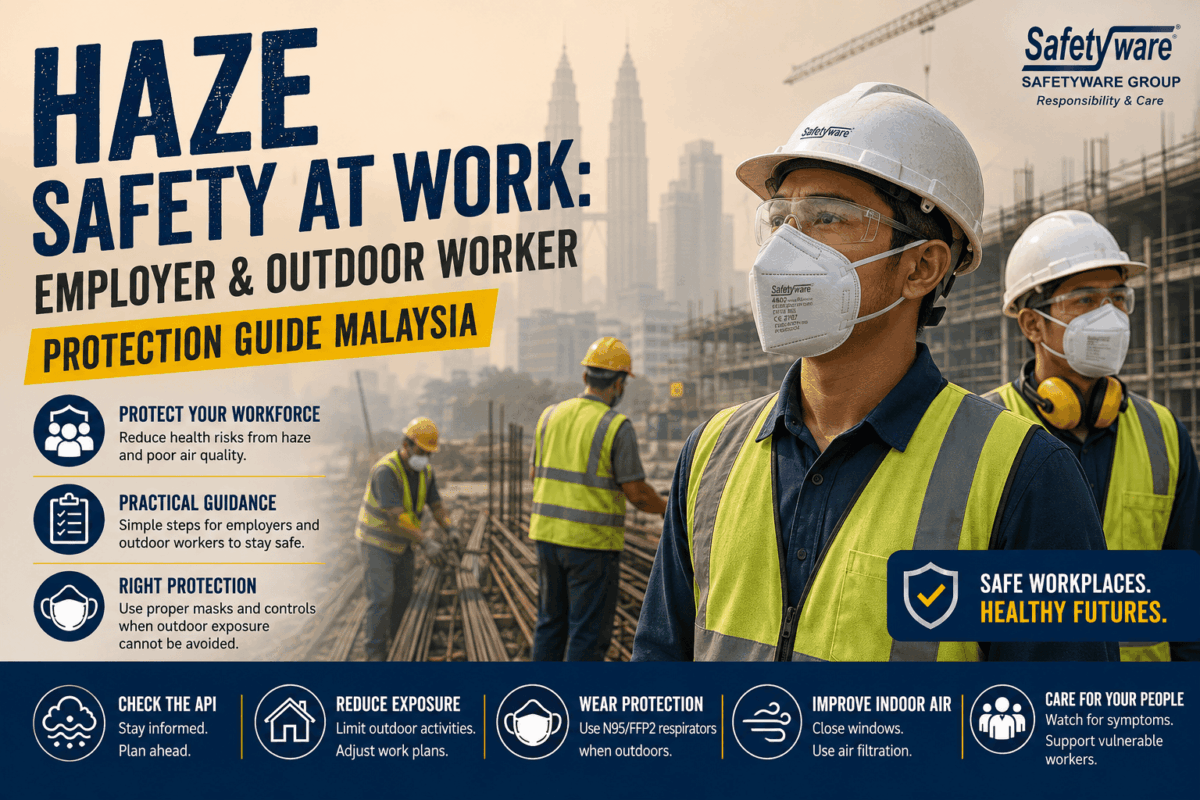
Malaysia’s haze season can create serious occupational health concerns, particularly for employees who spend long hours working outdoors. Construction workers, road crews, agricultural workers, landscapers, security personnel, delivery teams and other outdoor workers may face prolonged exposure to haze. For employers, haze safety at work should not wait until haze becomes severe before taking action especially the recent haze issue happening in Malaysia.
The Department of Occupational Safety and Health (DOSH) recommends that employers assess haze-related risks, identify outdoor activities that may require reduction, establish clear criteria for stopping outdoor work, provide suitable respirators, when necessary, conduct respirator fit testing and maintain clear communication with employees.
The Department of Environment (DOE) uses the Air Pollutant Index (API) to communicate air quality and its potential health effects. Employers can use API readings together with workplace risk assessments to determine appropriate controls for outdoor work.
How Haze Affects Outdoor Workers
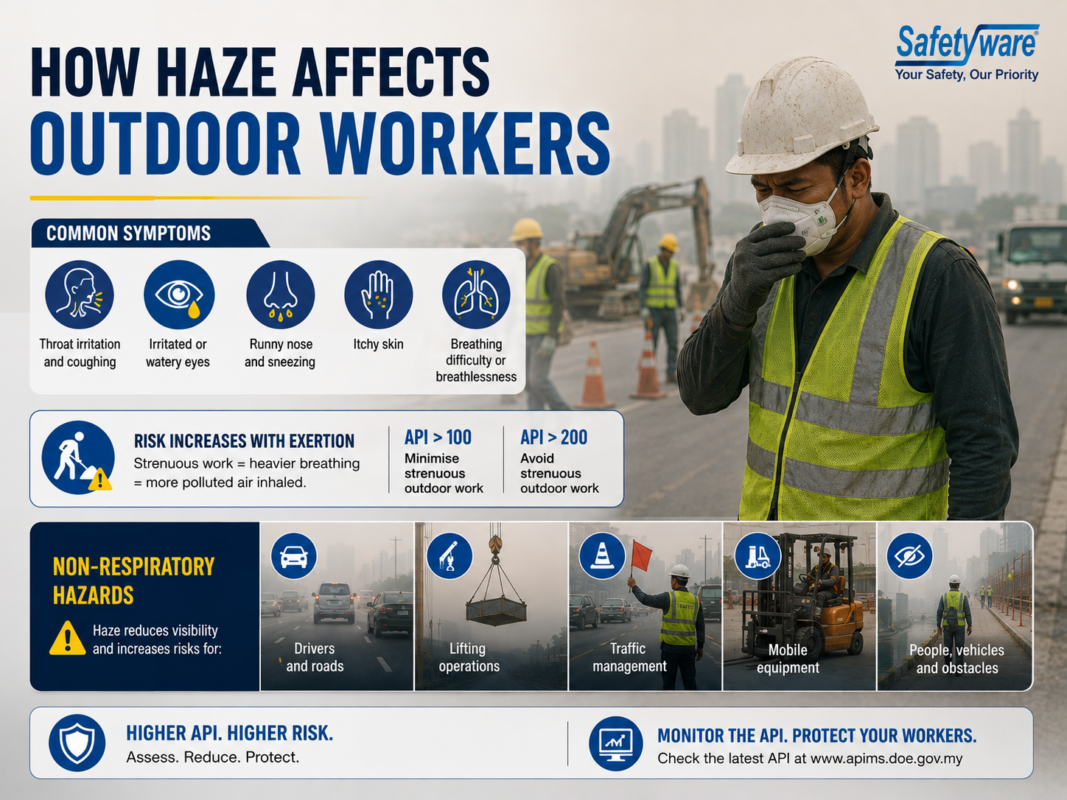
Haze contains fine airborne particles that can be inhaled into the respiratory system. During smoke haze, particulate matter is a major health concern, and DOSH notes that the severity of health effects is related to the API level.
Outdoor workers may experience symptoms such as:
- Throat irritation and coughing
- Irritated or watery eyes
- Runny nose and sneezing
- Itchy skin
- Breathing difficulty or breathlessness
These symptoms are specifically identified in Malaysian workplace haze guidance.
The risk can become greater when workers perform strenuous physical activity because heavier breathing can increase inhalation of polluted air. DOSH therefore recommends minimising strenuous outdoor work when API exceeds 100 and avoiding strenuous outdoor work when API exceeds 200.
Haze can also create non-respiratory workplace hazards. Reduced visibility can affect drivers, lifting operations, traffic management, mobile equipment and other activities where workers need to clearly see people, vehicles or obstacles. DOSH specifically recommends risk assessment for lifting operations at higher API levels because poor visibility can create additional safety risks.
Malaysia API Levels Explained for Workplaces
The Air Pollutant Index (API) is used in Malaysia to communicate the level of air pollution and its potential health effects. The Department of Environment (DOE) is responsible for air-quality monitoring and API information.
For haze safety at work planning, employers can use the following API categories as a practical reference:
| API | Category | Workplace Considerations |
| 0–50 | Good | Normal work activities. Maintain preparedness for possible haze. |
| 51–100 | Moderate | Identify outdoor activities that may need to be reduced. Educate workers, prepare N95 respirators and conduct fit testing for employees who may need respirators. |
| 101–200 | Unhealthy | Initiate N95 respirator use for outdoor employees, minimise strenuous outdoor work and consider moving susceptible workers indoors. |
| 201–300 | Very Unhealthy | Avoid strenuous outdoor work, move susceptible workers indoors and consider temporarily stopping earthworks and earth-moving activities. |
| 301–400 | Hazardous | Assess visibility, use vehicle headlights where appropriate and ensure outdoor workers use N95 respirators. |
| 400–500 | Hazardous | Avoid outdoor work where possible. |
| >500 | Hazardous | Workplace closures may be required depending on government/emergency directives, with essential services treated separately. |
When Should Outdoor Work Be Reduced?
Employers should progressively reduce outdoor work as haze conditions worsen, especially when workers perform strenuous physical activities.
When the API exceeds 100, DOSH recommends minimising strenuous outdoor activities. Employers should move workers indoors if they have difficulty wearing or using respirators outdoors.
When the API exceeds 200, employers should stop strenuous outdoor activities. They should move susceptible employees indoors and assign them less physically demanding work where possible. Employers should also provide suitable respirators for workers who must continue working outdoors and temporarily stop earthworks and earth-moving activities.
When the API exceeds 300, employers should assess activities that may become more dangerous because haze reduces visibility. This assessment is particularly important for tower crane and mobile crane lifting operations.
When the API exceeds 400, employers should avoid outdoor work. Emergency and essential services that must continue should implement additional controls, including suitable respiratory protection, to reduce workers’ exposure to haze.
When Should Workers Wear N95 Respirators?
N95 respirators are designed to filter fine airborne particles and are different from ordinary surgical or disposable face masks. DOSH’s haze workplace guidance states that a suitable respirator should be capable of filtering about 95% of very fine particles and identifies disposable N95 respirators as a preferred option for haze protection.
According to Malaysian workplace haze guidance, employers should prepare sufficient N95 respirators as API reaches the moderate range and should initiate their use by outdoor workers at API 101–200. At API 201–300, all employees performing outdoor work should use suitable respirators, and at API 301–400 all outdoor workers should wear suitable respirators.
At API levels above 400, employers should generally avoid outdoor work instead of relying on respirators as the only protective measure. Respirators provide personal protection, but they should not encourage workers to continue unnecessary outdoor activities during hazardous haze conditions.
Workers should also understand the limitations of particulate respirators. An N95-type respirator helps reduce exposure to airborne particles, but it does not protect against gases, vapours, oxygen-deficient environments or every type of chemical exposure. Employers should therefore select respirators based on the specific hazards identified through the workplace risk assessment.
Read more on Best Mask for Haze in Malaysia: N95 vs Surgical Mask
Respirator Fit Testing and Proper Use
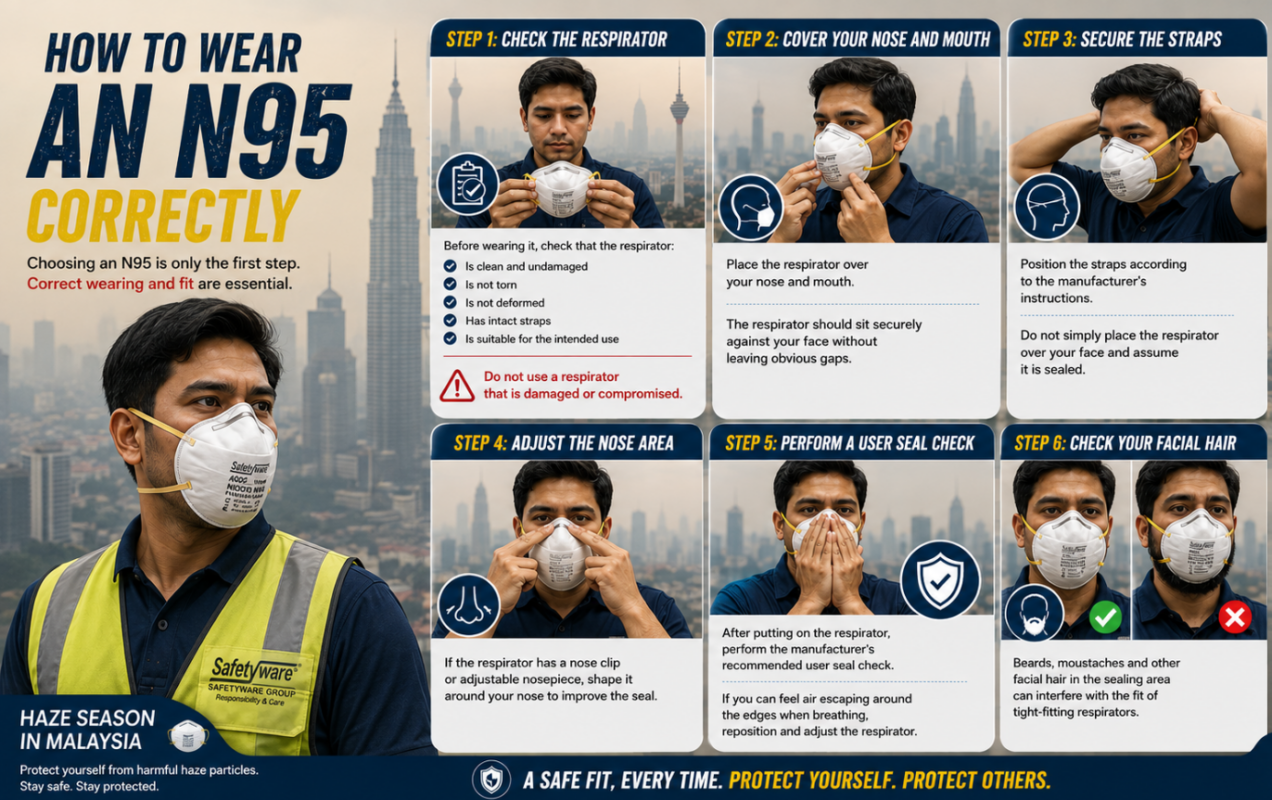
Providing workers with an N95 respirator is not enough. The respirator needs to fit the individual worker properly to provide its intended level of protection. The Malaysian haze workplace guidance also calls for training and supervision to ensure respirators are used correctly.
Fit testing is different from a user seal check:
- Fit testing determines whether a particular respirator model and size can provide an adequate seal for an individual worker.
- User seal checking is performed by the worker every time the respirator is put on, following the manufacturer’s instructions.
- Fit testing may be qualitative or quantitative. Qualitative testing relies on the user’s response to a test agent, while quantitative testing uses instruments to measure leakage or fit performance. Facial hair can interfere with the seal of tight-fitting respirators.
Workers should be trained to:
- Inspect the respirator before use.
- Ensure the respirator covers the nose, mouth and chin as designed.
- Position the straps correctly.
- Adjust the nose clip where provided.
- Perform the required user seal check.
- Avoid wearing a tight-fitting respirator where facial hair prevents an effective seal.
- Replace the respirator when it becomes damaged, soiled or difficult to breathe through.
Employers should also train workers never to pull the respirator below the nose during haze exposure. A respirator that is incorrectly positioned cannot provide the intended protection.
Which Workers Are at Higher Risk?
Employees with existing heart or respiratory illness as more susceptible to the effects of haze. When API exceeds 100, susceptible employees working outdoors should use suitable respiratory protection. If they experience difficulty working outdoors while wearing a respirator, employers should deploy them to indoor work. When API exceeds 200, susceptible employees should be moved indoors, preferably to work that is not physically strenuous.
Employers should therefore have a system for identifying workers who may be more vulnerable without unnecessarily disclosing confidential medical information to supervisors or co-workers.
Managers should also pay attention to workers who develop haze-related symptoms during a shift. DOSH recommends identifying employees with medical symptoms related to haze and advising them to seek medical treatment when appropriate.
Employees should report symptoms such as persistent coughing, breathing difficulty, unusual chest discomfort, severe irritation or other concerning reactions instead of continuing work without assessment.
Employer Haze Preparedness Checklist
A haze response should be prepared before the API reaches hazardous levels. DOSH recommends employers make preparations when there is an increased risk of haze, rather than waiting until conditions become severe.
Employer Haze Preparedness Checklist:
- Monitor official Malaysian API readings regularly.
- Establish an internal haze response procedure.
- Identify employees and tasks that are more vulnerable to haze exposure.
- Identify outdoor activities that should be reduced or stopped at different API levels.
- Establish clear stop-work criteria.
- Conduct respirator fit testing for employees who may need respiratory protection.
- Maintain sufficient stock of suitable N95 or other appropriate particulate respirators.
- Train workers on respirator fitting, seal checking, use and replacement.
- Improve indoor air cleaning and filtration where practical.
- Keep doors and windows closed as appropriate to reduce haze infiltration.
- Inspect air-conditioning and air-cleaning systems.
- Provide a communication channel for haze updates.
- Give employees a way to report haze-related symptoms or concerns.
- Reassign susceptible workers indoors when necessary.
- Review activities affected by poor visibility, such as driving, lifting and mobile equipment operations.
PPEs to Prepare for Haze Safety at Work
Respiratory protection should be the main PPE consideration during haze conditions. However, outdoor workers may still need other PPE based on the hazards associated with their regular job duties.
N95 or Suitable Particulate Respirators
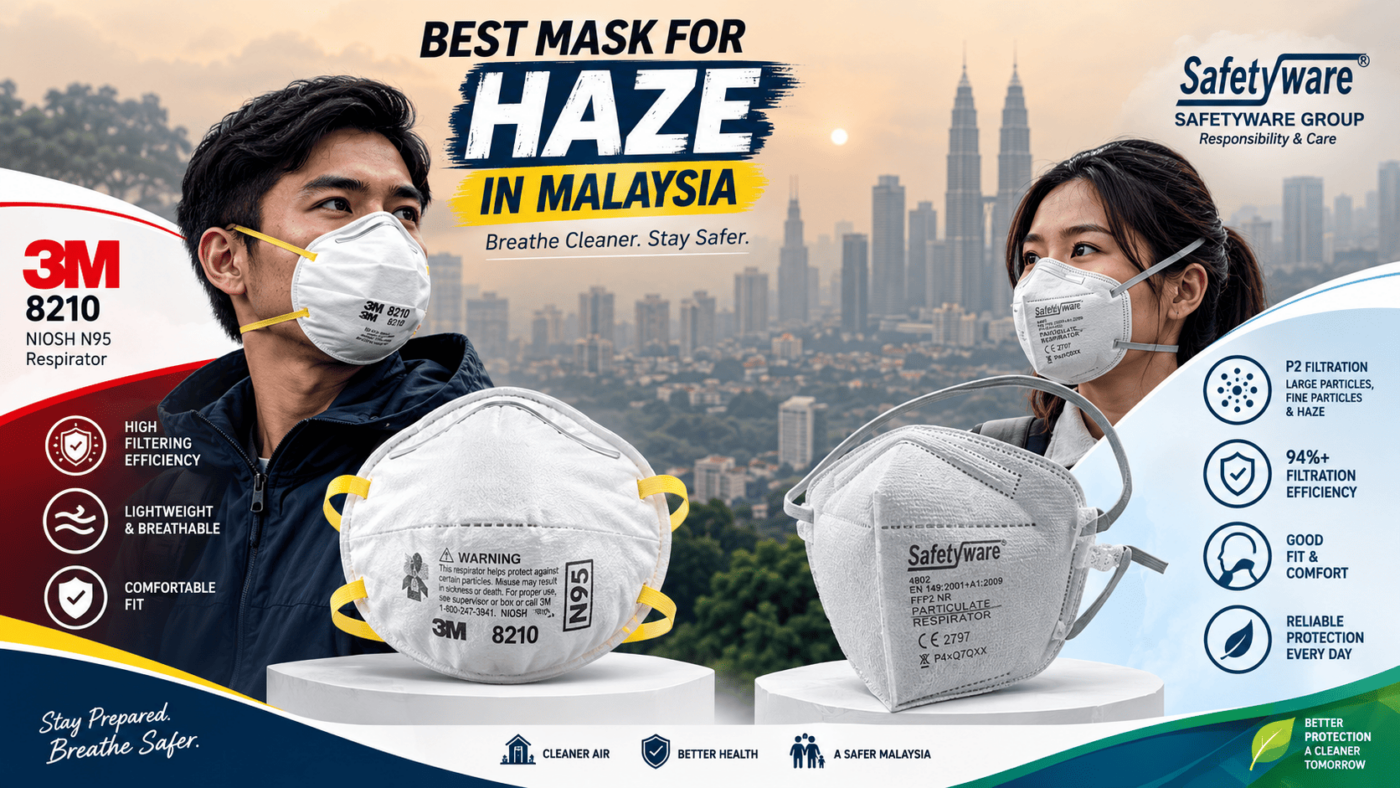
Maintain an adequate stock before haze conditions deteriorate. Employers should select respirators that are appropriate for particulate exposure and suitable for the worker’s face and task.
Eye Protection
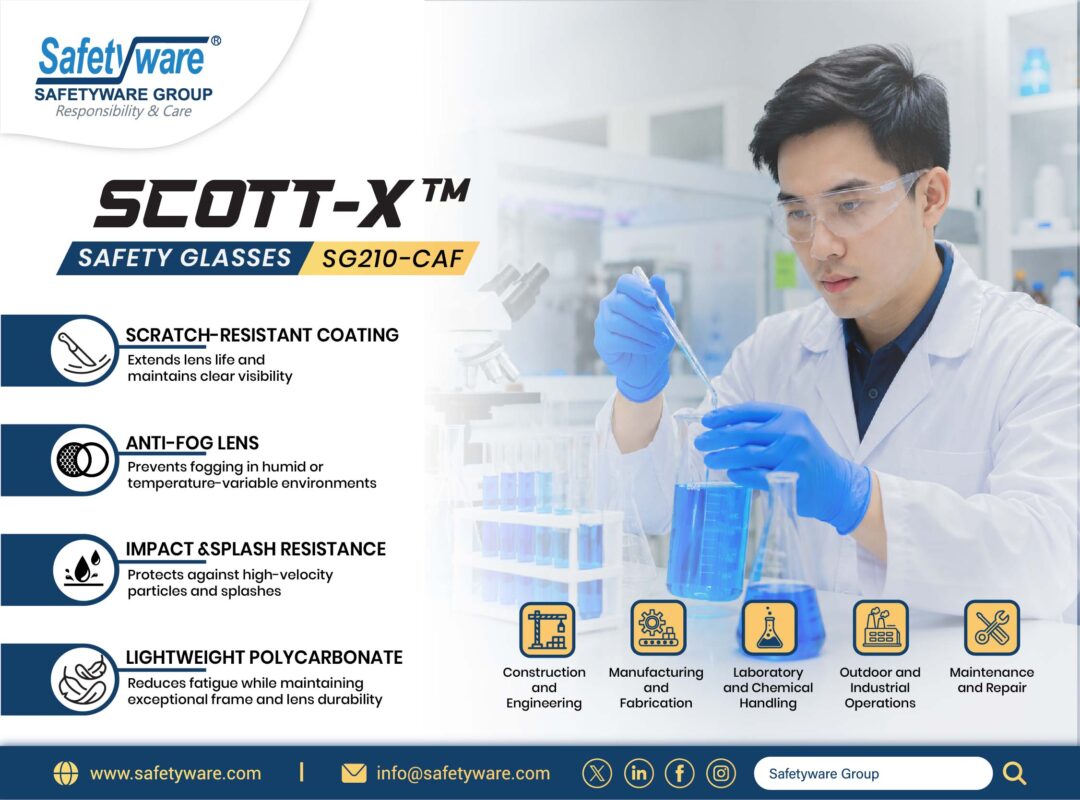
Workers exposed to outdoor haze may experience eye irritation. Workers who face dust, flying particles, chemical splashes or other eye hazards should continue wearing suitable safety spectacles or goggles according to the workplace risk assessment.
High-Visibility PPE
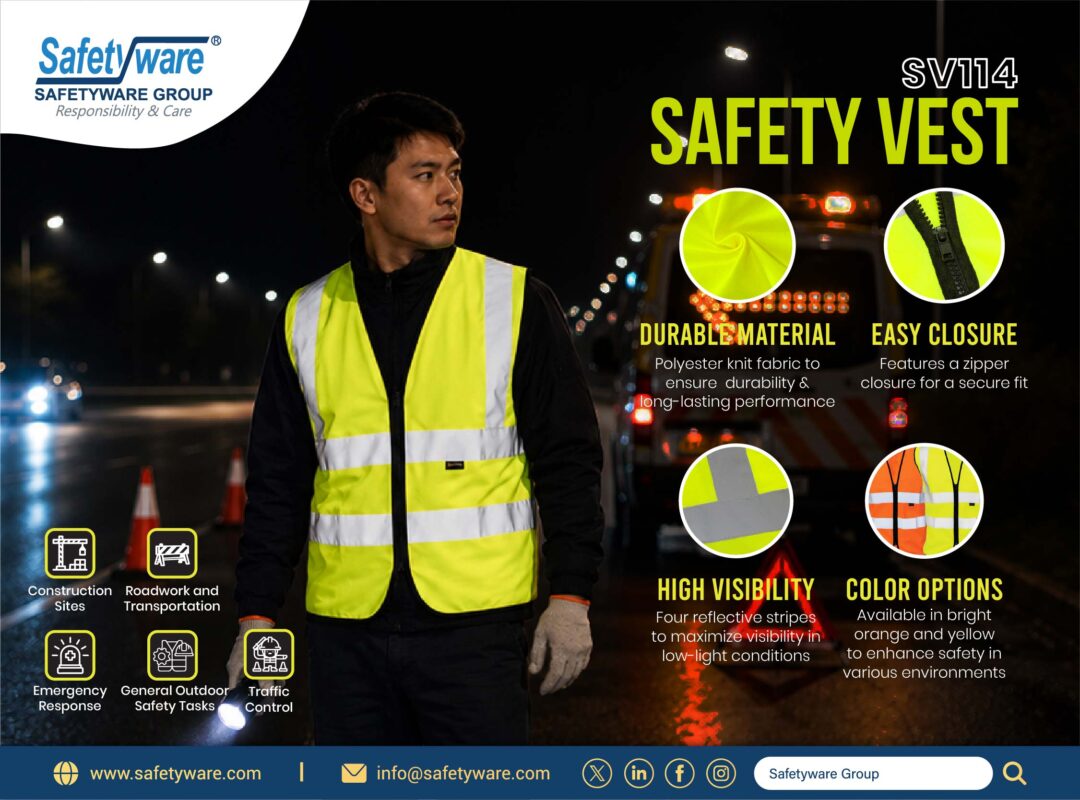
Poor visibility during severe haze can increase the risk of vehicle-worker interactions. Outdoor workers who already require high-visibility clothing should continue using appropriate high-visibility garments. However, high-visibility PPE does not replace respiratory protection or reduce exposure to haze.
Haze Safety at Work Start Today!
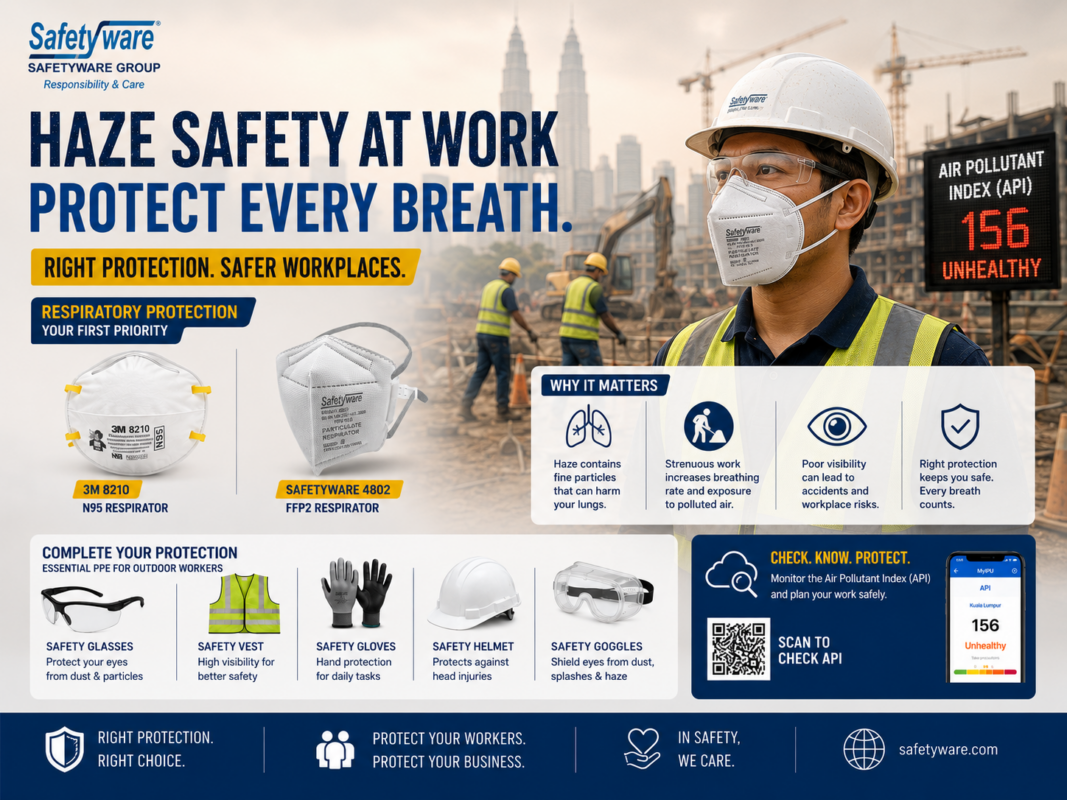
Haze conditions can change quickly, so employers should prepare essential PPE before air quality deteriorates. Having suitable respiratory protection and workplace PPE readily available can help organisations respond more effectively when outdoor workers need additional protection.
Safetyware offers a range of workplace PPE to help organisations prepare not only haze conditions but offers wide range of industrial PPE solutions for different industries and working environments.
🔥 Shop for N95 Respirators from Safetyware in Shopee
👉 Explore full range catalogue of our Respiratory Protection at Safetyware
Read more on Best Mask for Haze in Malaysia: N95 vs Surgical Mask
Read more on Malaysia Haze 2026: How to Protect Yourself from Haze and PM2.5
Frequently Asked Questions (FAQs)
1. What should employers do when haze affects the workplace?
Employers should monitor Malaysia’s Air Pollutant Index (API), assess haze-related risks, identify outdoor activities that can be reduced or stopped, and communicate appropriate precautions to employees. Where necessary, employers should move susceptible workers indoors, reduce strenuous outdoor work and provide suitable respiratory protection.
2. At what API level should outdoor work be reduced?
DOSH guidance recommends minimising strenuous outdoor work when the API exceeds 100. When the API exceeds 200, employers should stop strenuous outdoor activities and move susceptible workers indoors where possible. At API levels above 400, employers should generally avoid outdoor work, except when essential services must continue with appropriate safety controls.
3. When should outdoor workers wear N95 or FFP2 respirators?
Respiratory protection should be introduced as haze safety at work. Malaysian workplace guidance recommends initiating N95 respirator use for outdoor workers when API reaches 101–200, with suitable respiratory protection continuing at higher API levels where outdoor work must continue.
4. Where can employers buy PPE for haze protection in Malaysia?
Employers can obtain respiratory protection and other workplace PPE from Safetyware, including particulate respirators and PPE for construction, manufacturing, logistics, roadwork and other industries. 👉 Visit Safetyware full range catalogue
📞 Need More Information?
Looking for reliable Respiratory protection solutions for your workplace?
Explore SAFETYWARE’s Respiratory protection full range at
👉Safetyware Catalogs
Our safety specialists can help evaluate workplace hazards, recommend suitable safety helmets, and support compliance with Malaysia workplace safety requirements.
If you need a quotation, feel free to contact us at:
📩 Email: [email protected]
📞 Tel: WhatsApp Us