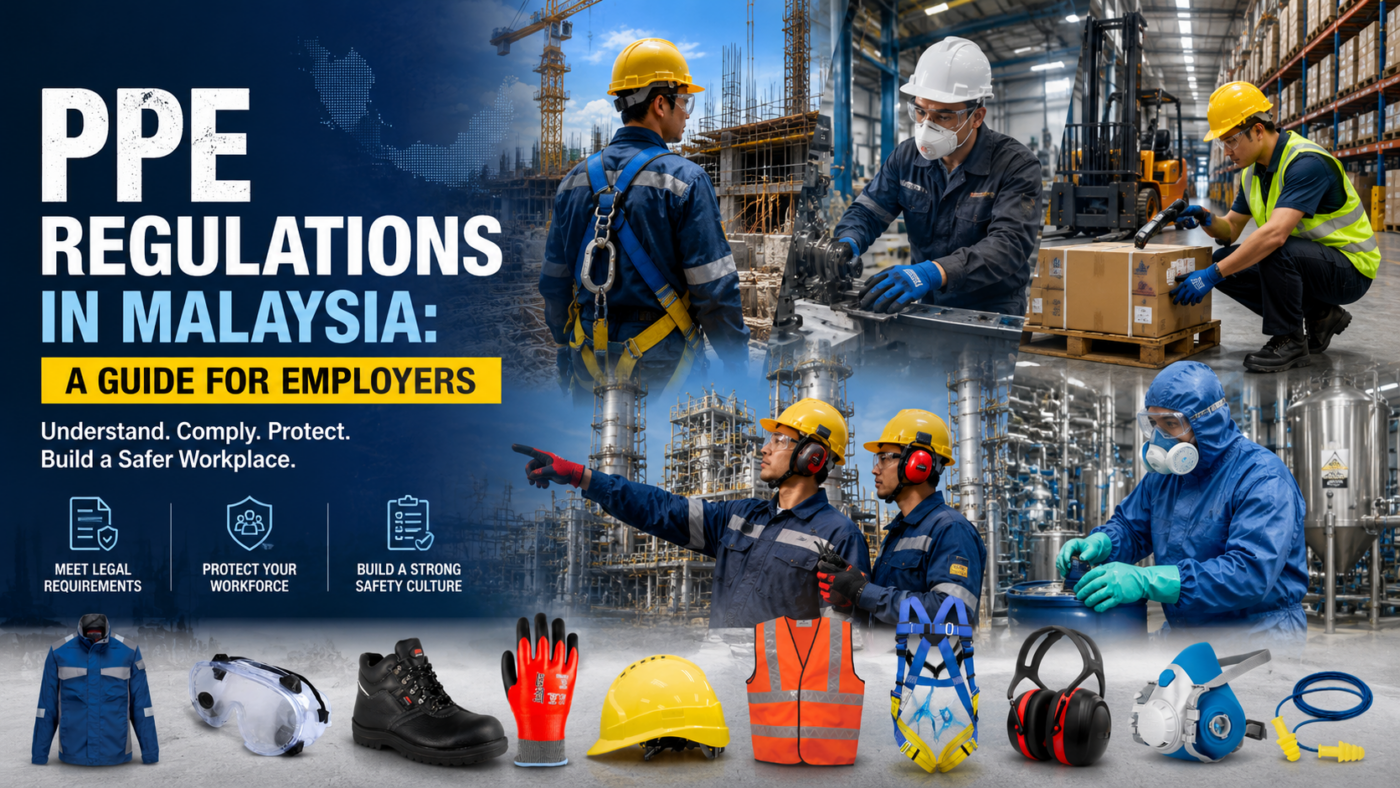
Personal Protective Equipment (PPE) is one of the most important safeguards for protecting workers from workplace hazards. In Malaysia, employers are legally required to comply with Malaysian PPE regulations which to provide suitable PPE whenever risks cannot be eliminated through engineering or administrative controls.
Failure to comply with Malaysian PPE regulations may expose employees to serious injuries, increase business liabilities, and result in enforcement action by the Department of Occupational Safety and Health (DOSH). This guide explains the PPE regulations in Malaysia, employer responsibilities, employee duties, applicable legislation, PPE standards, and best practices for maintaining workplace compliance.
What is Personal Protective Equipment (PPE)?
PPE refers to clothing, equipment, or devices worn by workers to minimize exposure to workplace hazards that could cause injury or illness.
PPE serves as the final line of defense after all other hazard control measures have been implemented.
Common examples include:
- Safety helmets
- Safety shoes
- Safety gloves
- Safety goggles
- Face shields
- Respirators
- Hearing protection
- High visibility clothing
- Fall protection harnesses
- Protective clothing
Why PPE Regulations Matter in Malaysia?
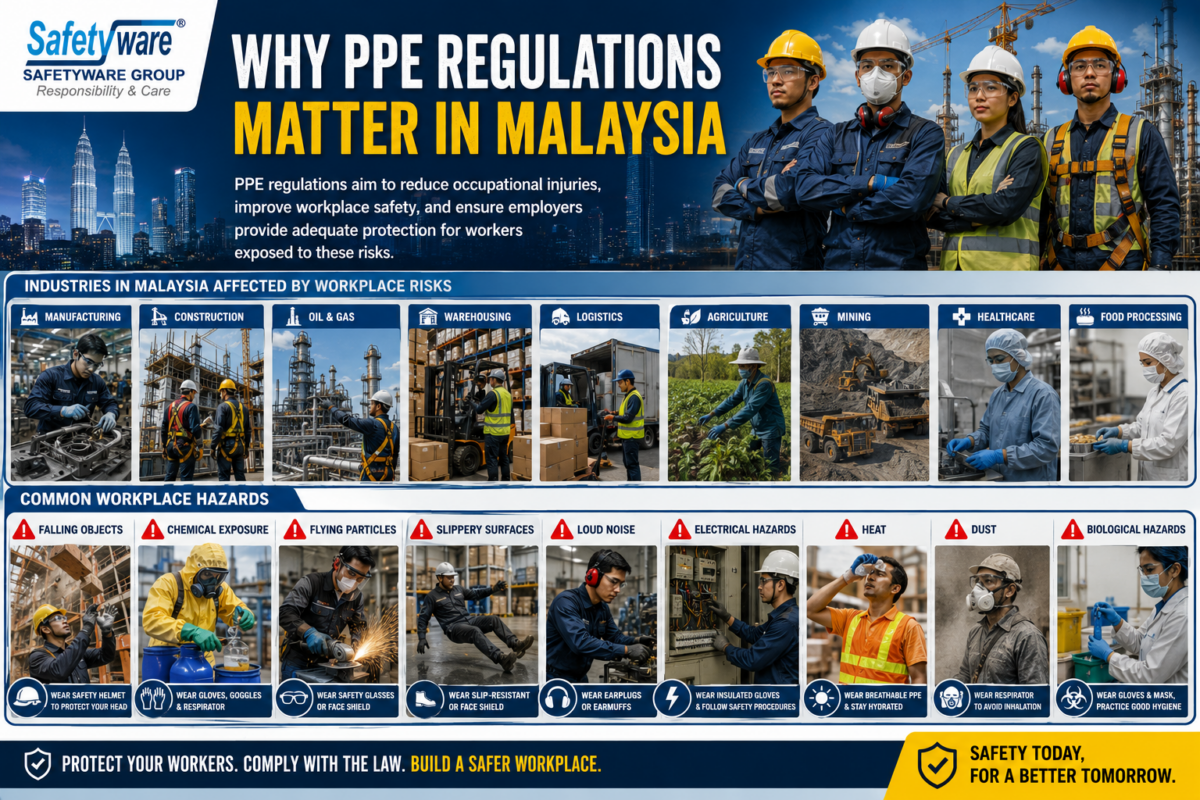
Malaysia continues to experience workplace accidents across industries such as:
- Manufacturing
- Construction
- Oil & Gas
- Warehousing
- Logistics
- Agriculture
- Mining
- Healthcare
- Food Processing
Common workplace hazards include:
- Falling objects
- Chemical exposure
- Flying particles
- Slippery surfaces
- Loud noise
- Electrical hazards
- Heat
- Dust
- Biological hazards
PPE regulations aim to reduce occupational injuries, improve workplace safety, and ensure employers provide adequate protection for workers exposed to these risks.
Malaysian Laws Governing PPE
Occupational Safety and Health Act 2022 (Act 514)
The Occupational Safety and Health Act 2022 (OSHA 2022) is Malaysia’s primary legislation governing workplace safety and health.
The Act places a legal duty on employers to ensure, so far as is reasonably practicable, the safety, health, and welfare of employees at work.
This includes:
- Identifying workplace hazards
- Conducting risk assessments
- Implementing hazard control measures
- Providing suitable PPE where necessary
- Maintaining PPE in good condition
- Ensuring employees receive proper PPE training
Occupational Safety and Health (Use and Standards of Exposure of Chemicals Hazardous to Health) Regulations 2000 (USECHH)
Where employees work with hazardous chemicals, employers must:
- Conduct Chemical Health Risk Assessments (CHRA)
- Provide appropriate chemical-resistant PPE
- Ensure PPE is suitable for the specific chemical hazards
- Replace damaged PPE immediately
- Train workers in proper PPE use
Examples include:
- Chemical-resistant gloves
- Chemical splash goggles
- Face shields
- Chemical suits
- Respirators
Employer Responsibilities Under Malaysian PPE Regulations
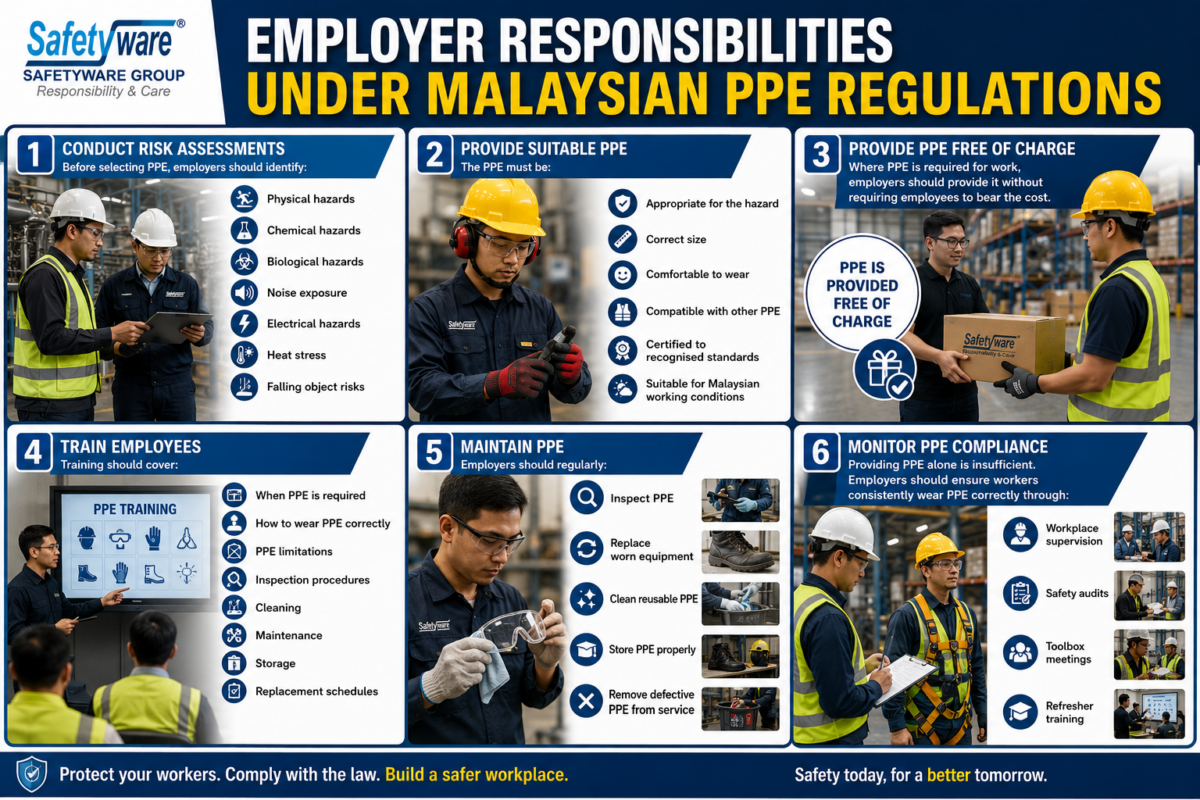
Employers have several legal responsibilities regarding PPE.
1. Conduct Risk Assessments
Before selecting PPE, employers should identify:
- Physical hazards
- Chemical hazards
- Biological hazards
- Noise exposure
- Electrical hazards
- Heat stress
- Falling object risks
2. Provide Suitable PPE
The PPE must be:
Appropriate for the hazard
- Correct size
- Comfortable to wear
- Compatible with other PPE
- Certified to recognised standards
- Suitable for Malaysian working conditions
Provide PPE Free of Charge
Where PPE is required for work, employers should provide it without requiring employees to bear the cost.
3. Train Employees
Training should cover:
- When PPE is required
- How to wear PPE correctly
- PPE limitations
- Inspection procedures
- Cleaning
- Maintenance
- Storage
- Replacement schedules
4. Maintain PPE
Employers should regularly:
- Inspect PPE
- Replace worn equipment
- Clean reusable PPE
- Store PPE properly
- Remove defective PPE from service
5. Monitor PPE Compliance
Providing PPE alone is insufficient.
Employers should ensure workers consistently wear PPE correctly through:
- Workplace supervision
- Safety audits
- Toolbox meetings
- Refresher training
Employee Responsibilities
Employees also have legal obligations.
Workers should:
- Wear PPE provided
- Follow safety instructions
- Inspect PPE before use
- Report damaged PPE
- Avoid modifying PPE
- Keep PPE clean
- Store PPE properly
PPE Standards Recognised in Malaysia
Malaysia commonly adopts internationally recognised PPE standards. Employers should ensure PPE complies with the relevant certification requirements.
| PPE | Common Standards |
| Safety Helmets | EN 397 |
| Industrial Safety Helmets (Electrical) | EN 50365 |
| Safety Shoes | EN ISO 20345 |
| Safety Glasses | EN 166 |
| Chemical Goggles | EN 166 |
| Face Shields | EN 166 |
| Hearing Protection | EN 352 |
| Respirators | EN 149, EN 140, EN 143, EN 14387 |
| Protective Gloves | EN 388, EN ISO 374, EN 407, EN 511 |
| High Visibility Clothing | EN ISO 20471 |
| Fall Protection | EN 361 |
Industry-Specific PPE Requirements
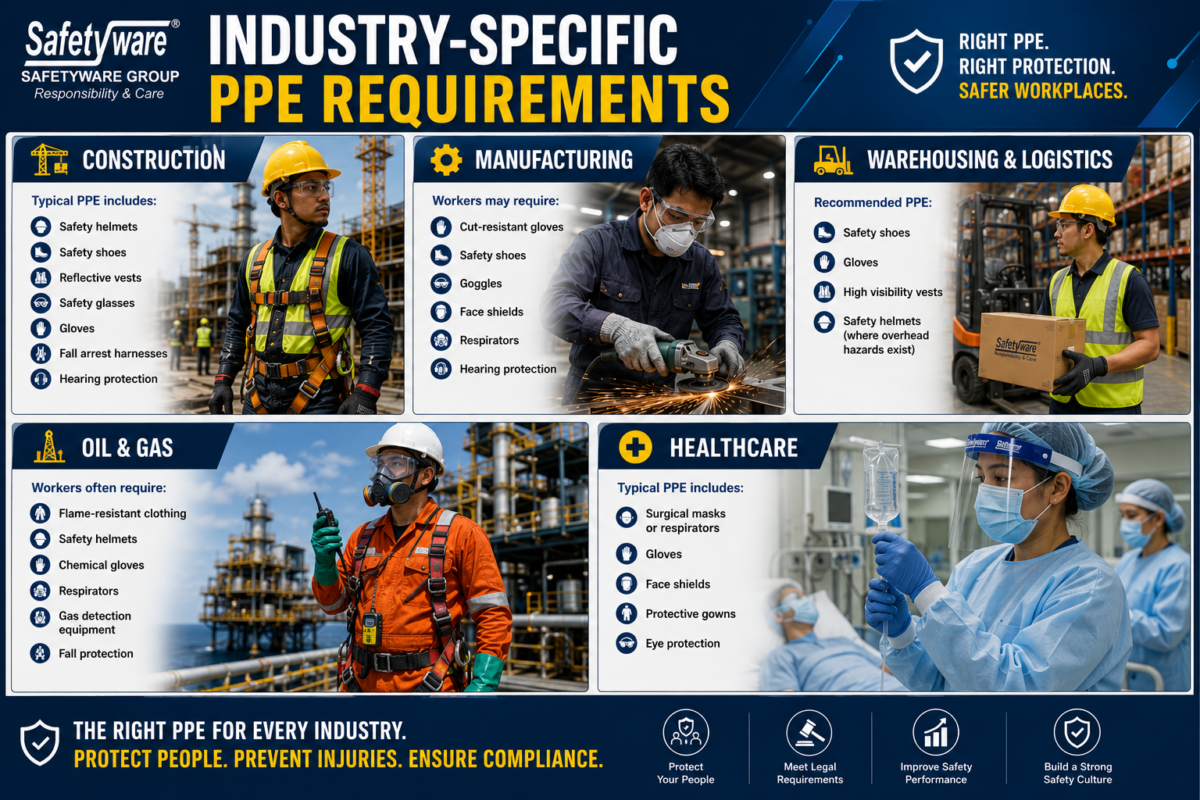
Construction
Typical PPE includes:
- Safety helmets
- Safety shoes
- Reflective vests
- Safety glasses
- Gloves
- Fall arrest harnesses
- Hearing protection
Manufacturing
Workers may require:
- Cut-resistant gloves
- Safety shoes
- Goggles
- Face shields
- Respirators
- Hearing protection
Warehousing & Logistics
Recommended PPE:
- Safety shoes
- Gloves
- High visibility vests
- Safety helmets (where overhead hazards exist)
Oil & Gas
Workers often require:
- Flame-resistant clothing
- Safety helmets
- Chemical gloves
- Respirators
- Gas detection equipment
- Fall protection
Healthcare
Typical PPE includes:
- Surgical masks or respirators
- Gloves
- Face shields
- Protective gowns
- Eye protection
Common PPE Compliance Mistakes
Many workplaces unintentionally reduce the effectiveness of their PPE programmes by:
- Purchasing PPE based only on price.
- Providing one type of PPE for all hazards.
- Failing to conduct risk assessments.
- Not replacing damaged PPE promptly.
- Neglecting employee training.
- Poor PPE storage and maintenance.
- Inadequate supervision of PPE use.
- Using non-certified PPE.
Avoiding these common mistakes helps improve worker protection and supports compliance with Malaysian workplace safety requirements.
Choosing Safetyware Certified PPE for Workplace Compliance
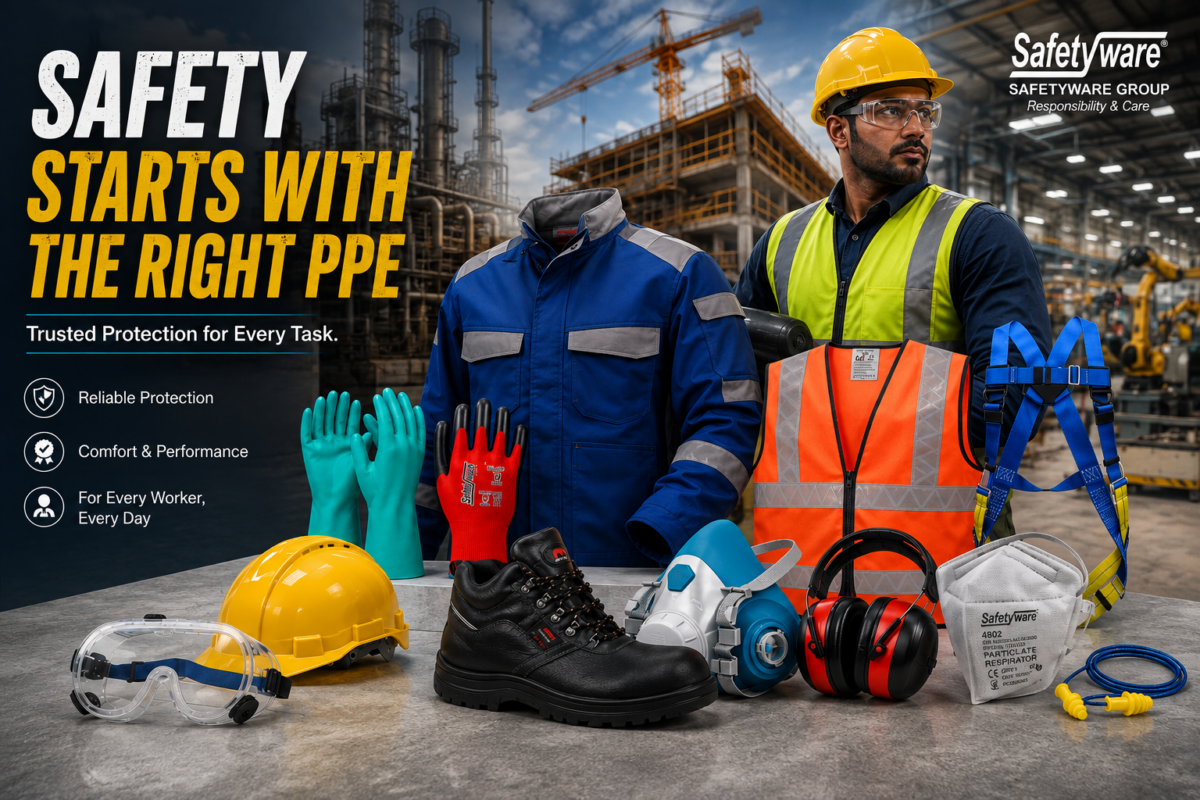
Complying with Malaysian PPE regulations involves more than simply providing protective equipment. Employers should ensure that PPE is appropriate for the identified hazards, complies with relevant safety standards, fits workers correctly, and is properly maintained throughout its service life.
As a leading PPE manufacturer and safety equipment supplier in Malaysia, Safetyware offers a comprehensive range of certified workplace safety solutions for industries including manufacturing, construction, oil and gas, logistics, warehousing, healthcare, food processing, and utilities. The company’s product portfolio includes head-to-toe PPE such as safety helmets, safety footwear, gloves, respiratory protection, eye and face protection, hearing protection, fall protection, and protective clothing, helping employers meet workplace safety requirements with reliable and compliant solutions.
👉 Explore Ssafetyware for Full Range PPE catalogues
👉 Read more on PPE for Manufacturing in Malaysia: Factory Safety Equipment Guide & OSHA 1994 Compliance
Frequently Asked Questions (FAQs)
1. Is employers’ provision of PPE mandatory in Malaysia?
Yes. Employers must provide suitable PPE when workplace hazards cannot be adequately controlled through other measures and ensure it is properly maintained and used.
2. Can employers charge employees for required PPE?
Where PPE is necessary for work, employers are generally expected to provide it without passing the cost to employees.
3. What PPE standards are commonly recognised in Malaysia?
Common standards include EN 397 for safety helmets, EN ISO 20345 for safety footwear, EN 166 for eye and face protection, EN 352 for hearing protection, EN 149 for filtering facepiece respirators, EN 388 for mechanical protection gloves, and EN ISO 374 for chemical protective gloves.
4. How often should PPE be inspected?
PPE should be inspected before each use by the wearer, with regular documented inspections and maintenance carried out according to the manufacturer’s instructions and the workplace risk assessment.
📞 Need More Information?
Looking for reliable Full protection solutions for your workplace?
Explore SAFETYWARE’s safety shoes and workplace PPE range at
👉Safetyware Catalogs
Our safety specialists can help evaluate workplace hazards, recommend suitable safety helmets, and support compliance with Malaysia workplace safety requirements.
If you need a quotation, feel free to contact us at:
📩 Email: [email protected]
📞 Tel: WhatsApp Us