Manufacturing is the backbone of Malaysia’s economy, contributing significantly to GDP and employing millions of workers across industries such as electronics, automotive, rubber, chemicals, and food production. However, it is also one of the most hazardous working environments in the country. According to DOSH (Department of Occupational Safety and Health), manufacturing consistently ranks among the top sectors for workplace injuries and occupational disease cases.
Therefore, an effective factory safety programme must prioritize Personal Protective Equipment (PPE). In Malaysia, workers are entitled to appropriate PPE under the Occupational Safety and Health Act 1994 (OSHA 1994). Additionally, employers must provide PPE at no cost to employees. Depending on the hazards present, PPE typically includes safety footwear, hearing protection (above 85 dB), eye protection, gloves, and respiratory protection.
This guide explains the key PPE categories, relevant certifications, and specific requirements across different manufacturing sub-sectors.
OSHA 1994 and Employer’s Duty
The primary legal framework governing workplace PPE in Malaysia is the Occupational Safety and Health Act 1994 (OSHA 1994). Under Section 15, employers must ensure the safety, health, and welfare of employees as far as practicable. This includes providing and maintaining appropriate PPE.
Furthermore, Section 29 clearly states that employers cannot charge employees for PPE. If workers must wear protective equipment to perform their duties safely, the employer must bear the full cost.
In addition, the Factories and Machinery Act 1967 (FMA) applies to many manufacturing environments. It sets requirements for machinery guarding, pressure systems, and lifting equipment. As a result, these requirements indirectly define PPE obligations. DOSH officers may conduct unannounced inspections, and non-compliance can lead to stop-work orders, fines, or prosecution.
PPE Legal Requirements for Manufacturers in Malaysia
OSHA 1994 and the Employer’s Duty of Care
The primary legal framework governing workplace PPE in Malaysian manufacturing is the Occupational Safety and Health Act 1994 (OSHA 1994). Under Section 15, every employer has a general duty to ensure, so far as is practicable, the safety, health, and welfare at work of all employees. This includes the provision and maintenance of PPE.
Critically, Section 29 of OSHA 1994 prohibits employers from charging employees for PPE. If workers are required to wear protective equipment to do their job safely, the employer bears the full cost.
The Factories and Machinery Act 1967 (FMA) also apply to many manufacturing environments, setting out specific requirements for machinery guarding, pressure vessels, and lifting equipment — each of which creates PPE obligations. DOSH officers can and do conduct unannounced factory inspections, during which PPE compliance (or the lack of it) can result in stop-work orders, fines, and prosecution.
HIRARC: The Foundation of PPE Selection
Under OSHA 1994, employers must conduct HIRARC (Hazard Identification, Risk Assessment, and Risk Control) before selecting PPE. This process is critical because it ensures PPE is chosen based on actual workplace risks.
Specifically, HIRARC:
• Identifies hazards
• Assesses risk severity and likelihood
• Determines appropriate control measures
Controls follow this hierarchy:
1. Elimination — remove the hazard completely
2. Substitution — replace with a safer alternative
3. Engineering controls — guards, enclosures, ventilation
4. Administrative controls — procedures, training, rotation
5. PPE — final layer of protection
Importantly, PPE should never be the first control measure. Instead, it acts as the last line of defense when other controls are insufficient.
This hierarchy matters because PPE should never be the first response to a hazard — it is the final layer of protection when other controls are insufficient or impractical.
Know More
The 7 Core PPE Categories Every Malaysian Factory Needs
1. Foot Protection — Safety Shoes and Boots
Safety footwear is the most universally required PPE on the manufacturing floor. The international standard EN ISO 20345 classifies safety shoes by protection level:
- S1 — steel toe cap (200J impact resistance), anti-static, energy absorbing heel. Suitable for most dry manufacturing environments.
- S2 — S1 plus water penetration resistance. Appropriate for light liquid exposure.
- S3 — S2 plus midsole penetration resistance and cleated outsole. Required where sharp objects on the floor (nails, metal swarf) pose a puncture risk.
For electronics and semiconductor manufacturing, footwear must also carry an ESD (electrostatic discharge) rating, preventing static build-up that could damage sensitive components or ignite flammable vapors. Look for the ESD symbol (a hand touching a triangle) on compliant footwear.
For wet processing environments — beverage production, chemical plants, wet food handling — S5-rated rubber or PVC boots with slip-resistant soles (SRC rated) are recommended.
Key certification: EN ISO 20345 (S1 to S5) | ESD per EN 61340-5-1
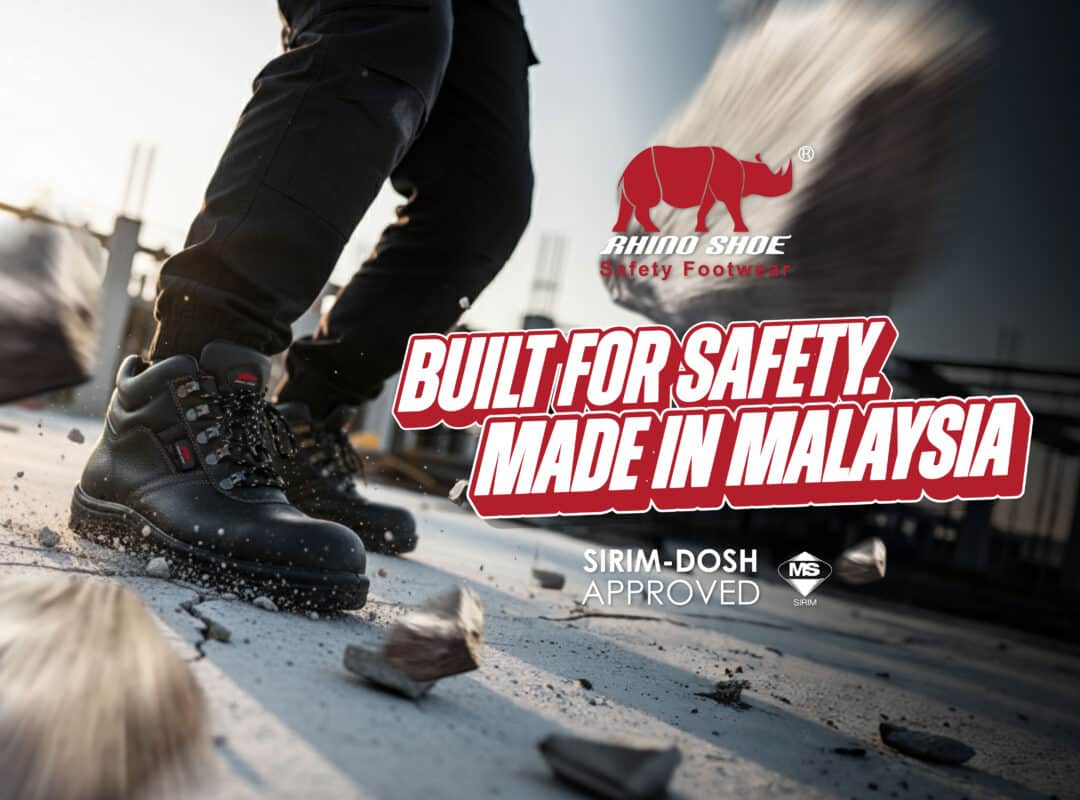
Rhino Safety Shoes – Built for safety and durability in Malaysian industrial environments.
2. Hearing Protection
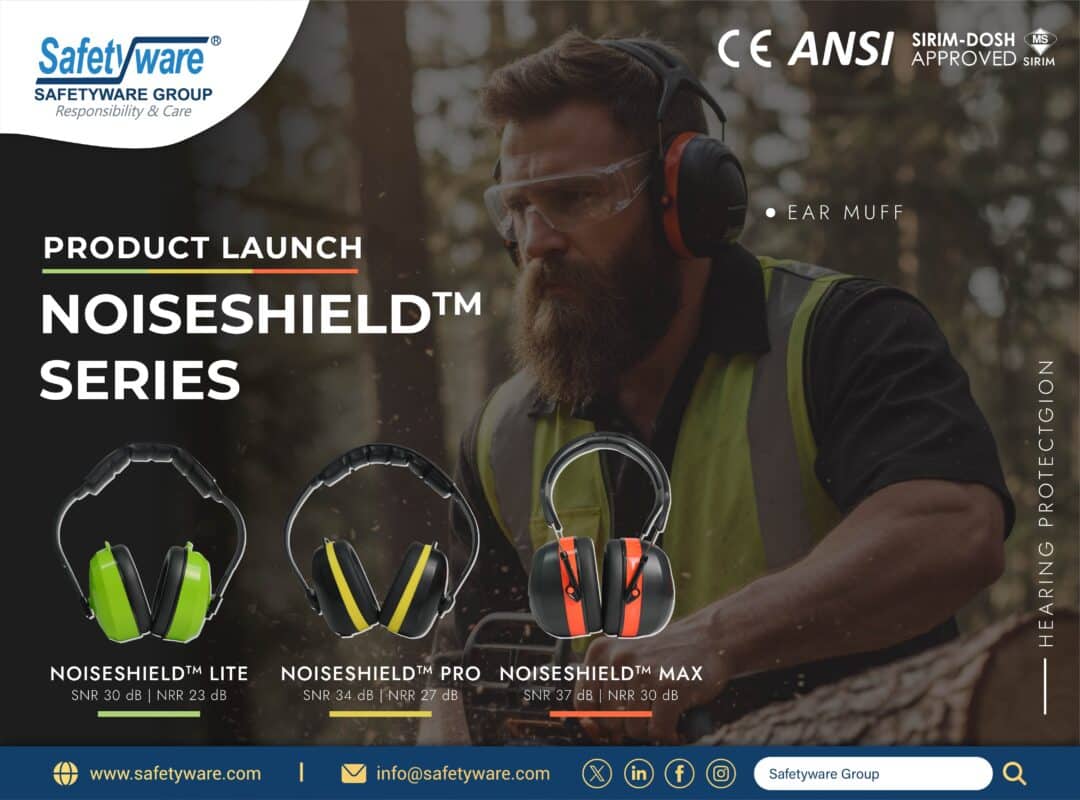
Occupational noise-induced hearing loss is irreversible and among the most common occupational diseases in Malaysian manufacturing. Under DOSH’s Guidelines for the Control of Noise at Work, the permissible exposure limit is 90 dB(A) for an 8-hour time-weighted average (TWA), with an action level at 85 dB(A) — meaning hearing protection becomes mandatory above 85 dB(A).
Injection molding machines, stamping presses, weaving looms, and pneumatic tools routinely produce 90–105 dB(A) of noise. Hearing protection selection is based on the SNR (Single Number Rating) value — the higher the SNR, the greater the attenuation.
- Disposable foam earplugs — highest attenuation (SNR 35–40 dB), low cost, single use
- Reusable earplugs — moderate attenuation, hygienic when cleaned, good for variable noise tasks
- Earmuffs — easiest to don/doff, preferred where workers enter and exit noisy areas frequently; can integrate with hard hat
Formula for required attenuation: Workplace noise level (dB) − 85 dB = minimum SNR required.
Key certification: EN 352 series (earplugs and earmuffs)
3. Eye and Face Protection
Eye injuries are among the most preventable workplace incidents — and among the most costly in terms of permanent disability. The appropriate protection depends on the specific hazard:
| Hazard | Recommended Protection | Standard |
| Flying particles, swarf, chips | Safety glasses (side shields) | EN 166 / ANSI Z87.1 |
| Liquid chemical splash | Indirect-vent chemical goggles | EN 166 Class 3 |
| Grinding sparks | Face shield over safety glasses | EN 166 |
| Welding (arc) | Auto-darkening welding helmet or shade lens | EN 379 |
| UV/IR radiation | Filtered safety glasses | EN 170 / EN 172 |
| Molten metal splash | Full face shield, heat-resistant | EN 166 / EN 168 |
A common mistake is using safety glasses alone when liquid chemical splash is present. Safety glasses do not protect the sides and top of the eye socket from splash — chemical goggles with indirect ventilation are required.
Key certification: EN 166 (Europe) | ANSI Z87.1 (USA/ANSI-accepting markets)
4. Hand Protection — Gloves
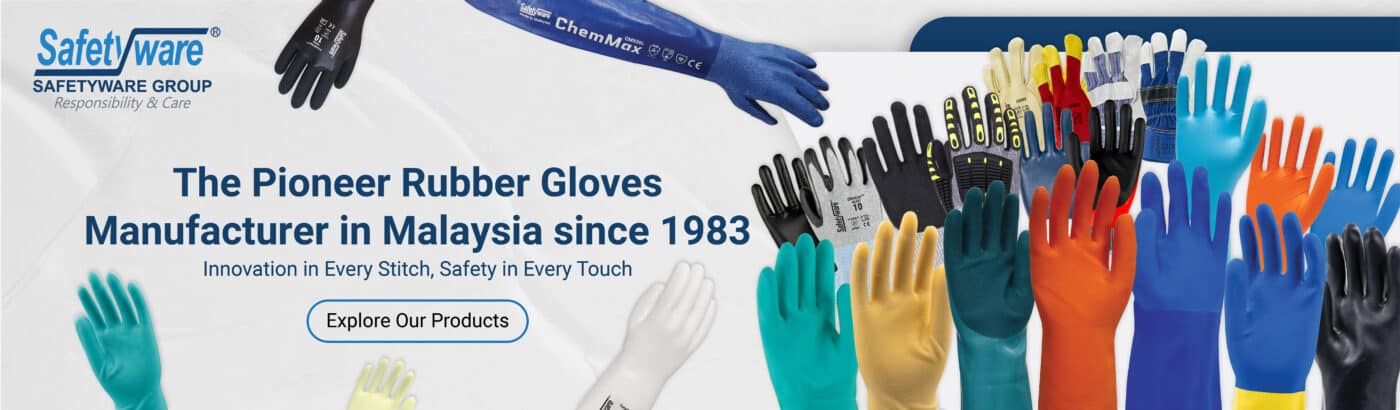
The hands are the most frequently injured body part in manufacturing. Selecting the right glove requires matching the glove type to the hazard:
Cut and abrasion resistance: The EN 388 standard rates gloves on a scale of A–F for cut resistance (ASTM/TDM blade test). Cut-level D or higher is recommended for sheet metal handling, press shop work, and glass fiber reinforced composites.
Heat resistance: EN 407 rates gloves for contact heat (up to 500°C), convective heat, and radiant heat. Foundry, furnace, and hot-press operations require gloves rated to the specific temperature range.
Chemical resistance: EN 374 covers penetration, permeation, and degradation. The specific glove material must be matched to the chemical being handled — nitrile offers good broad-spectrum protection but is not suitable for all aromatic solvents. Always check the chemical compatibility chart before selecting glove material.
ESD/anti-static gloves: Required in electronics assembly to prevent electrostatic discharge damage to components.
Key certifications: EN 388 (mechanical), EN 407 (thermal), EN 374 (chemical), EN 61340 (ESD)
5. Respiratory Protection
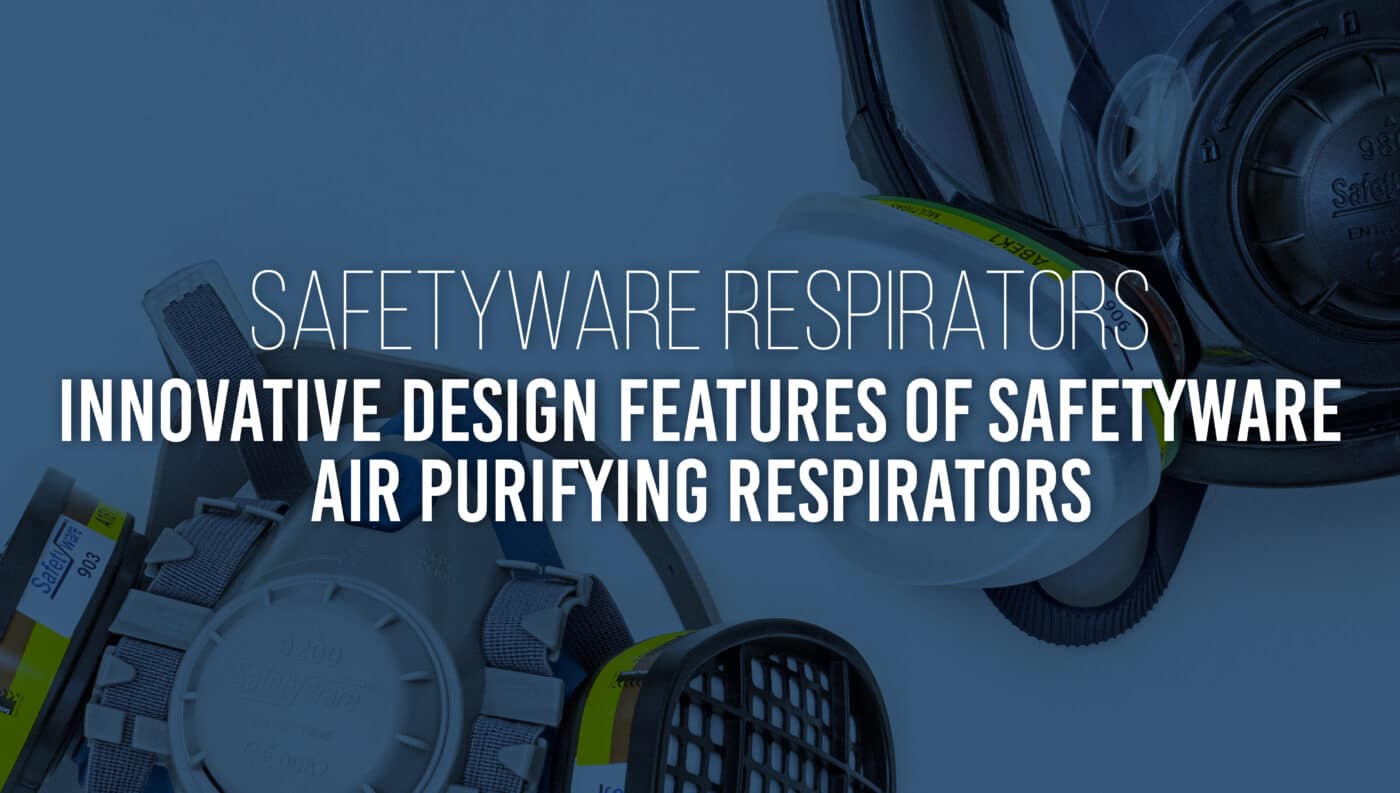
Airborne hazards in manufacturing range from nuisance dust to immediately dangerous-to-life-and-health (IDLH) concentrations of chemical vapours. Selection must be based on the specific contaminant and its concentration:
- Disposable filtering facepieces (FFP1/FFP2/FFP3): For dust, particles, and light fumes. FFP2 (equivalent to N95) filters at least 94% of airborne particles. FFP3 filters at least 99%.
- Half-face respirators with cartridges: For organic vapour (OV), acid gas (AG), combined OV/AG, and P100 particulate. Standard for spray painting, chemical mixing, and solvent work.
- Full-face respirators: When eye protection is also needed against vapour or splash, or when higher protection factors are required.
- Powered Air-Purifying Respirators (PAPR): For prolonged wear or when seal testing for tight-fitting respirators is difficult (facial hair, glasses).
- Supplied air (SCBA or airline): For confined space entry, oxygen-deficient atmospheres, and IDLH concentrations.
Critical: Tight-fitting respirators (half-face, full-face) must be fit tested before use. A respirator that does not seal to the face provides no protection.
Key certifications: EN 149 (FFP), EN 140/EN 136 (half-face/full-face), NIOSH (USA), MS 1479 (Malaysia)
6. Head Protection — Safety Helmets and Bump Caps
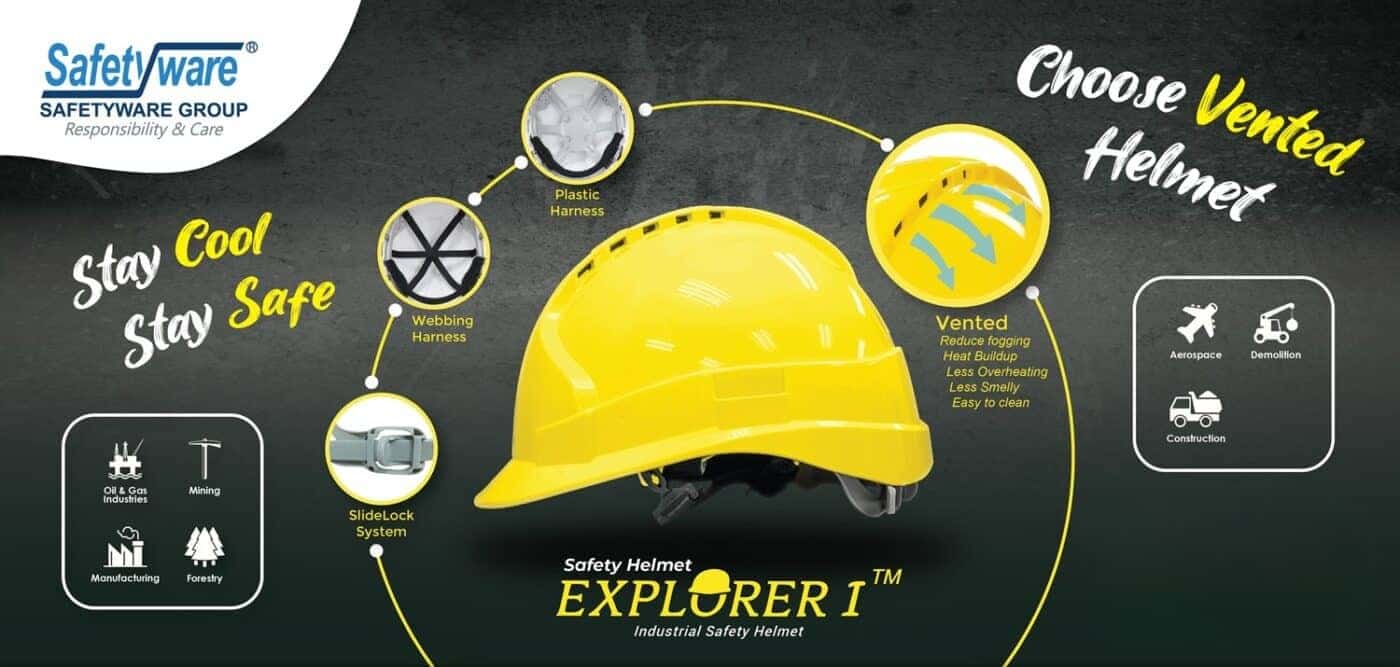
Head protection is essential wherever workers face overhead hazards such as falling objects, fixed obstructions, or electrical risks. Therefore, safety helmets that comply with EN 397 are commonly used in industrial environments.
These helmets provide protection against:
• Lateral deformation
• Impact and penetration
• Electrical hazards (optional insulation classes)
• Chin strap retention for elevated work
However, in low-risk environments where overhead impact risk is minimal, bump caps (EN 812) may be used. Although they offer lighter protection, they are not suitable where falling object hazards exist.
Key certifications: EN 397, EN 812 (bump cap), ANSI Z89.1 (Class E for electrical)
7. High-Visibility Clothing and Body Protection
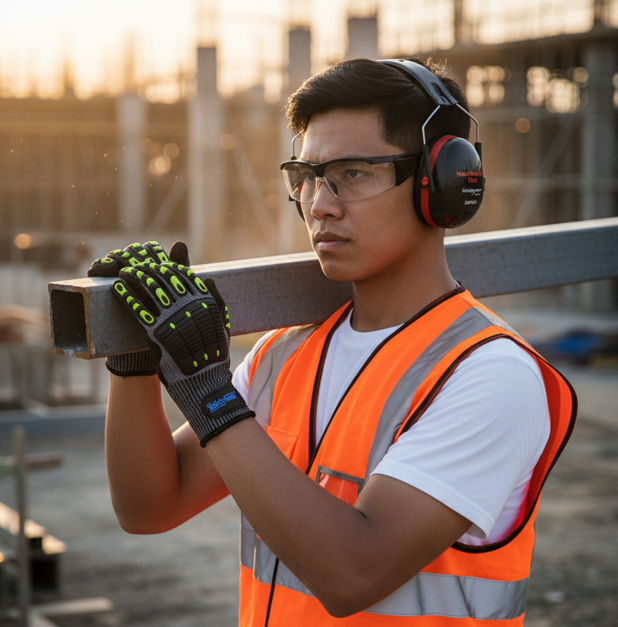
In manufacturing environments where vehicles such as forklifts or AGVs operate, worker visibility becomes critical. Therefore, high-visibility clothing compliant with EN ISO 20471 is required.
For example:
• Class 2: Suitable for standard industrial environments
• Class 3: Required for high-risk or low-light conditions
Beyond visibility, body protection includes:
• Welding aprons for hot work
• Chemical-resistant aprons for handling hazardous substances
• Flame-resistant coveralls for fire-risk environments
• Disposable coveralls for cleanrooms and contamination control

PPE Requirements by Manufacturing Sub-Sector
Electronics and Semiconductor Manufacturing
This sector focuses more on contamination and electrostatic discharge (ESD) rather than physical injury. Therefore, PPE selection differs significantly.
Typical PPE includes:
• ESD footwear and wrist straps
• ESD garments (smocks or coveralls)
• Cleanroom PPE (bunny suits, masks, gloves)
Additionally, workers handling solvents require respirators and chemical-resistant gloves.
Automotive Manufacturing
Automotive environments combine multiple high-risk processes such as welding, stamping, and painting. As a result, PPE requirements are more extensive.
Key PPE includes:
• Safety footwear with metatarsal protection
• Cut-resistant gloves
• Welding helmets and gloves
• Respiratory protection for paint operations
• Hearing protection in high-noise areas
Chemical Manufacturing
In this sector, PPE selection must follow Safety Data Sheets (SDS). Therefore, each chemical determines the required protection level.
Common PPE includes:
• Chemical goggles and face shields
• Chemical-resistant gloves (based on compatibility)
• Respirators with appropriate cartridges
• Chemical-resistant footwear
Rubber and Plastics Manufacturing
Hot processes create heat, fumes, and steam exposure. Therefore, workers require:
• Heat-resistant gloves
• Face protection
• Respiratory protection
• Hearing protection
Furniture and Wood Products
Wood dust presents a serious health risk and is classified as a carcinogen. Therefore, respiratory protection is critical.
Workers should use:
• FFP3 or P3 respirators
• Eye protection
• Hearing protection
• Safety footwear with midsole protection
How to Build a PPE Programme for Your Malaysian Factory
A PPE programme is not just about issuing equipment. Instead, it requires a structured and systematic approach.
Step 1: Conduct HIRARC
Identify hazards, assess risks, and select PPE accordingly.
Step 2: Select Certified PPE
Ensure compliance with standards such as EN, ANSI, or DOSH requirements.
Step 3: Training and Usage
Workers must understand how to properly wear and maintain PPE.
Step 4: Monitoring and Review
Regularly inspect PPE and update requirements based on workplace changes.
Ready to review your factory’s PPE programme?
Frequently Asked Questions — Manufacturing PPE Malaysia
Who is responsible for providing PPE in a Malaysian factory?
Under Section 15 and Section 29 of OSHA 1994, the employer is responsible for providing PPE appropriate to the workplace hazards, at no cost to the worker. This obligation extends to contractors and sub-contractors whose workers are on the employer’s premises.
What is HIRARC and why is it required before selecting PPE?
HIRARC stands for Hazard Identification, Risk Assessment, and Risk Control. It is a systematic process required under OSHA 1994 guidelines for identifying workplace hazards before selecting controls. DOSH inspectors can request to see your HIRARC documentation during an audit. PPE selected without an underlying HIRARC may not be appropriate for the actual hazard level and could leave you legally exposed if a worker is injured.
What are the noise exposure limits in Malaysian factories?
DOSH’s Guidelines for the Control of Noise at Work set the permissible exposure limit at 90 dB(A) TWA over 8 hours, with an action level at 85 dB(A). At 85 dB(A), employers must provide hearing protection and begin a hearing conservation programme. At 90 dB(A), hearing protection use becomes mandatory.
Is there a legal requirement to keep PPE issuance records in Malaysia?
While OSHA 1994 does not specify a precise record-keeping format, DOSH inspectors routinely request evidence that PPE was provided, workers were trained in its use, and replacements were issued when equipment became worn or damaged. Maintaining issuance records protects the employer in the event of an accident investigation.
What is the difference between EN 388 cut levels A through F for gloves?
EN 388 (2016 edition) uses an ISO 13997 test method and rates gloves from A (lowest) to F (highest) for cut resistance in grams-force. Level A (2 N) offers basic cut protection for light assembly work; Level D (10 N) and above is recommended for sheet metal, glass, and sharp-edge handling; Level F (30 N) is used for the most severe cutting hazards such as butchery and blade-intensive operations.