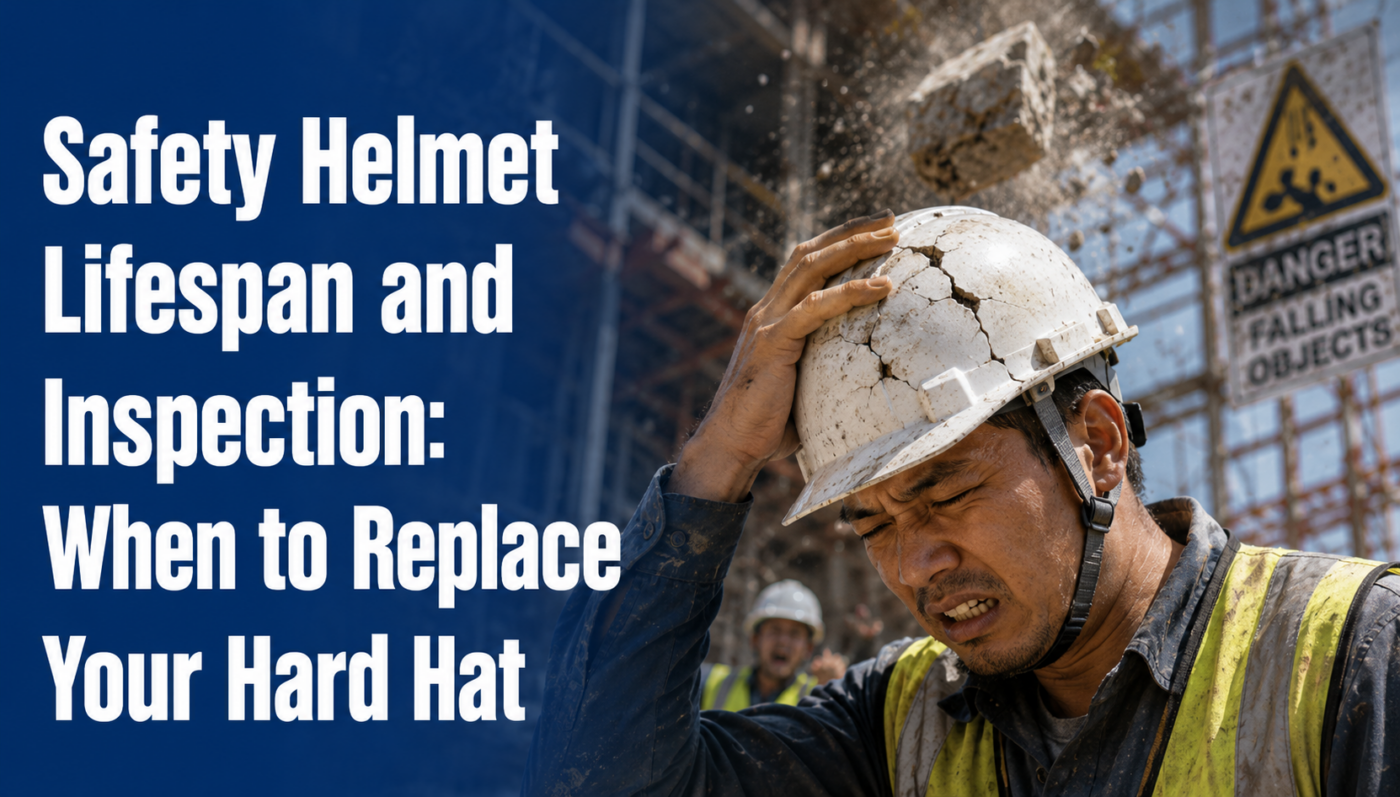
Would you trust a safety helmet that’s 10 years old and damaged?
Probably not.
Yet, many workers continue wearing safety helmets that have been exposed to years of sunlight, heat, impacts, and harsh working conditions, simply because they “still look okay.”
However, when discussing the Safety Helmet Lifespan and Inspection Guide, it is important to understand that a hard hat does not need to crack in order to fail. In fact, like any piece of Personal Protective Equipment (PPE), a safety helmet gradually ages over time. As a result, an expired or damaged helmet may no longer provide the level of protection you need when it matters most.
Moreover, whether you work in construction, manufacturing, logistics, warehousing, or maintenance, understanding the Safety Helmet Lifespan and Inspection Guide is critical. Otherwise, you may unknowingly put yourself at serious risk. Ultimately, this knowledge could make the difference between walking away safely from an accident and suffering a life-changing injury.
Therefore, let’s explore how to ensure your head protection continues performing at its best.
Why safety helmets are important?
A safety helmet, also known as a hard hat, is a type of Personal Protective Equipment (PPE) designed to protect workers from head injuries caused by falling objects, impacts, electrical hazards, and other workplace risks.
Every day, workers in construction, manufacturing, logistics, and heavy industries face hazards that could result in serious head injuries. A falling wrench, swinging steel beam, or accidental slip can happen in a split second. In these moments, a properly maintained safety helmet can mean the difference between walking away safely and suffering a life-changing injury.
However, simply wearing a hard hat isn’t enough. Like all Personal Protective Equipment (PPE), safety helmets have a limited lifespan and require regular inspection to ensure they continue providing the protection they were designed for.
How Long Does a Safety Helmet Last?
| Component | Typical Replacement Period |
| Helmet Shell | 3–5 years from first use (or as recommended by the manufacturer) |
| Suspension Harness | Every 12–24 months, or sooner if worn or damaged |
| After Major Impact | Replace immediately—even if no damage is visible |
Common industry recommendation:
While the exact lifespan depends on the manufacturer and work environment, always check the manufacturing date and follow the manufacturer’s replacement guidelines.
6 Warning Signs Your Safety Helmet Needs Replacing:
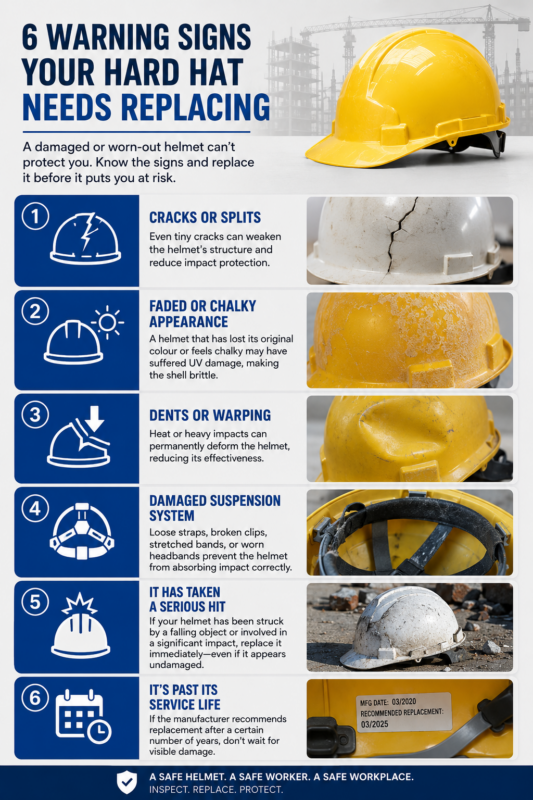
1. Helmet Cracks or Splits
Even tiny cracks can weaken the helmet’s structure and reduce impact protection.
2. Helmet Faded or Chalky Appearance
A helmet that has lost its original colour or feels chalky may have suffered UV damage therefore making the shell brittle.
3. Helmet Dents or Warping
Heat or heavy impacts can permanently deform the helmet, reducing its effectiveness.
4. Damaged Helmet Suspension System
Loose straps, broken clips, stretched bands, or worn headbands prevent the helmet from absorbing impact correctly.
5. Safety Helmet Has Taken a Serious Hit
If your helmet has been struck by a falling object or involved in a significant impact, replace it immediately—even if it appears undamaged.
6. Helmet Past Its Service Life
If the manufacturer recommends replacement after a certain number of years, don’t wait for visible damage.
Why Your Safety Helmet Need Replace?
A safety helmet is engineered to absorb and disperse the force of an impact. Every day, it is exposed to conditions that slowly weaken its protective properties, including:
- Intense sunlight and UV radiation
- High temperatures and changing weather
- Chemicals, oils, paints, and solvents
- Accidental knocks and impacts
- Improper storage
A 60-Second Helmet Inspection Before Every Shift
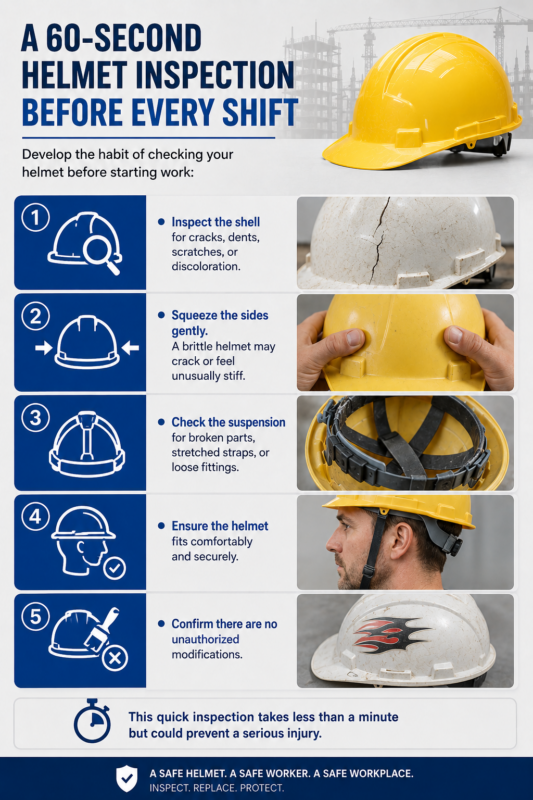
Develop the habit of checking your helmet before starting work:
- Inspect the shell for cracks, dents, scratches, or discoloration.
- Squeeze the sides gently. A brittle helmet may crack or feel unusually stiff.
- Check the suspension for broken parts, stretched straps, or loose fittings.
- Ensure the helmet fits comfortably and securely.
- Confirm there are no unauthorized modifications.
This quick inspection takes less than a minute but could prevent a serious injury.
Common Mistakes That Shorten Safety Helmet Lifespan
Many workers unintentionally reduce the effectiveness of their helmets by:
- Leaving hard hat on a vehicle dashboard in direct sunlight
- Cleaning with strong solvents or harsh chemicals
- Drilling holes for accessories
- Painting the helmet
- Applying excessive stickers or adhesives
- Continuing to use a helmet after a heavy impact
These practices can weaken the helmet and may even void the manufacturer’s certification.
How to Make Your Safety Helmet Last Longer?
Proper care doesn’t just extend your hard hat lifespan, it helps ensure it performs when you need it most.
Here are a few simple tips:
- Store it in a cool, dry place away from direct sunlight.
- Wash it regularly using mild soap and clean water.
- Replace worn suspension components promptly.
- Avoid dropping or throwing the helmet.
- Keep chemicals and solvents away from the shell.
- Follow the manufacturer’s inspection and replacement schedule.
Looking for a New Safety Helmet?
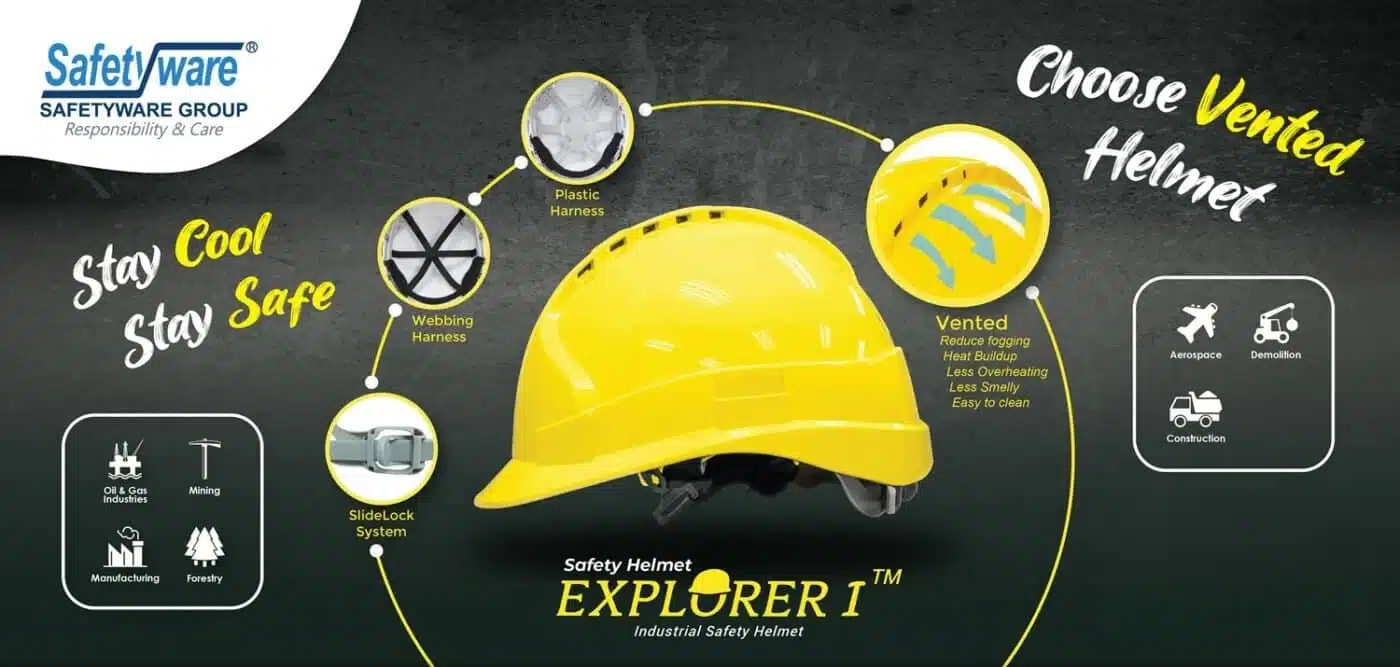
If your current helmet has reached the end of its service life, don’t take chances with your safety. Replacing a worn or damaged hard hat is a simple yet essential step in protecting yourself and your team from workplace hazards.
Safetyware supplies a wide selection of certified safety helmets that comply with recognised safety standards and are suitable for a variety of industrial applications, our range is designed to help you find the right protection for every job.
Explore our Safety Helmet Collection and choose head protection you can rely on
Read more about Safety Helmet Guide: Choose the Best Safety Helmet
View our helmet in shopee
Your Head Deserves Better Than “It Looks Fine”
A safety helmet is often the last line of defence against serious head injuries. It cannot protect you effectively if it has aged, been damaged, or exceeded its recommended service life.
Regular inspections, proper maintenance, and timely replacement are simple steps that can make a significant difference to workplace safety.
When it comes to head protection, don’t rely on appearance alone. Inspect it. Replace it when necessary. Protect what matters most to your life.
Frequently Asked Questions (FAQ)
Can I continue using a helmet after it has taken a heavy impact?
No. Even if there are no visible cracks, the helmet may have lost its ability to absorb future impacts and should be replaced immediately.
How often should I inspect my hard hat?
A quick visual inspection should be carried out before every use, while employers should also conduct regular documented inspections as part of their PPE management programme.
Can I replace only the suspension system?
Yes, provided the helmet shell remains undamaged, is within its recommended service life, and the replacement suspension is approved by the manufacturer.
How do I know the age of my helmet?
Most hard hats have the manufacturing date moulded or printed inside the shell. This information helps determine whether the helmet is approaching the end of its recommended service life.
📞 Need More Information?
Looking for reliable head protection solutions for your workplace?
Explore SAFETYWARE’s safety helmet solutions and workplace PPE range at
Safetyware Helmet Catalogs
Our safety specialists can help evaluate workplace hazards, recommend suitable safety helmets, and support compliance with Malaysia workplace safety requirements.
If you need a quotation, feel free to contact us at:
📩 Email: [email protected]
📞 Tel: WhatsApp Us