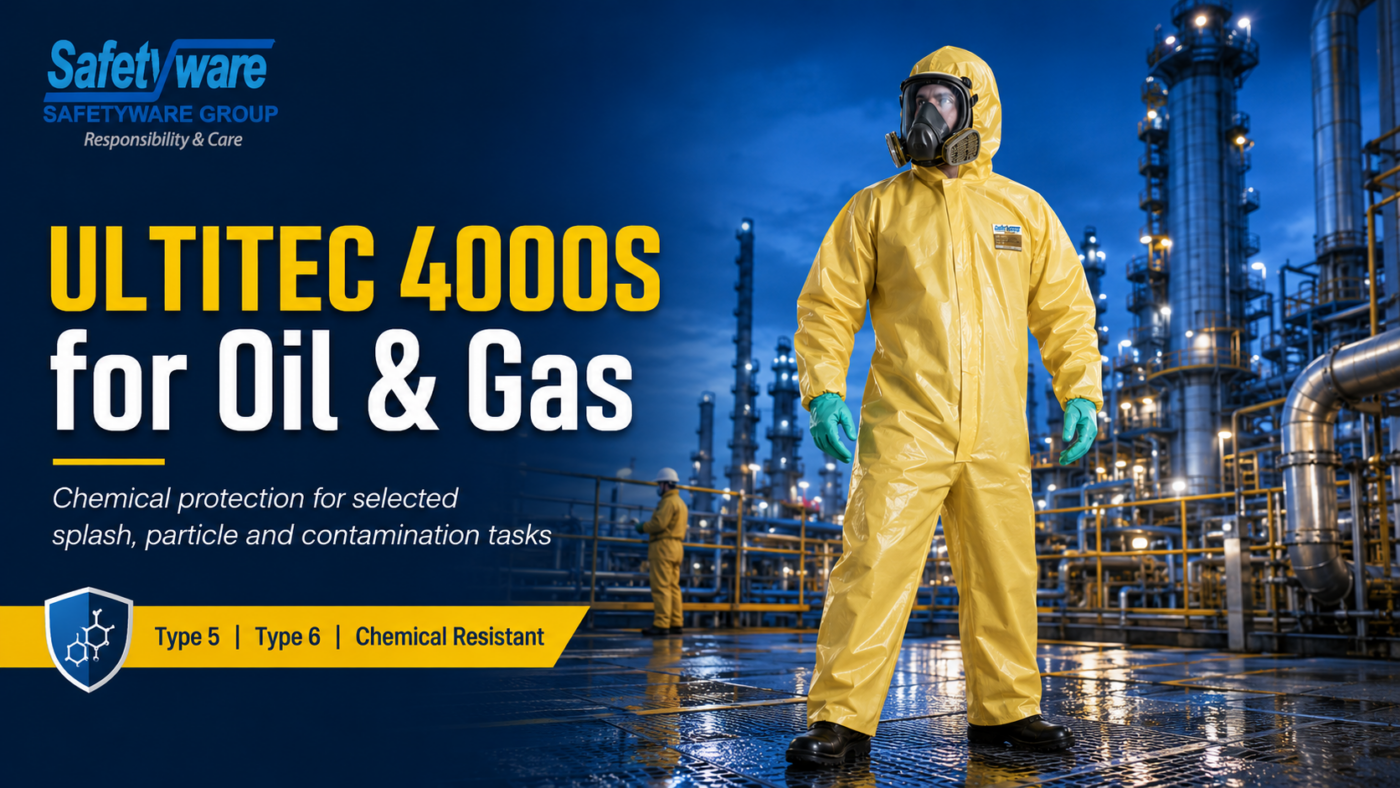
Oil and gas workers may face chemical splash, hazardous dust, process waste and contaminated surfaces. Therefore, normal workwear may not provide enough protection for some maintenance and cleaning tasks.
The ULTITEC 4000S is a single-use chemical protective coverall made from impervious PE-coated fabric. The manufacturer designed it to resist selected liquid chemicals under non-pressurised conditions. It also provides Type 5 and Type 6 whole-suit protection.
For example, oil and gas companies may consider this coverall for controlled chemical handling, shutdown maintenance, waste handling and low-pressure clean-up. However, the garment does not protect against every refinery hazard.
This guide explains the key benefits of ULTITEC 4000S, where it may fit in oil and gas work, and when workers should use a higher level of protection.
What Is ULTITEC 4000S?
ULTITEC 4000S is a yellow disposable coverall for selected chemical, particle and contamination hazards.
The garment uses:
- Impervious PE-coated fabric
- Four-thread overlocked seams
- Seven to nine stitches per inch
- A yellow design for clear worker visibility
- Single-use construction
The technical data sheet identifies the product as Style No. DD610. It also lists CE and UKCA approvals under the relevant PPE rules.
Most importantly, the coverall provides a barrier between the worker and the hazard. However, workers must still use the correct gloves, boots, eye protection and respirator for the task.
Key Benefits of ULTITEC 4000S
| Feature | Workplace Benefit |
|---|---|
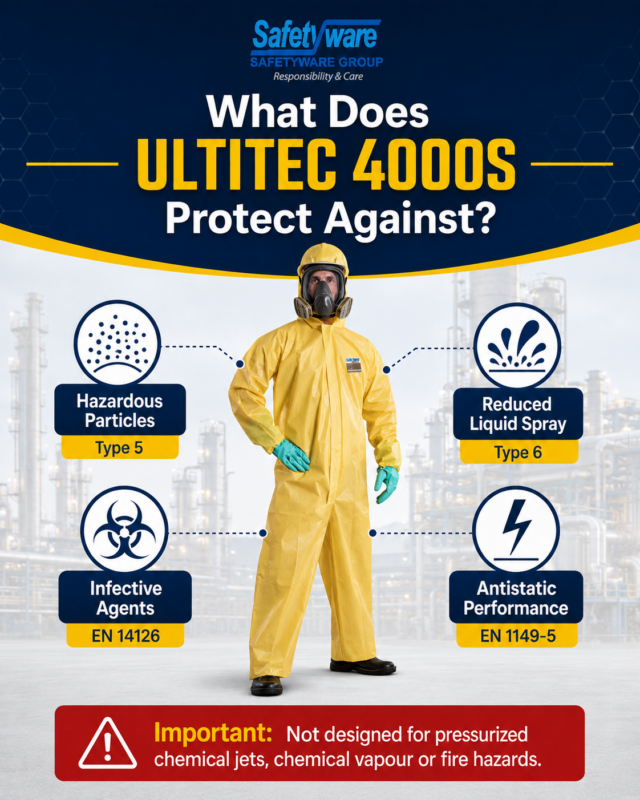
| PE-coated fabric | Helps resist selected liquid chemicals |
| Type 5 performance | Helps reduce contact with hazardous dry particles |
| Type 6 performance | Provides limited protection against light liquid spray |
| Antistatic performance | Supports tasks where static control forms part of the PPE plan |
| Infective-agent test performance | Supports selected work involving biological contamination |
| Disposable design | Removes the need to wash a contaminated garment |
| Yellow colour | Helps workers and supervisors identify protective clothing easily |
The garment passed the Type 5 inward-leakage test and the Type 6 reduced-spray test listed in its technical data sheet. In addition, the material passed the listed antistatic test under EN 1149-5.
As a result, ULTITEC 4000S may suit tasks where workers face particles, light spray or surface contamination.
What Do Type 5 and Type 6 Mean?
Type 5: Hazardous Dry Particles
Type 5 clothing helps reduce the amount of hazardous airborne particles that can enter the garment.
For example, workers may need this type of protection during:
- Dusty maintenance
- Removal of contaminated material
- Cleaning of dry process waste
- Work around hazardous particles
However, Type 5 protection does not protect the lungs. Therefore, workers may still need a suitable respirator.
Type 6: Reduced Liquid Spray
Type 6 clothing provides limited protection against light liquid spray.
It may suit controlled work where workers face small splashes or low-pressure spray. However, it does not provide protection against strong jets, heavy chemical flow or full liquid immersion.
Therefore, safety teams must understand the likely amount and pressure of the liquid before they select the garment.
Why Oil and Gas Workplaces May Need ULTITEC 4000S
Oil and gas sites include refineries, terminals, tank farms, processing plants and maintenance areas. Workers at these sites may come into contact with chemicals, dust, sludge or dirty equipment.
However, each job has different risks. Therefore, safety teams should select the coverall according to the task rather than the industry name alone.
ULTITEC 4000S may support the following oil and gas activities.
1. Shutdown and Turnaround Maintenance
Shutdown work often involves opening, cleaning or repairing process equipment.
During these jobs, workers may face:
- Process dust
- Chemical residue
- Dirty insulation
- Contaminated surfaces
- Waste from cleaning work
ULTITEC 4000S may help prevent this material from reaching the worker’s skin or normal clothing.
However, workers should only start after the company has isolated and depressurised the equipment. The coverall cannot protect against an uncontrolled release.
2. Controlled Chemical Handling
Oil and gas facilities use chemicals for cleaning, testing, water treatment and process control.
For example, workers may handle small containers, prepare cleaning chemicals or support controlled transfer work.
ULTITEC 4000S may suit some of these tasks when:
- The chemical matches the garment’s test data
- The task involves non-pressurised exposure
- The worker faces light splash or spray
- The exposure time remains limited
Before use, the safety team should review the Safety Data Sheet and the product’s chemical test information.
3. Contaminated Waste Handling
Oil and gas work can produce:
- Used absorbent pads
- Contaminated disposable PPE
- Process sludge
- Chemical containers
- Cleaning waste
- Spill-control material
A disposable coverall can help stop workers from carrying contamination onto their normal clothes.
After the task, workers should remove the garment carefully. Then, the company should dispose of it according to the contaminant and local waste rules.
4. Low-Pressure Clean-Up
Workers may also use ULTITEC 4000S during selected low-pressure clean-up work.
For example, the garment may support:
- Surface wiping
- Controlled spill clean-up
- Equipment cleaning
- Collection of contaminated waste
- Cleaning around process areas
However, the coverall does not protect against pressurised spray. Therefore, workers should not use it for high-pressure washing or active leaks.
5. Dusty Maintenance Areas
Some maintenance jobs create hazardous dust or fine particles.
In these cases, Type 5 protection may help reduce contact with the worker’s body and clothes.
In addition, workers may need:
- Respiratory protection
- Sealed safety goggles
- Suitable gloves
- Protective footwear
The company should check how all PPE items fit together before work begins.
👉Learn more on what is the PPE needs for chemical industry: Chemical Industry PPE Checklist | Essential Chemical PPE Guide
Tested Chemical Performance
The technical data sheet lists chemical penetration and repellency tests for:
- Sulphuric acid at 30%
- Sodium hydroxide at 10%
- o-Xylene
- Butan-1-ol
The material reached Class 3 for both penetration and repellency in the listed EN ISO 6530 tests.
However, these results do not mean that the coverall protects against every chemical.
Chemical performance can change because of:
- Different concentrations
- Chemical mixtures
- Higher temperatures
- Longer contact time
- Pressure
- Repeated contact
Therefore, users should never choose the garment based only on its colour or general product name.
Important Limits in Oil and Gas Work
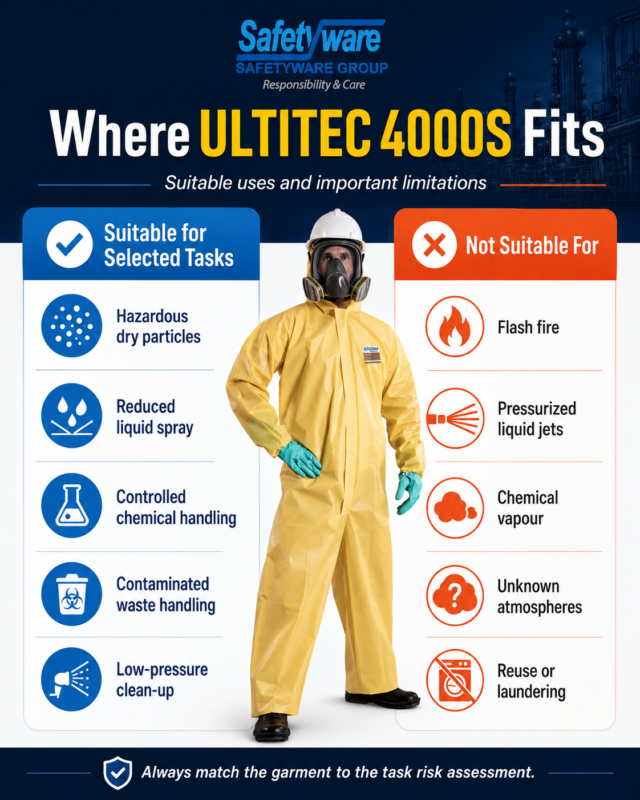
ULTITEC 4000S provides useful protection for selected tasks. However, it is not a universal oil and gas coverall.
Do Not Use It for Fire Hazards
The manufacturer tells users to keep the garment away from fire. Therefore, ULTITEC 4000S must not replace flame-resistant clothing.
Do not use it as the main protection against:
- Flash fire
- Open flame
- High heat
- Molten material
- Arc-flash hazards
Oil and gas sites may have several hazards at the same time. As a result, the safety team must check whether the full PPE system meets all task requirements.
Do Not Use It for Pressurised Chemical Exposure
The coverall is intended for non-pressurised conditions.
Therefore, do not use it for:
- High-pressure liquid jets
- Active pipe leaks
- Strong chemical spray
- Full liquid immersion
- Uncontrolled process releases
Do Not Use It for Chemical Vapour
The garment protects the body against selected particles and liquids. However, it does not provide gas-tight or vapour-tight protection.
Workers entering an area with chemical vapour or an unknown atmosphere may need a higher-level chemical suit and suitable breathing equipment.
Do Not Wash or Reuse It
The technical data sheet states:
- Do not wash
- Do not dry-clean
- Do not iron
- Do not machine-dry
- Do not reuse
- Keep away from fire
Therefore, workers should treat ULTITEC 4000S as a single-use garment.
👉Click here to know more about different between disposable and non disposable coverall : Disposable Coverall vs Reusable Coverall: Which Saves More?
How to Use ULTITEC 4000S Safely
Follow these steps before and after each task.
1. Identify the Hazard
First, confirm the chemical, concentration and physical form.
Also check whether the hazard appears as:
- Dust
- Liquid
- Spray
- Vapour
- Pressurised flow
2. Review the Task Conditions
Next, check:
- Exposure time
- Liquid pressure
- Work temperature
- Fire risk
- Work area
- Movement required
- Other PPE needed
3. Choose the Correct Size
The worker should be able to bend, climb and reach without pulling or tearing the coverall.
A garment that feels too tight may fail during normal movement.
4. Inspect the Garment
Before use, check for:
- Tears
- Holes
- Open seams
- Zip damage
- Dirty or damaged fabric
- Incorrect size
Do not use the coverall if you find any damage.
5. Check Other PPE
The coverall may need to work with:
- Chemical-resistant gloves
- Safety boots
- Goggles
- Face protection
- Respiratory protection
Therefore, check the connection points around the wrists, ankles, hood and face.
6. Remove It Carefully
After the task, avoid touching the contaminated outer surface.
Then, place the garment in the correct waste container and follow the site’s disposal process.
The manufacturer recommends storing clean garments in their original packaging at 15°C to 25°C, below 80% humidity, and away from sunlight, heat and solvents.
Other Industries That May Use ULTITEC 4000S
Although this article focuses on oil and gas, other industries may also consider this model.
These include:
- Chemical processing
- Waste management
- Pharmaceutical production
- Mining
- Electronics manufacturing
- Biological-hazard work
The technical data sheet also lists test results for resistance to blood, blood-borne pathogens and microbial penetration.
However, every industry should complete its own risk assessment before use to ensure the equipment is suitable for the work and wearer.
Explore SAFETYWARE Chemical Protective Clothing
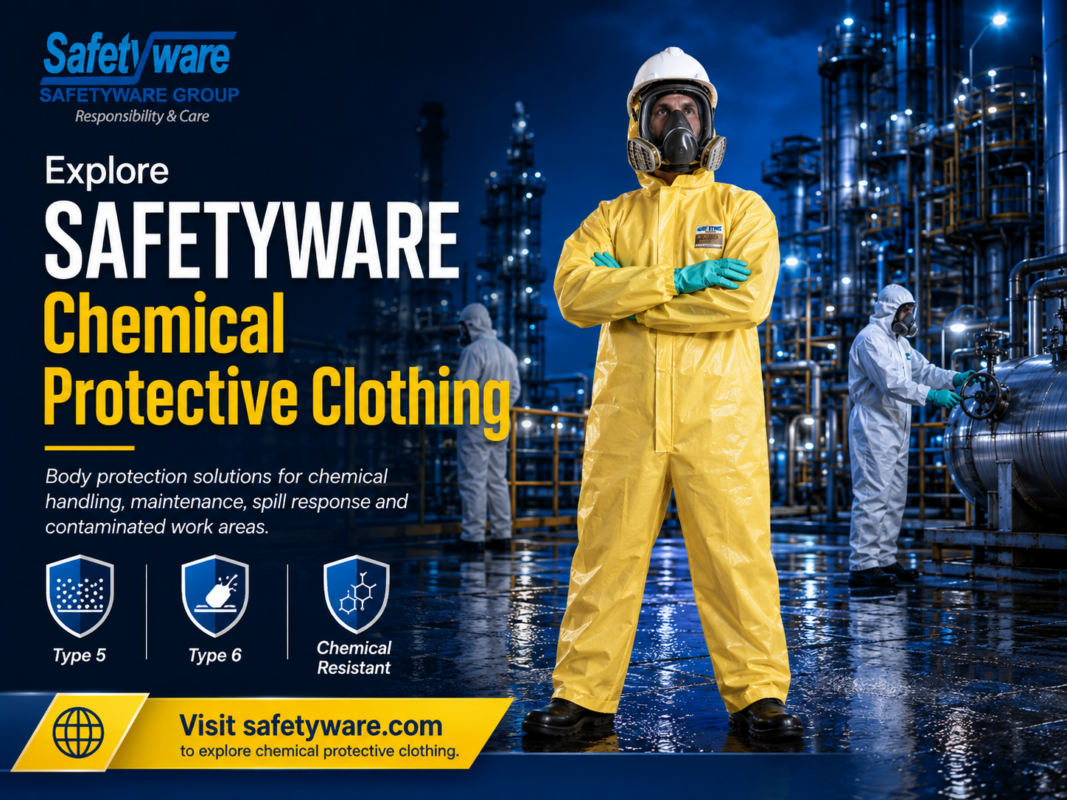
SAFETYWARE offers ULTITEC 4000S for selected tasks involving chemical splash, hazardous particles and workplace contamination.
In addition, the wider ULTITEC range includes different models for different hazard levels. This allows safety teams to select a coverall according to the task instead of using one product for every job.
Before choosing a model, consider:
- Chemical type
- Concentration
- Liquid pressure
- Exposure time
- Fire risk
- Respiratory hazard
- Work location
- Required PPE combination
👉Learn more about ULTITEC 4000S here! :ULTITEC 4000S Liquid Chemical Resistant | Safetyware
👉Discover Safetyware Body Protection here: Body Protection PPE Malaysia | Protective Clothing
Conclusion
ULTITEC 4000S provides practical single-use body protection for selected tasks involving hazardous particles, reduced liquid spray and non-pressurised chemical contact.
In oil and gas facilities, workers may use it for controlled chemical handling, shutdown maintenance, contaminated waste and low-pressure clean-up.
However, the garment does not protect against flash fire, chemical vapour, pressurised liquid jets or unknown atmospheres.
Therefore, always start with the task risk assessment. Then, check the chemical, exposure route and work conditions before selecting the coverall.
When the task matches its protection level, ULTITEC 4000S can help reduce contact between hazardous material and the worker’s skin or clothing.
👉 Perfect Chemical Coverall need Perfect gloves as well, Learn more!: Chemical Resistant Glove Guide – Safetyware Group
Frequently Asked Questions
Is ULTITEC 4000S suitable for oil refinery work?
It may suit selected refinery tasks involving hazardous particles, light chemical spray or surface contamination. However, workers should not use it for flash fire, chemical vapour, pressurised leaks or unknown chemical exposure.
What does Type 5 protection mean?
Type 5 clothing helps reduce inward leakage of hazardous airborne dry particles. However, workers may still need respiratory protection when the particles can enter the lungs.
What does Type 6 protection mean?
Type 6 clothing provides limited protection against reduced liquid spray. It does not protect against strong jets, heavy liquid flow or full immersion.
Is ULTITEC 4000S flame-resistant?
No. The manufacturer tells users to keep it away from fire. Therefore, it must not replace flame-resistant clothing in areas with flash-fire or heat hazards.
Can workers wash and reuse ULTITEC 4000S?
No. Workers must not wash, dry-clean, iron, machine-dry or reuse the garment.
Does it protect against every chemical?
No. Protection depends on the chemical, concentration, temperature, pressure and exposure time. Always review the Safety Data Sheet and product test data before use.
👉Click here to learn how to choose the correct respiratory filter. How to Choose Your Respiratory Filter Correctly – Safetyware Group
Safetyware Group provide full range of PPE support!
Explore more industrial PPE solutions here:
Comprehensive Workplace Safety Equipment, PPE & Signage – Safetyware Group
Wear wisely, work safely with Safetyware!✨
If you need any support, feel free to contact us at:
📩 Email: [email protected]
📞 Tel: WhatsApp Us