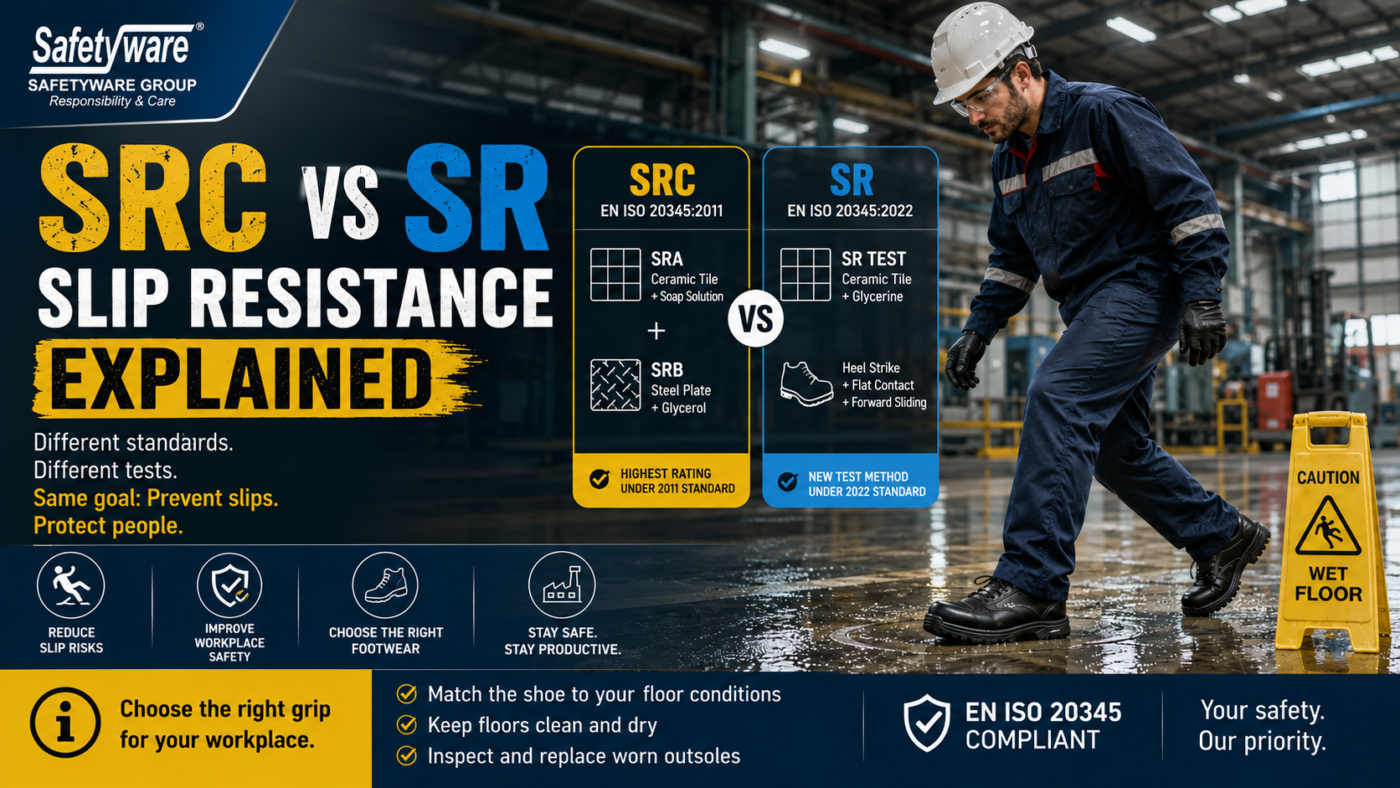
Slips, trips, and falls are among the most common causes of workplace injuries, particularly in environments where floors are wet, oily, dusty, or uneven. Choosing safety shoes with appropriate slip resistance is one of the most effective ways to reduce these risks and improve workplace safety. However, many buyers are now confused by the transition from the older SRC rating to the newer SR classification introduced in EN ISO 20345:2022.
If you’ve recently been shopping for safety footwear, you may have noticed that some shoes are labelled SRC, while newer models display SR instead. This change has caused confusion among many buyers, who often wonder whether SR is simply a new name for SRC or if it provides better slip resistance.
In this guide, we’ll explain what SRC and SR mean, how each slip resistance test is performed, the key differences between the old and new EN ISO 20345 standards, and how to choose the right safety shoes for your working environment.
What Is Slip Resistance?
- The ability of a shoe outsole to maintain grip on different walking surfaces
- Reduces the risk of slipping while walking or turning
- One of the most important safety shoe performance characteristics
- Tested under controlled laboratory conditions
Mention that slip resistance depends on several factors, including:
- Outsole material
- Tread pattern
- Floor surface
- Presence of water, oil, grease, or contaminants
- Condition of the outsole (new vs worn)
Why Is Slip Resistance Important?
The consequences of poor traction:
- Workplace injuries
- Sprains and fractures
- Lost productivity
- Medical expenses
- Employer legal responsibilities
Industries with high slip risks include:
- Construction
- Manufacturing
- Warehousing
- Logistics
- Food Processing
- Commercial Kitchens
- Healthcare
- Cleaning Services
- Agriculture
Understanding EN ISO 20345 Slip Resistance Standards
Safety footwear sold in many markets is tested according to EN ISO 20345.
The standard specifies minimum safety requirements including:
- Protective toe cap
- Slip resistance
- Sole performance
- Additional protection requirements
There are currently two versions commonly seen in the market:
- EN ISO 20345:2011
- EN ISO 20345:2022
This is where SRC and SR differ.
What Is SRC Slip Resistance?
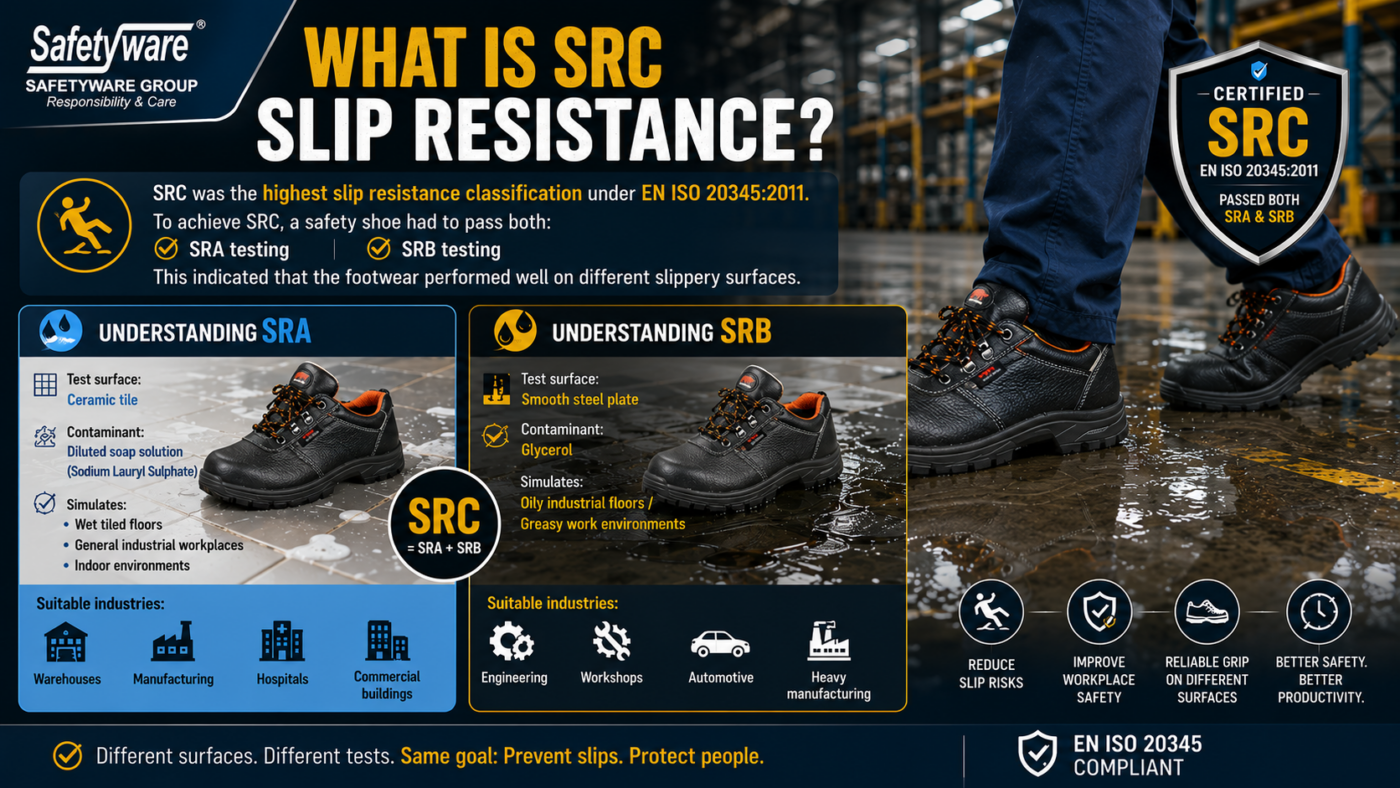
SRC was the highest slip resistance classification under EN ISO 20345:2011.
To achieve SRC, a safety shoe had to pass both:
- SRA testing
- SRB testing
This indicated that the footwear performed well on different slippery surfaces.
Understanding SRA
Test surface: Ceramic tile
Contaminant: Diluted soap solution (Sodium Lauryl Sulphate)
Simulates:
- Wet tiled floors
- General industrial workplaces
- Indoor environments
Suitable industries:
- Warehouses
- Manufacturing
- Hospitals
- Commercial buildings
Understanding SRB
Test surface: Smooth steel plate
Contaminant: Glycerol
Simulates: Oily industrial floors / Greasy work environments
Suitable industries:
- Engineering
- Workshops
- Automotive
- Heavy manufacturing
What Is SR Slip Resistance?
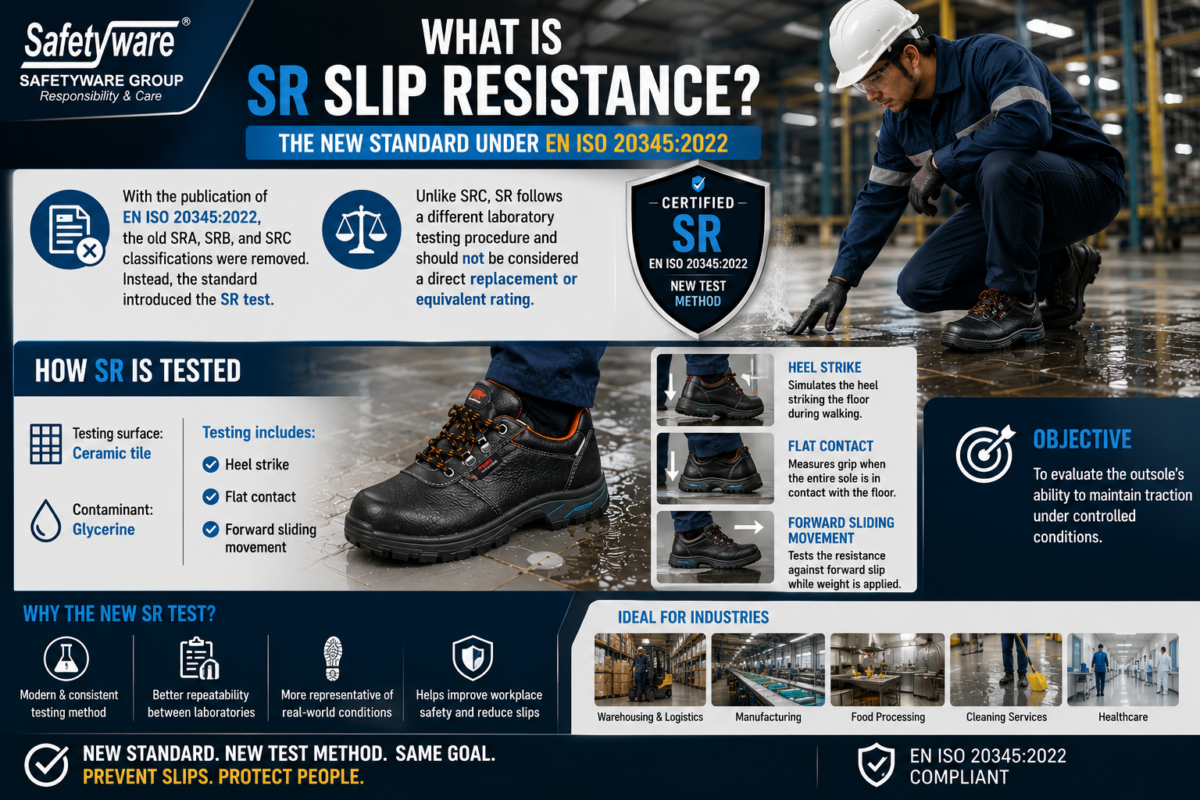
With the publication of EN ISO 20345:2022, the old SRA, SRB, and SRC classifications were removed. Instead, the standard introduced the SR test.
Unlike SRC, SR follows a different laboratory testing procedure and should not be considered a direct replacement or equivalent rating.
How SR Is Tested
Testing surface: Ceramic tile
Contaminant: Glycerine
Testing includes:
- Heel strike
- Flat contact
- Forward sliding movement
The objective is to evaluate the outsole’s ability to maintain traction under controlled conditions.
Why Was SR Introduced?
The updated standard aims to:
- Improve testing consistency
- Better represent modern workplace conditions
- Simplify slip resistance classifications
- Enhance repeatability between laboratories
SRC vs SR: What’s the Difference?
| Feature | SRC | SR |
| Standard | EN ISO 20345:2011 | EN ISO 20345:2022 |
| Classification | SRA + SRB | Optional SR test |
| Test Surface | Ceramic tile & steel | Ceramic tile |
| Contaminant | Soap solution & glycerol | Glycerine |
| Current Standard | Older | Latest |
| Still Valid? | Yes | Yes |
Is SR Better Than SRC?
Many buyers assume SR is simply an improved version of SRC.
This is not entirely correct:
- Different testing procedures
- Different laboratory methods
- Different standards
- Different performance requirements
Therefore SR cannot be directly compared with SRC. Instead, both ratings should be interpreted according to the version of EN ISO 20345 under which the footwear was certified.
What Factors Affect Slip Resistance?
Even safety shoes with excellent ratings can lose grip depending on workplace conditions.
1. Outsole Material:
- Rubber
- PU
- TPU
- Nitrile Rubber
| Outsole Material | Slip Resistance | Durability | Weight | Heat Resistance | Ideal Applications |
| Rubber | Excellent | Excellent | Heavy | High | Construction, engineering, outdoor work |
| PU | Good | Good | Lightweight | Moderate | Warehousing, logistics, manufacturing |
| TPU | Very Good | Excellent | Medium | Moderate | Automotive, manufacturing, warehouses |
| Nitrile Rubber | Excellent | Excellent | Heavy | Excellent | Oil & gas, foundries, chemical industries |
2. Floor Condition
- Wet concrete
- Ceramic tiles
- Steel flooring
- Painted epoxy floors
- Mud
- Oil
- Grease
- Dust
Which Industries Need Slip-Resistant Safety Shoes?
| Industry | Typical Slip Hazards |
| Warehousing | Wet loading bays |
| Manufacturing | Oil spills |
| Construction | Rain, mud |
| Food Processing | Grease and water |
| Logistics | Outdoor surfaces |
| Hospitality | Kitchen grease |
| Healthcare | Wet floors |
| Cleaning Services | Soap and water |
| Agriculture | Mud and uneven ground |
Recommended Slip-Resistant Safety Shoes from Safetyware
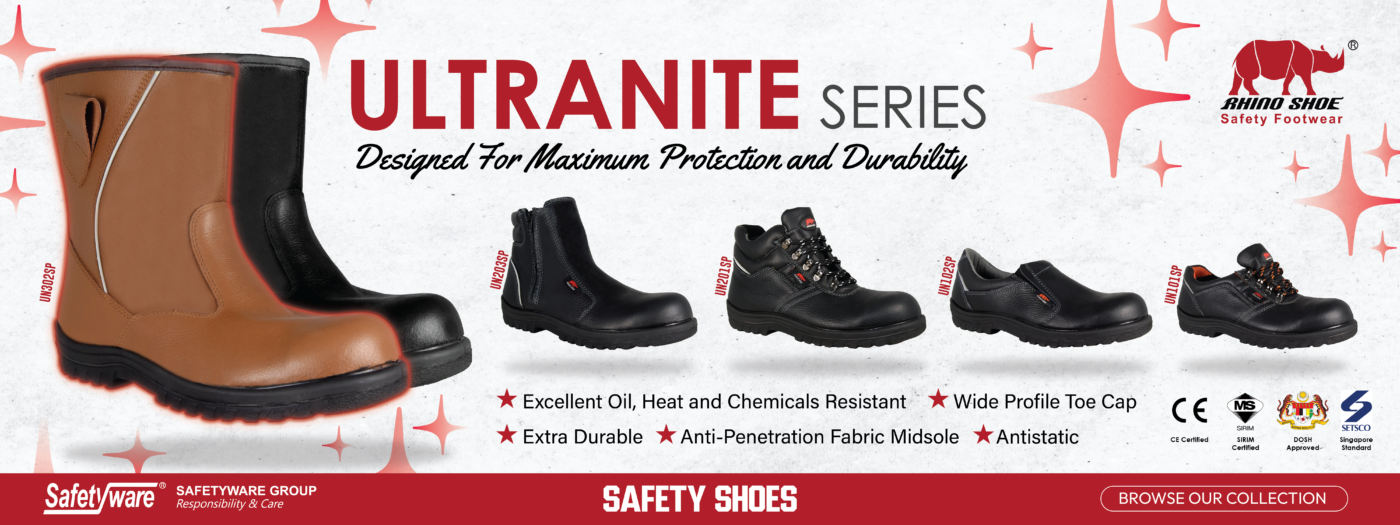
Choosing the right slip-resistant safety shoes involves more than looking for an SRC or SR rating. The footwear should also match your work environment, comfort requirements, and other workplace hazards, such as impact, puncture, water exposure, or prolonged standing.
At Safetyware, we offer a wide range of EN ISO 20345 certified safety shoes designed for different industries and working conditions. Whether you work in warehousing, manufacturing, construction, logistics, or engineering, selecting the appropriate footwear can help improve both safety and all-day comfort.
👉 Explore more on Safetyware safety shoes
👉 Read more on Water Resistant (WR) Safety Shoes Explained
👉 Read more on PU sole and Rubber sole on safety shoes
Frequently Asked Questions (FAQ)
1. What does SRC mean on safety shoes?
SRC was the highest slip resistance classification under EN ISO 20345:2011, indicating the footwear passed both the SRA and SRB slip tests.
2. What does SR mean on safety shoes?
SR is the optional slip resistance test introduced in EN ISO 20345:2022, using an updated testing method on a ceramic tile surface with glycerine.
3. Is SR better than SRC?
Not necessarily. SRC and SR are based on different test methods and standards, so they should not be directly compared.
4. Are SRC safety shoes still compliant?
Yes. Safety shoes certified to EN ISO 20345:2011 with the SRC rating remain compliant under the standard to which they were certified.
📞 Need More Information?
Looking for reliable Foot protection solutions for your workplace?
Explore SAFETYWARE’s safety shoes and workplace PPE range at
👉Safetyware Catalogs
Our safety specialists can help evaluate workplace hazards, recommend suitable safety helmets, and support compliance with Malaysia workplace safety requirements.
If you need a quotation, feel free to contact us at:
📩 Email: [email protected]
📞 Tel: WhatsApp Us