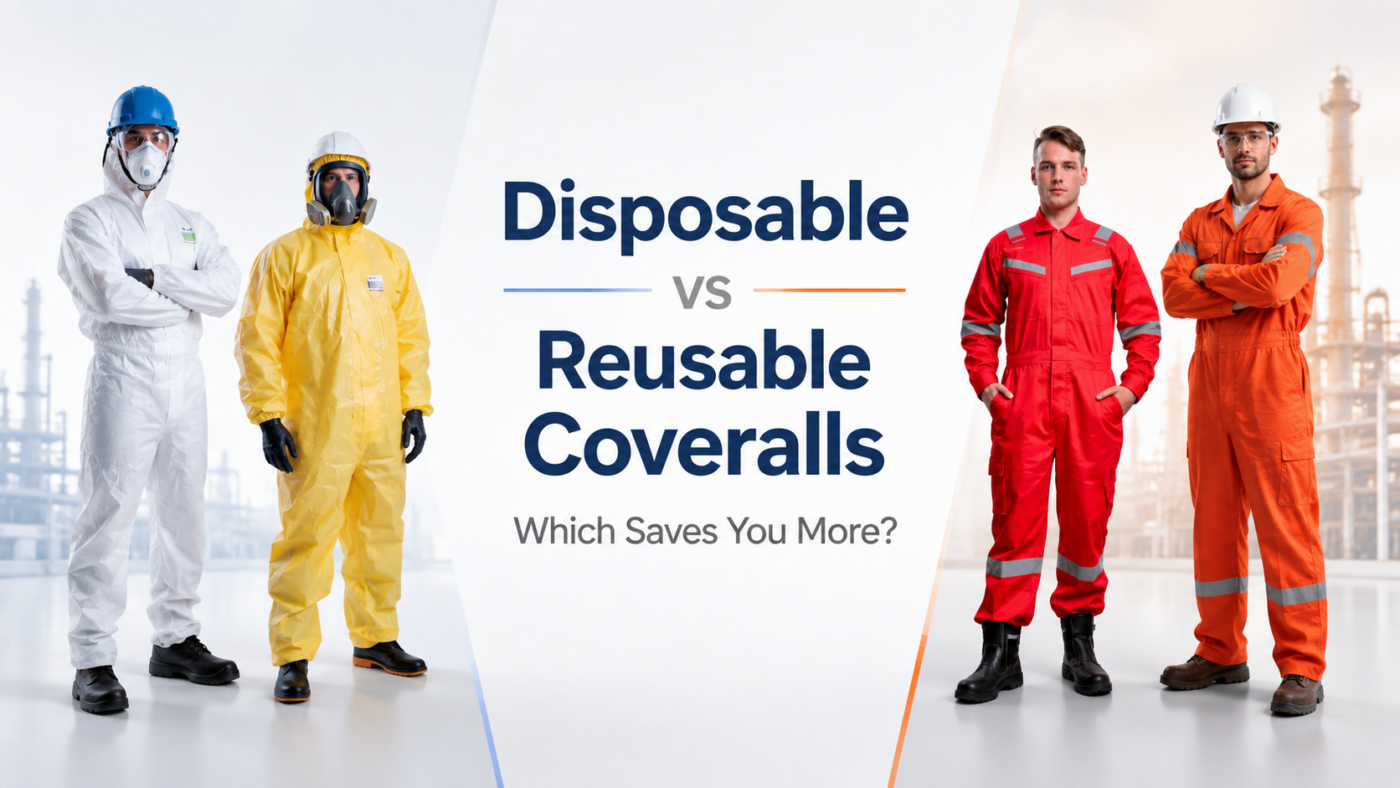
Choosing between disposable and reusable coveralls is not simply about comparing purchase prices.
Disposable coveralls normally cost less per piece and require no laundering. Reusable coveralls cost more initially but can be worn many times when they are properly cleaned, inspected and maintained.
The right choice depends on:
- Workplace hazards
- Frequency of use
- Contamination level
- Cleaning facilities
- Disposal requirements
- Required protection
In general, reusable coveralls offer better long-term value for routine industrial work. Disposable coveralls are often more practical for short-term, contamination-sensitive or hazardous tasks.
This guide explains the differences between disposable vs reusable coveralls and provides a simple method for choosing the right option.
Disposable vs Reusable Coveralls: Quick Comparison
| Factor | Disposable Coveralls | Reusable Coveralls |
|---|---|---|
| Initial cost | Lower | Higher |
| Cost per use | Usually higher over time | Usually lower with frequent use |
| Service life | Single or limited use | Multiple wear cycles |
| Laundering | Normally not required | Required |
| Contamination control | Removed after use | Must be cleaned correctly |
| Durability | Suitable for light or short-term tasks | Better for routine industrial work |
| Best application | Contaminated or occasional tasks | Daily operations |
The lower-cost option is only suitable when it provides the required protection.
What Are Disposable Coveralls?
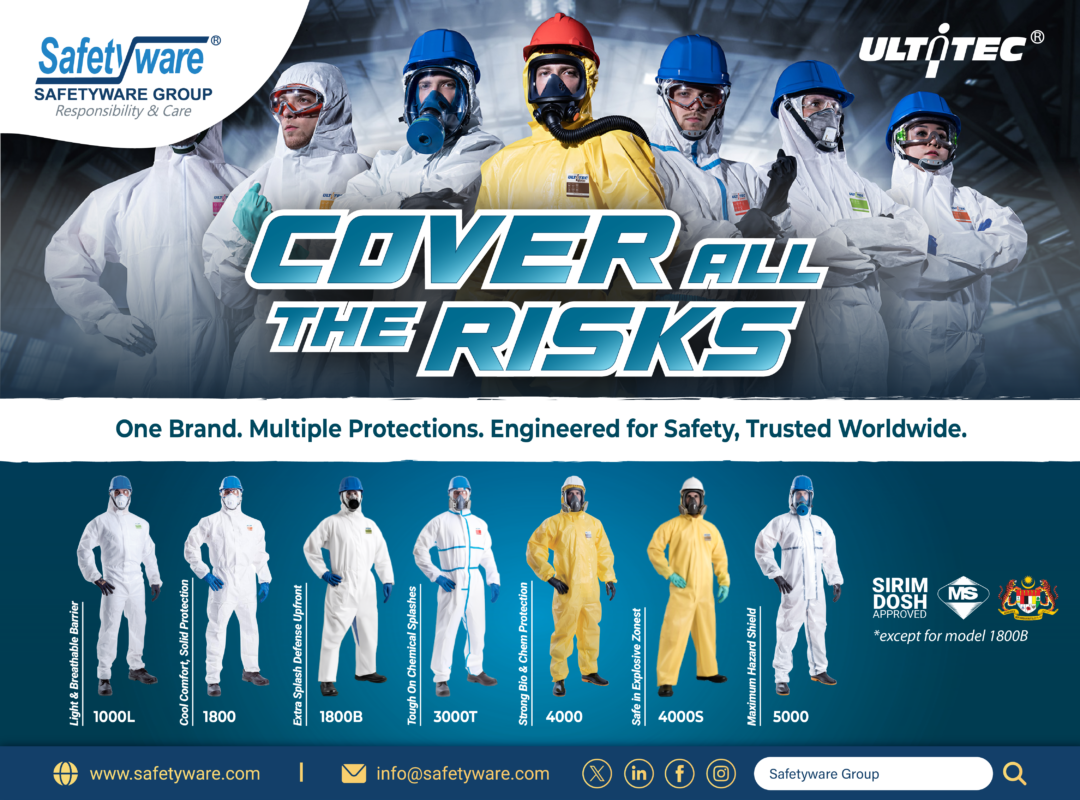
Disposable coveralls are designed for single-use or limited-use applications. They are commonly made from lightweight nonwoven or laminated materials.
Typical applications include:
- Chemical handling
- Painting and spraying
- Industrial cleaning
- Dusty maintenance work
- Food or pharmaceutical production
- Cleanroom entry
- Pesticide application
- Spill response
- Visitor protection
Disposable garments can help reduce contamination transfer because they are removed from service after use.
However, not every disposable coverall provides chemical protection. A lightweight polypropylene coverall may protect clothing from dirt or light dust but may not protect against hazardous liquids, sprays or chemicals.
Always check the product specification, garment construction and intended application.
👉Discover Safetyware Disposable Coverall here: Chemical Resistant Clothing Malaysia
What Are Reusable Coveralls?
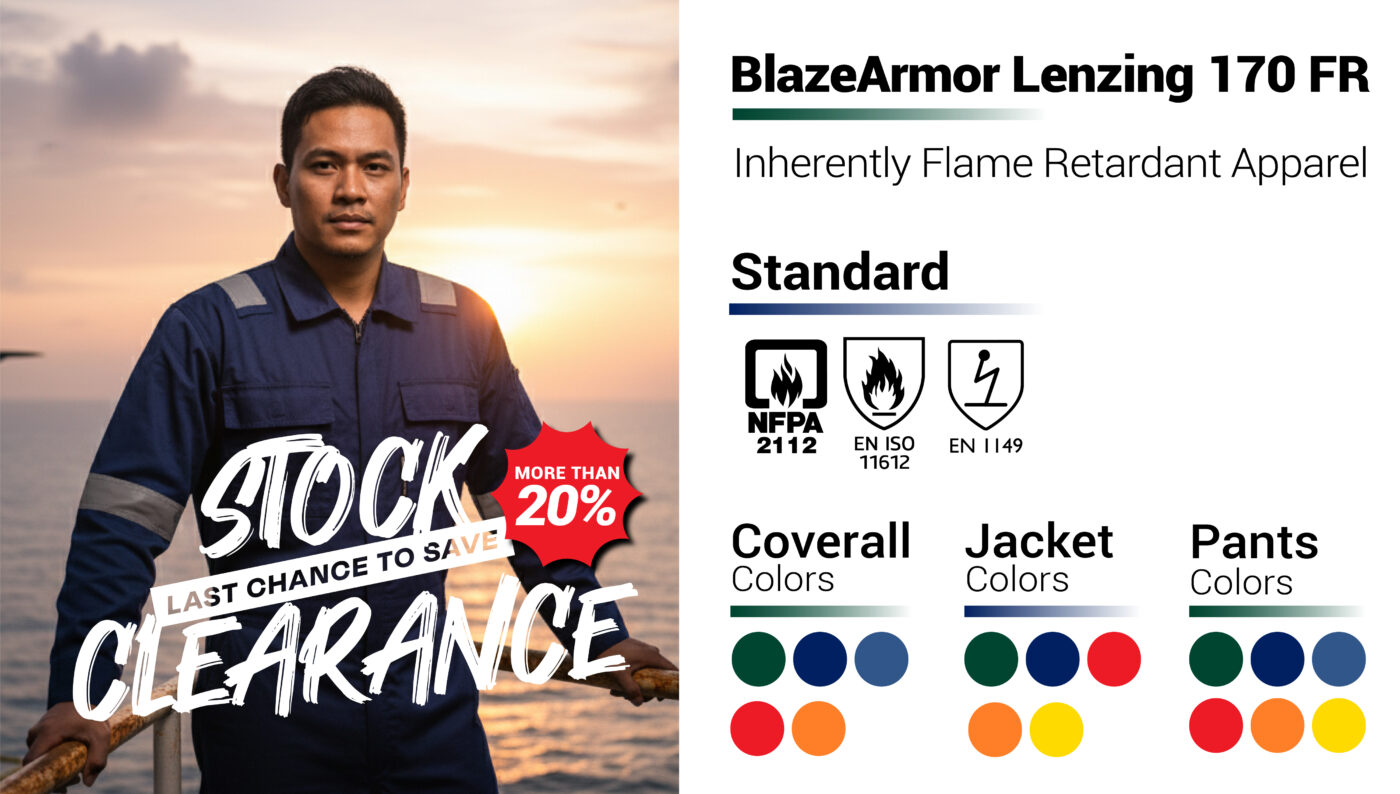
Reusable coveralls are designed to be worn, cleaned, inspected and used again.
They are commonly made from:
- Cotton
- Polyester
- Polyester-cotton blends
- Flame-resistant fabric
- Anti-static fabric
- Specialised coated materials
Reusable coveralls are widely used in:
- Manufacturing
- Engineering workshops
- Warehousing
- Construction
- Maintenance
- Utilities
- Oil and gas operations
- General industrial workplaces
They are generally more durable than lightweight disposable garments and are suitable for workers who need coveralls during every shift.
However, a standard reusable work coverall should not automatically be used for chemical, flame or electrical hazards. Specialised protection requires a garment designed and tested for that hazard.
👉Discover Safetyware Body Protection here: Body Protection PPE Malaysia | Protective Clothing
Which Coverall Saves More?
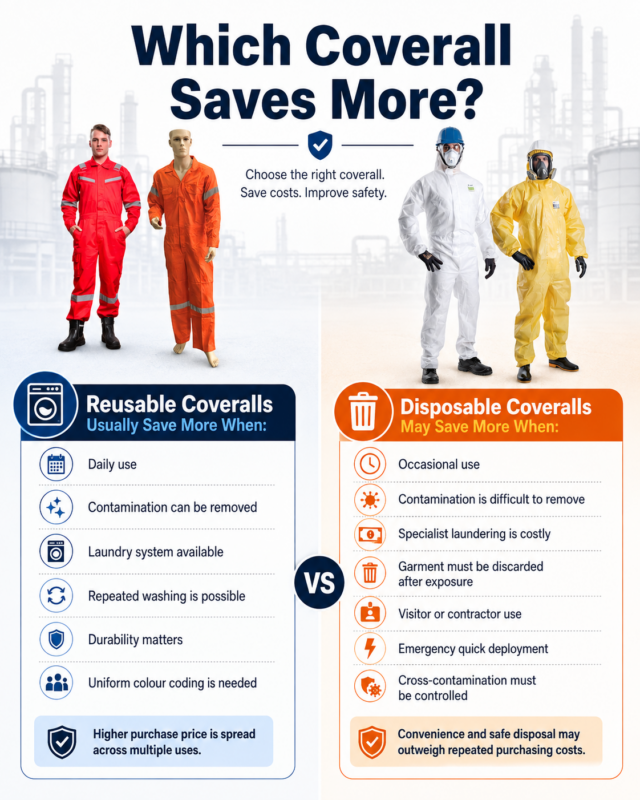
Reusable Coveralls Usually Save More When:
- Workers wear coveralls every day.
- Contamination can be safely removed.
- A proper laundry system is available.
- The garments can withstand repeated washing.
- Durability is important.
- Uniform identification or colour coding is required.
The higher purchase price is spread across multiple uses, which normally reduces the cost per wear.
Disposable Coveralls May Save More When:
- The garment is only needed occasionally.
- Contamination is difficult or unsafe to remove.
- Specialist laundering would be expensive.
- The garment must be discarded after exposure.
- Visitors or short-term contractors need protection.
- Emergency work requires quick deployment.
- Cross-contamination must be controlled.
In these situations, the convenience of using and disposing of the garment may outweigh the cost of repeated purchasing.
Protection Must Come Before Price
The first question should not be:
Which coverall is cheaper?
It should be:
What hazard must the worker be protected from?
Before choosing a coverall, assess:
- Type of hazard
- Chemical name and concentration
- Dust, liquid, spray or particle exposure
- Duration of the task
- Likelihood of direct contact
- Heat or flame exposure
- Biological contamination
- Static-control requirements
- Compatibility with gloves, boots and respirators
For chemical handling, review the Safety Data Sheet and the coverall manufacturer’s compatibility information.
A garment may look protective but still be unsuitable for the actual hazard.
Can Disposable Coveralls Be Reused?
Disposable coveralls should not be reused unless the manufacturer clearly permits it.
Remove a disposable coverall from service when:
- It has contacted a hazardous substance.
- The fabric is torn or punctured.
- The seams or zip are damaged.
- The inside has become contaminated.
- The garment is marked as single-use.
- Its protective condition is uncertain.
Do not wash or disinfect disposable coveralls without approved manufacturer instructions. Cleaning may damage the material or reduce its protective performance.
When Should Reusable Coveralls Be Replaced?
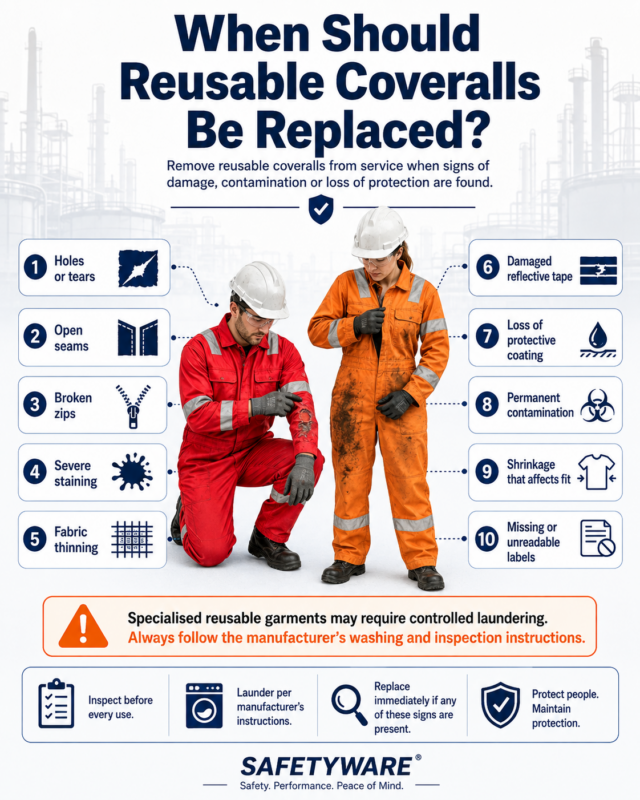
Reusable coveralls do not last indefinitely.
Remove the garment from service when it has:
- Holes or tears
- Open seams
- Broken zips
- Severe staining
- Fabric thinning
- Damaged reflective tape
- Loss of a protective coating
- Permanent contamination
- Shrinkage that affects fit
- Missing or unreadable labels
Specialised reusable garments may require controlled laundering. Follow the manufacturer’s washing and inspection instructions.
A Hybrid Approach Often Works Best
Many workplaces benefit from using both types.
| Workplace Task | Suggested Approach |
|---|---|
| Daily production work | Reusable coverall |
| Routine maintenance | Reusable coverall |
| Visitor entry | Disposable coverall |
| Painting or spraying | Suitable disposable coverall |
| Chemical spill response | Task-specific chemical coverall |
| Heavy contamination | Disposable or limited-use coverall |
| General warehouse work | Reusable coverall |
| Flame or welding hazard | Suitable flame-resistant garment |
A hybrid approach allows the company to control costs without using unsuitable clothing for higher-risk tasks.
How to Choose the Right Coverall
Use this five-step process.
1. Identify the Hazard
Determine what the worker may contact and how exposure could happen.
2. Confirm the Required Protection
Check the risk assessment, Safety Data Sheet, workplace procedure and product documentation.
3. Decide Whether Safe Reuse Is Possible
Consider whether contamination can be removed without damaging the garment or exposing laundry workers.
4. Compare the Full Cost
Include:
- Purchase price
- Frequency of replacement
- Laundry
- Inspection
- Disposal
- Damaged or lost garments
5. Review Performance
Monitor garment damage, consumption, contamination incidents and worker feedback.
The selected coverall should remain protective throughout the task, not only when it is first issued.
Explore SAFETYWARE Coverall Solutions

Once you have identified the workplace hazard and decided whether disposable or reusable protection is more suitable, the next step is to select a garment designed for the actual task.
SAFETYWARE offers disposable coveralls and protective apparel for applications involving hygiene control, workplace contamination and short-duration industrial tasks. The range includes disposable coveralls, lab coats, aprons and related protective clothing for cleanrooms, medical facilities and industrial workplaces.
For routine industrial work, the SAFETYWARE TC Polyester Coverall provides a reusable general-workwear option. Companies should still confirm that general workwear is suitable for the identified hazard, especially where chemicals, heat, flame or other specialised risks are present.
SAFETYWARE also provides a broader range of chemical-resistant clothing, including protective coveralls for splash, spray, particle and liquid chemical exposure. Selection should consider the chemical involved, its concentration, task duration and the protection level stated by the manufacturer.
Explore SAFETYWARE’s body-protection range or contact the team for product selection, sizing and quotation support.
Conclusion
There is no single winner in the disposable vs reusable coveralls comparison.
Reusable coveralls normally save more for routine industrial work because they can be worn and cleaned repeatedly. Disposable coveralls are often more suitable for occasional, contamination-heavy or short-term tasks where laundering is impractical.
Protection must remain the priority.
Identify the hazard first, confirm the required protection and then compare the full cost of using, maintaining and disposing of the garment.
For many workplaces, the most practical solution is to use reusable coveralls for daily operations and disposable protective coveralls for specific contaminated or hazardous tasks.
FREQUENTLY ASKED QUESTIONS
Are reusable coveralls cheaper than disposable coveralls?
Reusable coveralls are usually cheaper for frequent daily use because their cost is spread across multiple wear cycles. Laundry, inspection, repairs and replacement costs should still be included when comparing options.
When should disposable coveralls be used?
Disposable coveralls are suitable for occasional work, visitor protection, contaminated tasks and applications where safe laundering is difficult. The selected garment must provide the correct protection for the hazard.
Can disposable coveralls protect against chemicals?
Some disposable coveralls are designed for specific chemical splash or particle hazards. Basic disposable garments may provide only dirt or light-dust protection. Always check the product specification and chemical compatibility information.
Can disposable coveralls be washed and reused?
Disposable coveralls should not be washed or reused unless the manufacturer specifically permits it. Washing may damage the material, seams or protective barrier.
How often should reusable coveralls be inspected?
Inspect reusable coveralls before use and after cleaning. Remove garments with tears, damaged seams, broken closures, permanent contamination or any condition that may reduce protection.
Can one coverall protect against every industrial hazard?
No. General workwear, chemical coveralls, flame-resistant garments and electrical protective clothing have different purposes. Select clothing according to the specific hazard and product performance.
Safetyware Group provide full range of PPE support!
Explore more industrial PPE solutions here:
Comprehensive Workplace Safety Equipment, PPE & Signage – Safetyware Group
wear wisely, work Safely – with Safetyware! ✨
If you need any support, feel free to contact us at:
📩 Email: [email protected]
📞 Tel: WhatsApp Us