

Respiratory protection is essential in many industrial workplaces where workers are exposed to dust, fumes, airborne particles, and hazardous contaminants.
However, many users are unsure about the differences between FFP1, FFP2, and FFP3 respirators. Choosing the wrong respirator may reduce protection effectiveness and increase health risks.
Understanding respirator classifications helps employers and workers select suitable respiratory protection based on workplace hazards.
What Does FFP Mean?
FFP stands for Filtering Face Piece. These respirators are designed to filter airborne particles and help reduce inhalation of hazardous contaminants.
FFP respirators are commonly used in:
- Manufacturing
- Construction
- Healthcare
- Pharmaceutical industries
- Chemical handling
- Mining operations
- Food processing
The protection level increases from FFP1 to FFP3.
Why Respiratory Protection Is Important
Airborne hazards may not always be visible. Workers exposed to harmful particles over time may develop serious health conditions.
Common respiratory hazards include:
- Dust particles
- Chemical fumes
- Smoke
- Biological contaminants
- Metal fumes
- Fine airborne particles
Proper respirators help reduce inhalation risks and improve workplace safety.
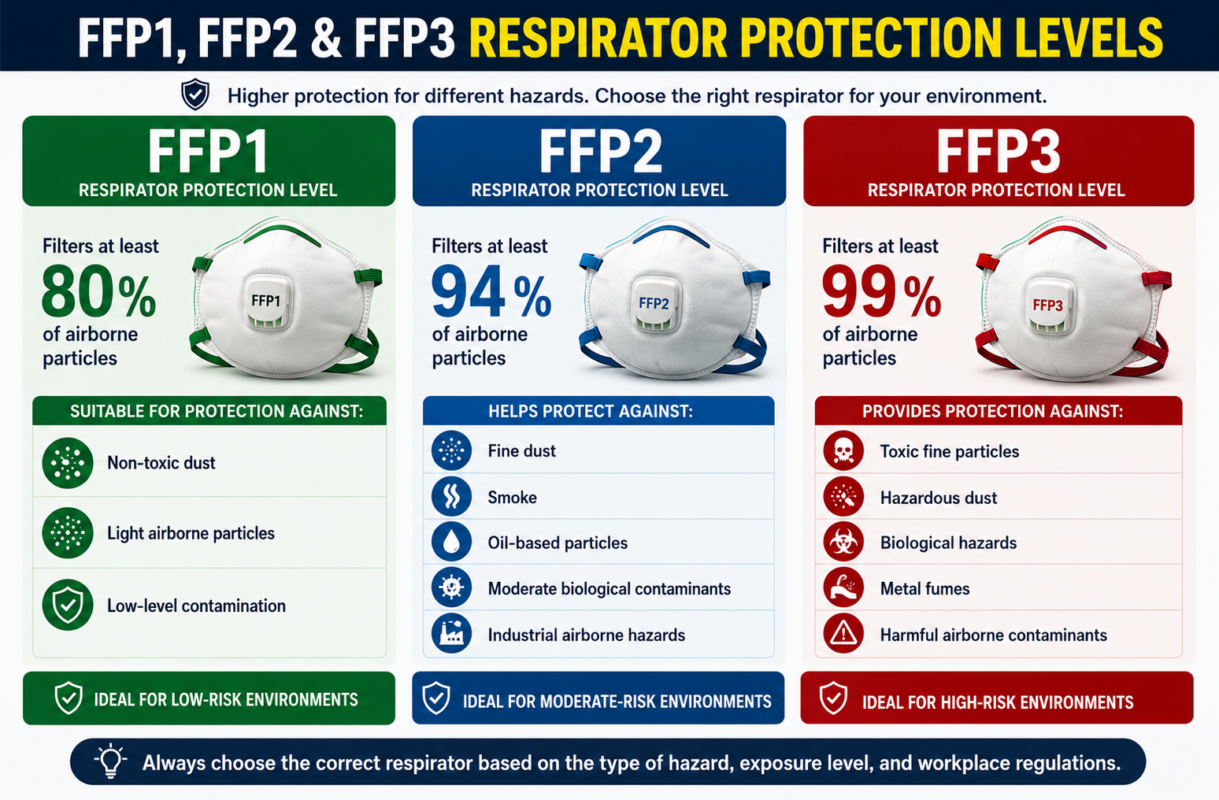
FFP1 Respirator Protection Level
FFP1 respirators typically filter at least 80% of airborne particles.
They are suitable for protection against:
- Non-toxic dust
- Light airborne particles
- Low-level contamination
FFP2 Respirator Protection Level
FFP2 respirators typically filter at least 94% of airborne particles.
They help protect against:
- Fine dust
- Smoke
- Oil-based particles
- Moderate biological contaminants
- Industrial airborne hazards
FFP3 Respirator Protection Level
FFP3 respirators typically filter at least 99% of airborne particles.
They provide protection against:
- Toxic fine particles
- Hazardous dust
- Biological hazards
- Metal fumes
- Harmful airborne contaminants
FFP1 vs FFP2 vs FFP3 Respirators Comparison
| Feature | FFP1 | FFP2 | FFP3 |
|---|---|---|---|
| Filtration Efficiency | Minimum 80% | Minimum 94% | Minimum 99% |
| Protection Level | Basic | Moderate | Highest |
| Suitable for Toxic Particles | No | Limited | Yes |
| Suitable for Fine Dust | Basic | Yes | Excellent |
| Chemical Hazard Protection | No | Moderate | Better |
| Common Use | Dust work | Industrial work | High-risk environments |
Higher filtration levels provide stronger respiratory protection.
How to Choose the Right Respirator
Choosing the correct respirator depends on workplace hazards and exposure risks.
Important factors include:
- Type of airborne contaminant
- Particle concentration
- Toxicity level
- Workplace environment
- Duration of exposure
- Industry requirements
Employers should conduct proper respiratory risk assessments before selecting respirators.
Why Choose SAFETYWARE Respiratory Protection Solutions
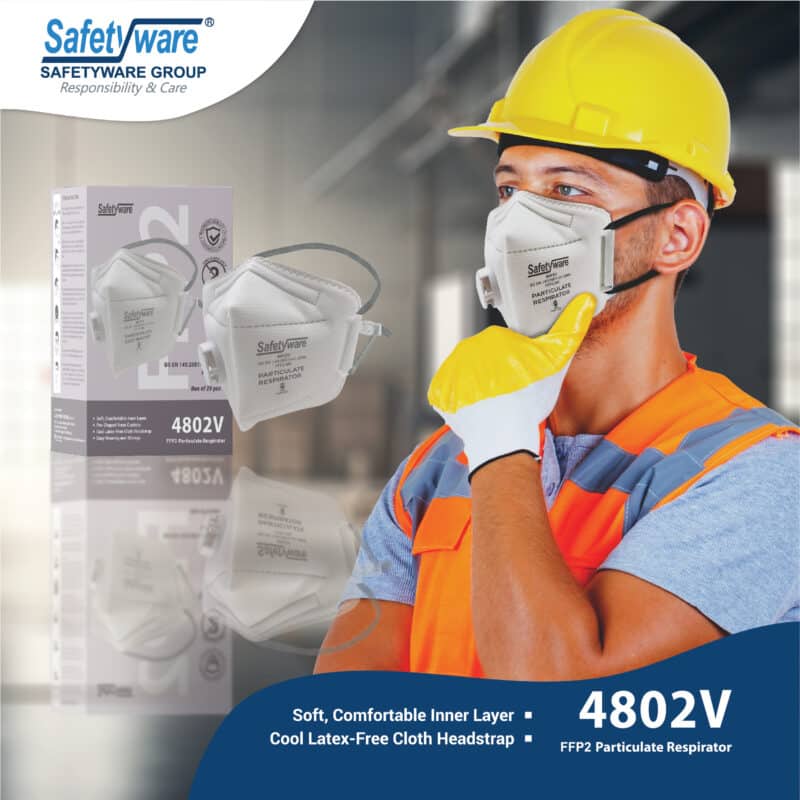
Safetyware provides reliable FFP2 respiratory protection products for industrial and workplace safety applications.
Key advantages include:
- Wide range of respirator solutions
- Compliance with recognized standards
- Reliable filtration performance
- Comfortable respirator designs
- Suitable for Malaysia industries
- Trusted by safety professionals
Safetyware supports safer workplaces with dependable respiratory protection solutions.
Conclusion
FFP1, FFP2, and FFP3 respirators provide different levels of respiratory protection depending on workplace hazards.
FFP1 respirators are suitable for low-risk dust environments. FFP2 respirators offer stronger protection for industrial and moderate-risk applications. FFP3 respirators provide the highest filtration efficiency for hazardous environments.
Choosing the correct respirator helps improve worker safety, reduce airborne exposure risks, and support workplace compliance.
Frequently Asked Questions (FAQs)
1. What is the difference between FFP1, FFP2, and FFP3 respirators?
The main difference is filtration efficiency and protection level against airborne particles.
2. Which respirator provides the highest protection?
FFP3 respirators provide the highest filtration efficiency among FFP respirators.
3. Are FFP2 respirators suitable for industrial work?
Yes. FFP2 respirators are widely used for industrial dust and airborne hazards.
4. Can FFP1 respirators protect against toxic particles?
No. FFP1 respirators are mainly suitable for low-risk dust protection.
5. Why is respirator fit important?
Proper fit prevents air leakage and improves respiratory protection effectiveness.
📞 Need More Information?
Your safety matters. If you have questions about which Respiratory is right for your workplace, we’re here to help!
Visit our website: www.safetyware.com
Work safely, work confidently – with Safetyware! 🔪✨
Learn more from SAFETYWARE PPE by clicking HERE!
If you need a quotation, feel free to contact us at:
📩 Email: [email protected]
📞 Tel: WhatsApp Us