
Personal Protective Equipment (PPE) plays a critical role in reducing workplace injuries in factories and industrial environments. However, PPE can only provide proper protection when workers use it correctly.
Many workplace accidents happen because workers misuse PPE, wear unsuitable equipment, or ignore safety procedures. Even small mistakes may increase exposure to serious hazards.
Understanding common PPE mistakes helps employers improve safety awareness, strengthen compliance, and reduce workplace incidents.
Why Proper PPE Usage Is Important
Factory workers face various workplace hazards every day, including:
- Falling objects
- Sharp materials
- Chemical exposure
- Noise hazards
- Dust and airborne particles
- Slippery surfaces
- Heat exposure
Proper PPE helps reduce injuries and improve worker protection during daily operations.
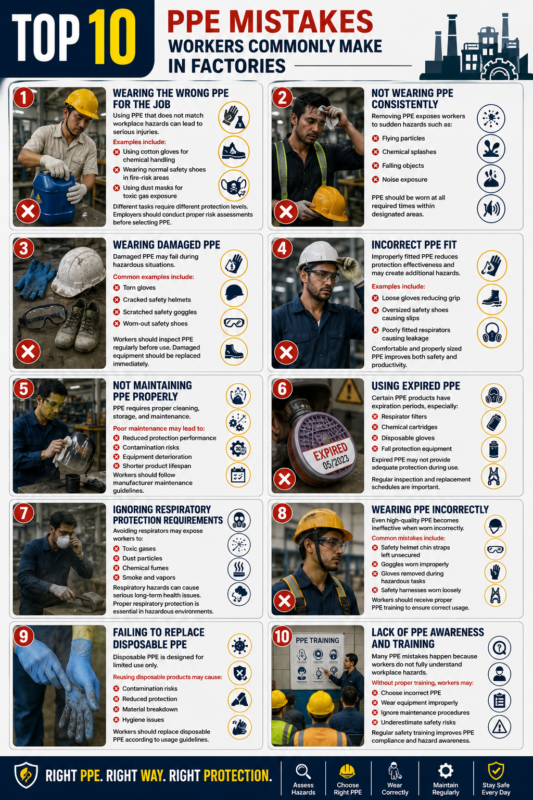
1. Wearing the Wrong PPE for the Job
One of the most common mistakes is using PPE that does not match workplace hazards.
Examples include:
- Using cotton gloves for chemical handling
- Wearing normal safety shoes in fire-risk areas
- Using dust masks for toxic gas exposure
Different tasks require different protection levels.
Employers should conduct proper risk assessments before selecting PPE.
2. Not Wearing PPE Consistently
Some workers remove PPE because of discomfort, heat, or convenience during work.
This exposes workers to sudden hazards such as:
- Flying particles
- Chemical splashes
- Falling objects
- Noise exposure
PPE should be worn at all required times within designated areas.
3. Wearing Damaged PPE
Damaged PPE may fail during hazardous situations.
Common examples include:
- Torn gloves
- Cracked safety helmets
- Scratched safety goggles
- Worn-out safety shoes
Workers should inspect PPE regularly before use.
Damaged equipment should be replaced immediately.
4. Incorrect PPE Fit
Improperly fitted PPE reduces protection effectiveness and may create additional hazards.
Examples include:
- Loose gloves reducing grip
- Oversized safety shoes causing slips
- Poorly fitted respirators causing leakage
Comfortable and properly sized PPE improves both safety and productivity.
5. Not Maintaining PPE Properly
PPE requires proper cleaning, storage, and maintenance.
Poor maintenance may lead to:
- Reduced protection performance
- Contamination risks
- Equipment deterioration
- Shorter product lifespan
Workers should follow manufacturer maintenance guidelines.
6. Using Expired PPE
Certain PPE products have expiration periods, especially:
- Respirator filters
- Chemical cartridges
- Disposable gloves
- Fall protection equipment
Expired PPE may not provide adequate protection during use.
Regular inspection and replacement schedules are important.
7. Ignoring Respiratory Protection Requirements
Some workers underestimate airborne hazards and avoid using respirators.
This may expose workers to:
- Toxic gases
- Dust particles
- Chemical fumes
- Smoke and vapors
Respiratory hazards can cause serious long-term health issues.
Proper respiratory protection is essential in hazardous environments.
8. Wearing PPE Incorrectly
Even high-quality PPE becomes ineffective when worn incorrectly.
Common mistakes include:
- Safety helmet chin straps left unsecured
- Goggles worn improperly
- Gloves removed during hazardous tasks
- Safety harnesses worn loosely
Workers should receive proper PPE training to ensure correct usage.
9. Failing to Replace Disposable PPE
Disposable PPE is designed for limited use only.
Reusing disposable products may cause:
- Contamination risks
- Reduced protection
- Material breakdown
- Hygiene issues
Workers should replace disposable PPE according to usage guidelines.
10. Lack of PPE Awareness and Training
Many PPE mistakes happen because workers do not fully understand workplace hazards.
Without proper training, workers may:
- Choose incorrect PPE
- Wear equipment improperly
- Ignore maintenance procedures
- Underestimate safety risks
Regular safety training improves PPE compliance and hazard awareness.
How Employers Can Reduce PPE Mistakes
Employers can improve PPE compliance by:
- Conducting proper risk assessments
- Providing regular safety training
- Performing PPE inspections
- Replacing damaged equipment promptly
- Educating workers on hazard awareness
- Encouraging safety culture
Strong PPE management improves workplace safety performance.
Why Choose SAFETYWARE PPE Solutions
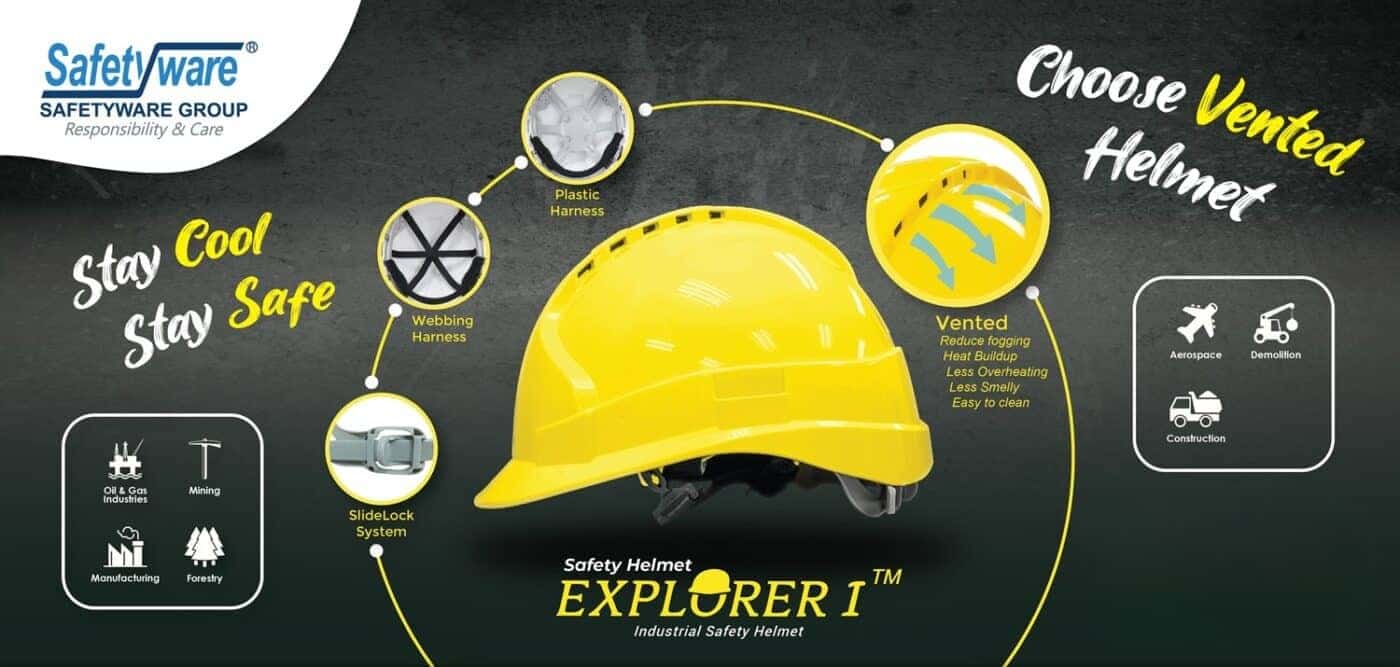
Safetyware provides reliable PPE solutions for various industrial applications.
Key advantages include:
- Compliance with international standards
- Durable industrial protection
- Wide range of PPE solutions
- Comfortable and ergonomic designs
- Suitable for Malaysia industries
- Trusted by safety professionals
Safetyware supports safer workplaces through practical industrial safety solutions.
Conclusion
PPE is essential for protecting workers in factories and industrial environments. However, PPE can only work effectively when used correctly.
Common mistakes such as wearing damaged equipment, using incorrect PPE, and ignoring maintenance procedures may increase workplace risks.
Improving PPE awareness, training, and compliance helps reduce accidents and create safer working environments.
Frequently Asked Questions (FAQs)
1. Why is proper PPE usage important in factories?
Proper PPE usage helps reduce injuries and improve worker protection against workplace hazards.
2. What is the most common PPE mistake?
Using the wrong PPE for workplace hazards is one of the most common mistakes.
3. Why should damaged PPE be replaced immediately?
Damaged PPE may fail to provide adequate protection during hazardous situations.
4. How can employers improve PPE compliance?
Employers can improve compliance through training, inspections, and proper PPE management.
5. What standards apply to industrial PPE?
Common standards include DOSH Malaysia requirements, EN standards, ISO systems, and ANSI standards.
📞 Need More Information?
Your safety matters. If you have questions about which PPE is right for your workplace, we’re here to help!
Visit our website: www.safetyware.com
Work safely, work confidently – with Safetyware! 🔪✨
Learn more from SAFETYWARE PPE by clicking HERE!
If you need a quotation, feel free to contact us at:
📩 Email: [email protected]
📞 Tel: WhatsApp Us