
Creating a safe workplace requires more than compliance with regulations or providing personal protective equipment (PPE). While these elements are essential, they are only part of the equation. The most successful organizations understand that safety leadership plays a critical role in shaping workplace behaviours, improving communication, and fostering a culture where safety becomes everyone’s responsibility.
As workplaces across Malaysia continue to evolve, organizations are facing new challenges such as mental well-being, psychosocial risks, digital transformation, and increasing Environmental, Social, and Governance (ESG) expectations. Developing strong safety leaders has become essential for building resilient, future-ready businesses.
Why Safety Leadership Matters

Every organization has policies and procedures, but not every organization has a strong safety culture.
Safety leadership goes beyond enforcing rules. It is about influencing people, making informed decisions, and creating an environment where employees feel empowered to speak up about risks, report hazards, and actively participate in workplace safety.
Strong leaders help organizations:
- Create a positive safety culture
- Encourage safe work behaviours
- Improve communication across teams
- Strengthen employee engagement
- Build trust and accountability
- Improve compliance with safety regulations
- Increase operational performance
When leaders demonstrate a genuine commitment to safety, employees are more likely to adopt safe behaviours in their daily work.
Compliance Alone Is Not Enough
Many organizations invest heavily in compliance programs, audits, and safety procedures. While these are important, they do not automatically create a strong safety culture.
True workplace safety happens when leaders consistently reinforce the right behaviours through:
- Visible leadership
- Open communication
- Active listening
- Coaching and mentoring
- Continuous improvement
Employees are more likely to follow safety procedures when they see leaders leading by example rather than simply enforcing policies.
Emerging Workplace Challenges
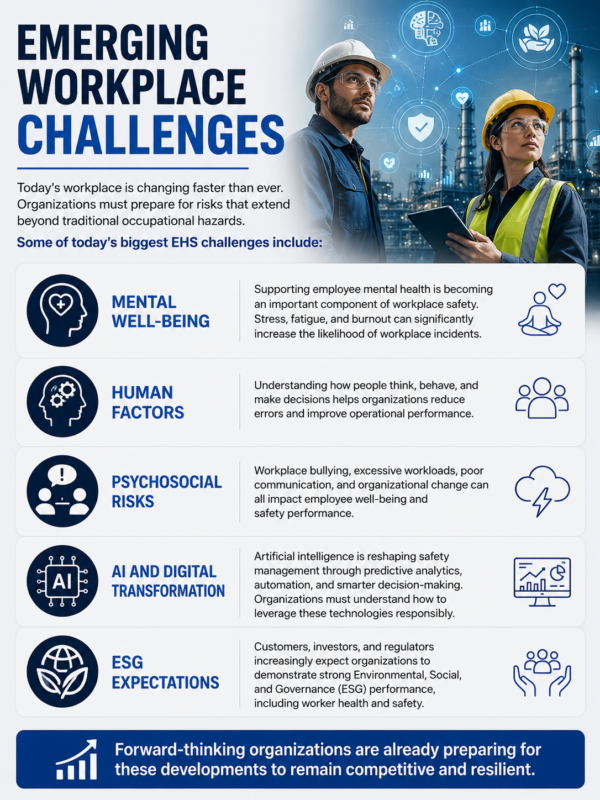
Today’s workplace is changing faster than ever. Organizations must prepare for risks that extend beyond traditional occupational hazards.
Some of today’s biggest EHS challenges include:
Mental Well-being
Supporting employee mental health is becoming an important component of workplace safety. Stress, fatigue, and burnout can significantly increase the likelihood of workplace incidents.
Human Factors
Understanding how people think, behave, and make decisions helps organizations reduce errors and improve operational performance.
Psychosocial Risks
Workplace bullying, excessive workloads, poor communication, and organizational change can all impact employee well-being and safety performance.
AI and Digital Transformation
Artificial intelligence is reshaping safety management through predictive analytics, automation, and smarter decision-making. Organizations must understand how to leverage these technologies responsibly.
ESG Expectations
Customers, investors, and regulators increasingly expect organizations to demonstrate strong Environmental, Social, and Governance (ESG) performance, including worker health and safety.
Forward-thinking organizations are already preparing for these developments to remain competitive and resilient.
Building a Strong Safety Culture
Developing a positive safety culture requires continuous effort from every level of an organization.
Successful organizations often focus on:
- Leadership commitment
- Employee participation
- Effective communication
- Continuous learning
- Risk awareness
- Psychological safety
- Regular safety training
When these elements work together, organizations create workplaces where safety becomes part of everyday decision-making rather than simply a compliance requirement.
Join the Safety360 EHS Event
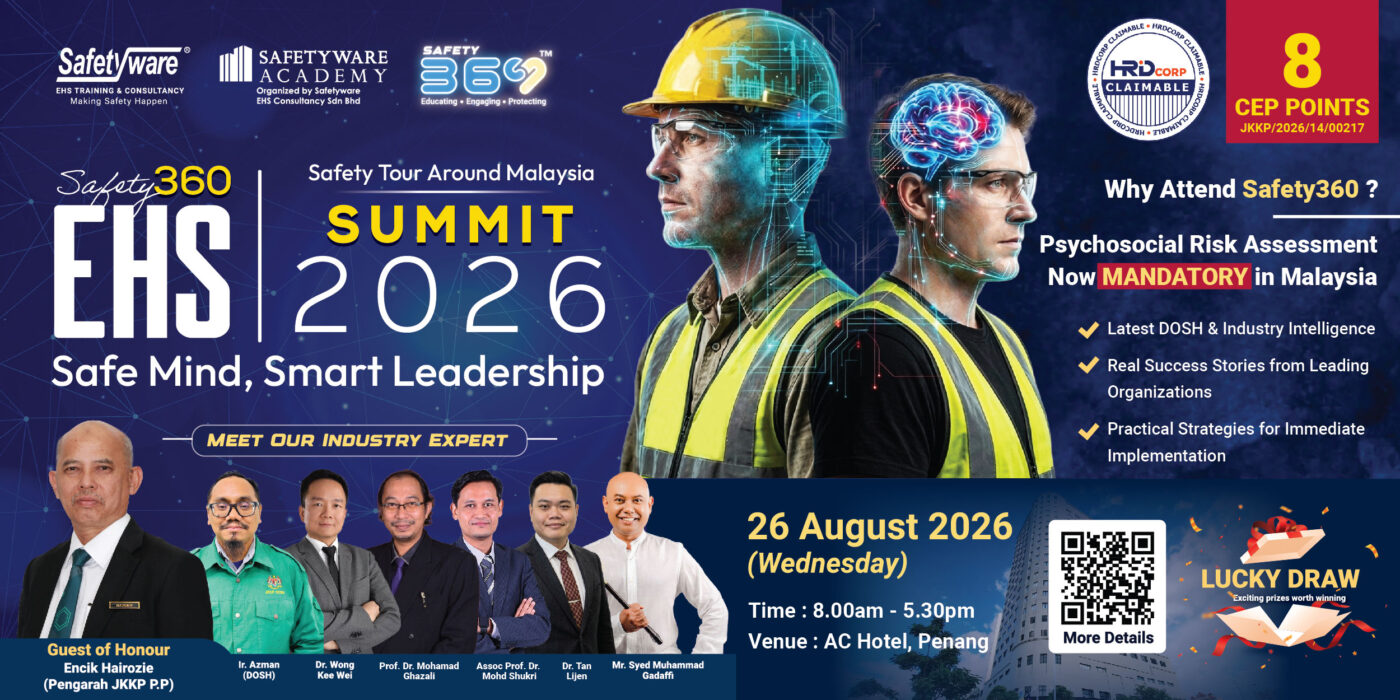
Building a strong safety culture starts with strong leadership—and that’s exactly what Safety360 is designed to address.
Safety360 brings together industry professionals, EHS practitioners, and business leaders to explore how leadership influences communication, trust, decision-making, and workplace culture. The event also examines emerging topics that are shaping the future of workplace safety, including mental well-being, psychosocial risks, human factors, artificial intelligence in EHS, and ESG expectations.
Whether you’re an EHS Manager, Safety Officer, HR professional, business owner, or operational leader, Safety360 offers valuable insights to help your organization build resilient teams and strengthen long-term safety performance.
If you’re interested in learning practical strategies, industry best practices, and future-ready EHS solutions, we invite you to join the Safety360 event. We’ll be sharing more details, expert insights, and real-world approaches to help organizations enhance workplace safety and leadership capabilities.
Why Choose SAFETYWARE?
SAFETYWARE is committed to supporting organizations beyond supplying PPE. We work closely with businesses to promote workplace safety through quality personal protective equipment, safety education, industry knowledge sharing, and professional engagement initiatives such as Safety360. By combining certified PPE solutions with practical safety expertise, we help organizations create safer, healthier, and more resilient workplaces.
Conclusion
Creating a safer workplace requires more than compliance—it requires leadership. Organizations that invest in developing effective leaders are better equipped to build strong safety cultures, improve employee engagement, and adapt to future workplace challenges.
As workplace expectations continue to evolve, leadership will remain one of the most valuable investments any organization can make. By combining strong leadership, continuous learning, and appropriate PPE, businesses can create safer and more sustainable workplaces for everyone.
If you’re ready to strengthen your organization’s safety culture and prepare for the future of EHS, consider joining the upcoming Safety360 event to gain practical insights from industry experts.
Frequently Asked Questions
Why is safety leadership important?
Safety leadership influences workplace behaviour, improves communication, and creates a positive safety culture that helps reduce workplace incidents and improve employee engagement.
What is a safety culture?
A safety culture refers to the shared values, attitudes, and behaviours that determine how safety is managed and prioritized within an organization.
How can leaders improve workplace safety?
Leaders can improve workplace safety by communicating effectively, leading by example, encouraging employee participation, conducting regular safety training, and promoting continuous improvement.
Why is compliance alone not enough?
Compliance establishes minimum legal requirements, but leadership creates the behaviours, trust, and engagement needed to build a sustainable safety culture.
Who should attend the Safety360 event?
Safety360 is suitable for EHS Managers, Safety Officers, HSE Professionals, HR teams, Factory Managers, Business Leaders, Operations Managers, and anyone responsible for improving workplace safety and organizational performance.
📞 Need More Information?
Looking for reliable Safety related Training for your workplace?
Contact to Safetyware EHS Consultancy at
👉Safetyware EHS Consultancy
We provide the most comprehensive safety solutions in Malaysia, combining training, assessment, and consultancy to help organizations build safer, healthier, and more compliant workplaces.
If you need a quotation, feel free to contact us at:
📩 Email: [email protected]
📞 Tel: WhatsApp Us