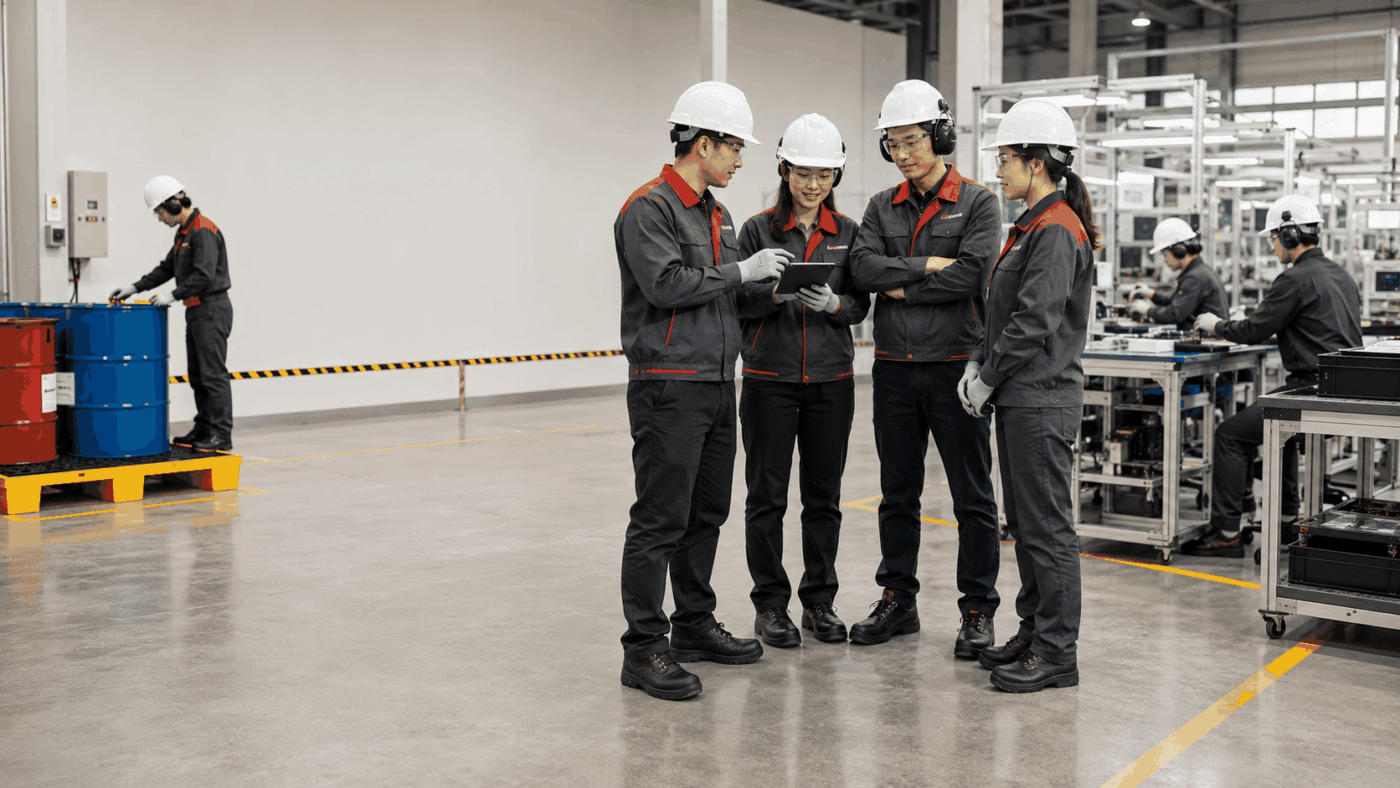
Manufacturing supports many of Vietnam’s key industries, from electronics and machinery to textiles, food, metalwork and chemicals. However, each factory creates a different mix of hazards. A worker near a press may face impact and noise, while a chemical handler may face splash and vapour risks. Therefore, employers need a PPE programme that matches each job instead of one standard kit for the entire factory.
Vietnamese law also treats personal protective equipment as the last layer in a wider control plan. Employers must first remove or reduce danger through technology, equipment and safe work methods. Then, where hazards remain, they must provide suitable PPE and make sure workers use it correctly.
This guide explains how manufacturers can identify common hazards, select suitable protection and manage PPE throughout its service life. It also separates legal duties from product standards and good industry practice.
Legal note: This article provides general guidance, not legal advice. Employers should check the latest Vietnamese legal text, technical regulations and sector rules that apply to their site and activities.
Why PPE Selection in Manufacturing Must Start With a Hazard Assessment
PPE only works when it matches the hazard, exposure level and work method. For example, a general handling glove may improve grip, but it may not protect against a sharp metal edge. Likewise, a particulate respirator may filter dust, but it will not control a gas or vapour unless the manufacturer specifically designed and approved it for that purpose.
First, map each process and task. Next, record the source, route and likely severity of each exposure. Finally, consider how workers move between production zones, because their PPE may need to work together across several hazards.
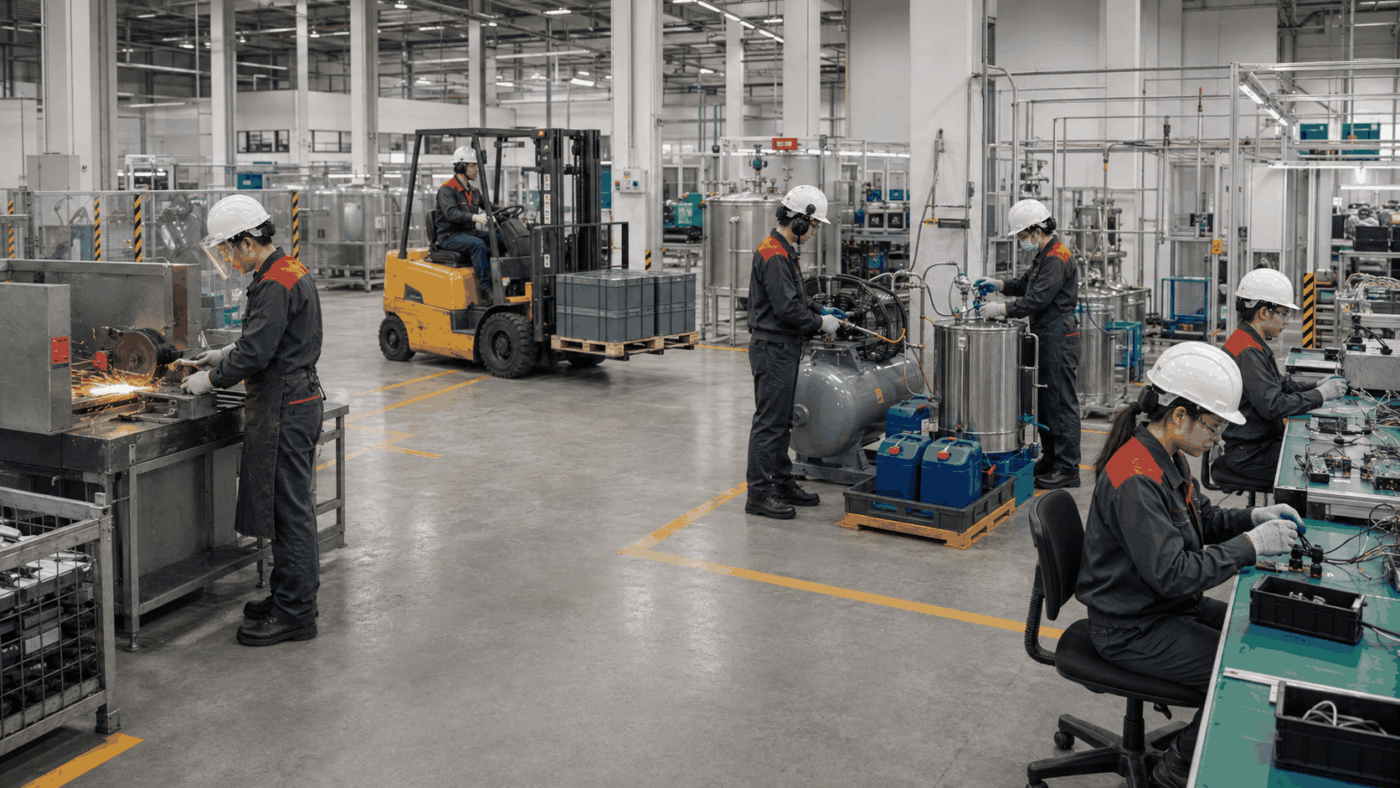
Common manufacturing hazards include:
- Flying particles from cutting, drilling, grinding or machining
- Sharp sheet metal, glass, blades, burrs and unfinished parts
- Falling or moving objects during material handling
- Forklifts, mobile equipment and vehicle routes
- Harmful noise from presses, compressors, motors and production lines
- Dust, fumes, mist, gases or vapours
- Chemical splash during mixing, cleaning, plating or maintenance
- Hot surfaces, molten material, sparks or welding radiation
- Slippery floors, dropped tools and sharp material underfoot
- Electrical work, stored energy and electrostatic discharge
- Work at height, confined spaces and non-routine maintenance
- Contamination concerns in electronics, food, medical or clean production
Vietnam’s Legal Framework for Workplace PPE
Vietnam’s Law on Occupational Safety and Health, Law No. 84/2015/QH13, took effect on 1 July 2016. Article 23 addresses personal protective equipment at work. In summary, workers who perform jobs with dangerous or harmful factors must receive adequate PPE from the employer and must use it while working.
Importantly, the law also requires employers to apply technology, engineering and equipment measures to remove or reduce hazards and improve working conditions. Therefore, PPE does not replace machine guarding, local exhaust ventilation, isolation, safer chemicals or sound work procedures.
When employers provide PPE, Article 23 requires the correct type, quantity and quality for the intended users. It also prevents employers from paying cash instead of providing PPE, making employees buy it or charging employees for it. In addition, employers must guide and supervise use. Where PPE can carry toxic, infectious or radioactive contamination, employers must also arrange suitable cleaning or decontamination.
Circular No. 25/2022/TT-BLDTBXH
Circular No. 25/2022/TT-BLDTBXH took effect on 1 April 2023 and gives more detail on PPE provision at work. It covers head, eye and face, hearing, respiratory, hand and arm, foot and leg, body, fall, electrical and other forms of protection.
The Circular links PPE eligibility to actual exposure. Examples include physical factors that fail to meet occupational hygiene limits, toxic dust or chemicals, biological hazards, dangerous machinery, unsafe working positions, work at height and oxygen-deficient or other hazardous locations.
The Circular’s appendix gives job and occupation examples. Even so, employers should not treat that appendix as a complete substitute for a site assessment. Where a listed job does not reflect the factory’s actual risk, the employer should assess the additional need and document the PPE decision.
The Circular also supports a managed issue system. In practice, employers should plan PPE purchases, keep issue records, inspect items before issue and during use, replace expired or damaged PPE, and provide suitable storage. The Circular also calls for consultation with the worker representative organisation when the employer prepares annual procurement plans and decides service periods and quantities.
Law, Standards and Good Practice: Know the Difference
| Type | What it means | How a buyer should use it |
|---|---|---|
| Vietnamese law and circulars | Binding duties for employers and workers within their scope | Use them to define who must receive PPE and how the programme must operate |
| Vietnamese technical regulations | Mandatory technical rules where they apply to a product or hazard | Confirm whether a specific QCVN, conformity route or sector rule applies |
| Product standards | Test methods and performance classifications, such as EN, ISO or ANSI standards | Match the exact product marking and performance level to the risk and tender terms |
| Factory rules and buyer specifications | Site controls that may exceed the legal minimum | Apply them consistently after checking that they suit the task and other PPE |
| Common industry practice | Useful methods such as wearer trials, colour coding and PPE zoning | Use these methods to strengthen the programme, but do not describe them as law |
Essential PPE for Manufacturing Operations in Vietnam
No single item below is mandatory for every factory worker. Instead, employers should select each item from the risk assessment, applicable law, technical rules and product information.
1. Eye and Face Protection
Safety glasses can help control impact from low-energy flying particles during general factory work. However, chemical splash, fine dust, high-impact work, molten metal and welding need different designs. For example, splash work may require close-fitting goggles, while grinding may require suitable eye protection plus a face shield. A face shield normally supplements primary eye protection; it does not automatically replace it.
Buyers should check lens and frame markings, coverage, optical quality, impact rating and compatibility with respirators or hearing protection. Moreover, anti-fog performance can improve consistent use in Vietnam’s warm and humid conditions.
2. Hand and Arm Protection
Factories often need several glove types. General handling gloves can support grip and abrasion control. In contrast, cut-resistant gloves suit tasks involving sheet metal, glass or sharp parts. Chemical-resistant gloves require a material that matches the exact chemical, concentration, temperature and contact time. Heat, electrical and cleanroom work also require task-specific designs.
Never select chemical gloves from material name alone. Instead, compare the safety data sheet with the glove maker’s permeation and degradation data. Also, run a worker trial to confirm grip, dexterity and cuff coverage.
3. Foot Protection
Safety footwear selection should consider toe impact, sole penetration, slip, water, heat, chemicals, electrical risks and static control. For instance, metal fabrication may need toe and penetration protection, while wet processing may need waterproof boots with suitable grip. Electronics work may require ESD footwear as one part of a complete electrostatic-control system.
Fit matters as much as the rating. Therefore, employers should manage sizes, allow a practical fitting process and review complaints before a poor fit leads to non-use.
4. Hearing Protection
Noise control should start at the machine. Enclosures, quieter tools, damping, maintenance and separation can reduce exposure for everyone. Where measured exposure still requires hearing protection, employers can select ear plugs, earmuffs or a compatible combination.
Do not choose the highest attenuation rating by default. Too much protection can block speech, alarms or equipment sounds. Instead, use the noise assessment, account for fit and train workers to insert plugs or seal earmuffs correctly.
5. Respiratory Protection
Respirator selection requires more than choosing a mask. First, identify the contaminant and concentration. Then, confirm oxygen level, exposure time, warning properties and whether the task could create an immediately dangerous atmosphere. Finally, choose an approved device, filter or cartridge that the manufacturer allows for that hazard.
Particulate respirators can help protect against suitable airborne particulates such as dusts, fumes and mists when properly selected, fitted and used. However, gases and vapours may require a compatible air-purifying respirator and specific cartridge. Oxygen-deficient, unknown or highly dangerous atmospheres need a different supplied-air strategy and trained specialists. Facial hair, poor fit and incompatible eyewear can also break the seal of a tight-fitting respirator.
6. Head, Body and Fall Protection
Use industrial safety helmets where the assessment identifies falling-object, overhead-impact or related head hazards. Meanwhile, bump caps only address minor contact with fixed objects and do not replace a safety helmet.
Body protection can range from ordinary workwear to chemical, heat, flame, arc or disposable garments. Therefore, choose the fabric, seam, closure and coverage for the actual exposure. For work at height, a harness alone is not a complete fall-protection system; the plan must also cover anchorage, connectors, clearance, inspection and rescue.
Manufacturing PPE Selection Matrix
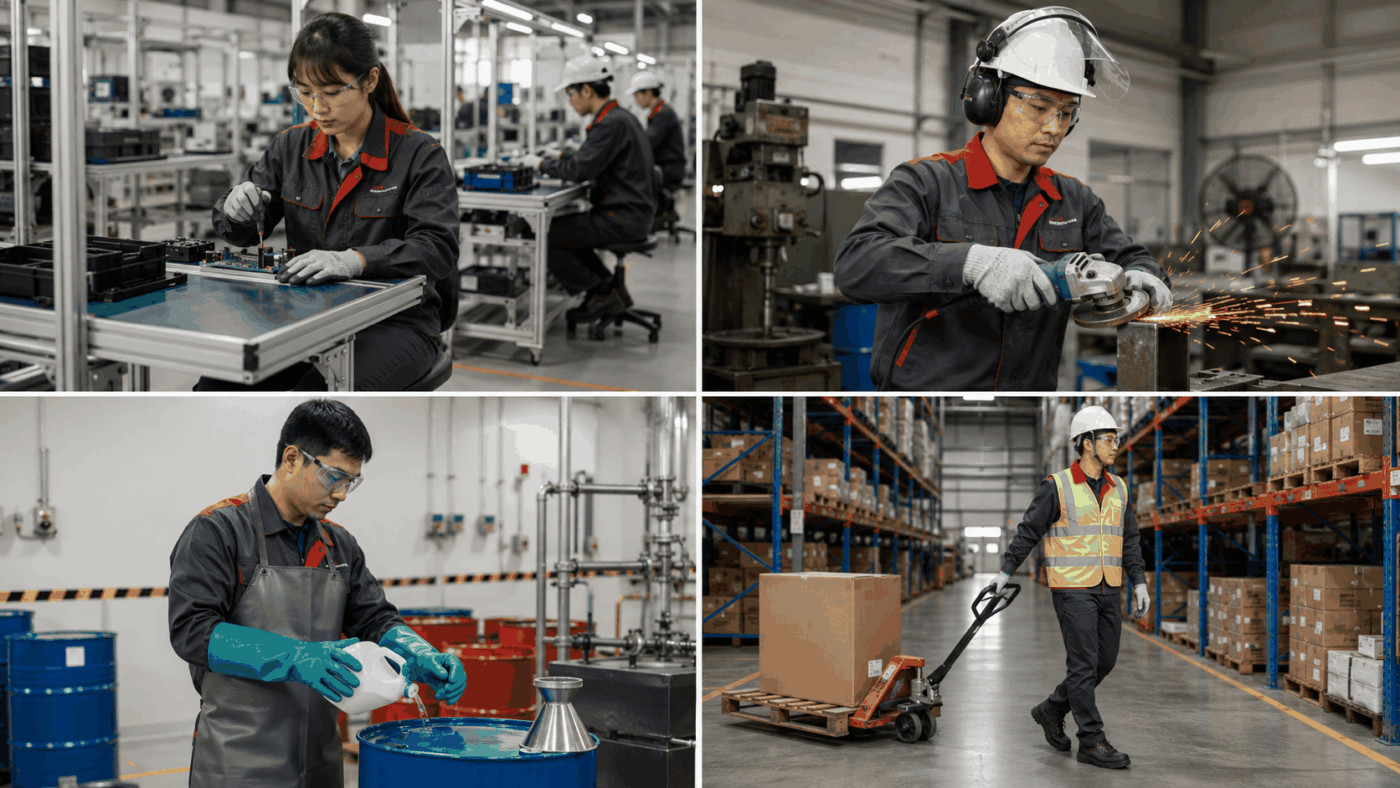
| Task or area | Main hazards | Typical PPE direction after other controls | Key selection question |
|---|---|---|---|
| Assembly and packing | Sharp edges, small parts, minor impact | Safety glasses, task-matched handling or cut gloves, suitable footwear | Does the PPE preserve grip and fine movement? |
| Metal cutting and grinding | Flying particles, cuts, sparks, noise | Rated eye protection, face protection where required, cut gloves, hearing protection, footwear and suitable clothing | Do all items work together without gaps? |
| Chemical mixing or cleaning | Splash, vapour, skin contact | Chemical goggles, face shield where required, compatible gloves, protective clothing, footwear and selected respirator if needed | Does the SDS match the selected glove and respirator data? |
| Welding and hot work | Radiation, sparks, fume, heat | Welding eye/face protection, heat-resistant gloves and clothing, footwear, hearing and respiratory protection as assessed | Is each item rated for the welding process and exposure? |
| Electronics and clean production | Static, contamination, fine assembly | ESD or cleanroom clothing, suitable gloves, eye protection and ESD footwear within a controlled system | Does the PPE fit the site’s grounding and contamination plan? |
| Maintenance and shutdown | Stored energy, sharp parts, chemicals, height | Task-specific PPE plus lockout/tagout and permit controls | Has the team reassessed the non-routine task? |
| Warehouse and loading area | Vehicles, falling loads, foot injury, visibility | High-visibility clothing where needed, footwear, helmet in defined zones and gloves | Are pedestrian routes and PPE zones clearly controlled? |
How Manufacturers in Vietnam Can Build an Effective PPE Programme
Step 1: Create a Task-Based Hazard Register
List routine, non-routine and emergency tasks. Then, record who performs them, how often and for how long. Include maintenance, cleaning, contractor work and product changeovers because these tasks often create different exposures from normal production.
Step 2: Apply the Hierarchy of Controls
Remove the hazard where possible. If removal is not practical, substitute safer materials, isolate the process or add engineering controls. Next, use safe procedures, access rules and training. Finally, select PPE for the remaining risk.
Step 3: Write a PPE Specification for Each Role
Define the hazard, required performance, size range, compatible accessories, inspection method, cleaning process and replacement trigger. Also, require documents for the exact model rather than accepting a certificate from a similar item.
Step 4: Test Fit and Compatibility
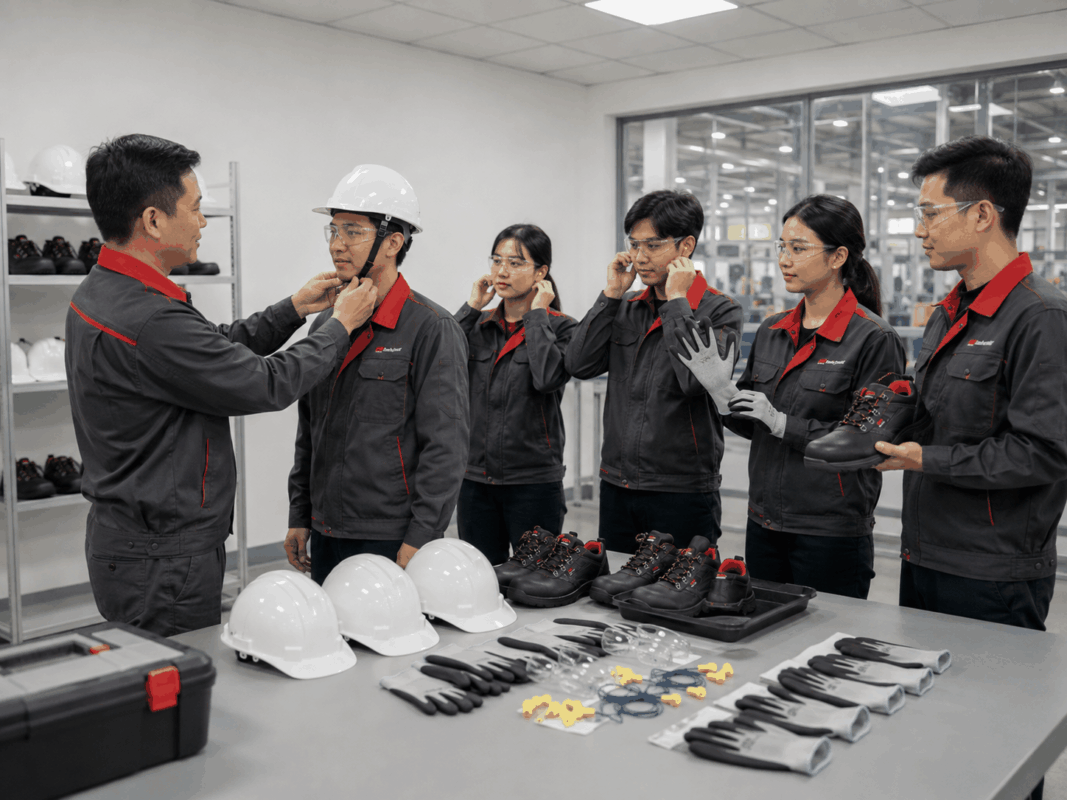
Run supervised wearer trials before a large purchase. Check whether spectacles break an earmuff seal, whether a helmet interferes with a face shield and whether gloves reduce control of machinery. In addition, use formal fit testing where the respirator programme requires it.
Step 5: Train, Issue and Record
Teach workers why they need each item, how to put it on, what it cannot protect against and when to stop work. Then, record issue, inspection and replacement. Training should use language and demonstrations that workers can understand.
Employers should provide practical PPE training during onboarding, when introducing new equipment and periodically thereafter. Training should cover correct fitting, limitations, inspection, cleaning and replacement criteria. Refresher training can help reinforce good practices and address issues identified during workplace inspections or incident investigations.
Step 6: Inspect and Improve
Supervisors should check PPE condition and use during real work, not only during audits. Furthermore, safety teams should investigate fogging, heat stress, loss of grip and poor fit. These complaints often show why workers remove PPE or use it incorrectly.
Factory PPE Procurement Checklist
Before approving an item, confirm the following:
- The site assessment identifies the hazard and exposure route.
- Engineering and work-practice controls come before PPE.
- The selected PPE matches the task and expected exposure level.
- The exact model carries the required marking and current supporting documents.
- The product meets any applicable Vietnamese technical regulation or sector rule.
- The PPE works with every other item worn at the same time.
- Sizes and adjustment ranges cover the workforce.
- Worker trials confirm comfort, grip, vision and movement.
- Training covers use, limits, checks and emergency action.
- Storage prevents heat, sunlight, moisture or chemical damage.
- Cleaning and decontamination methods follow the maker’s instructions.
- The site defines inspection, expiry and replacement triggers.
- Issue and replacement records identify the worker or work group.
- Procurement includes backup stock for damage, expiry and new starters.
Common PPE Mistakes in Manufacturing
Buying One Glove for Every Task
A glove that handles oil may fail against a specific solvent, while a high cut level may reduce the movement needed for assembly. Therefore, classify tasks and trial several designs.
Treating Certification as the Whole Risk Assessment
A mark shows that a product met stated test conditions. It does not prove suitability for every chemical, impact level or work duration. Consequently, buyers must compare the performance data with the actual exposure.
Ignoring PPE Compatibility
Workers often wear several items at once. Safety glasses can affect earmuff seals, while a respirator can conflict with a visor. For this reason, test the full set together.
Replacing PPE Only When It Looks Worn
Some damage remains hard to see. Filters can reach a change point, helmet shells can age and chemical gloves can degrade. Thus, the programme needs both visual checks and time- or use-based replacement rules.
Using PPE to Avoid Fixing the Process
PPE places the control on the worker. In contrast, a guard, enclosure or extraction system can protect everyone near the process. Employers should always revisit higher-level controls.
SAFETYWARE Products and Solutions
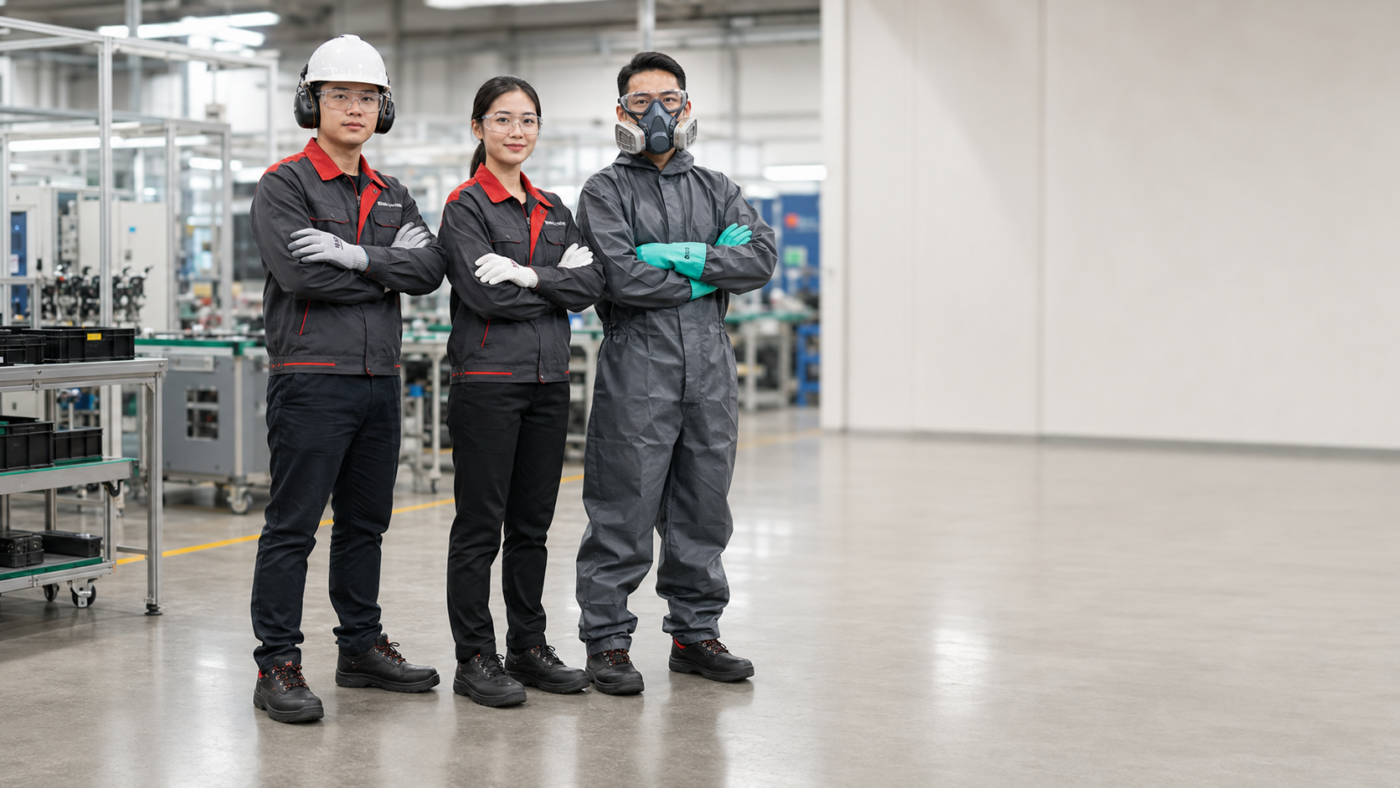
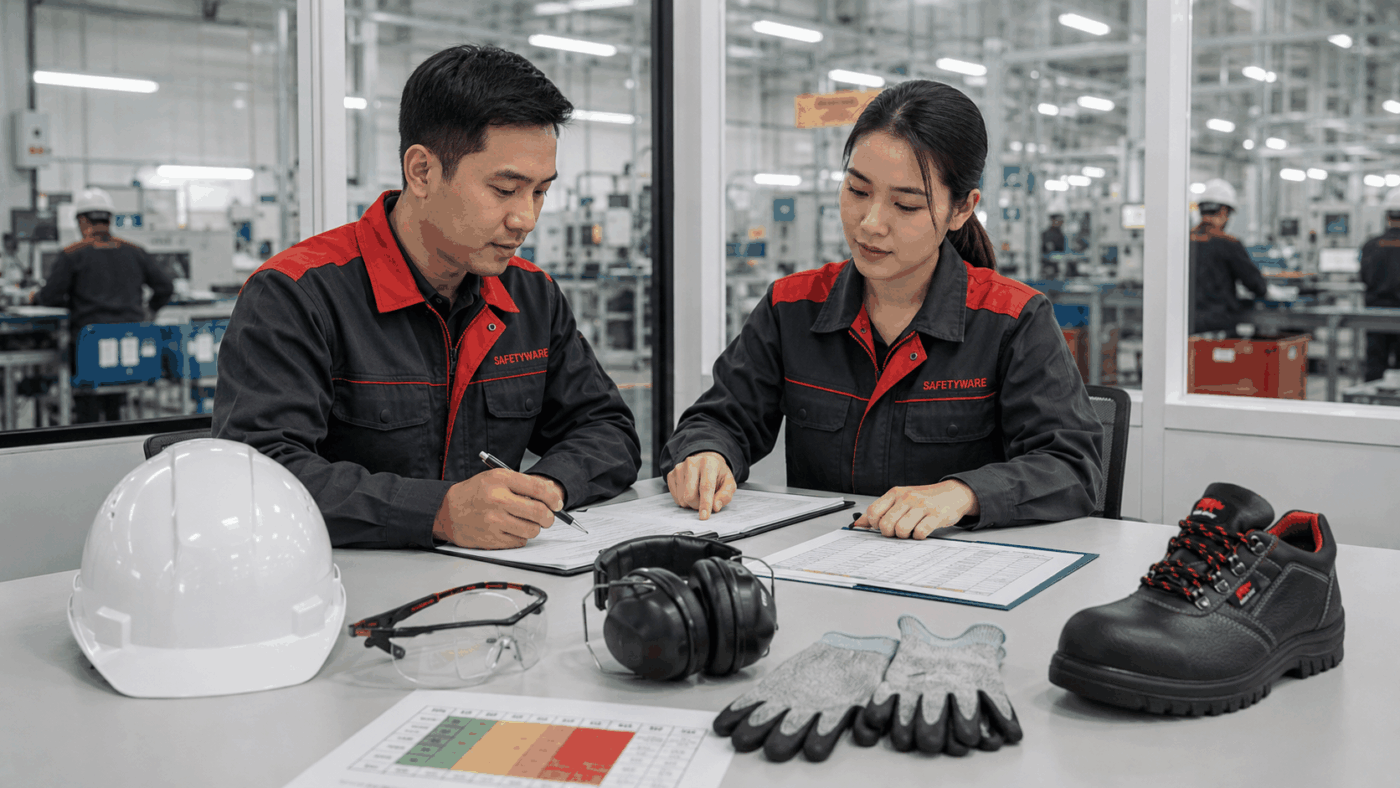
SAFETYWARE supports head-to-toe PPE selection for manufacturing, maintenance, logistics, electronics and process work. However, the correct choice still depends on the site’s hazard assessment, applicable Vietnamese rules and the technical data for the exact model.
Relevant official product ranges include:
- Safety helmets for assessed head-impact and falling-object hazards
- Safety glasses and safety goggles for task-matched eye protection
- Cut-resistant gloves and chemical-resistant gloves for mechanical and chemical hazards
- RHINO SHOE general-purpose safety footwear and ESD safety shoes for factory and static-control applications
- SAFETYWARE ear plugs and earmuffs for noise-control programmes
- Particulate respirators and the wider respiratory-protection range for assessed airborne hazards
- Body protection for general, chemical, heat, visibility and contamination-control needs
For a factory-wide project, share the task list, safety data sheets, exposure information, required standards, sizes, quantities and delivery plan with SAFETYWARE. This information allows the product team to compare options more accurately. Buyers should then validate the shortlisted PPE at the workplace before final approval.
Conclusion
Effective PPE for manufacturing in Vietnam starts with a clear view of each task. Employers should first remove or reduce hazards through safer processes, guards, ventilation, isolation and good work methods. Then, they should provide suitable PPE for the remaining risk, train workers, keep issue records and replace equipment before it can no longer protect.
Vietnamese law sets the employer’s core duties, while product standards describe tested performance. Good industry practice then helps the factory turn both into a working programme. When manufacturers keep these three layers separate, they can make better buying decisions and build safer, more consistent operations.
📞 Need More Information?
Looking for international grade PPE supplier?
Explore SAFETYWARE’s safety shoes and workplace PPE range at
👉Safetyware Catalogs
Our safety specialists can help evaluate workplace hazards, recommend suitable safety helmets, and support compliance with Malaysia workplace safety requirements.
If you need a quotation, feel free to contact us at:
📩 Email: [email protected]
📞 Tel: WhatsApp Us