
Food safety is a responsibility that extends beyond ingredients, machinery and production processes. Every item entering a food production environment must be carefully considered to minimise potential contamination risks.
In food manufacturing and processing facilities, employees often work around conveyors, mixers, bottling machines, packaging equipment and other industrial machinery. While these operations keep production running efficiently, they can also expose workers to excessive workplace noise.
This creates two important considerations for food manufacturers: protecting employees from noise-induced hearing loss and maintaining effective foreign object prevention practices.
Metal detectable earplugs offer a practical solution that addresses both considerations. Unlike conventional earplugs, metal-detectable designs are intended to support detection procedures if an earplug is accidentally lost in a production environment.
Common Workplace Noise Hazards in Food Industry
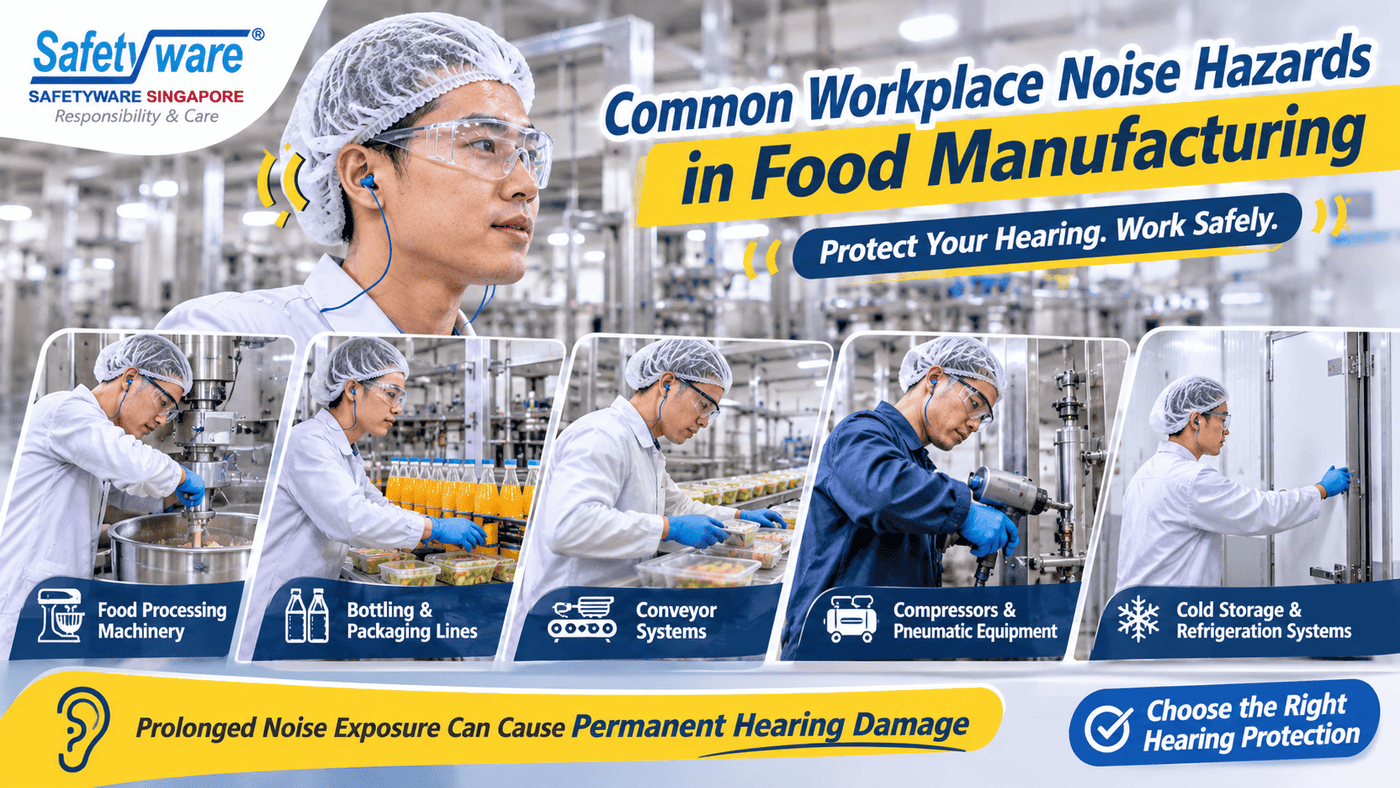
Food manufacturing facilities operate various machines and equipment that can generate significant noise levels.
Some common sources include:
- Food processing machinery: Industrial mixers, grinders, slicers and cutting equipment.
- Bottling and packaging lines: Automated filling, sealing, labelling and packaging machines.
- Conveyor systems: Continuous movement of products, containers and packaging materials.
- Compressors and pneumatic equipment: Air compressors, pneumatic tools and associated machinery.
- Cold storage and refrigeration systems: Industrial refrigeration equipment and ventilation systems.
Prolonged exposure to excessive workplace noise can result in permanent hearing damage.
According to Singapore’s Workplace Safety and Health Council (WSHC), employers should assess workplace noise hazards, implement suitable noise control measures and provide appropriate hearing protection to affected employees.
Therefore, selecting suitable hearing protection should form part of a company’s overall workplace safety programme.
Why Choose Metal Detectable Earplugs for Food Production?
In food processing environments, foreign object contamination is an important consideration.
Small objects accidentally introduced into production lines can create product quality concerns, potential contamination incidents, product recalls and financial losses.
Metal detectable earplugs are designed to help address one particular risk: the accidental loss of hearing protection during production activities.
Here are several reasons food manufacturers may consider using them:
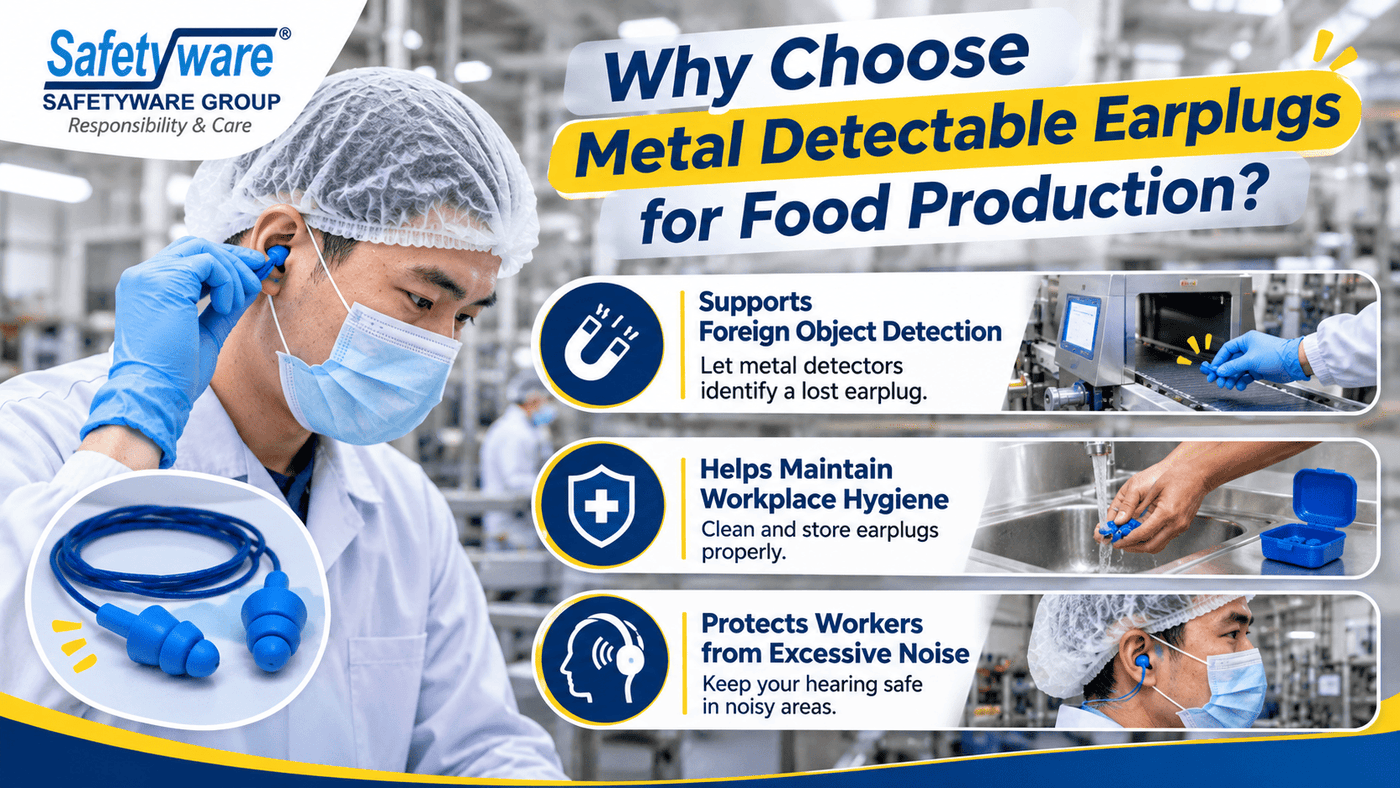
Supports Foreign Object Detection
Metal detectable earplugs incorporate detectable material to support identification through compatible industrial metal detection systems.
If an earplug is accidentally dropped or lost, its detectable component may help the production facility identify it during its established inspection procedures.
However, detection performance depends on the metal detector, product characteristics, earplug orientation and operating conditions. Factories should conduct their own detection validation.
Helps Maintain Workplace Hygiene Procedures
Using designated, reusable earplugs with proper cleaning and storage procedures helps companies establish more consistent hearing protection practices.
Workers should follow the facility’s hygiene requirements, clean earplugs appropriately and store them in a clean protective case when not in use.
Protects Workers from Excessive Noise
Food production workers should not have to compromise their hearing protection because of contamination concerns.
Selecting metal detectable hearing protection allows businesses to consider both employee safety and their foreign object control procedures.
How to Select and Maintain Earplugs in Food Manufacturing Facilities
Choosing the right earplugs involves more than comparing their noise reduction ratings.
Food manufacturers should consider the following factors:
Noise Exposure Assessment
Identify noisy work areas and determine employees’ actual noise exposure. Select hearing protection based on the assessment rather than choosing the highest-rated earplugs automatically.
Proper Fit and Comfort
Ensure employees receive suitable earplugs and understand how to wear them correctly. Poor fitting can compromise protection.
Food Safety Compatibility
Check that the earplugs, cords and storage accessories comply with the facility’s hygiene and foreign object control procedures.
Detection Compatibility
Conduct metal detector validation using the actual HP312 product under the factory’s operating conditions. Do not assume that every metal detector will detect the earplug in every orientation.
Cleaning and Maintenance
Follow the manufacturer’s cleaning instructions. Inspect reusable earplugs regularly and replace them if damaged, deteriorated or no longer suitable for use.
Safetyware HP312 SecureFit™ Metal Detectable Earplugs
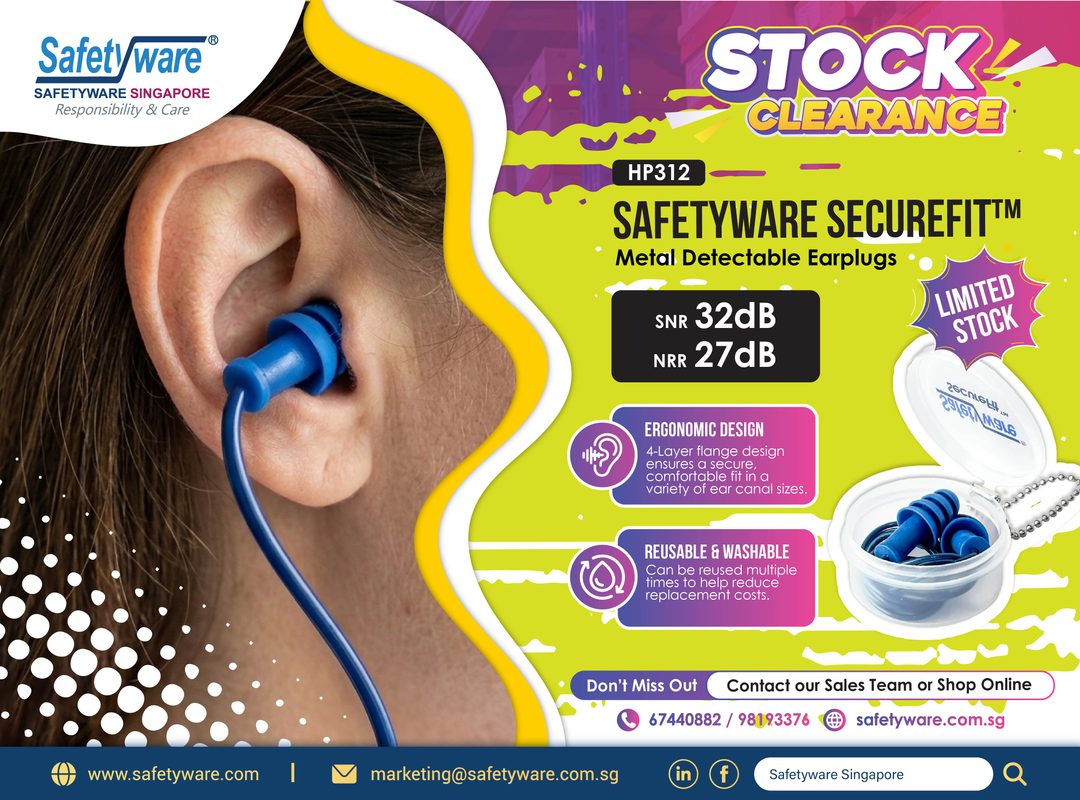
For food manufacturers looking for practical hearing protection, Safetyware Singapore offers the HP312 SecureFit™ Metal Detectable Earplugs. Designed with a reusable four-layer flange structure, these earplugs provide a secure and comfortable fit across different ear canal sizes.
🔥 Special Stock Clearance: Safetyware HP312 Metal Detectable Earplugs
🔥 Limited Stock Available!
Key Product Specifications:
- Product Code: HP312
- Product Name: Safetyware SecureFit™ Metal Detectable Earplugs
- SNR: 32 dB
- NRR: 27 dB
- Design: Four-layer flange design
- Usage: Reusable and washable
- Feature: Metal detectable
👉Explore more on Ear protection at Safetyware
👉Read more on What Is Hearing Protection PPE? Earplugs vs Earmuffs Explained
Key Features and Benefits
1. Ergonomic Four-Layer Flange Design
The four-layer flange design helps provide a secure and comfortable fit for different ear canal sizes.
A suitable fit is important because poorly fitted earplugs may reduce actual hearing protection performance.
2. Reusable and Washable
Unlike disposable earplugs, HP312 can be reused multiple times when properly cleaned, inspected and maintained according to the manufacturer’s instructions.
This can help reduce frequent replacement requirements and support more economical hearing protection management.
3. Metal Detectable Design
The metal-detectable feature makes HP312 worth considering for food manufacturing and processing facilities that operate metal detection systems as part of their foreign object control programmes.
4. Convenient Storage Case
The supplied storage case helps keep the earplugs together when they are not in use, supporting better storage and handling practices.
Frequently Asked Questions (FAQs)
1. What are metal detectable earplugs?
Metal detectable earplugs are hearing protection products designed with detectable material to help compatible metal detection systems identify them if accidentally lost. They are particularly relevant to food manufacturing facilities with foreign object control procedures.
2. Why are metal detectable earplugs used in food factories?
Food factories may use metal detectable earplugs to support foreign object prevention programmes while providing hearing protection for workers exposed to noisy machinery and production equipment.
3. Are metal detectable earplugs mandatory in Singapore’s food industry?
Metal detectable earplugs are not a general mandatory requirement under Singapore’s food safety regulations. However, food manufacturers should establish suitable foreign object control measures and provide appropriate hearing protection based on workplace risk assessments.
4. What is the difference between SNR and NRR?
SNR (Single Number Rating) and NRR (Noise Reduction Rating) are different systems used to describe hearing protector attenuation. They follow different testing and rating methods, so their values should not be directly compared.
The HP312 has an SNR of 32 dB and an NRR of 27 dB.
📞 Need More Information?
Looking for Hearing protection?
Explore SAFETYWARE’s Full workplace PPE range at
👉Safetyware Catalogs
Our safety specialists can help evaluate workplace hazards, recommend suitable safety helmets, and support compliance with Malaysia workplace safety requirements.
If you need a quotation, feel free to contact us at:
📩 Email: [email protected]
📞 Tel: WhatsApp Us