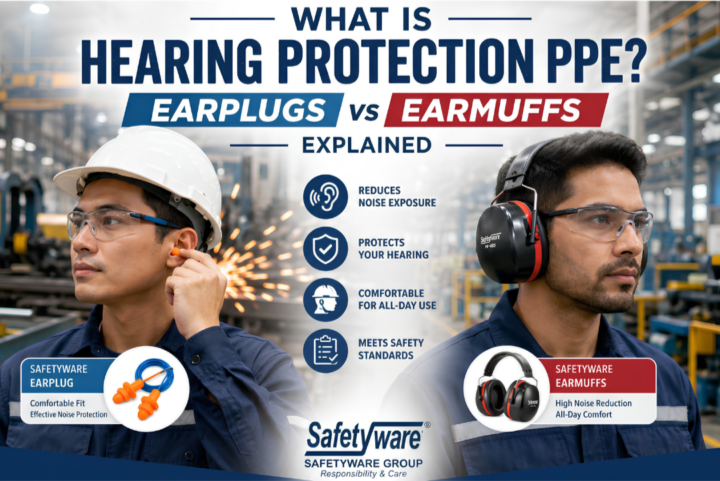
Noise is one of the most common workplace hazards, yet it is often overlooked because hearing damage happens gradually. Unlike cuts or burns, hearing loss usually develops over time and is permanent once it occurs. That is why hearing protection PPE plays a critical role in protecting workers who are regularly exposed to loud environments.
Whether you work in manufacturing, construction, mining, airports, workshops, or warehouses, wearing the right hearing protection can help prevent long-term hearing damage while ensuring compliance with workplace safety regulations.
In this guide, we’ll explain what hearing protection PPE is, compare earplugs and earmuffs, discuss their advantages and disadvantages, and help you choose the best solution for your workplace.
What Is Hearing Protection PPE?
Hearing protection PPE (Personal Protective Equipment) refers to equipment specifically designed to reduce the amount of harmful noise reaching your ears.
Its primary purpose is to lower noise exposure to a safer level without completely blocking important sounds such as warning alarms, machinery signals, or verbal communication where possible.
Common types include:
- Earplugs
- Earmuffs
- Electronic hearing protectors
- Banded earplugs
- Helmet-mounted earmuffs
These products are widely used across industries where workers are exposed to continuous or sudden loud noises.
Why Is Hearing Protection Important?
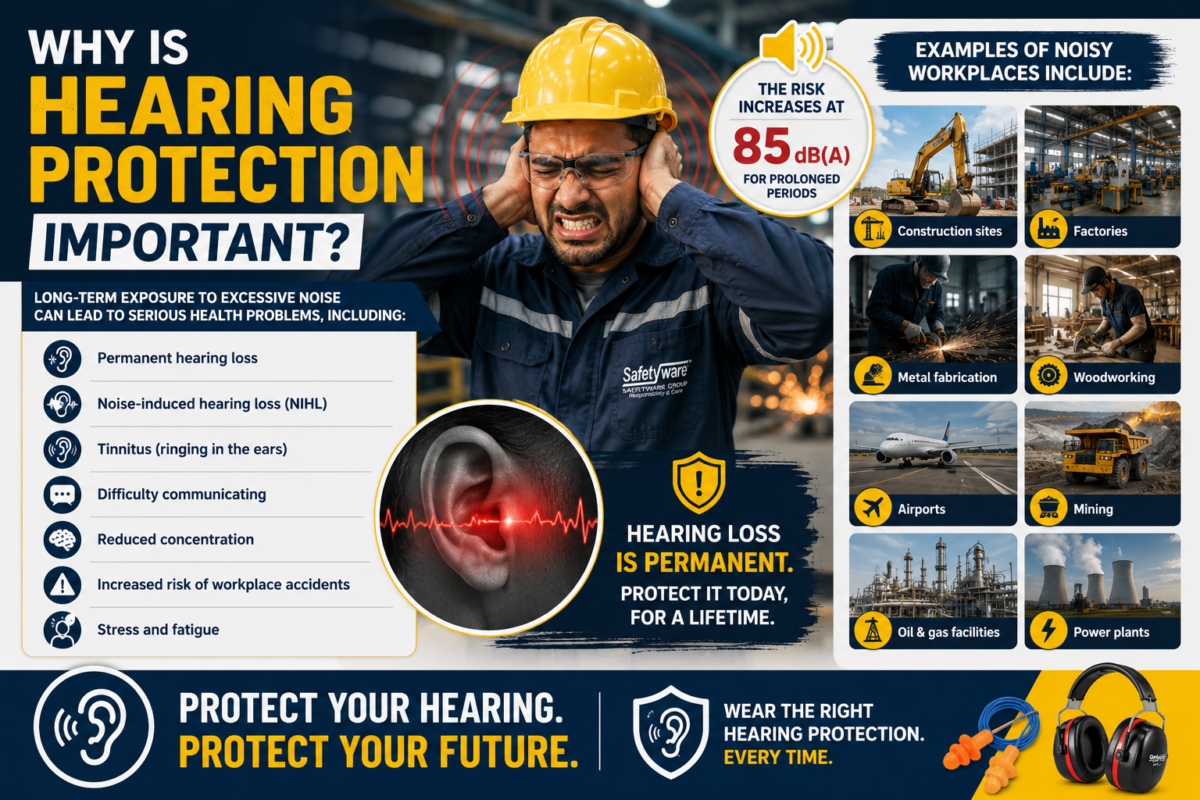
Long-term exposure to excessive noise can lead to serious health problems, including:
- Permanent hearing loss
- Noise-induced hearing loss (NIHL)
- Tinnitus (ringing in the ears)
- Difficulty communicating
- Reduced concentration
- Increased risk of workplace accidents
- Stress and fatigue
The risk increases when workers are exposed to noise levels above 85 dB(A) for prolonged periods.
Examples of noisy workplaces include:
- Construction sites
- Factories
- Metal fabrication
- Woodworking
- Airports
- Mining
- Oil & gas facilities
- Power plants
Common Types of Hearing Protection PPE
1. Earplugs:
Earplugs are inserted directly into the ear canal to reduce incoming noise. They are lightweight, compact, and available in several materials including foam, silicone, rubber, and reusable thermoplastic designs.
Advantages:
- Lightweight and comfortable
- Easy to carry
- Suitable in hot environments
- Compatible with helmets, face shields, goggles, and respirators
- Affordable
Disadvantages:
- Must be inserted correctly
- Can become dirty if handled improperly
- Easy to lose
- Disposable versions require regular replacement
2. Earmuffs:
Earmuffs cover the entire outer ear using cushioned ear cups connected by a headband or attached directly to a safety helmet. They provide consistent protection because they are easier to wear correctly compared to earplugs.
Advantages:
- Easy to put on
- Consistent protection
- Durable
- Comfortable for repeated use
- Easy to supervise in workplaces
Disadvantages:
- Bulkier
- Can become warm during hot weather
- Higher initial cost
- May interfere with some PPE if incompatible
Earplugs vs Earmuffs: What’s the Difference?
| Feature | Earplugs | Earmuffs |
| Comfort | Excellent for long wear | Comfortable but warmer |
| Portability | Very portable | Larger and bulkier |
| Cost | Lower | Higher |
| Ease of Use | Requires proper insertion | Very easy |
| Hygiene | Disposable or washable | Easy to clean |
| Hot Environments | Better | May become warm |
| Helmet Compatibility | Excellent | Helmet-mounted versions available |
| Durability | Disposable or reusable | Highly durable |
Understanding Noise Reduction Ratings (NRR & SNR)
Not all hearing protection provides the same level of noise reduction. Earplugs and earmuffs are available with different Noise Reduction Ratings (NRR) or Single Number Ratings (SNR), which indicate how much noise the product is designed to reduce when worn correctly.
Typical Noise Reduction Levels
| Hearing Protection | Typical Noise Reduction |
| Disposable Foam Earplugs | NRR 29–33 dB (SNR 34–37 dB) |
| Reusable Earplugs | NRR 20–28 dB (SNR 23–32 dB) |
| Standard Earmuffs | NRR 20–30 dB (SNR 25–34 dB) |
| High-Attenuation Earmuffs | NRR 30–31 dB (SNR 35–37 dB) |
Which Hearing Protection Should You Choose?
The right hearing protection depends on your workplace, noise levels, comfort preferences, and compatibility with other PPE.
Choose Earplugs if:
- You wear hard hats, goggles, or respirators together.
- You work in hot environments.
- You need lightweight hearing protection.
- You require affordable disposable options.
- You wear hearing protection for extended periods.
Choose Earmuffs if:
- You frequently remove and replace hearing protection.
- You need a solution that is quick and easy to wear correctly.
- You work in colder environments.
- You prefer reusable PPE with minimal maintenance.
- Supervisors need to visually confirm compliance.
Hearing Protection Standards
Quality hearing protection should comply with recognised safety standards. Common standards include:
- EN 352 – European standard for hearing protectors.
- ANSI S3.19 – Noise Reduction Rating (NRR) testing commonly referenced in North America.
- AS/NZS 1270 – Australian and New Zealand standard for hearing protectors.
Always ensure the selected product is certified for your workplace requirements and provides an appropriate level of noise reduction.
Tips for Using Hearing Protection Properly
Simply wearing hearing protection is not enough—it must be used correctly and maintained properly to provide effective protection. Follow these best practices for both earplugs and earmuffs.
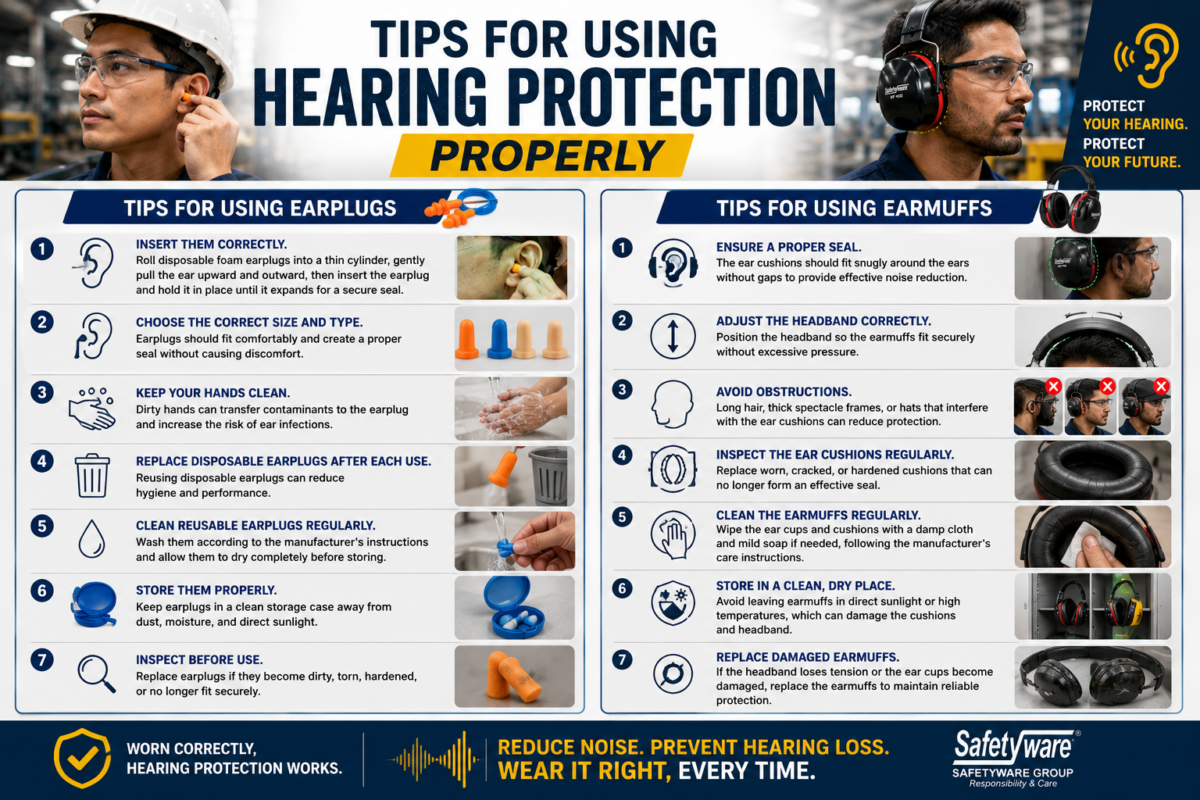
Tips for Using Earplugs
- Insert them correctly. Roll disposable foam earplugs into a thin cylinder, gently pull the ear upward and outward, then insert the earplug and hold it in place until it expands for a secure seal.
- Choose the correct size and type. Earplugs should fit comfortably and create a proper seal without causing discomfort.
- Keep your hands clean. Dirty hands can transfer contaminants to the earplug and increase the risk of ear infections.
- Replace disposable earplugs after each use. Reusing disposable earplugs can reduce hygiene and performance.
- Clean reusable earplugs regularly. Wash them according to the manufacturer’s instructions and allow them to dry completely before storing.
- Store them properly. Keep earplugs in a clean storage case away from dust, moisture, and direct sunlight.
- Inspect before use. Replace earplugs if they become dirty, torn, hardened, or no longer fit securely.
Tips for Using Earmuffs:
- Ensure a proper seal. The ear cushions should fit snugly around the ears without gaps to provide effective noise reduction.
- Adjust the headband correctly. Position the headband so the earmuffs fit securely without excessive pressure.
- Avoid obstructions. Long hair, thick spectacle frames, or hats that interfere with the ear cushions can reduce protection.
- Inspect the ear cushions regularly. Replace worn, cracked, or hardened cushions that can no longer form an effective seal.
- Clean the earmuffs regularly. Wipe the ear cups and cushions with a damp cloth and mild soap if needed, following the manufacturer’s care instructions.
- Store in a clean, dry place. Avoid leaving earmuffs in direct sunlight or high temperatures, which can damage the cushions and headband.
- Replace damaged earmuffs. If the headband loses tension or the ear cups become damaged, replace the earmuffs to maintain reliable protection.
Hearing Protection PPE from Safetyware
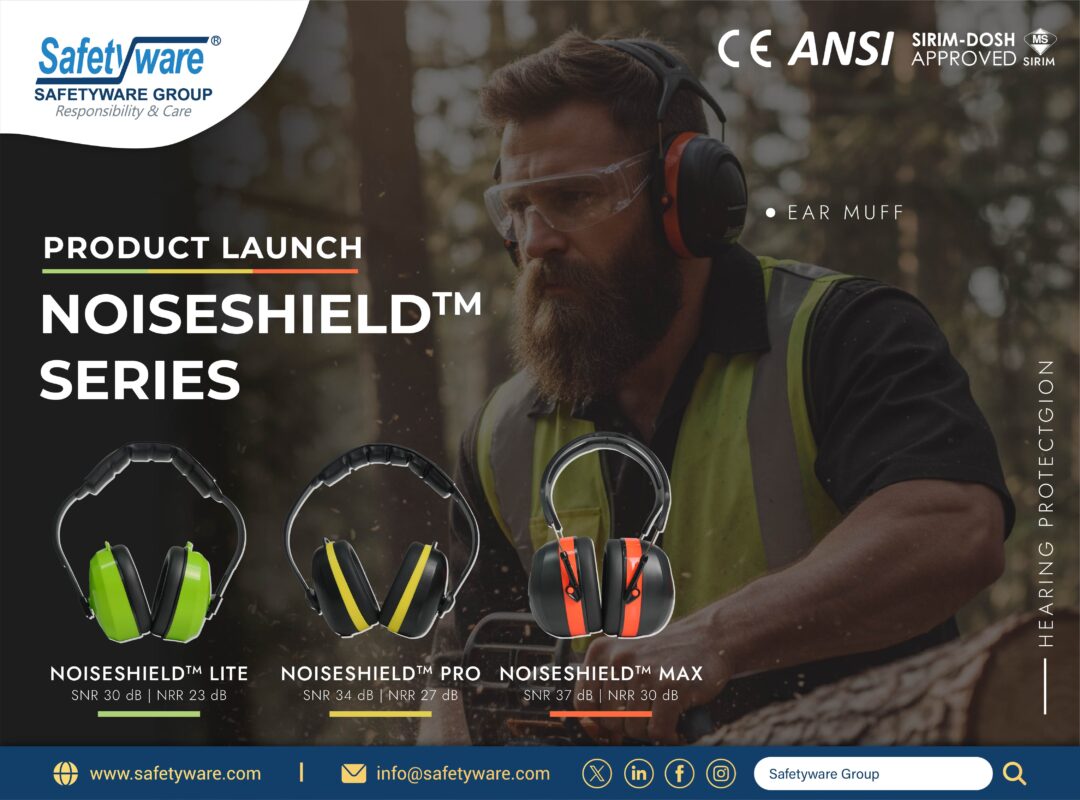
At Safetyware, we offer a comprehensive range of hearing protection PPE to help safeguard workers in noisy environments. Whether you need hearing protection for construction, manufacturing, oil & gas, mining, logistics, or general industrial work, Safetyware can help you choose the right solution to meet your safety requirements while ensuring compliance with workplace standards.
👉 Read more on our Hearing Protection PRODUCTS SPECS highlights
Frequently Asked Questions (FAQ)
1. What is hearing protection PPE?
Hearing protection PPE is personal protective equipment designed to reduce harmful noise exposure and help prevent permanent hearing loss. Common types include earplugs and earmuffs.
2. Which is better: earplugs or earmuffs?
Neither is universally better. The right choice depends on your work environment, noise level, comfort preference, and compatibility with other PPE. Earplugs are ideal for workers wearing helmets or other protective equipment, while earmuffs are often preferred for their ease of use and consistent fit.
3. At what noise level is hearing protection required?
Hearing protection is generally recommended when workers are exposed to continuous noise levels of 85 dB(A) or higher over an extended period. Employers should conduct a noise risk assessment and follow applicable workplace regulations.
4. What do NRR and SNR mean?
NRR (Noise Reduction Rating) and SNR (Single Number Rating) indicate how much noise a hearing protector can reduce when worn correctly. NRR is commonly used in North America, while SNR is used in Europe and many other countries. A higher rating generally provides greater noise reduction, but proper fit is essential for achieving the stated level of protection.
📞 Need More Information?
Looking for reliable head protection solutions for your workplace?
Explore SAFETYWARE’s safety shoes and workplace PPE range at
👉Safetyware Catalogs
Our safety specialists can help evaluate workplace hazards, recommend suitable safety helmets, and support compliance with Malaysia workplace safety requirements.
If you need a quotation, feel free to contact us at:
📩 Email: [email protected]
📞 Tel: WhatsApp Us