In hazardous environments, breathing clean air can be a matter of life and death. When toxic gases, smoke, airborne contaminants, or oxygen-deficient conditions are present, standard respiratory protection may not provide sufficient protection.
This is where a Self-Contained Breathing Apparatus (SCBA) becomes essential.
An SCBA supplies clean, breathable air from its own compressed air cylinder, allowing users to work safely in environments where the surrounding air is dangerous or unknown. It is one of the most important pieces of personal protective equipment (PPE) for firefighters, emergency responders, and industrial workers.
What Is an SCBA?
A Self-Contained Breathing Apparatus (SCBA) is a respiratory protection device that provides clean air from an independent air source carried by the user.
Unlike standard respirators that rely on filtering surrounding air, an SCBA delivers breathable air directly from a compressed air cylinder. This allows users to operate safely in environments that contain:
- Toxic gases
- Smoke
- Harmful airborne particles
- Chemical vapors
- Oxygen-deficient atmospheres
- Unknown air contaminants
Because the air supply is completely independent of the surrounding environment, SCBA systems provide the highest level of respiratory protection available.
Why Is an SCBA Important?
Many workplaces contain hazards that cannot be adequately controlled by standard respirators.
Without proper respiratory protection, exposure to dangerous atmospheres can result in:
- Breathing difficulties
- Chemical exposure
- Loss of consciousness
- Serious injury
- Fatal accidents
An SCBA protects users by supplying clean breathing air even when surrounding conditions are unsafe.
This makes SCBA equipment critical for life-saving operations and high-risk industrial activities.
Where Is SCBA Commonly Used?
SCBA equipment is used whenever workers may be exposed to hazardous atmospheres or oxygen-deficient environments.
Common applications include:
Firefighting Operations
Firefighters frequently encounter smoke, toxic gases, and extreme conditions. SCBA allows them to enter dangerous areas while maintaining a safe air supply.
Rescue Operations
Emergency responders use SCBA during rescue missions where air quality is unknown or hazardous.
Confined Space Entry
Confined spaces such as tanks, vessels, tunnels, and storage areas may contain low oxygen levels or harmful gases. SCBA provides reliable respiratory protection during entry and rescue operations.
Chemical and Industrial Environments
Workers in chemical plants, manufacturing facilities, and industrial processing areas often face exposure to dangerous airborne contaminants. SCBA systems help protect them from these hazards.
Safetyware SCBA Features
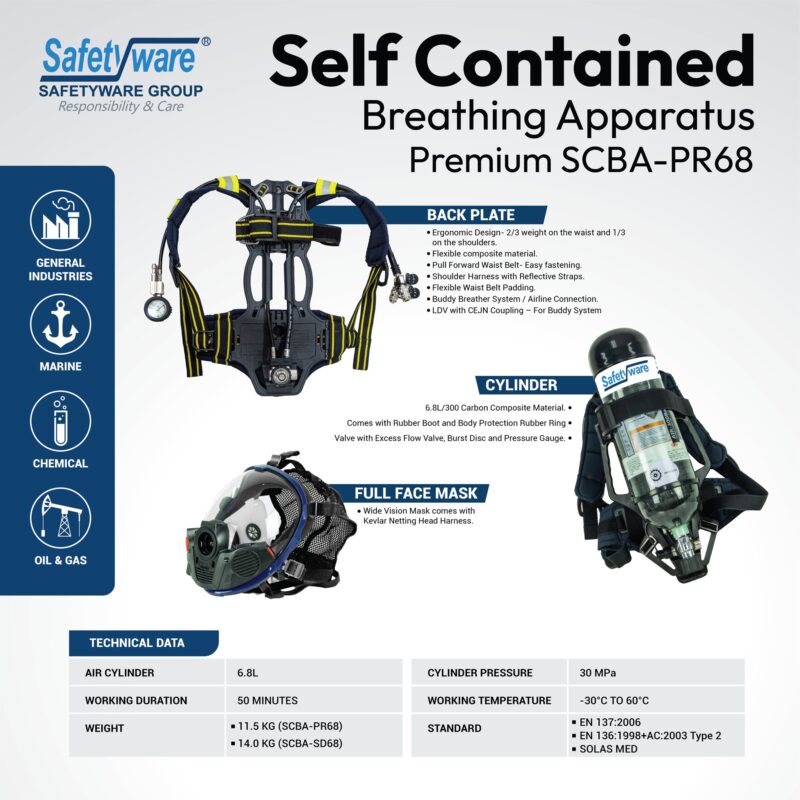
The SAFETYWARE AirGuard SCBA is designed to deliver professional-grade respiratory protection in demanding environments.
Key features include:
- EN137 Type 2 certified design
- Lightweight construction
- Comfortable ergonomic harness
- Full-face mask for comprehensive protection
- High-pressure air cylinder
- Reliable regulator system
- Low air warning alarm for added safety
- Durable components for long-term performance
The lightweight design helps users move more freely while reducing fatigue during extended operations.
SCBA vs Standard Respirators
Many people wonder whether a standard respirator can replace an SCBA.
The answer depends on the environment.
| Feature | SCBA | Standard Respirator |
|---|---|---|
| Air Source | Independent air cylinder | Surrounding air |
| Oxygen Deficient Areas | Suitable | Not suitable |
| Toxic Gas Environments | Suitable | Limited protection |
| Firefighting Use | Suitable | Not suitable |
| High-Risk Operations | Suitable | Limited use |
Standard respirators filter surrounding air. In contrast, SCBA systems provide their own breathable air supply, making them suitable for the most hazardous environments.
SCBA Training and Maintenance Requirements
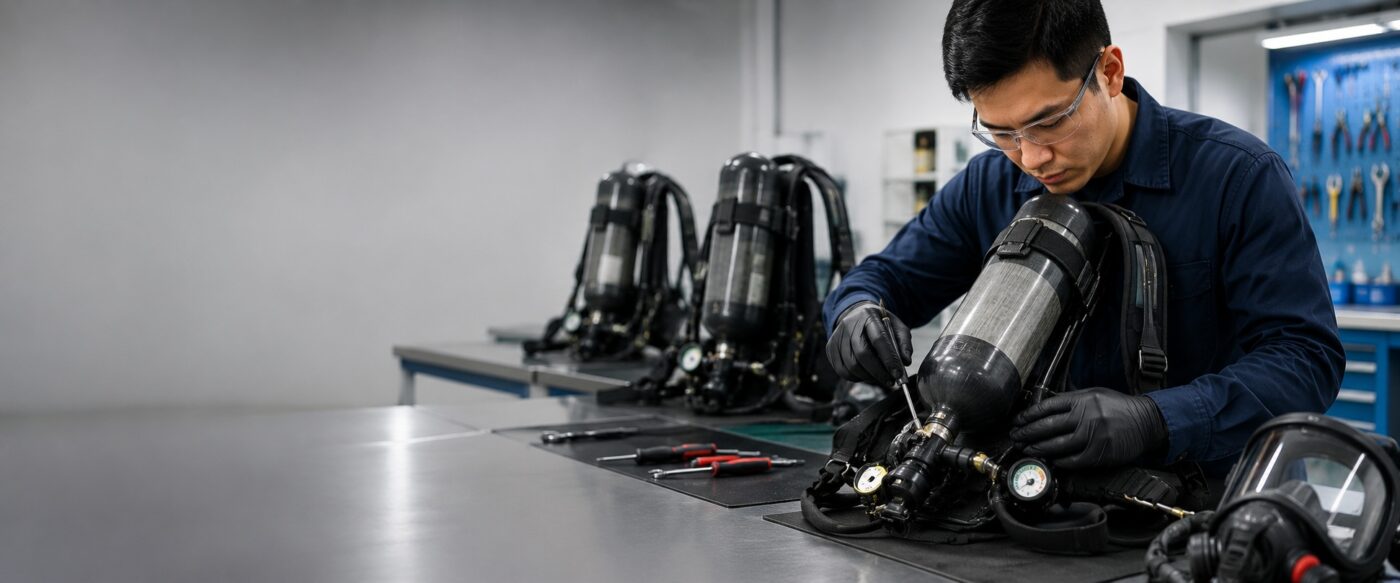
SCBA equipment should only be used by properly trained personnel.
Users must understand:
- Correct fitting procedures
- Equipment inspection methods
- Emergency procedures
- Cylinder handling requirements
- Operational limitations
Proper training helps ensure maximum protection and operational effectiveness.
In addition, SCBA cylinders must undergo hydrostatic testing every five years to verify cylinder integrity and ensure continued safety.
Regular inspection and maintenance are essential for reliable performance.
Protect Your Workforce with Reliable SCBA Solutions
SCBA equipment plays a critical role in protecting workers operating in dangerous atmospheres. Whether used for firefighting, confined space entry, emergency response, or industrial operations, a reliable self-contained breathing apparatus provides the respiratory protection needed to perform safely and effectively.
Investing in quality SCBA equipment helps organizations improve safety compliance, reduce risk, and protect lives when every breath matters.
Frequently Asked Questions (FAQs)
What does SCBA stand for?
SCBA stands for Self-Contained Breathing Apparatus.
What is an SCBA used for?
It is used to provide breathable air in hazardous, toxic, or oxygen-deficient environments.
Who uses SCBA equipment?
Firefighters, emergency responders, industrial workers, and confined space entry teams commonly use SCBA systems.
How long can an SCBA provide air?
Depending on cylinder size and breathing rate, many SCBA systems can provide up to approximately 50 minutes of air.
Is SCBA better than a respirator?
For hazardous and oxygen-deficient environments, SCBA offers a much higher level of protection because it provides its own air supply.
📞 Need More Information?
Your safety matters. If you have questions about which SCBA is right for your workplace, we’re here to help!
Visit our website: www.safetyware.com
Cut safely, work confidently – with Safetyware! 🔪✨
Learn more from SAFETYWARE FAQ by clicking HERE!
If you need a quotation, feel free to contact us at:
📩 Email: [email protected]
📞 Tel: WhatsApp Us