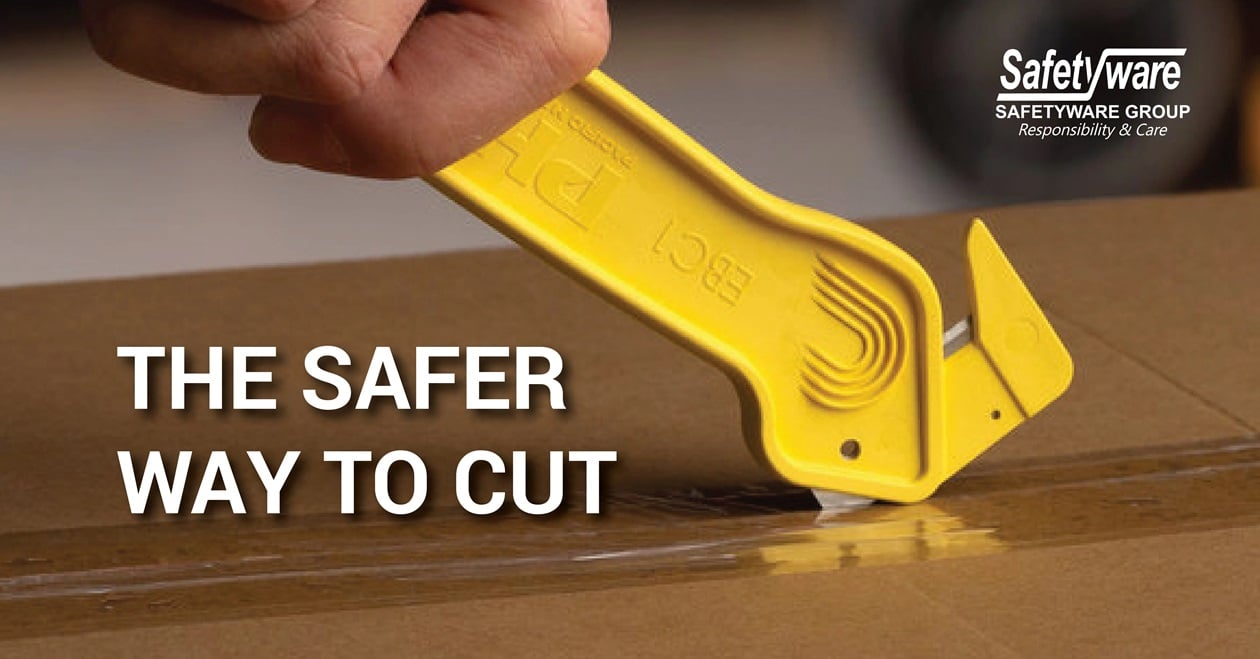
Safety Cutters: Stop the Bleed Before It Starts — A Complete Guide to Safer Cutting at Work
Cutting injuries are among the most preventable workplace accidents. Understand the hazards, the technology, and how to choose the right safety cutter — from auto-retract to ceramic blade — for every cutting task in your operation.
Walk through any warehouse, logistics hub, manufacturing plant, retail stockroom, or food processing line and you will find workers cutting — opening cardboard boxes, slitting shrink wrap, trimming strapping, scoring packaging, and performing dozens of other cutting tasks every shift. The humble box cutter is one of the most ubiquitous tools in the industrial world, and also one of the most dangerous. Unlike machinery where guards can be engineered into the design, a traditional utility knife or snap-off blade cutter places a permanently exposed razor edge in a worker’s hand.
The solution is not to eliminate cutting tasks — that is rarely possible — but to engineer the hazard out of the tool itself. Safety cutters are specifically designed to reduce or eliminate the injury risk associated with cutting, through mechanisms that retract the blade when not in use, recess the blade so only the cutting edge is exposed, or use finger-friendly ceramic blade technology that cannot lacerate skin. This guide covers the full landscape of workplace cutting hazards, explains the three main safety cutter technologies, and provides a practical framework for selecting the right safety cutter for every task in your operation.
The Cutting Hazard Landscape: Why Box Cutters Injure So Many Workers
Cuts and lacerations from hand tools — particularly utility knives, snap-off blades, and standard box cutters — account for a disproportionately large share of workplace injuries globally. The root causes are well understood and remarkably consistent across industries, from warehouse and logistics to food processing and retail.
Five Root Causes of Workplace Cutting Injuries
Root Causes of Workplace Cutting Injuries — Percentage Breakdown by Category
What the data reveals is striking: the top three root causes — exposed blade, no auto-retract, wrong tool — account for 80% of all cutting injuries, and all three are design characteristics of the cutting tool itself. This means that switching from a traditional box cutter to an appropriately specified safety cutter can eliminate the majority of cutting injury risk without any change in work processes, training intensity, or supervision level.
The Hidden Cost of a Laceration: More Than Just Medical Bills
The US OSHA Safety Pays programme estimates the total cost of a single workplace laceration at $45,000 or more when direct costs (medical, treatment, workers’ compensation) and indirect costs (lost productivity, investigation time, replacement labour, retraining, potential regulatory penalties, and reputational impact) are combined. A typical laceration results in an average of 5–6 lost working days per injury. For a warehouse or manufacturing operation performing hundreds of cutting tasks per day, the cumulative exposure from traditional box cutter use is substantial.
Industries Most at Risk from Cutting Injuries
Cutting injuries occur across virtually every industrial sector, but are concentrated in environments with high volumes of repetitive cutting tasks. In Malaysia and the broader Southeast Asian region, the highest-risk sectors include:
- E-commerce fulfilment and warehousing — workers open thousands of cartons per shift; high-speed, repetitive cutting with inadequate safety tools is the primary risk factor
- Logistics and freight handling — cutting strapping, shrink wrap, and securing materials at dock and distribution centres
- Food and beverage processing — packaging opening, film cutting, and material preparation in environments where blade hygiene also matters
- Pharmaceutical and healthcare — sterile packaging opening where contamination risk and precision are both critical
- Retail and FMCG — stockroom workers opening cartons under time pressure
- Electronics manufacturing — component packaging, anti-static film cutting in cleanroom environments
- Automotive and manufacturing assembly — cutting packaging materials, gaskets, insulation, and protective films
What Makes a Safety Cutter “Safe”: Six Critical Design Features
The term “safety cutter” encompasses several distinct design approaches. Not all safety cutters are equal, and understanding the underlying safety mechanism — what the cutter actually does to prevent the blade from causing injury — is the starting point for making an informed specification decision.
1. Auto-Retract Mechanism
An auto-retract (or self-retract) mechanism uses a spring or grip-activated system to automatically withdraw the blade into the body of the cutter the moment the worker’s grip pressure is released or the trigger is no longer depressed. The blade only extends during the active cutting stroke and immediately retracts otherwise — eliminating the most common injury scenario: the blade left exposed between cuts, during walking, reaching, or setting the tool down.
2. Concealed or Recessed Blade Design
A concealed blade cutter, such as those in the Klever range, uses a recessed blade arrangement where the blade is permanently housed within the tool body and only a small, controlled portion of the cutting edge is accessible. The blade cannot extend beyond the cutting slot. This means the blade is never exposed in the traditional sense — a worker’s hand or finger simply cannot make contact with the blade edge during normal use. The cutter scores or severs the box or tape surface while the blade remains fully recessed within the tool.
3. Controlled Blade Depth / Depth Limiter
Many safety cutters incorporate a depth-limiting mechanism that restricts how far the blade extends — typically to 1–3 mm — sufficient to cut through cardboard, packaging tape, or plastic film, but not deep enough to penetrate a worker’s skin to a tissue-damaging depth. This feature is particularly valuable in environments where box contents are fragile or where cutting through the outer packaging only (without damaging inner layers) is required.
4. Rounded or Blunted Blade Tip
Traditional utility knife blades have pointed tips that present a puncture risk independent of the cutting edge. Safety cutters often use rounded or straight-tip blade profiles that eliminate the puncture hazard while retaining full cutting performance along the blade’s edge. The Klever range, for example, uses a curved blade that cannot puncture even if thrust against skin.
5. Ceramic (Finger-Friendly) Blade Technology
The most advanced safety cutter technology uses blades made from zirconia oxide ceramic — the same material class used in cutting-edge surgical and industrial applications. Ceramic blades are engineered to be finger-friendly: they will not cut human skin under normal accidental contact pressure, but they cut through plastic film, tape, paper, and cardboard cleanly and efficiently. Slice brand, part of the Pacific Handy Cutter family, specialises exclusively in ceramic blade technology.
6. Ergonomic Design and Ambidextrous Use
Ergonomic handle design — appropriate grip size, soft-touch material, and balanced weight distribution — reduces hand fatigue during repetitive cutting tasks. Fatigue is a contributing factor to loss of blade control and subsequent injury. Many modern safety cutters are also designed for ambidextrous use, eliminating the awkward grip posture that left-handed workers are forced to adopt with right-handed-only tools.
Three Safety Cutter Technologies: A Side-by-Side Comparison
The three primary safety cutter technologies — auto-retract, concealed/recessed blade, and ceramic — offer different levels and types of protection suited to different tasks. The table below compares them directly against the traditional box cutter to illustrate the protection improvement each delivers.
Safety Cutter Technology Comparison — Traditional Box Cutter vs. Three Safety Technologies
How to Choose the Right Safety Cutter: A Practical Selection Framework
Selecting the appropriate safety cutter for a given task requires evaluating four key variables: the material being cut, the volume and frequency of cutting, the work environment, and the consequence of accidental blade contact in that setting. The table below maps common workplace tasks to the recommended safety cutter technology.
| Industry / Application | Material Being Cut | Key Requirement | Recommended Technology | Suggested Brand |
|---|---|---|---|---|
| Warehouse / E-commerce fulfilment | Corrugated cardboard, tape, shrink wrap | High volume, fast cutting, minimal downtime | Auto-Retract | PHC / Klever |
| Retail / Stockroom | Cardboard boxes, tape, blister packs | Safe for untrained users, easy handling | Concealed Blade / Auto-Retract | Klever Kutter |
| Food & Beverage Processing | Packaging film, shrink wrap, bag tops | Hygienic, no blade fragments, food-safe | Ceramic Blade / Concealed | Slice / Klever |
| Pharmaceutical / Healthcare | Sterile packaging, blister packs, labels | No blade contamination risk, cleanroom safe | Ceramic Blade | Slice |
| Electronics / Cleanroom | Anti-static film, packaging, ESD bags | ESD-safe, precision cut, no metallic blade fragments | Ceramic Blade | Slice |
| Logistics / Freight Handling | Strapping, banding, stretch film | Durable, ergonomic for extended use, safe | Auto-Retract | PHC |
| Manufacturing Assembly | Component packaging, protective film, gaskets | Precision, dexterity, controlled depth | Ceramic / Concealed Blade | Slice / Klever |
| Automotive Parts Handling | Heavy cardboard, plastic strapping | Robust, heavy-duty, reliable auto-retract | Auto-Retract (heavy-duty) | PHC |
| Agriculture / Plantation | Bags, sacks, banding, packaging | Durable in outdoor conditions, simple use | Concealed Blade / Auto-Retract | Klever / PHC |
| Office / Light Industry | Paper, tape, light packaging | Compact, safe for mixed-skill users | Ceramic / Concealed Blade | Slice Pen / Klever |
Don’t Overlook Blade Replacement Frequency
A frequently missed factor in safety cutter selection is blade replacement frequency and ease. A safety cutter with a complex blade-change mechanism that workers avoid for convenience will eventually be used with a dull blade — requiring excessive force and dramatically increasing injury risk. PHC auto-retract cutters and Klever’s XChange system are designed for tool-free, safe blade replacement. Slice ceramic blades last up to 11 times longer than equivalent steel blades, dramatically reducing replacement frequency and cost over time.
Pacific Handy Cutter: World’s Largest Safety Cutter Manufacturer
Pacific Handy Cutter (PHC) is recognized as the world’s largest manufacturer of safety cutters — a position built over decades of engineering innovation, rigorous product testing, and a commitment to eliminating blade-related workplace injuries. The PHC family comprises three distinct brands, each addressing a different segment of the safety cutting market with specialized technology.
Safetyware Group is the authorized master distributor for Pacific Handy Cutter in Malaysia and the surrounding Southeast Asian region — providing access to the full PHC, Klever, and Slice product portfolio, supported by technical product knowledge, on-site demonstrations, and regional supply capability across Malaysia, Singapore, Thailand, and APAC.
Pacific Handy Cutter (PHC)
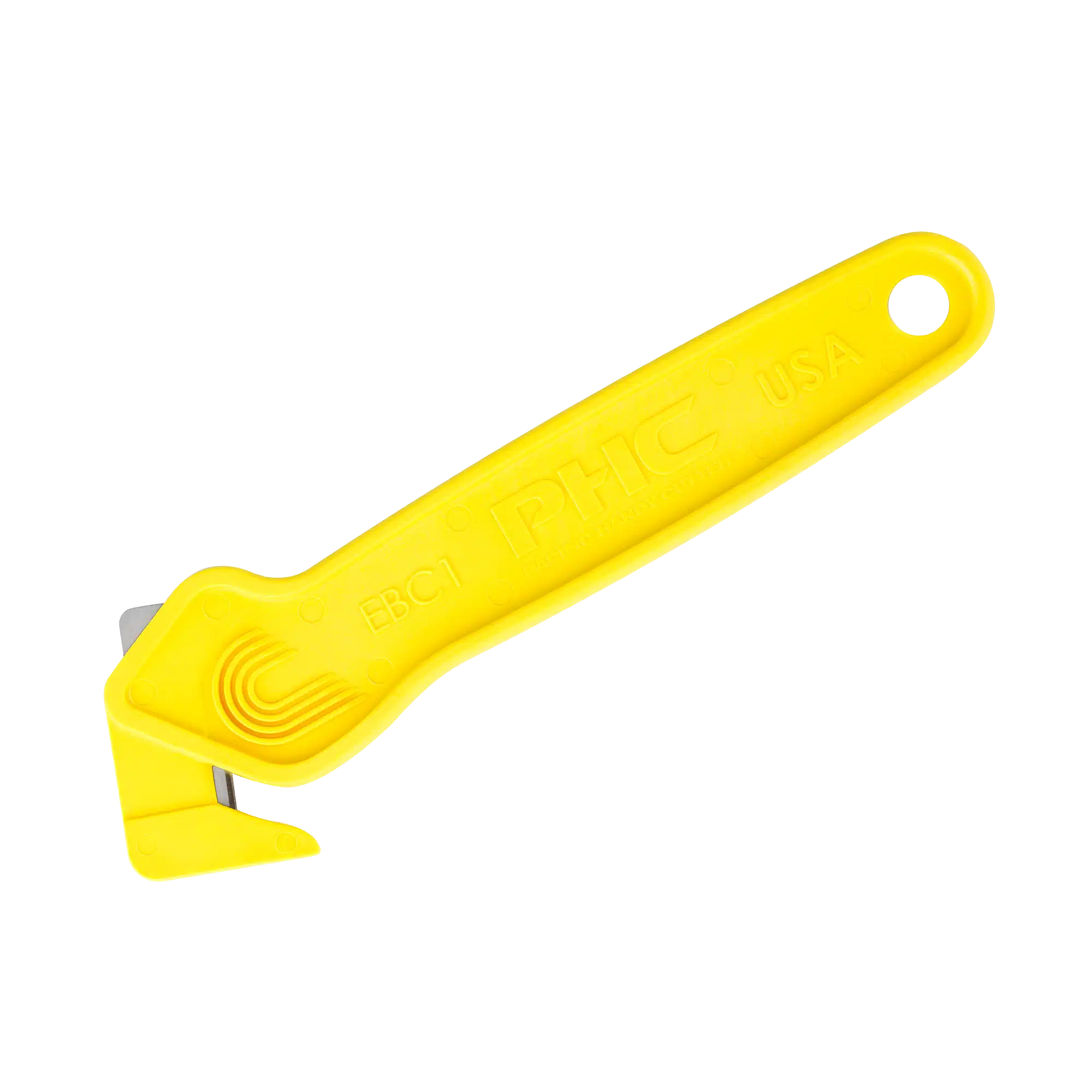
The original safety cutter brand — trusted by grocery chains, retailers, and industrial operations worldwide for over 70 years. Specialises in auto-retract and squeeze-grip blade activation safety cutters.
- Technology: Spring-loaded auto-retract; blade only exposed during active cutting stroke
- Blade: Replaceable steel blades; tool-free change on most models
- Best for: High-volume warehouse, logistics, grocery, and industrial carton cutting
- Key models: PHC S-Series, Auto-Retract Safety Cutter, Squeeze Grip, Film Cutters, Bag Cutters
- Heritage: Founded in the USA; preferred by 80%+ of US grocery retailers
Klever Innovations
American-engineered, patented concealed blade safety cutters. The Klever Kutter’s recessed blade design is one of the most recognizable safety cutter innovations in the world — the blade is never exposed to the user’s skin during normal operation.
- Technology: Permanently recessed carbon steel blade — only the cutting slot is accessible
- Blade: Dual-sided for extended life; XChange models have tool-free replaceable heads
- Best for: Retail, general industry, food, mixed-use environments, sustainability-focused operations
- Key models: Klever Kutter, Klever EcoKutter (75% recycled plastic), Klever Kleen XChange (antimicrobial), Klever Koncept, Klever Excel Plus
- Sustainability: EcoKutter made from 75% recycled materials; dual-sided blade reduces waste
Slice
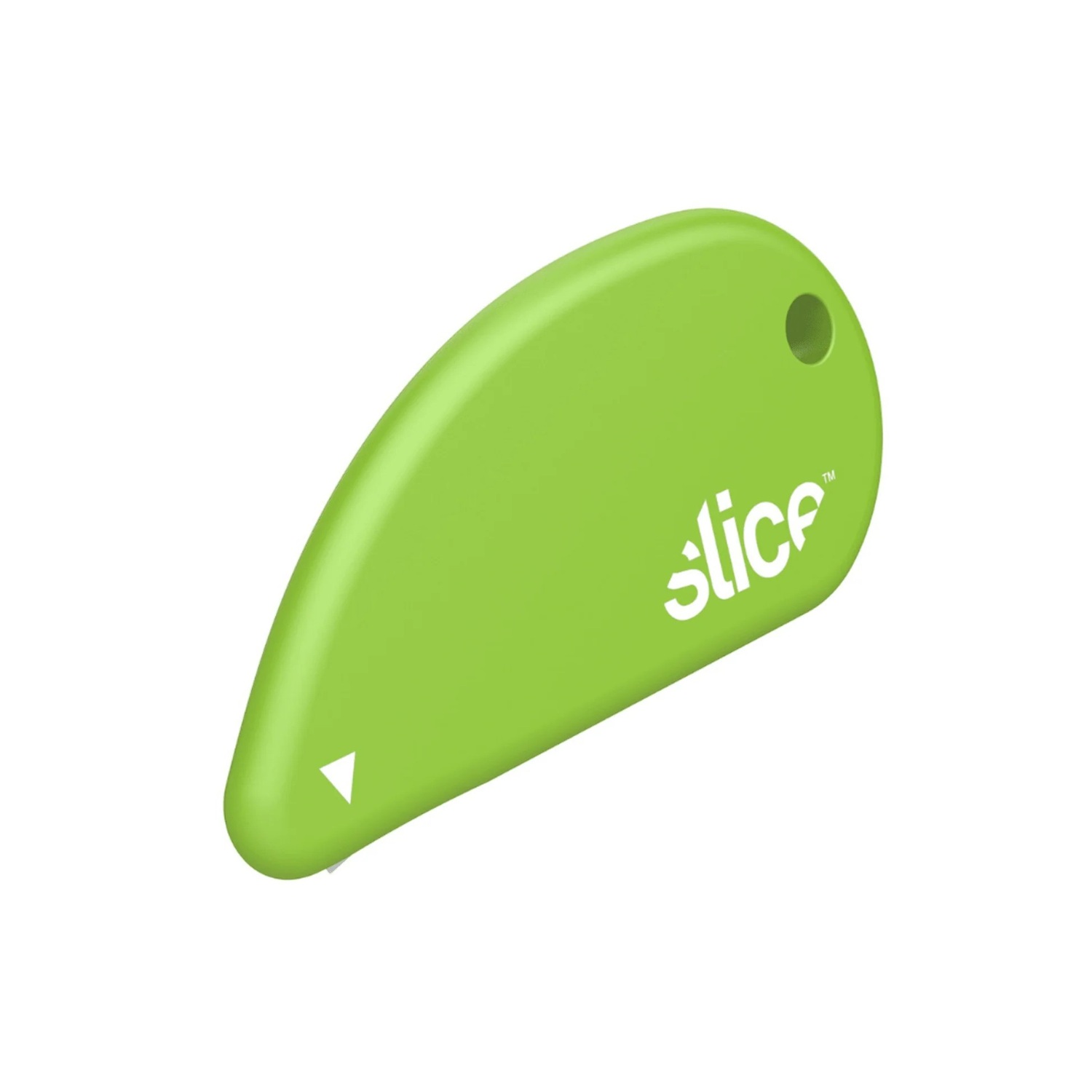
Revolutionary zirconia oxide ceramic blade technology. Slice blades are engineered to be finger-friendly — they will not cut skin under the light pressure of accidental contact, while cutting packaging materials cleanly and efficiently. Ceramic blades last up to 11× longer than steel equivalents.
- Technology: 100% zirconia oxide ceramic blade — harder than steel, finger-friendly edge profile
- Blade life: Up to 11× longer edge retention than equivalent steel blades
- Best for: Pharmaceutical, cleanroom, electronics, food manufacturing, healthcare, laboratory settings
- Key models: Slice Box Cutter (auto-retract ceramic), Slice Pen Cutter, Slice Mini Cutter, Slice Utility Knife, Slice Finger Tab
- Advantage: No metal contamination risk; suitable for ESD-sensitive and cleanroom environments
PHC Product Range — Featured Models



Safetyware: Malaysia’s Master Distributor — On-Site Safety Cutter Demo Available
As the authorized master distributor for Pacific Handy Cutter across Malaysia and the surrounding region, Safetyware Group provides more than a product catalogue — we offer a full safety cutter consultation service tailored to your specific operation, industry, and workforce.
The on-site demonstration programme is particularly valuable because safety cutter selection is highly task-specific. A model that performs excellently for opening corrugated cardboard boxes may be inappropriate for slitting stretch film on a pallet, and a ceramic cutter ideal for pharmaceutical packaging rooms may not provide the cutting force needed for heavy-duty strapping. Our specialists will work through every cutting task in your operation — with the actual materials you use — and demonstrate the performance, ergonomics, and injury prevention characteristics of the recommended tool in real conditions.
Why On-Site Demonstration Matters
- Real-world validation — cutting performance differs significantly between material types; testing in your environment eliminates specification errors
- Worker buy-in — workers who have seen and handled the recommended cutter, and understand why it is safer, are significantly more likely to use it consistently
- Task-specific optimisation — most operations have 3–8 distinct cutting tasks, each of which may be best served by a different cutter model or blade type
- Training integration — the demonstration includes guidance on correct cutting technique, blade inspection, and replacement intervals for each model
- Compliance documentation — our team can assist with documenting your safety cutter specification as part of your HIRARC and PPE register under OSHA 1994
Implementing a Safe Cutting Programme: Beyond the Tool Itself
Specifying the right safety cutter is the most impactful single step an organisation can take to reduce cutting injuries. But a comprehensive safe cutting programme integrates the right tool with training, inspection, and management systems to maintain that protection over time.
Conduct a Cutting Task Inventory
List every cutting task performed in your operation — the material being cut, the frequency, the environment, and the current tool being used. This inventory is the basis for your tool specification and should be included in your HIRARC under OSHA 1994.
Eliminate or Substitute High-Risk Traditional Cutters
Identify all traditional snap-off blades and exposed-blade utility knives currently in use. These should be replaced with appropriate safety cutters. Do not allow workers to continue using traditional box cutters “until stock runs out” — the injury risk is ongoing every shift.
Select and Specify the Right Cutter for Each Task
Use the selection matrix in this guide or engage Safetyware for an on-site assessment. Match the safety cutter technology — auto-retract, concealed blade, or ceramic — to the specific material, frequency, and risk level of each cutting task identified in step 1.
Train Workers on Correct Use, Inspection, and Blade Replacement
Even a safety cutter can be misused. Train workers on the correct cutting technique (cutting away from the body, stable surfaces, controlled strokes), how to inspect the cutter and blade before each use, and the correct procedure for changing blades safely. PHC and Klever’s tool-free blade change systems reduce the risk of injury during blade replacement.
Establish a Blade Inspection and Replacement Schedule
A dull blade is a dangerous blade — it requires more force, reduces control, and significantly increases the risk of the tool slipping. Establish clear criteria for blade replacement (not just “when it breaks”) and ensure adequate blade stock is available at all times. Slice ceramic blades last up to 11 times longer than steel, reducing replacement frequency significantly.
Monitor, Review, and Report Near-Misses
Track all cutting incidents — including near-misses — and use the data to identify whether a different cutter specification, additional training, or a change in work process is required. Under Malaysia’s OSHA 1994, near-miss reporting is a critical component of a proactive safety management system.
Cutting Tool Safety Under OSHA 1994 (Act 514) — Malaysia
Under OSHA 1994, employers are required to provide and maintain safe work equipment, including cutting tools. Where risk assessment identifies cutting hazards, the employer must implement controls — which for hand tools means specifying inherently safer tool designs (safety cutters) as the primary engineering control, supplemented by training and procedure. DOSH enforcement activity has increased significantly since the OSHA Amendment 2022, and tool-related injury investigations will examine whether appropriate safer tool options were available and whether they had been specified. A documented safety cutter selection — linked to a HIRARC — is both good practice and a compliance requirement.
Safetyware Group — 40 Years of Workplace Safety in Malaysia
As the authorized master distributor of Pacific Handy Cutter in Malaysia and Southeast Asia, Safetyware brings together a 40-year safety heritage and global product leadership — providing businesses across the region with access to the world’s most trusted safety cutter brands.
Leader Rubber Products Sdn. Bhd. founded in Penang — the first locally-owned rubber gloves factory in Malaysia, establishing our foundation in worker hand protection.
Multifocal Corporation Sdn. Bhd. established, expanding the safety product range and building regional distribution capability across Malaysia and Southeast Asia.
Safetyware Group Berhad listed on Bursa Malaysia — a publicly listed company with regional presence in Malaysia, Singapore, Thailand, Australia, and APAC.
Authorized master distributor of Pacific Handy Cutter (PHC · Klever · Slice) — the world’s largest safety cutter manufacturer — serving Malaysia and the surrounding region.