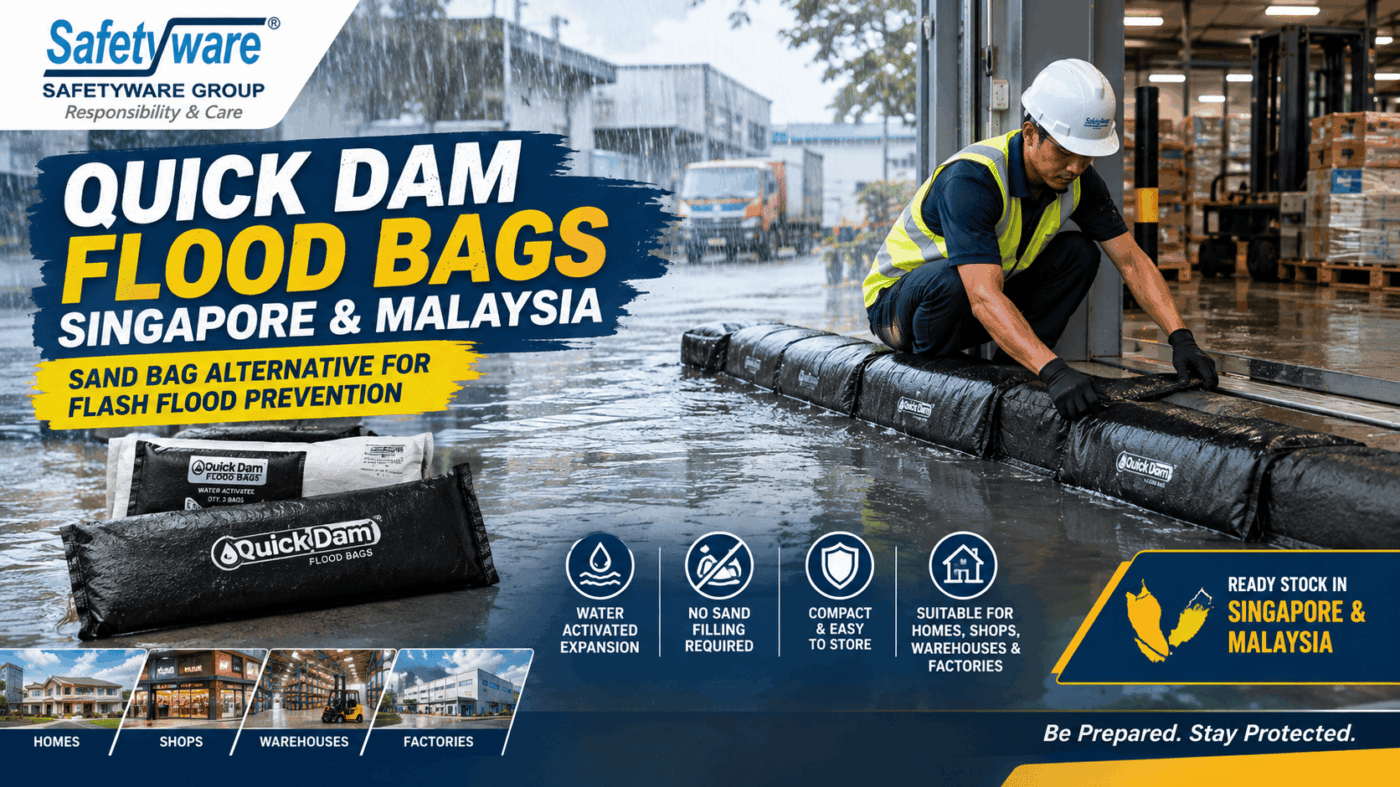
Heavy rainfall and sudden changes in weather can create flooding risks for residential, commercial and industrial properties. In Singapore and Malaysia, flash floods can disrupt business operations, damage equipment, affect inventory and create safety hazards for employees and visitors. As the rainy season approaches, property owners and facility managers should review their existing flood-preparedness measures. Whether you are searching for a Flood Bag Singapore & Malaysia supplier, exploring a sandbag alternative or planning a flood-preparedness strategy for your workplace, understanding how flood bags work can help you make a more informed decision.
Why Flash Flood Prevention Matters in Singapore & Malaysia
Flash floods can develop rapidly when intense rainfall overwhelms drainage systems or causes water levels to rise in low-lying areas. Even when flooding does not last long, water entering a building can disrupt normal activities and create costly cleanup and repair work.
In Singapore, heavy rainfall can affect roads, residential areas, commercial premises and building entrances. In Malaysia, seasonal rainfall and local drainage conditions can increase flood risks in susceptible locations, including areas near rivers, low-lying land and urban drainage systems.
The impact of flooding depends on the location, surrounding environment, drainage capacity and severity of rainfall. Therefore, flood preparation should not be limited to properties that have experienced major flooding in the past.
Common problems caused by flash floods
Property damage: Water entering ground-floor areas can damage flooring, walls, furniture and electrical equipment.
Inventory loss: Shops, warehouses and factories may experience damage to stored goods, packaging materials, raw materials and finished products.
Business interruptions: Flooded entrances, loading bays and access roads can delay deliveries, affect staff attendance and interrupt production.
Workplace safety risks: Wet floors, contaminated water and water near electrical installations can create hazards for employees and visitors.
Additional cleaning and maintenance: Removing standing water, drying affected areas and repairing damaged equipment can require significant time and resources.
Taking preventive measures before heavy rainfall occurs can help businesses prepare for these risks. A suitable flood protection solution should form part of a broader plan that also considers drainage, building maintenance, emergency procedures and official weather alerts.
What Are Quick Dam Flood Bags?
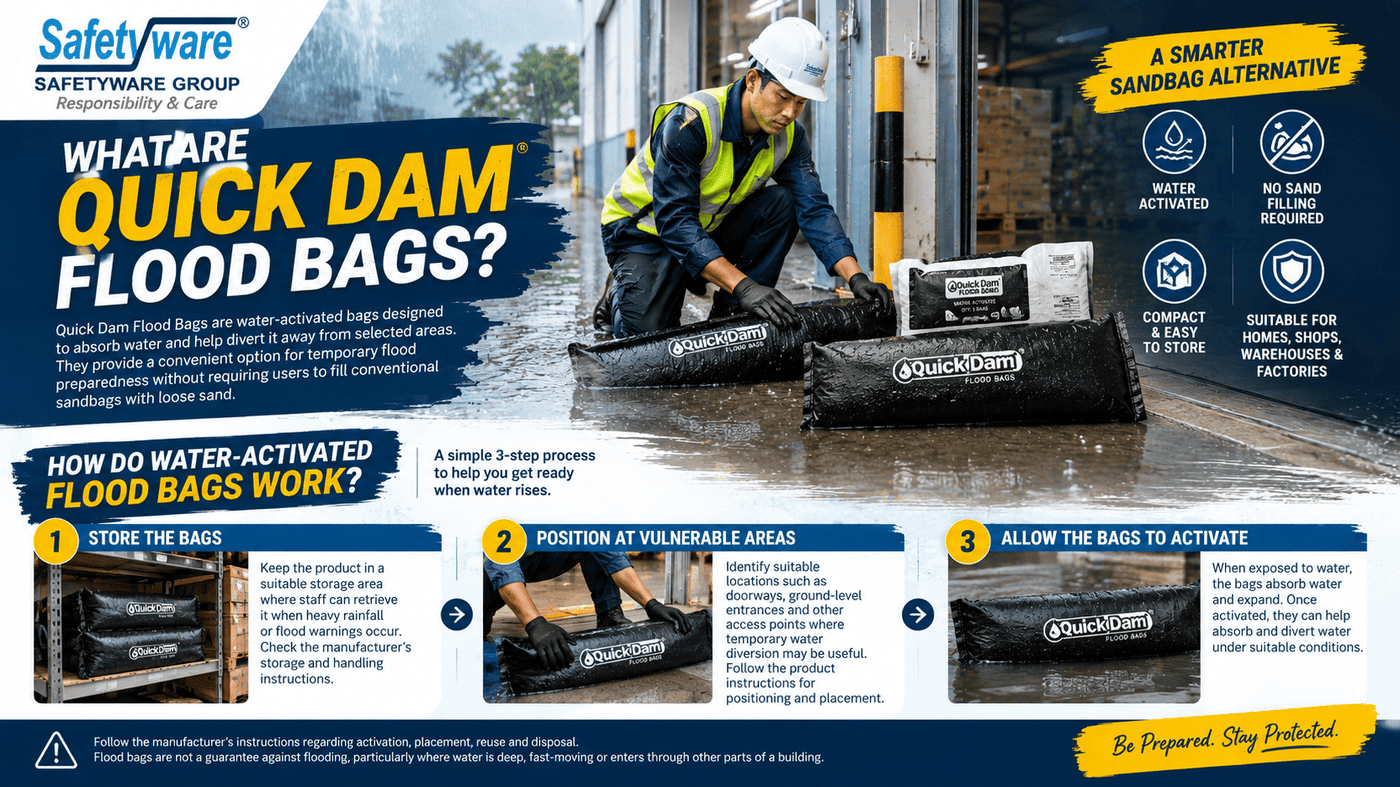
Quick Dam Flood Bags absorb water and help divert it away from selected areas. These water-activated bags offer a convenient solution for temporary flood protection without the need to fill traditional sandbags with loose sand.
Traditional sandbags require suitable filling material, preparation space and manual handling. In comparison, water-activated flood bags are compact before activation and expand when exposed to water, making them easier to store and prepare for use.
Quick Dam Flood Bags can help divert water away from suitable areas, including doorways, garage entrances and access points around commercial and industrial buildings. Their suitability depends on the product specifications and the conditions at the intended installation location.
How do water-activated flood bags work?
The general process involves three stages:
Step 1: Store the bags in an accessible location
Keep the product in a suitable storage area where staff can retrieve it when heavy rainfall or flood warnings occur. Check the manufacturer’s storage and handling instructions.
Step 2: Position the bags at vulnerable areas
Identify suitable locations such as doorways, ground-level entrances and other access points where temporary water diversion may be useful. Follow the product instructions for positioning and placement.
Step 3: Allow the bags to activate
When exposed to water, the bags absorb water and expand. Once activated, they can help absorb and divert water under suitable conditions.
Users should follow the manufacturer’s instructions regarding activation, placement, reuse and disposal. Flood bags are not a guarantee against flooding, particularly where water is deep, fast-moving or enters through other parts of a building.
Quick Dam Flood Bags vs Sandbag Alternative
Sandbags have traditionally been used to manage floodwater around properties. However, preparing them can involve sourcing sand, filling bags, transporting heavy loads and arranging storage space.
For businesses that need a convenient temporary flood-preparedness product, Quick Dam Flood Bags offer a different approach.
| Feature | Quick Dam Flood Bags | Traditional Sandbags |
|---|---|---|
| Preparation | Water-activated design | Usually requires manual sand filling |
| Storage before use | Compact before activation | Requires space for filled bags or filling materials |
| Filling material | No separate sand filling required | Requires sand or another suitable filling material |
| Handling | Lightweight before activation, subject to product specifications | Can be heavy, particularly when filled |
| Deployment | Position according to product instructions | Requires placement and arrangement |
| Best use considerations | Suitable applications depend on product specifications and site conditions | Suitability depends on bag construction, filling and placement |
The most appropriate option depends on the expected water conditions, site layout, available storage and response requirements. Traditional sandbags may remain suitable for certain applications, while water-activated bags can offer a more convenient option when avoiding manual filling is a priority.
For businesses evaluating a sandbag alternative, consider the amount of preparation required, the number of vulnerable entrances and the time needed to deploy the selected product.
Where Can Quick Dam Flood Bags Be Used?
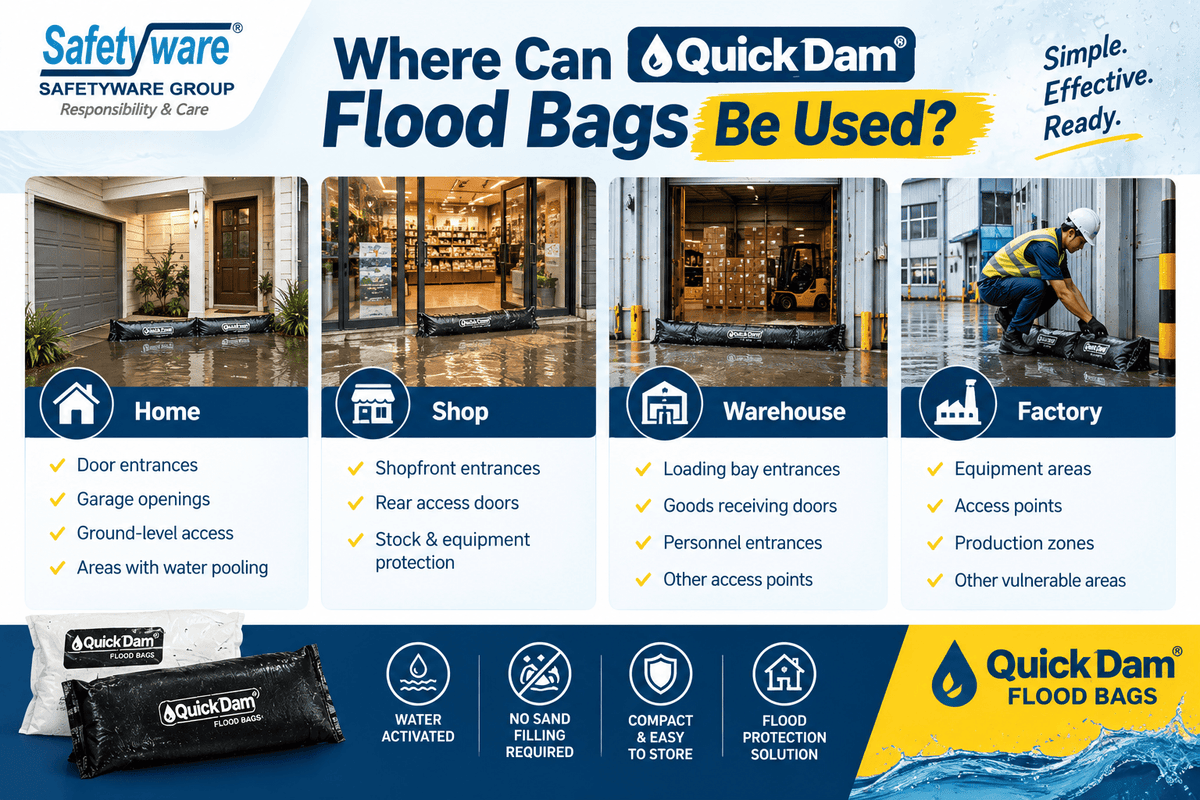
Quick Dam Flood Bags are designed for targeted water control. Their flexible form makes them an option for selected locations around residential and commercial properties.
Homes and residential properties
Water may enter homes through ground-level doors, garage openings and other vulnerable access points. Quick Dam Flood Bags can be considered for suitable entrances where temporary water diversion is needed.
Potential applications include:
- Front and back door entrances.
- Garage openings.
- Selected ground-level access points.
- Areas where rainwater tends to collect near a building.
Homeowners should also inspect drainage, move vulnerable belongings away from exposed floor areas and monitor local weather and flood warnings.
Shops and retail outlets
Shops may face water damage to stock, display equipment, payment systems and furniture during flooding.
Quick Dam Flood Bags can help divert water at suitable shopfronts and rear access doors where water intrusion is a concern. Their compact pre-activation form can also make it easier to keep emergency supplies available without preparing sandbags in advance.
Retail operators should identify vulnerable areas before the rainy season and establish a clear procedure for staff to follow when heavy rainfall or flood warnings occur.
Warehouses and distribution centres
Warehouses often store large quantities of goods, packaging materials and equipment. Water entering through loading bays or ground-level doors may affect inventory and interrupt deliveries.
Quick Dam Flood Bags may be considered for suitable areas such as:
- Loading bay entrances.
- Goods receiving and dispatch doors.
- Selected personnel entrances.
- Other suitable points where water may enter from outside.
Flood bags should be combined with appropriate inventory protection, drainage maintenance and site-specific emergency procedures. They are not a substitute for a professional assessment where a warehouse faces significant flood exposure.
Factories and industrial facilities
Factories may contain machinery, raw materials, finished products and electrical systems that require protection from water damage.
Facility managers can assess vulnerable doors, access points and other locations where temporary water diversion may be appropriate. Quick Dam Flood Bags may then be incorporated into the site’s flood-preparedness plan.
Before deployment, consider the potential water depth, surface conditions, staff handling requirements and whether a temporary bag barrier is suitable for the application. Industrial facilities with significant flood risks may require additional engineering measures or permanent flood-control systems.
What to Consider When Choosing Flood Bags
Before purchasing a flood protection product, consider where you plan to use it.
Application Area: Identify the area that needs protection, such as a doorway, garage entrance, loading bay or other suitable access point.
Expected water conditions: Consider the possible water depth, flow rate and duration of exposure. Not every temporary flood barrier is suitable for every flooding condition.
Storage and readiness: Check storage requirements, shelf life where applicable, activation instructions and the amount of preparation required.
Coverage Requirements: Estimate the number of bags needed and follow the manufacturer’s instructions for placement and use.
Site-Specific Risks: Check for other possible water entry points, such as walls, drains and unprotected entrances.
Emergency Procedures: Use flood bags alongside other safety measures, official flood warnings and evacuation plans.
For properties with repeated or severe flooding, seek professional advice about drainage upgrades, permanent barriers and other engineering solutions.
How to Prepare and Deploy Quick Dam Flood Bags
Having the product available is only one part of flood preparedness. Businesses should also make sure staff understand how and when to use it.
Before heavy rainfall
Identify the areas where water is most likely to enter and determine whether Quick Dam Flood Bags are suitable for those locations.
Store the bags in a dry, accessible place and make sure responsible personnel know where to find them. Review the manufacturer’s instructions before an emergency occurs.
Flood warning issued
Monitor official weather and flood information. If conditions allow and it is safe to do so, prepare the designated bags according to the product instructions.
Where pre-activation is appropriate, use the recommended method and allow sufficient time for the bags to expand. Avoid waiting until water is already moving rapidly through an unsafe area.
During deployment
Position the bags according to the intended water path and the manufacturer’s guidance. Ensure the arrangement is suitable for the surface and application.
Do not put staff at risk to position or adjust bags during dangerous conditions. Floodwater may conceal hazards, and personal safety must take priority over property protection.
After use
Follow the manufacturer’s instructions for handling and disposal. Inspect the affected area only when it is safe to do so, and review whether the original placement and preparedness plan need improvement.
Quick Dam Flood Bags are not designed to return to their original compact condition after activation. Always check the manufacturer’s instructions for proper handling and disposal.
Ready Stock! Safetyware Quick Dam Flood Bags!
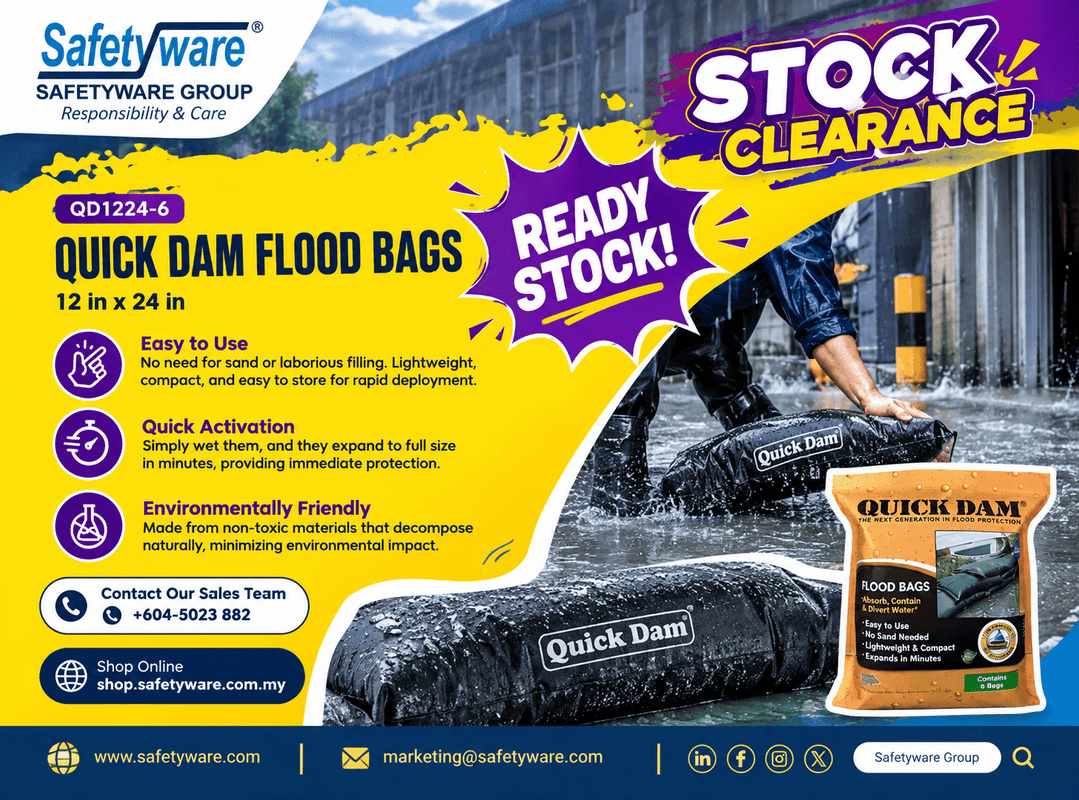
Safetyware supplies workplace safety and protection products for a range of industries. Quick Dam Flood Bags offer an option for households and businesses looking for a water-activated alternative to conventional sandbags. Whether you are preparing a residential property, retail outlet, warehouse or factory, selecting suitable flood protection products should begin with an assessment of the areas most exposed to water intrusion.
👉Product page: https://safetyware.com/product/quick-dam-flood-bags/
👉 Explore more on Safetyware Full Range PPEs
Frequently Asked Questions (FAQs)
1. How quickly do Quick Dam Flood Bags expand?
The standard bag typically reaches its full height of approximately 3.5 inches in about 10 minutes when sufficient water is available. Actual activation depends on the conditions and the manufacturer’s instructions.
2. Do Quick Dam Flood Bags need sand?
No. Quick Dam Flood Bags use water-activated absorbent material and do not require separate sand filling.
3. Can Quick Dam Flood Bags be stacked?
Multiple bags can be arranged or stacked according to the manufacturer’s guidance. Proper positioning is important because gaps, unstable surfaces or unsuitable arrangements can allow water to pass through.
4. Are Quick Dam Flood Bags suitable for warehouses and factories?
They may be suitable for selected entrances and other appropriate water-control applications. However, facilities should assess the expected water conditions and consider additional measures where flood risks are significant.
5. Can Quick Dam Flood Bags be reused?
They are not designed to be dried and returned to their original compact state for reuse. Follow the manufacturer’s guidance for handling, service life and disposal after activation.
📞 Need More Information?
Looking for reliable Full protection solutions for your workplace?
Explore SAFETYWARE’s safety shoes and workplace PPE range at
👉Safetyware Catalogs
Our safety specialists can help evaluate workplace hazards, recommend suitable safety helmets, and support compliance with Malaysia workplace safety requirements.
If you need a quotation, feel free to contact us at:
📩 Email: [email protected]
📞 Tel: WhatsApp Us