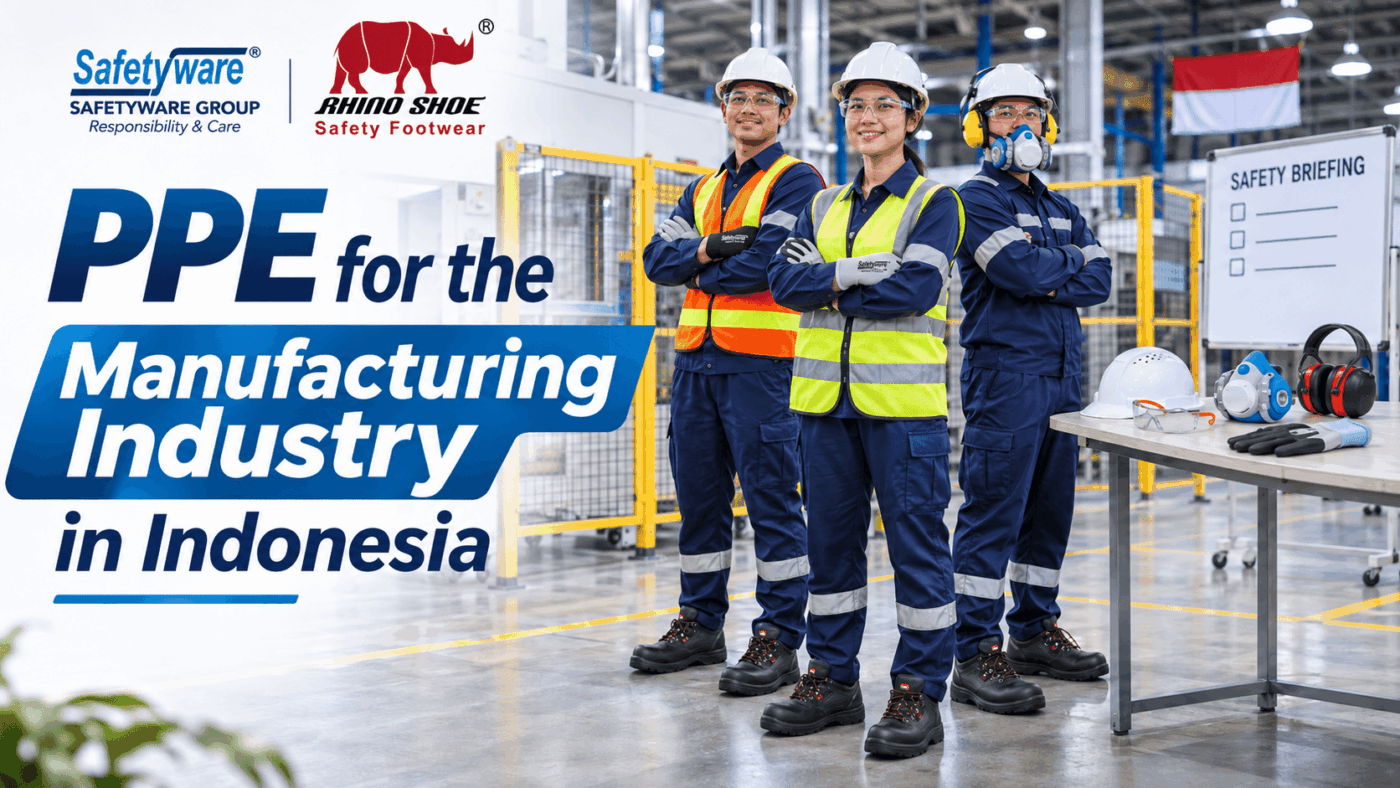
A manufacturing plant can contain several very different workplaces under one roof. A packing operator, welder, chemical-mixing technician and maintenance engineer may all need personal protective equipment, but their protection requirements are not interchangeable.
For Indonesian factories, PPE—commonly called Alat Pelindung Diri or APD—must connect to the hazards of the task. Buying a standard helmet, glove and shoe package for everyone can leave important risks unresolved while adding unnecessary discomfort elsewhere.
This guide explains the core Indonesian framework and turns it into practical selection and purchasing steps. It is intended for employers, K3 teams, distributors and PPE buyers who need clear specifications supported by product evidence.
What Indonesian employers need to know about APD
The PPE regulation remains in force
The Ministry of Manpower’s legal database lists PER.08/MEN/VII/2010 on Alat Pelindung Diri as in force at the review date. [1]
Article 2 requires employers to provide PPE free of charge and specifies conformity with SNI or applicable standards. Article 7 requires PPE management, including identifying needs, selecting protection suited to hazards and worker needs, training, use, maintenance, storage, inspection, evaluation and reporting. [2]
The practical implication is that an issue record alone does not complete a PPE programme. Employers need a documented basis for selection and an ongoing process for use and upkeep.
Workplace conditions also matter
Permenaker No. 5 of 2018, concerning occupational safety and health in the work environment, is also listed as in force by the Ministry. It is a separate reference for the factory’s workplace-environment assessment. [3]
Likewise, the Ministry lists Government Regulation No. 50 of 2012 on SMK3 as in force. Review its applicability when integrating PPE into the company’s occupational safety and health management system. This article does not determine a particular plant’s SMK3 obligations. [4]
Separate law, standards and company rules
| Layer | What it establishes | Purchasing implication |
|---|---|---|
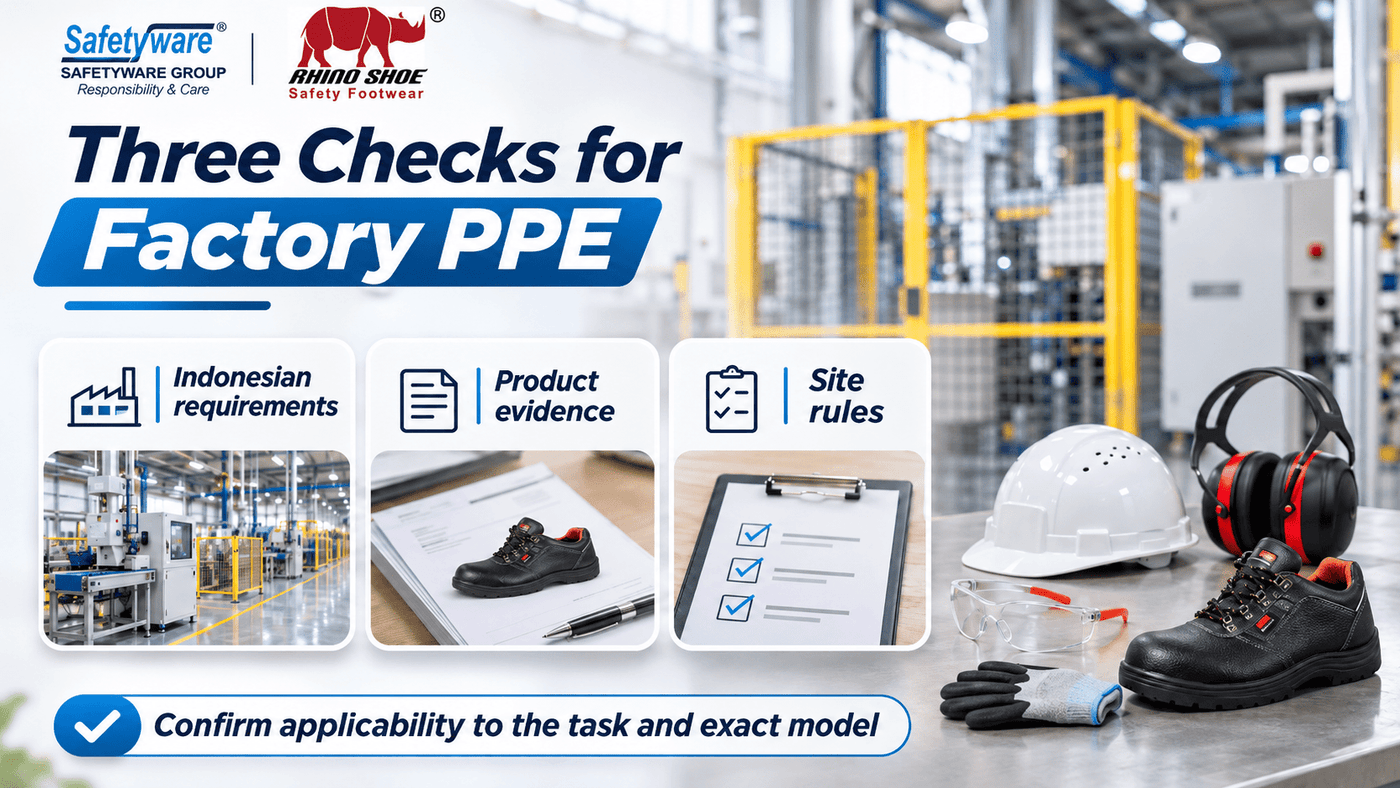
| Indonesian legal requirements | Employer duties and applicable national controls | Confirm the rules relevant to the plant, activity and product |
| Product standards | Defined performance requirements and tests | Record the exact standard, edition, rating and model evidence |
| Site or customer requirements | Operational and contractual expectations | Check whether the site requires particular features or approved models |
The wording “SNI or applicable standards” is not permission to assume that every imported EN- or ANSI-marked product satisfies every Indonesian requirement. Check any product-specific mandatory rules and conformity obligations separately. A familiar brand or foreign certificate does not settle that question by itself.
Assess the process before choosing the product
NIOSH’s hierarchy of controls places elimination, substitution and engineering controls ahead of administrative controls and PPE. These principles help reduce reliance on equipment that workers must wear correctly throughout a task. [5]
For a factory, start by asking whether a process can remove the exposure, use a safer substance, contain emissions or separate people from machinery. Then specify PPE for the remaining risk.
Avoid using PPE to justify a missing machine guard, uncontrolled vehicle route or unsuitable access arrangement. Where existing controls are inadequate, review the task before allowing work to continue.
Manufacturing hazards and PPE selection questions
This table is a planning aid. It does not make every listed item compulsory for every worker or establish a ready-made specification.
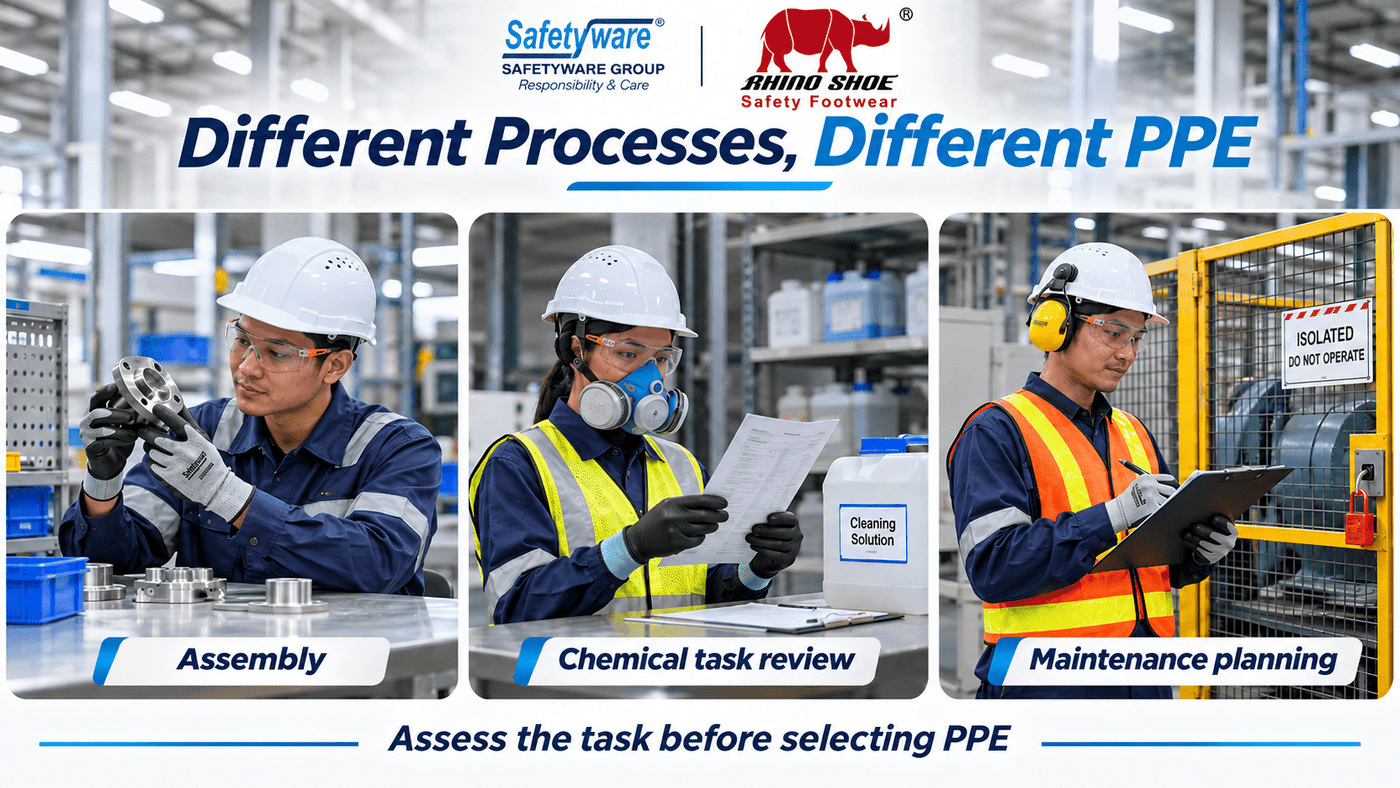
| Task or area | Hazards to assess | Controls to review first | PPE questions |
|---|---|---|---|
| Receiving and warehousing | Vehicles, falling goods, sharp packaging, slips | Traffic segregation, storage stability, handling aids | Is suitable head, foot, visibility and hand protection required for the assessed task? |
| Assembly and packing | Sharp components, repetitive handling, small particles | Safer components, fixtures, ergonomic layout | What grip, dexterity and eye protection are needed? |
| Metal fabrication | Sharp edges, particles, sparks, noise | Guarding, screens, extraction, tool condition | Which eye, face, hearing and hand protection suits each separate operation? |
| Welding | Optical radiation, heat, sparks, fumes | Welding screens, ventilation, fire precautions | Are filter selection, clothing, gloves and respiratory measures assessed together? |
| Chemical mixing or cleaning | Splash, vapour, mist, skin exposure | Substitution, closed transfer, ventilation, safe procedures | Do gloves, clothing, eye protection and respirators match the actual substance and exposure? |
| Dust-generating work | Airborne particles, eye exposure, other process hazards | Enclosure and extraction | What respiratory and eye protection is justified by exposure information? |
| Machinery maintenance | Unexpected movement, stored energy, sharp parts | Isolation, energy control, verified safe condition | What PPE is needed after the equipment has been made safe? |
| Cold or hot processes | Thermal contact and environmental exposure | Insulation, separation, handling tools | Are thermal performance and exposure limitations documented? |
Use separate entries where a worker performs several jobs. For example, the gloves used to move a finished metal component may be unsuitable for the chemical-cleaning step that follows.
Key selection decisions for factory PPE
Hand protection: match the task and check entanglement
Specify what the worker handles, how long contact lasts and what movement the task requires. For chemicals, provide the substance name, concentration, temperature and contact pattern to the supplier. A request for “chemical gloves” leaves too much undefined.
Also consider whether gloves create a machinery hazard. HSE warns against wearing gloves where they can become caught in rotating machinery. Its engineering guidance specifically addresses this entanglement risk. [6] Do not apply a blanket glove rule to an operation involving accessible rotating parts; use a competent task assessment and effective guarding.
Eye and face protection: identify the exposure
Distinguish flying particles, dust, liquid splash, optical radiation and thermal hazards. Write those exposures into the specification rather than choosing eyewear only by appearance.
Check coverage, fit and compatibility with helmets and respirators. For operations needing face protection, ask whether primary eye protection is also required by the assessed hazard and product instructions. Ordinary spectacles should not be assumed to provide industrial eye protection.
Respiratory protection: identify the contaminant first
Determine the substance, physical form, concentration and atmospheric conditions before choosing a respirator. A dust-focused solution does not automatically address gases or vapours.
NIOSH explains that air-purifying respirators filter contaminants from the surrounding air but do not provide oxygen. They cannot be used in oxygen-deficient or immediately dangerous atmospheres. [7] Unknown atmospheres and confined-space work require a specialist assessment and controlled entry arrangements.
The purchasing brief should also address fit, compatible filters, replacement arrangements and user instructions. A facepiece purchased without the correct supporting components is not a complete solution.
Foot protection: specify separate properties
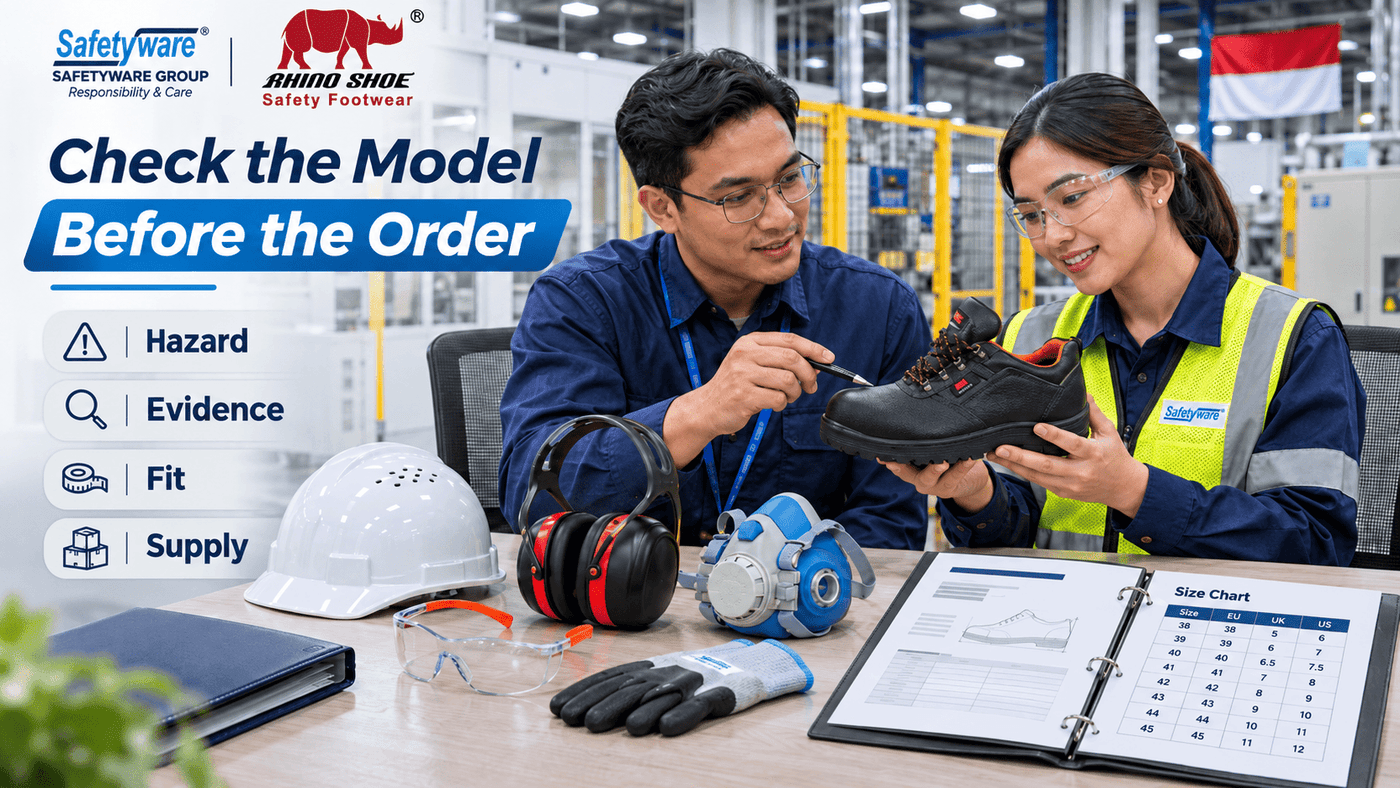
Assess impact, penetration, slip conditions, liquids, heat and any electrical requirements individually. Record the exact model and documented performance, including the standard edition where relevant.
Do not infer all properties from a single category name. A heavy boot is not automatically suitable for every chemical or floor condition, and a light shoe is not automatically appropriate for assembly work. Include fit and task mobility in the selection process.
Hearing, clothing and head protection
Base hearing-protector selection on the noise assessment and the need for communication. Check whether the chosen combination works with other PPE.
For clothing, distinguish visibility, hygiene, chemical and thermal functions. A clean garment or high-visibility vest does not establish chemical or flame protection. Similarly, select head protection for identified hazards rather than making helmet colour the main purchasing criterion.
Build a practical factory PPE programme
1. Create a task register
List routine production, cleaning, changeovers, breakdown response, maintenance and contractor activities. Include infrequent jobs; they can be missed when a PPE matrix only reflects normal production.
For each task, name the responsible reviewer and record what information is still missing. This makes gaps visible before purchasing begins.
2. Translate the assessment into a specification
A useful request might say:
“Please propose gloves for handling the listed finished metal components at a stationary bench. Include cut-performance evidence, grip, size range, dexterity considerations and care instructions. The gloves will not be used near accessible rotating machinery. Chemical-cleaning tasks will be specified separately.”
This is easier to evaluate than “send your strongest gloves”. It gives the supplier a defined application and prevents a performance claim from expanding beyond its evidence.
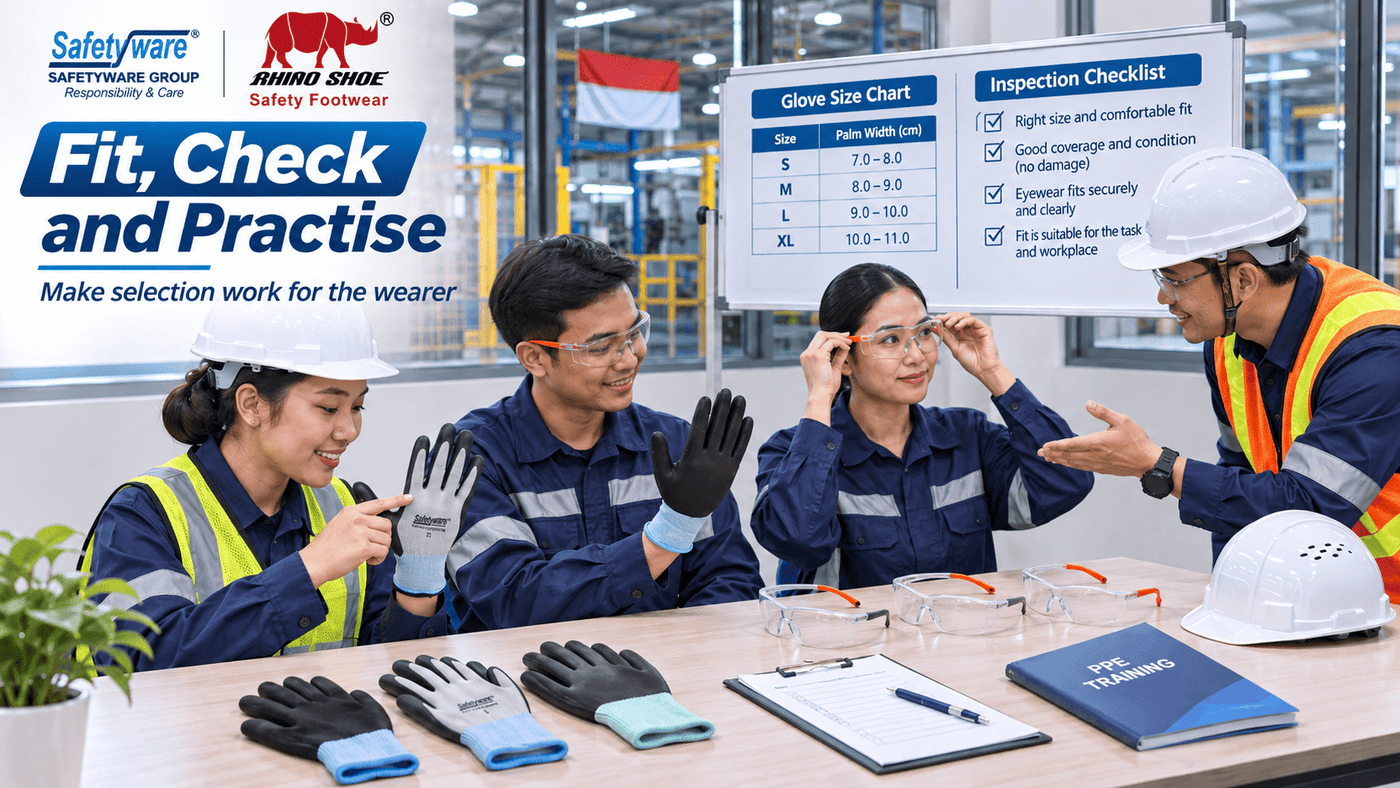
3. Trial fit and compatibility
Include representative users and normal work movements in a controlled trial. Record problems such as poor fit, restricted vision, difficulty gripping or interference between PPE items.
Do not create hazardous exposure to test a product informally. Use supplier documentation and competent testing support where additional performance evidence is needed.
4. Make training practical
Ask users to demonstrate fitting, pre-use inspection and removal. Explain limitations and defect-reporting arrangements in language they understand. A signed attendance sheet should support, rather than replace, a check that the equipment can be used correctly.
5. Plan replacement supply
Record model, size, issue location and replacement arrangements. Ensure the right sizes and consumables remain available during shift changes, supplier delays and maintenance shutdowns.
Treat a substitute model as a new selection decision. Similar appearance or a matching price does not establish equivalent protection.
Procurement and audit checklist
- The task, hazard and exposure are documented.
- Higher-order controls have been reviewed.
- Applicable Indonesian requirements are identified.
- The product standard, edition and required performance are specified where relevant.
- Evidence belongs to the exact model and variant supplied.
- Any applicable mandatory product-conformity requirements have been checked.
- Sizes and compatibility meet workforce needs.
- Instructions, limitations and care requirements are available.
- Users know when to report damage or poor fit.
- Inspection and replacement responsibilities are assigned.
- Spare stock and consumables have a replenishment plan.
- Changes to tasks, chemicals or equipment trigger a review.
For distributors, keep the supporting documents with the quotation and identify any unanswered technical questions. Avoid promising “complete compliance” based on a catalogue description alone.
SAFETYWARE Products and Solutions
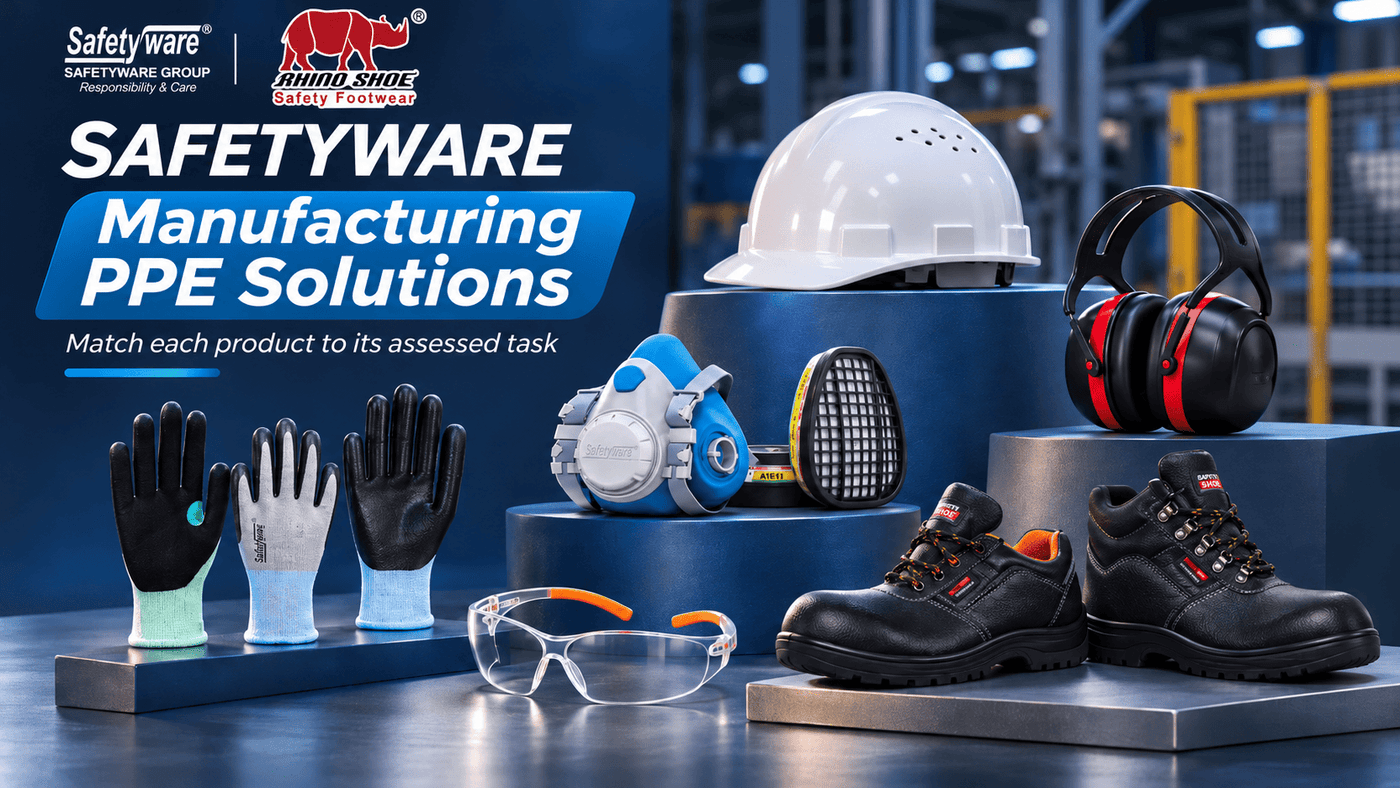
The SAFETYWARE product directory offers a starting point for manufacturing PPE and supporting safety equipment. Use a task assessment to shortlist suitable ranges, then request current model-specific evidence.
| Verified official range | Selection discussion |
|---|---|
| Hand and arm protection | Compare handling, cut, chemical and thermal options for separate tasks |
| Eye and face protection | Specify the exposure, coverage and compatibility requirements |
| Respiratory protection | Define the atmosphere and contaminants before discussing a complete system |
| Foot protection | Review RHINO SHOE options against foot hazards, floor conditions and fit |
| Hearing protection | Use the noise assessment to discuss suitable protectors and compatibility |
Send SAFETYWARE the application, destination, required documents, workforce sizes, quantities and delivery dates. Request a technical shortlist, samples where appropriate, and clear maintenance and replacement information.
These category links confirm available product families, not Indonesian approval for every listed model. Confirm any relevant local conformity obligations and exact-product documentation before ordering.
Conclusion
Effective PPE for the manufacturing industry in Indonesia starts with the process, the exposure and the worker. The APD framework requires more than issuing equipment: selection, training and continuing management all matter.
Build a task-based matrix, confirm applicable requirements and request evidence for each proposed model. Then support the chosen PPE with fit checks, practical training and reliable replacement supply. This gives employers and buyers a clear basis for decisions without turning one product or standard into a universal factory solution.
📞 Need More Information?
Looking for PPE for a factory?
Explore SAFETYWARE’s safety shoes and workplace PPE range at
👉Safetyware Catalogs
Our safety specialists can help evaluate workplace hazards, recommend suitable safety helmets, and support compliance with Malaysia workplace safety requirements.
If you need a quotation, feel free to contact us at:
📩 Email: [email protected]
📞 Tel: WhatsApp Us