
The best safety shoes for a Malaysian workplace are the pair that matches the actual hazard, working surface, shift length and required test evidence. A comfortable PU shoe may suit warehousing, while NBR rubber outsoles support heavier industrial duties and PVC boots are practical for wet or washable areas.

How to Choose Safety Shoes in Malaysia
Start with the task rather than the shoe style. A workplace risk assessment should identify falling-object, underfoot penetration, slip, electrical, static-control, heat, chemical and weather exposure. Then compare products that address those hazards without creating unnecessary weight or fatigue.
- Toe protection: select the required impact and compression performance for the task.
- Midsole protection: consider penetration resistance where nails, metal offcuts or sharp debris may be present.
- Slip performance: match outsole pattern and compound to wet, oily, tiled or uneven surfaces.
- Electrical or ESD properties: these are different requirements. Use the classification specified by the workplace.
- Upper and sole material: assess water, oil, heat, abrasion and chemical exposure against the individual model.
- Fit and comfort: allow suitable toe room, heel retention and width for long Malaysian working shifts.
- Documentation: request the current test report, certificate, marking and technical datasheet required by the customer or project.
Safety Footwear Standards and Evidence
EN ISO 20345 is a widely specified performance standard for safety footwear. Malaysia buyers may also need applicable SIRIM or DOSH documentation, depending on product classification, tender conditions and workplace requirements. Singapore buyers should align selection with the organisation’s WSH risk assessment and any client or project specification.
A certification logo alone is not enough for every job. Check that the certificate covers the exact model and size range, and review additional markings for properties such as penetration resistance, water resistance, heat contact, electrical resistance or slip performance. Ask the supplier to explain any marking that is unclear.
NBR Rubber vs PU vs PVC Safety Footwear
| Material or construction | Best suited to | Selection notes |
|---|---|---|
| NBR rubber outsole | Heavy industry, fabrication, oil and gas, construction and demanding outdoor work | Strong abrasion, oil and heat performance may be available. Confirm the rating of the exact model. |
| PU outsole | Manufacturing, logistics, electronics, warehousing and general industrial work | Usually lighter and more flexible. Compare density, cushioning, hydrolysis resistance and slip performance. |
| PVC safety boot | Food processing, agriculture, cleaning, wastewater, fisheries and wet work | Easy to wash and waterproof by construction. Confirm toe protection, sole grip and chemical compatibility. |
NBR Rubber Safety Shoes for Heavy-Duty Work
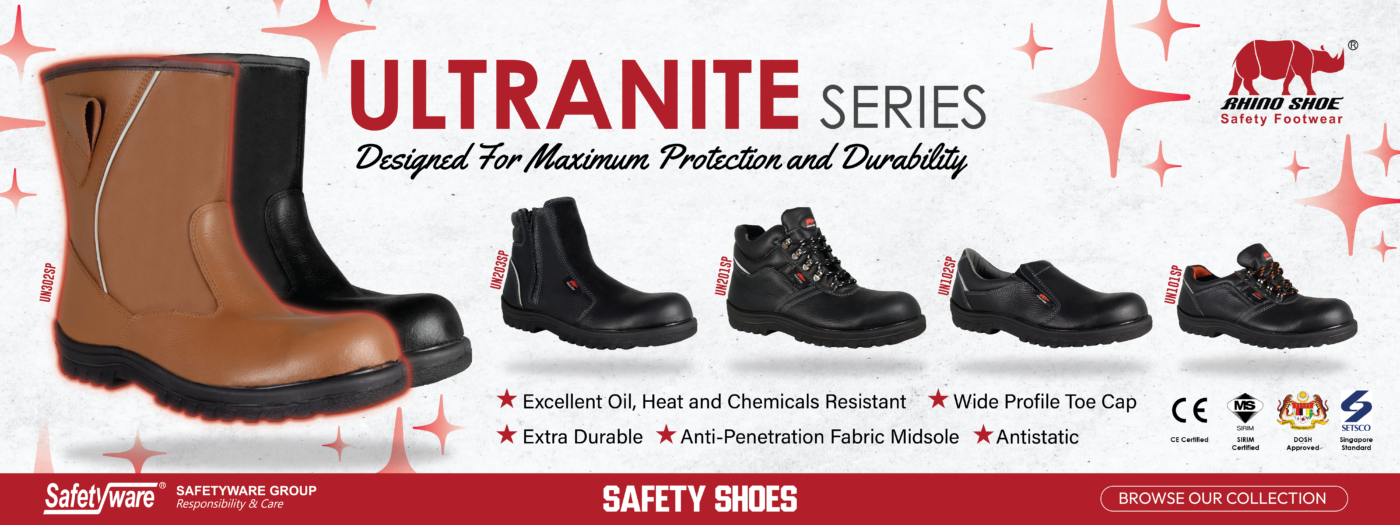
Nitrile butadiene rubber, commonly called NBR, is used for durable outsoles that can perform well around oils, abrasion and demanding industrial surfaces. Some RHINO SHOE models use direct vulcanised construction for a strong bond between upper and sole. Heat-contact capability varies by design, so buyers should verify the model’s marked performance instead of applying one temperature claim to the whole range.
Explore the RHINO SHOE Ultranite NBR range for heavy industrial applications.
PU Safety Shoes for Comfort and Daily Use
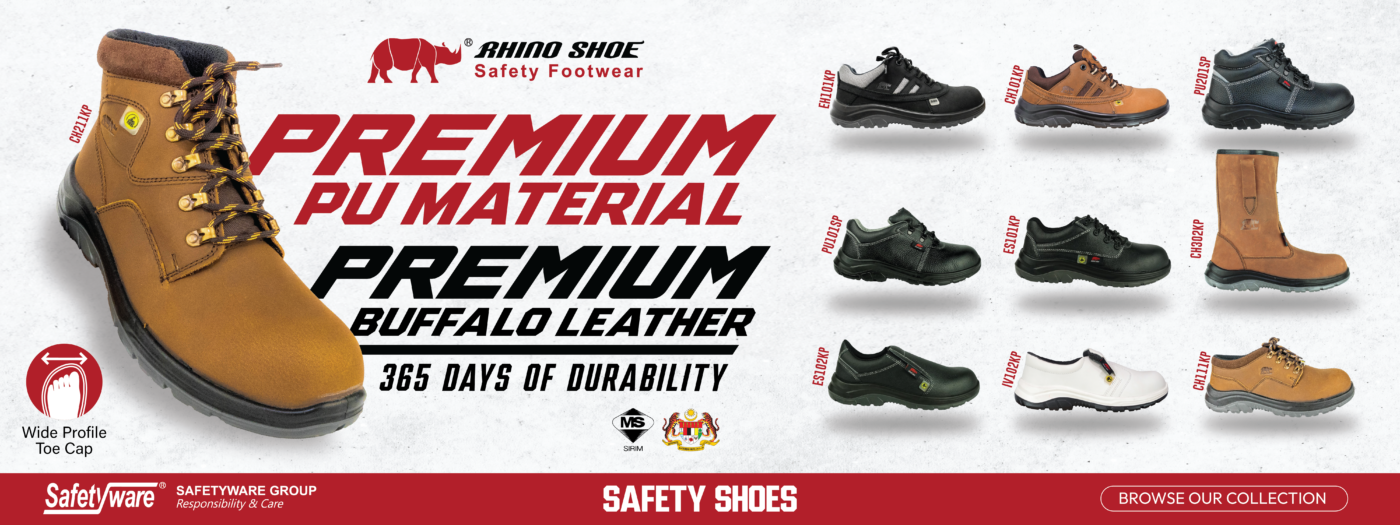
Polyurethane safety shoes are popular for long shifts because PU outsoles can provide a useful balance of low weight, flexibility and shock absorption. Single-density and dual-density constructions behave differently, so compare the outsole design, work surface and expected service conditions. For electronics or static-sensitive workplaces, select a model with the appropriate antistatic or ESD classification rather than relying on the material name alone.
Review available models in the RHINO SHOE safety footwear catalogue.
PVC Safety Boots for Wet and Washable Areas
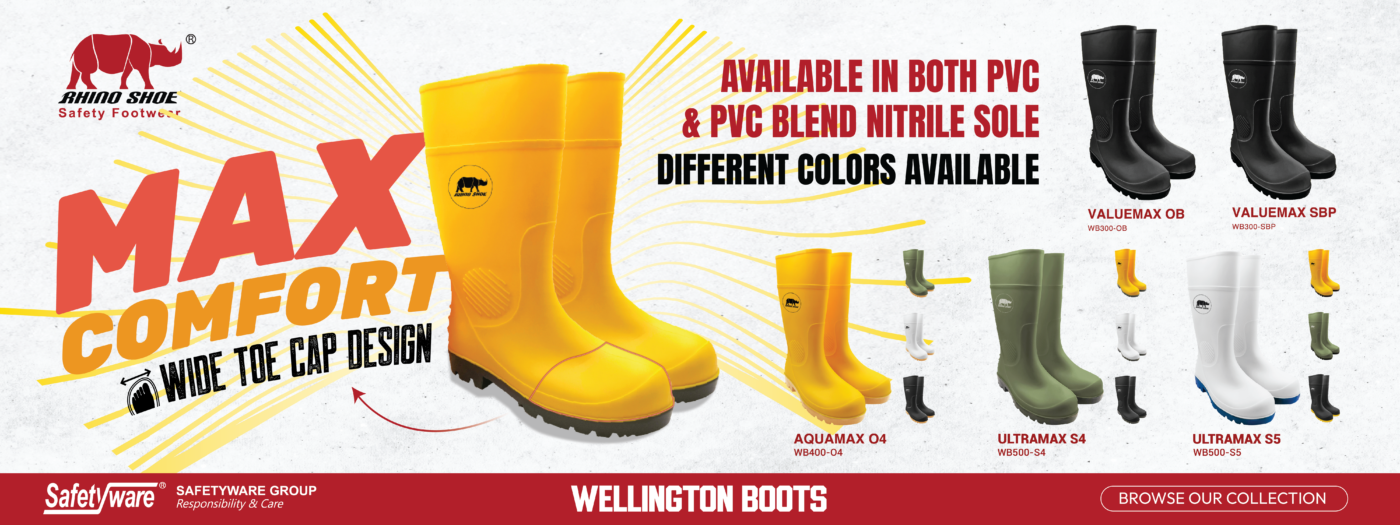
PVC safety boots, also called gumboots, are practical where footwear must resist water, mud and frequent cleaning. They are widely used in agriculture, food handling, fisheries, wastewater and general cleaning. Chemical resistance depends on substance, concentration, temperature and exposure time, so consult a compatibility guide before using any boot for chemical handling.
See the RHINO SHOE waterproof safety boot range.
Safety Shoe Selection by Industry
| Workplace | Likely priorities | Useful starting point |
|---|---|---|
| Construction and civil works | Toe impact, penetration, slip, ankle support and weather | PU or NBR safety shoes, depending on duty severity |
| Metal fabrication and heavy industry | Heat, abrasion, sparks, sharp debris and oil | Rated NBR outsole footwear with suitable upper protection |
| Warehouse and logistics | Comfort, grip, toe protection and long walking distances | Lightweight PU safety shoes |
| Electronics and clean production | Static control, cleanliness, comfort and non-marking soles | Properly classified ESD or antistatic footwear |
| Food, agriculture and wet processing | Waterproofing, washability, grip and hygiene | PVC safety boots or washable safety footwear |
| Fire and emergency response | Heat, flame, puncture, water and emergency-service requirements | Purpose-designed firefighter boots such as HARVIK models |
RHINO SHOE Safety Footwear from a Malaysian Manufacturer
Safetyware is Malaysia’s largest safety footwear manufacturer and produces a broad range of RHINO SHOE safety shoes and PVC boots. Local manufacturing supports product selection, technical documentation, repeat supply and footwear programmes for factories, construction projects and regional distributors. Safetyware is also the exclusive Malaysian distributor for HARVIK firefighter boots.
For a structured trial, shortlist models from the hazard assessment, issue representative sizes to workers, record fit and comfort feedback, and confirm the required technical evidence before bulk procurement. This produces a better result than choosing one generic shoe for every department.
Safety Shoes Malaysia FAQ
Which safety shoe sole is best for factory work?
PU is a useful starting point for general manufacturing because it can be lightweight and cushioned. Choose NBR or another rated compound when heat, oil, abrasion or heavy-duty conditions require stronger performance.
Are PVC boots suitable for chemicals?
PVC resists many liquids, but no boot is suitable for every chemical. Check the manufacturer’s compatibility data for the substance, concentration, temperature and expected contact time.
How should a safety shoe fit?
The toe cap should not press on the toes, the heel should remain secure, and the width should suit the wearer without excessive movement. Test the actual work socks and allow for foot swelling during long shifts.
Request a Safety Footwear Recommendation
Browse Safetyware’s foot protection range or send Safetyware your industry, hazard, quantity and delivery location for model selection, sizing support, documentation and a quotation.
Technical review: Safetyware footwear manufacturing and EHS technical team. Last reviewed: 19 August 2026.