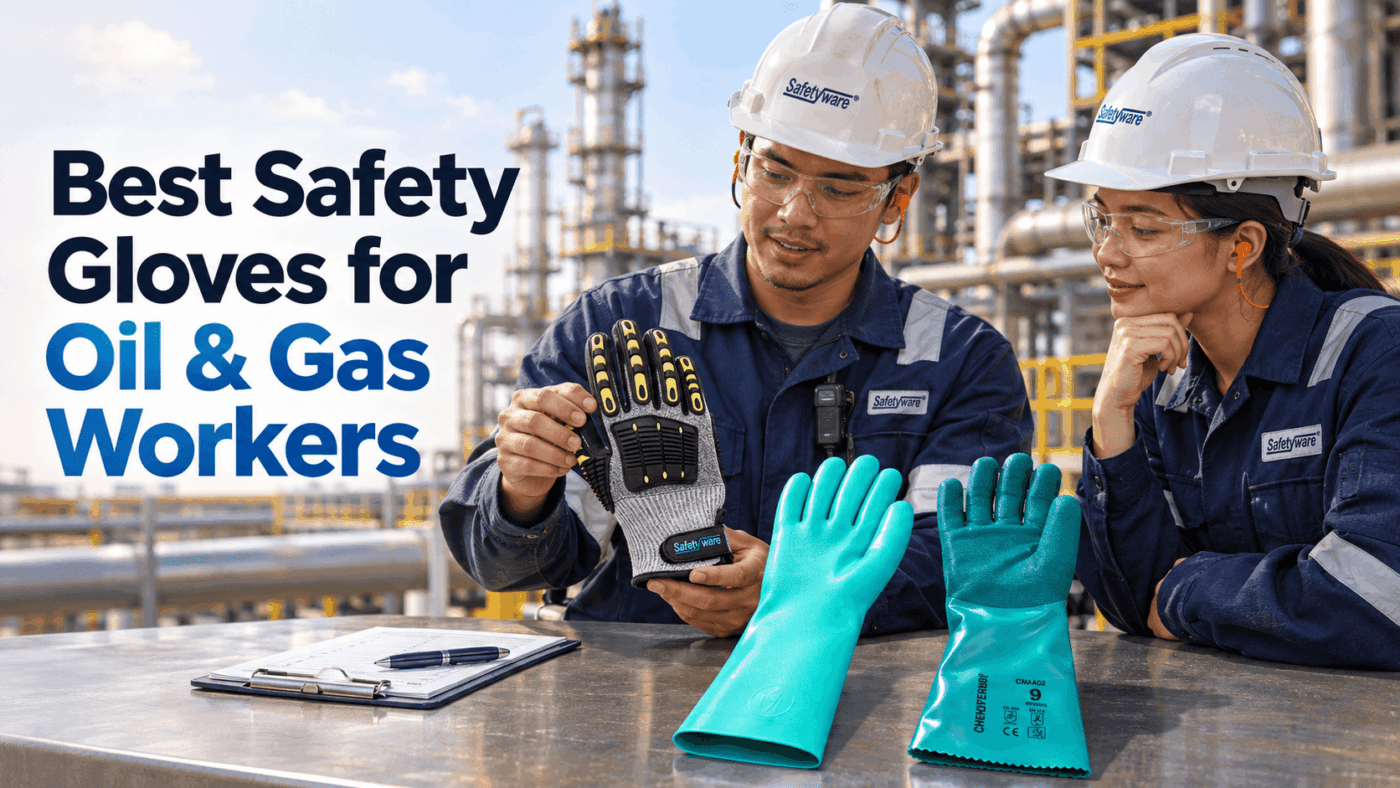
A worker handling pipe fittings needs control and protection against mechanical hazards. A technician taking a chemical sample needs a glove proven suitable for that substance. A maintenance worker handling hot components faces a different selection problem again.
The best safety gloves for oil and gas workers are therefore the gloves that match the task, exposure and wearer. Buying one heavily padded glove for everyone may leave chemical hazards unresolved. Choosing every glove by its cut rating can overlook impact, heat or loss of grip.
This guide explains which glove categories to consider, how to interpret the relevant standards and which SAFETYWARE products to shortlist for technical review. It is a task-based buying guide, not a claim that one model is best for every oilfield, terminal or refinery job.
Which safety gloves are best for each oil and gas task?
Start with this selection matrix, then confirm the required performance through the site risk assessment. The categories describe options to evaluate, not automatic approval for a job.
| Task or exposure | Glove category to assess | Evidence to request | Key limitation |
|---|---|---|---|
| Handling tools and secured pipe components | Impact- and cut-resistant gloves with suitable grip | Mechanical ratings, back-of-hand impact test results and wearer trial | Padding does not make crush or pinch points safe. |
| Handling sharp components during isolated maintenance | Cut-resistant gloves | Relevant cut test method, rating and coverage | Cut resistance does not establish chemical resistance. |
| Chemical sampling or cleaning | Chemical-resistant gloves or gauntlets | Data for the exact substance, concentration and contact conditions | A material name such as nitrile is not enough. |
| Handling chemically contaminated sharp components | Gloves with both chemical and mechanical protection | Separate evidence for each hazard | Neither rating should be inferred from the other. |
| Contact with hot components | Thermal-protective gloves | Performance for the relevant heat exposure and intended contact conditions | A heat rating is not permission for unlimited contact. |
| Electrical intervention | Electrical protective gloves selected by qualified personnel | Appropriate electrical performance, inspection and test records | Ordinary industrial rubber or nitrile gloves are not a substitute. |
| Precision inspection with low mechanical exposure | Dexterous gloves meeting the assessed minimum protection | Fit, grip and ability to operate the tools safely | Extra bulk can interfere with control. |
Before selecting gloves, reduce the hazard through isolation, guarding, tools and safer handling methods. NIOSH places PPE after elimination, substitution, engineering and administrative controls in the hierarchy of controls. [1]
Understand glove standards without confusing them with law
Performance standards help buyers compare protection under defined tests. They do not, by themselves, establish a universal legal requirement for all oil and gas sites.
For example, US OSHA’s 29 CFR 1910.138 requires appropriate hand protection for identified hazards and bases selection on performance, tasks, conditions and duration. That is a US legal provision, not a rule automatically applicable to a Southeast Asian workplace. Buyers elsewhere should verify the law and product acceptance requirements for their own jurisdiction, alongside operator specifications. [2]
Current references to check
| Reference | Main purpose | How buyers should use it |
|---|---|---|
| EN 388:2016+A1:2018 | Mechanical risks, including abrasion, cut, tear, puncture and optional impact testing | Read the individual results rather than treating the marking as one overall score. |
| ANSI/ISEA 105-2024 | Classification of hand protection performance | Check the claimed properties and exact test documentation. The 2024 update standardises the pictogram showing abrasion, cut and puncture ratings. |
| ANSI/ISEA 138-2019 | Back-of-hand impact performance | Compare documented impact classifications for the fingers and knuckles. |
| ISO 374-1:2024 | Chemical-protective glove requirements | Combine the marking with chemical-specific compatibility and permeation information. |
| EN 407:2020 | Protection against thermal risks from heat and/or fire | Identify which thermal properties were tested and the reported performance. |
These editions were checked against BSI, ISO, ANSI and ISEA sources on 13 November 2026. ISO editions and regional EN adoptions can carry different publication dates; use the exact designation on the product documents rather than silently substituting one for another. [3–7]
ISEA states that the 2024 revision of ANSI/ISEA 105 did not make major changes to test methods or protection levels. It also warns against wording that implies ANSI has approved or certified a glove. Ask for evidence of conformity to the claimed standard and classification. [4]
Best for mechanical handling: balance impact, cut resistance and grip
Back-of-hand protection needs its own evidence
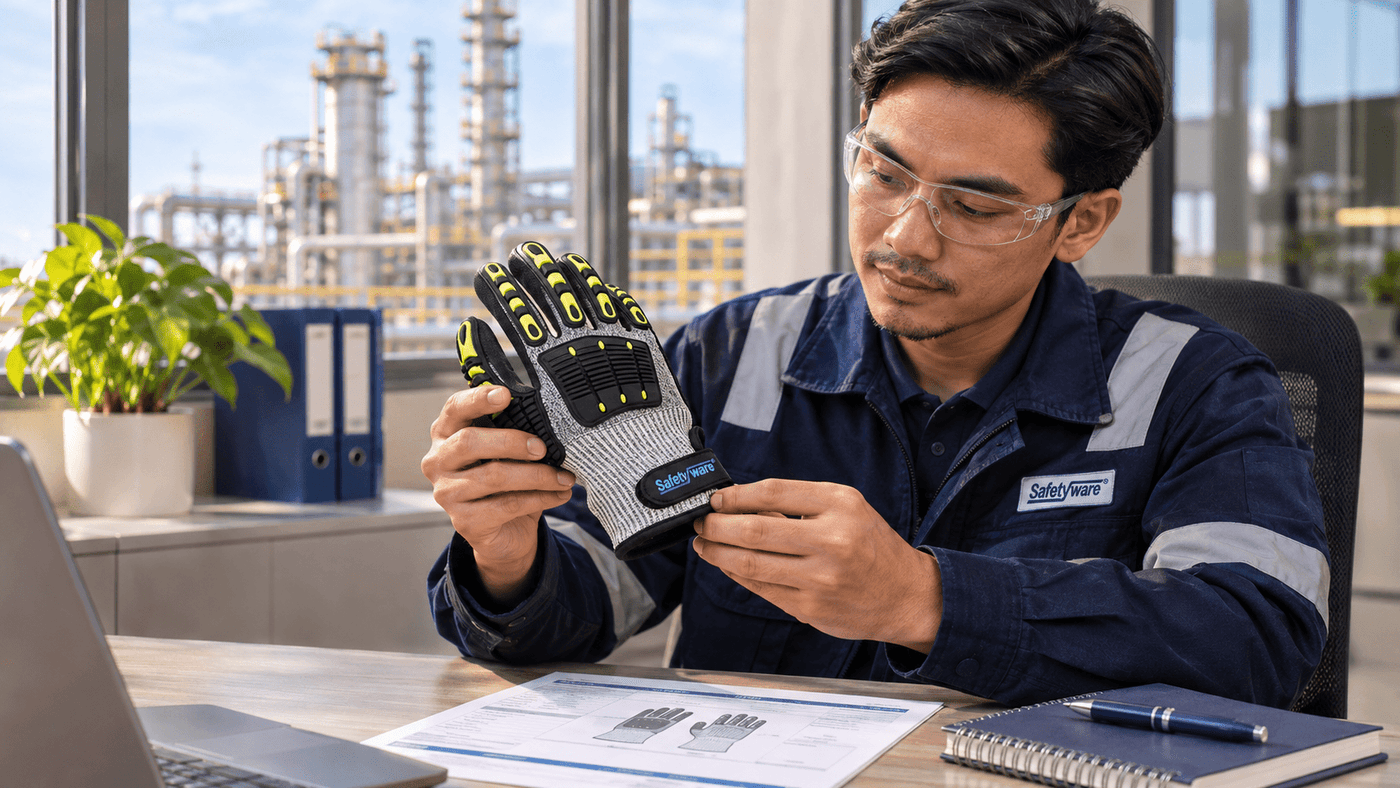
ANSI/ISEA 138 evaluates impact protection at the back of the hand and provides three performance levels. It gives buyers a structured way to compare products, rather than judging protection from the appearance or thickness of moulded padding. [5]
An impact classification does not establish protection against every crushing event. Keep hands away from trapped-energy zones, suspended loads and closing gaps. Suitable handling tools and positioning remain essential.
Cut resistance is a separate property
Under EN 388, the letter-based cut result runs from A to F and relates to the EN ISO 13997 test. Other positions in the marking describe other properties; an optional P indicates a passed impact test. An X can indicate an untested property. [8]
Do not directly equate an EN cut letter with an ANSI/ISEA cut classification without checking the underlying test information. Most importantly, “cut-resistant” does not mean cut-proof.
Grip deserves a realistic trial
Workers may handle smooth metal, oily tools or damp fittings. Ask them to evaluate the proposed glove with representative, safely controlled materials and tasks. Check whether it allows secure tool control without excessive effort or frequent repositioning.
A textured nitrile palm can be a grip feature, but it does not establish a chemical barrier across the whole hand. The back, seams and cuff may have different construction or coverage.
Best for chemical work: select against the actual substance
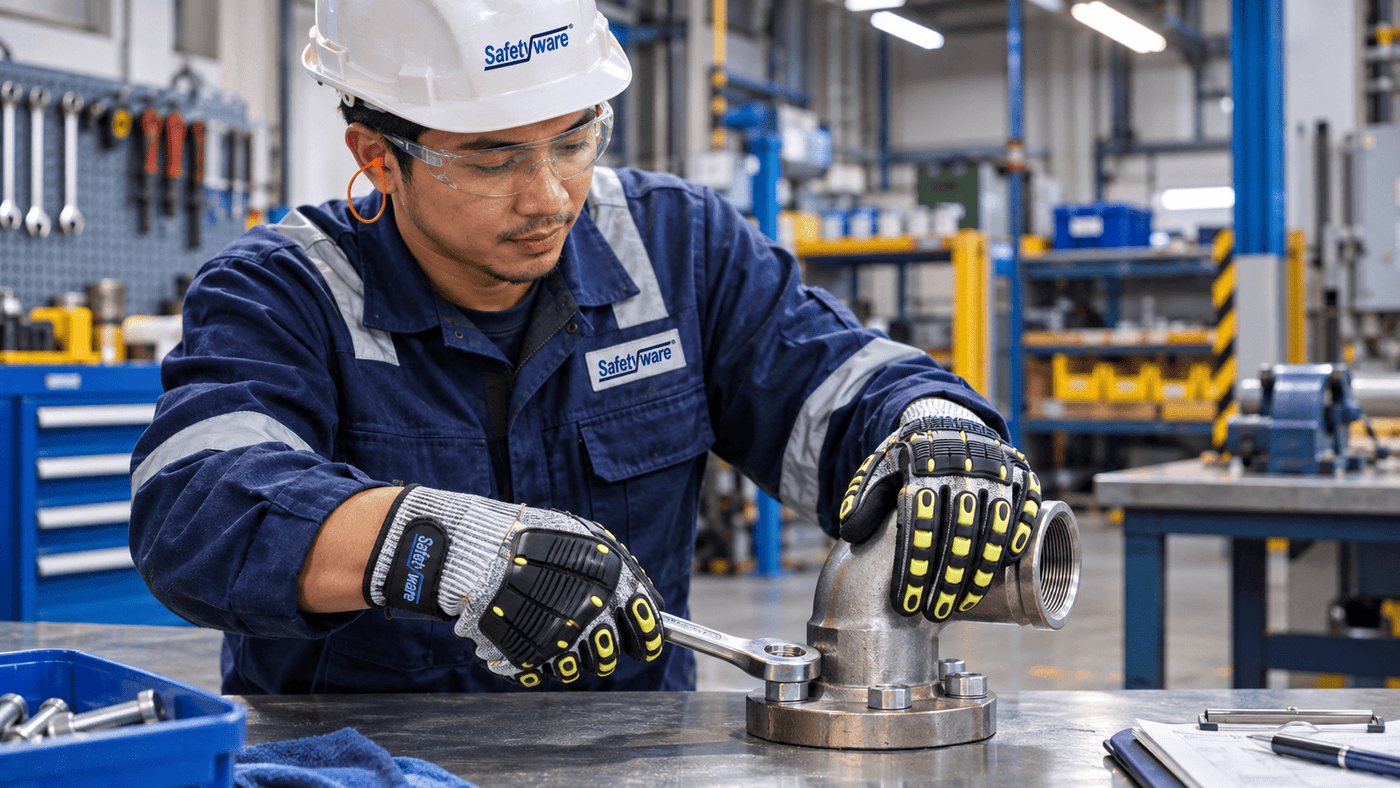
No glove material protects against every chemical. HSE advises using manufacturer data and considering the substance, other hazards, contact duration, wearer and task. Performance can vary between manufacturers, and data for a pure chemical may not represent a mixture. [9]
Before recommending a chemical glove, provide the supplier with:
- The chemical name and safety data sheet.
- Concentration and mixture composition, where known.
- Process and contact temperature.
- Expected splash, intermittent contact or immersion conditions.
- Likely contact duration and frequency.
- Any simultaneous cut, abrasion or thermal hazard.
Three terms worth understanding
Penetration means passage through holes, seams or defects. Permeation means movement through the glove material at a molecular level. Degradation means the material changes after chemical contact, such as swelling, softening or cracking. These describe different failure mechanisms. [8,9]
A laboratory breakthrough result is not a universal safe wearing time. Agree a replacement schedule using the manufacturer’s advice and actual operating conditions. Do not wait for a visible hole before considering chemical exposure.
Also review cuff length and the interface with sleeves. Select the arrangement for the expected direction of splash and the rest of the protective clothing system.

Best for heat exposure: check the specific thermal risk
Contact with a hot surface is different from flame exposure, radiant heat or molten splash. EN 407 covers thermal risks, but a reference to the standard alone does not tell you which properties a particular glove provides. [7]
Describe the work precisely when asking for a recommendation: the component, surface temperature, contact duration, handling method and any contamination. Review the test results and manufacturer’s intended use before approving a glove.
Do not assume a chemical glove’s thermal marking makes it suitable for welding or firefighting. Likewise, a mechanical glove with back-of-hand padding should not be treated as flame-protective without supporting evidence.
Avoid turning gloves into a new hazard
Rotating machinery requires a specific decision
HSE warns that gloves can become entangled in drills, lathes and other rotating machinery. Do not apply a blanket “gloves everywhere” rule where entanglement is possible. Guarding, isolation and the authorised operating procedure must control the task. [10]
Fit and condition matter throughout the shift
During a wearer trial, check finger length, palm fit, cuff security and the ability to operate required controls. Include the sizes actually needed across the workforce.
Before use, inspect for damage, detached padding, worn grip surfaces and contamination. Follow the manufacturer’s cleaning and storage instructions; washing or solvent cleaning is not automatically acceptable for every model. Establish clear disposal or quarantine arrangements for gloves that no longer meet the selection criteria.
Train workers to remove contaminated gloves without transferring residue to their skin. Keep replacement stock accessible so a damaged pair does not remain in service because the correct size is unavailable.
Buyer checklist: turn a shortlist into an approved glove
A strong purchasing specification answers the following questions:
| Check | What to record |
|---|---|
| Task | The operation, location and expected handling conditions |
| Hazards | Mechanical, chemical, thermal or electrical exposure requiring protection |
| Required performance | Standard, edition and minimum task-relevant results |
| Model evidence | Datasheet, conformity documentation and relevant test reports |
| Chemical evidence | Substance, concentration, temperature and contact limitations |
| Wearer trial | Fit, grip, dexterity and compatibility with other PPE |
| Use controls | Inspection, cleaning, storage, replacement and training |
| Supply | Sizes, quantities, lead time and approved substitution process |
As a practical approach, standardise a small number of clearly defined glove categories rather than one universal glove. For example, distinguish mechanical handling, chemical contact and specialist thermal or electrical tasks. Make the task-to-model allocation easy for supervisors and workers to understand.

SAFETYWARE Products and Solutions
The SAFETYWARE product directory includes glove ranges for different hazards. The following models are useful starting points for a documented shortlist. These are conditional options, not a ranking based on independent comparative testing.
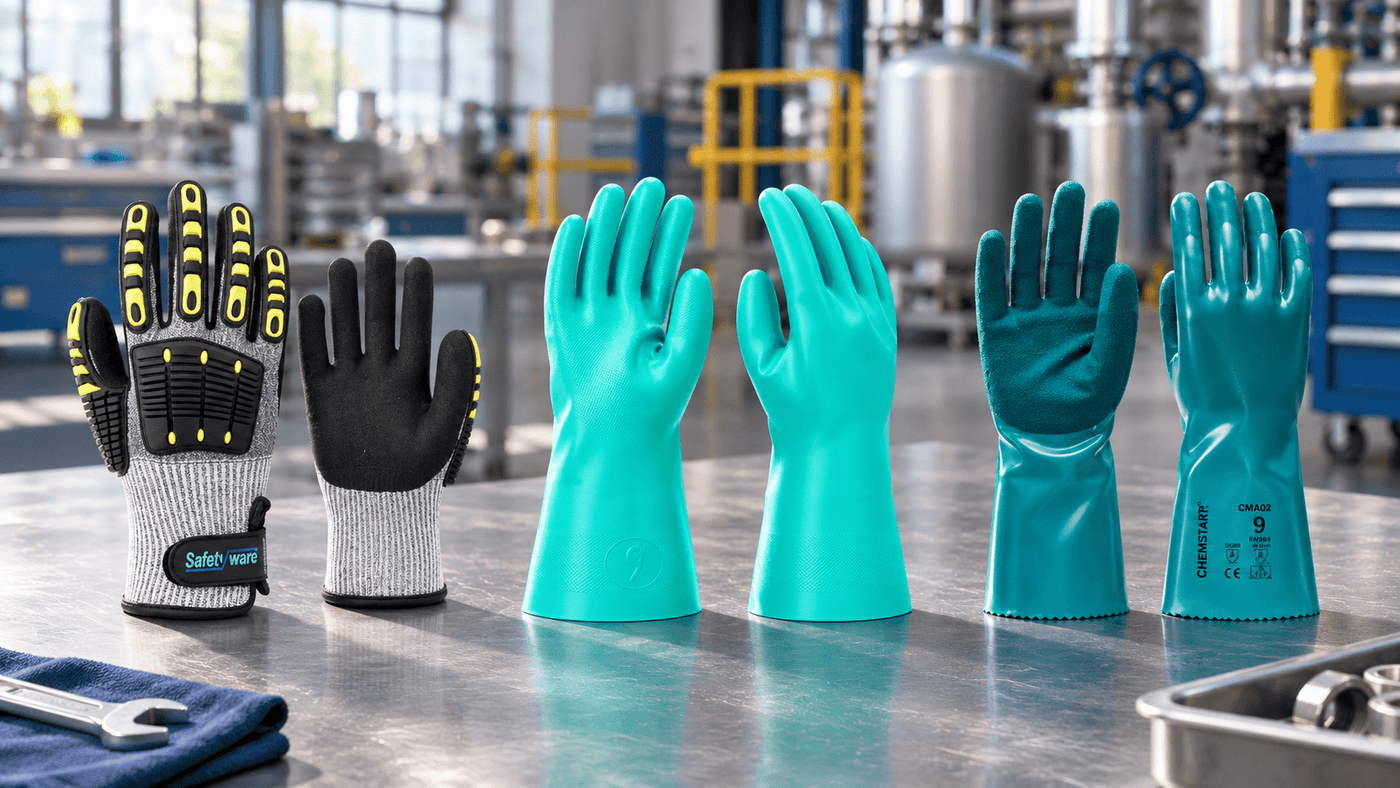
For assessed mechanical handling: ImpactGuard™ IMP01
The official SAFETYWARE ImpactGuard™ IMP01 page lists a 13-gauge HPPE blend liner, sandy nitrile palm coating and EN cut level F. This makes it a candidate to review where cut resistance, grip and back-of-hand protection are relevant.
Request the current complete mechanical marking and impact test evidence before assigning it to a task. The verified page does not establish an ANSI/ISEA 138 level, so this article does not assign one. Do not treat its palm coating as proof of chemical protection.
For chemical-handling assessment: Chem-Pro™ GNF1513
The official SAFETYWARE Chem-Pro™ GNF1513 page lists a flocklined nitrile glove approximately 0.38 mm thick and 330 mm long, with a recessed diamond palm pattern.
Review it against the actual chemical data and required contact conditions. Its published standard references include EN ISO 374-1:2016+A1:2018; do not relabel the product as certified to ISO 374-1:2024 merely because a newer international edition exists. Obtain current model documents for the intended market.
For combined chemical and cut hazards: ChemArmor+™ CMA02
The official SAFETYWARE ChemArmor+™ CMA02 page lists an HPPE blend liner, nitrile coating, sandy-grip palm and EN cut level D. Its stated length is approximately 350 mm.
Consider it where the assessment identifies both chemical and mechanical exposure, subject to model-specific compatibility and performance evidence. Confirm the complete current markings and limitations rather than relying on the product name alone.
For other exposure profiles
Explore the official impact-resistant glove range, chemical-resistant glove range and heat-resistant glove range.
Send SAFETYWARE the task description, hazards, required standards, chemical information, sizes and quantities. That gives the technical and sales teams a practical basis for discussing suitable models, samples and documentation.
Conclusion
The best safety gloves for oil and gas workers combine the protection required for the task with fit, grip and usable dexterity. Assess impact, cuts, chemicals and heat separately, then check whether the selected model addresses all relevant hazards.
Build a documented shortlist, run controlled wearer trials and establish clear inspection and replacement arrangements. With that information, SAFETYWARE can help buyers evaluate suitable glove options without relying on broad labels or appearance alone.
Sources and references
Primary and official sources reviewed on 13 November 2026:
- NIOSH — Hierarchy of Controls.
- US OSHA — 29 CFR 1910.138: Hand protection.
- BSI — Current EN 388 edition.
- ISEA — ANSI/ISEA 105-2024 update and standards catalogue.
- ISEA — Impact-resistant hand protection white paper; ANSI — ANSI/ISEA 138-2019.
- ISO — ISO 374-1:2024.
- BSI — Current EN 407 edition.
- European Agency for Safety and Health at Work — Protective gloves.
- UK HSE — Choosing gloves to protect skin, used for selection principles rather than its older standard references.
- UK HSE — Using the right type of PPE.
- SAFETYWARE — Product directory and official model/category links in the products section.
📞 Need More Information?
Want to know which PPE best fit the Oil and Gas Industry?
Explore SAFETYWARE’s safety shoes and workplace PPE range at
👉Safetyware Catalogs
Our safety specialists can help evaluate workplace hazards, recommend suitable safety helmets, and support compliance with Malaysia workplace safety requirements.
If you need a quotation, feel free to contact us at:
📩 Email: [email protected]
📞 Tel: WhatsApp Us