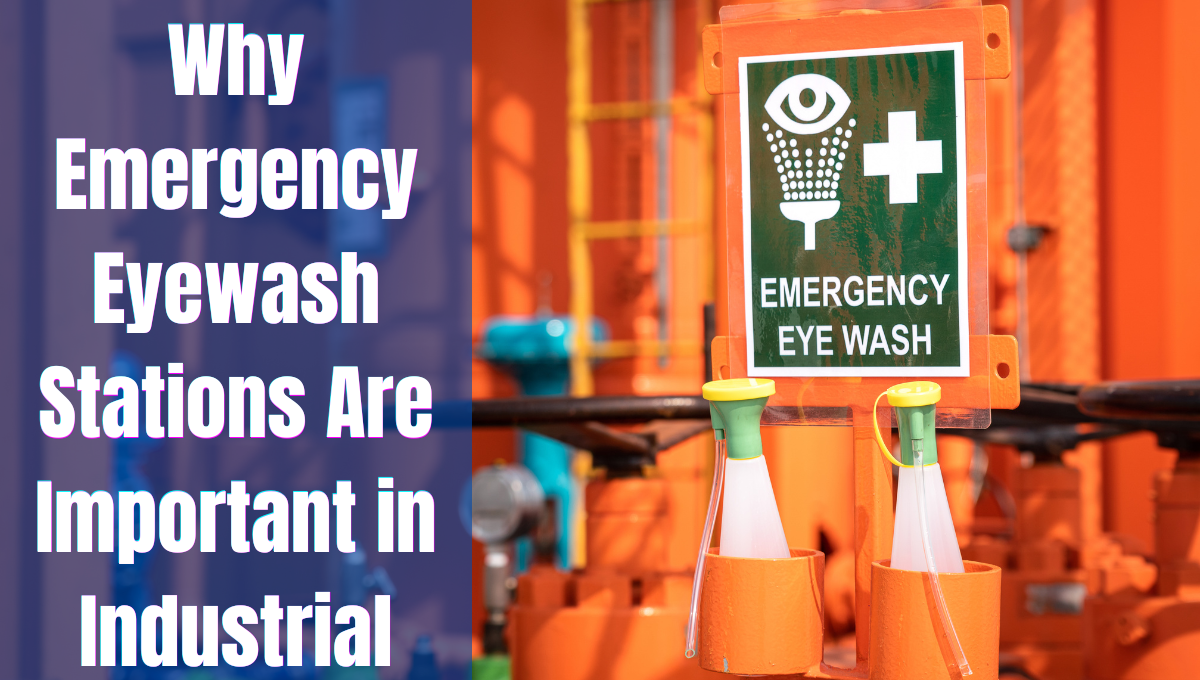
Eye injuries can happen within seconds in industrial workplaces. Chemical splashes, dust, flying particles, and hazardous liquids can cause serious eye damage without immediate treatment.
An emergency eyewash station helps reduce injury severity by flushing harmful substances from the eyes quickly. Proper emergency response equipment is essential for protecting workers in manufacturing, laboratories, food processing, chemical handling, and construction industries.
In Malaysia, many industries rely on emergency eyewash systems to support workplace safety compliance and improve emergency preparedness.
Why Emergency Eyewash Stations Are Important
An emergency eyewash station provides immediate flushing when hazardous materials enter the eyes. Fast response is critical because delays can increase injury severity.
Common workplace incidents include:
- Chemical splashes
- Dust exposure
- Metal particles
- Hazardous liquid contact
- Smoke and airborne irritants
Without proper eye flushing, workers may suffer:
- Eye irritation
- Corneal damage
- Vision impairment
- Permanent blindness
Emergency eyewash systems help minimize long-term injuries and improve worker safety.
Common Industries That Require Emergency Eyewash Stations
Many workplaces in Malaysia require emergency eyewash equipment due to exposure risks.
Industries commonly using eyewash stations include:
- Manufacturing
- Chemical processing
- Laboratories
- Pharmaceutical industry
- Food processing
- Oil and gas
- Construction
- Electronics manufacturing
These industries often involve hazardous substances that may accidentally contact the eyes.
Types of Emergency Eyewash Stations
There are two common types of emergency eyewash systems used in workplaces:
- Portable Emergency Eyewash
- Fixed Emergency Eyewash
Each type offers different advantages depending on workplace conditions and operational requirements.
What Is a Portable Emergency Eyewash?
A portable emergency eyewash is a self-contained unit designed for locations without direct water supply access.
These units usually include:
- Water storage tank
- Gravity-fed flushing system
- Easy transportation design
- Quick activation mechanism
Portable eyewash systems are commonly used in temporary work areas or remote locations.
What Is a Fixed Emergency Eyewash?

A fixed emergency eyewash station connects directly to a continuous water supply. It is permanently installed in designated hazardous areas.
Fixed systems are commonly installed near:
- Chemical handling stations
- Laboratories
- Production lines
- Battery charging areas
- Hazardous storage rooms
These units provide continuous water flow during emergencies.
Portable vs Fixed Emergency Eyewash Comparison
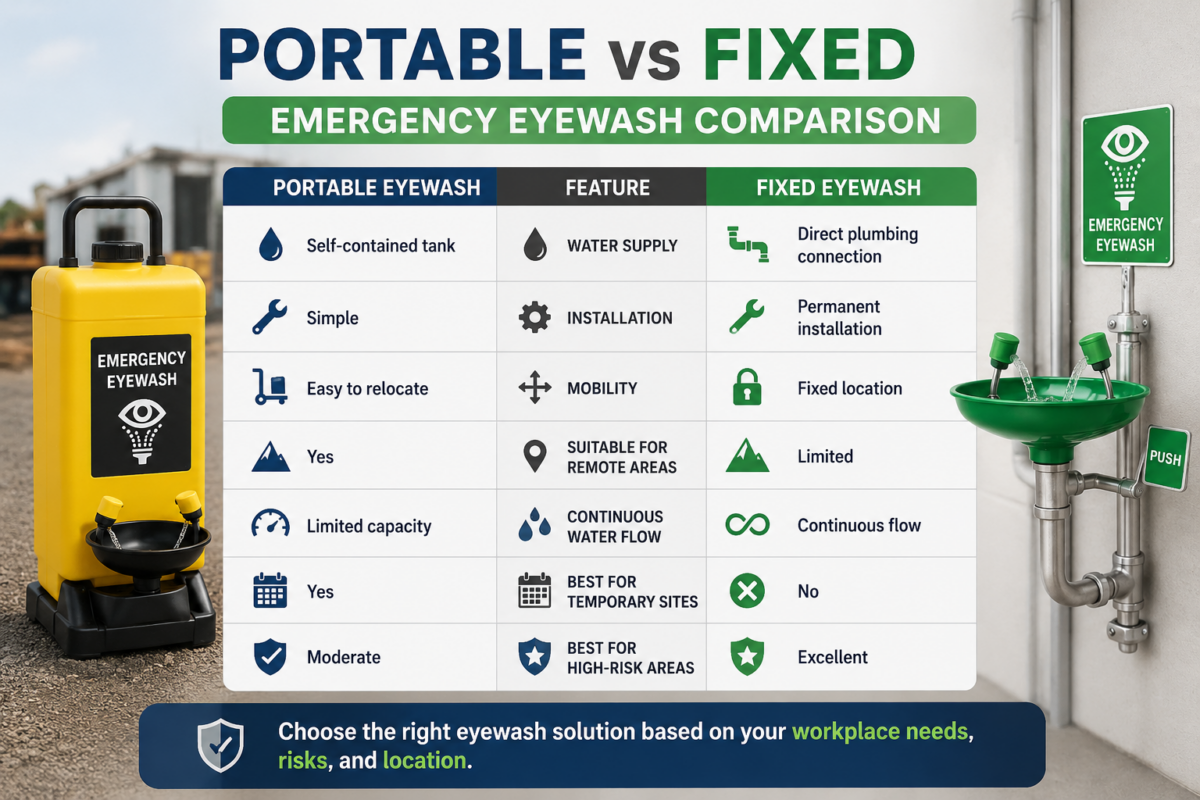
| Feature | Portable Eyewash | Fixed Eyewash |
|---|---|---|
| Water Supply | Self-contained tank | Direct plumbing connection |
| Installation | Simple | Permanent installation |
| Mobility | Easy to relocate | Fixed location |
| Suitable for Remote Areas | Yes | Limited |
| Continuous Water Flow | Limited capacity | Continuous flow |
| Best for Temporary Sites | Yes | No |
| Best for High-Risk Areas | Moderate | Excellent |
Both systems improve workplace safety when properly selected based on operational risks.
How to Choose the Proper Emergency Eyewash System
Choosing the correct eyewash system depends on workplace conditions and hazard levels.
Consider these factors:
- Type of chemical exposure
- Availability of water supply
- Workplace layout
- Mobility requirements
- Risk assessment findings
- Industry compliance requirements
High-risk facilities usually require fixed emergency eyewash systems. Temporary or remote worksites may benefit more from portable units.
Emergency Eyewash Best Practices
To ensure effectiveness, employers should follow proper maintenance and inspection procedures.
Recommended practices include:
- Conduct regular inspections
- Ensure clear access pathways
- Train employees on proper usage
- Replace water regularly in portable units
- Test activation systems routinely
- Install units near hazard areas
Quick accessibility is critical during emergencies.
Safety Standards and Compliance for Emergency Eyewash
Emergency eyewash systems should comply with recognized workplace safety guidelines.
Relevant standards include:
- DOSH Malaysia workplace safety requirements
- ANSI Z358.1 emergency eyewash guidelines
- ISO workplace safety systems
- EN safety standards
Proper compliance helps improve workplace safety readiness and emergency response effectiveness.
Why Choose SAFETYWARE Emergency Eyewash Solutions
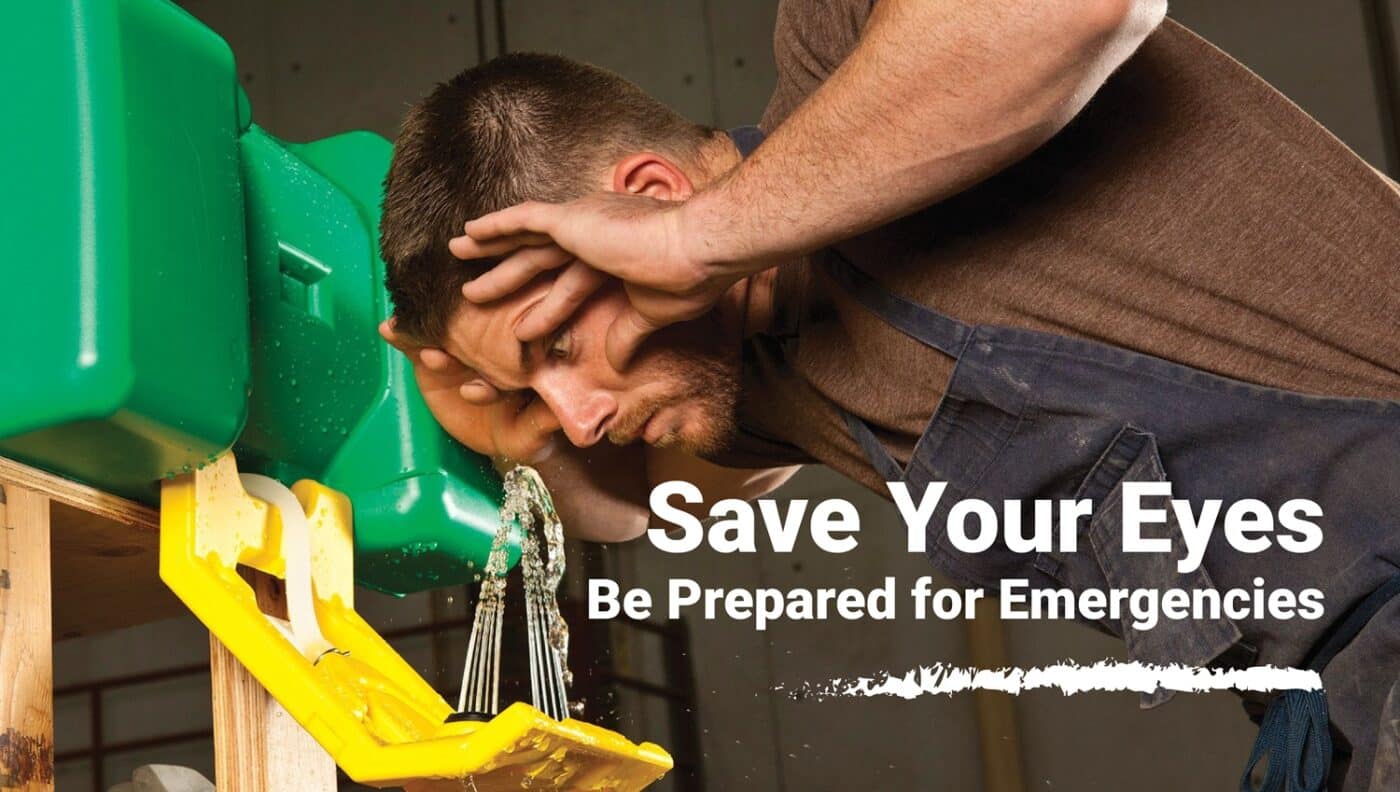
Safetyware provides reliable emergency response equipment designed for industrial workplaces.
Key advantages include:
- Durable industrial-grade construction
- Easy operation during emergencies
- Suitable for Malaysia industrial environments
- Compliance with recognized safety standards
- Cost-effective workplace safety solutions
Safetyware supports industries with practical and reliable emergency preparedness equipment.
Conclusion
Emergency eyewash stations play an essential role in workplace safety. Immediate eye flushing can reduce serious injuries and protect workers from permanent damage.
Portable emergency eyewash systems provide flexibility and mobility for temporary or remote worksites. Fixed emergency eyewash stations offer continuous protection for high-risk industrial environments.
Selecting the right system depends on workplace hazards, operational needs, and safety compliance requirements.
Investing in proper emergency response equipment helps create safer workplaces and improves emergency preparedness across industries.
Frequently Asked Questions (FAQs)
1. Why is an emergency eyewash station important?
Emergency eyewash stations help flush hazardous substances from the eyes immediately after exposure.
2. What is the difference between portable and fixed emergency eyewash systems?
Portable units are movable and self-contained, while fixed systems connect directly to a water supply.
3. Which industries require emergency eyewash stations?
Manufacturing, chemical processing, laboratories, food processing, and construction industries commonly require them.
4. How often should emergency eyewash stations be inspected?
Regular inspections should follow workplace safety procedures and manufacturer recommendations.
5. What standard applies to emergency eyewash systems?
ANSI Z358.1 is one of the most recognized emergency eyewash safety standards.
Looking for reliable emergency eyewash solutions for your workplace?
Explore Safetyware emergency response equipment and PPE solutions today at:
Safetyware Emergency Eye Wash & Shower
Contact our team for industrial safety recommendations and emergency preparedness solutions.
Explore more industrial PPE solutions here:
Comprehensive Workplace Safety Equipment, PPE & Signage – Safetyware Group
wear wisely, work Safely – with Safetyware! ✨
If you need a quotation, feel free to contact us at:
📩 Email: [email protected]
📞 Tel: WhatsApp Us