
Thermal Resistant Gloves:
Heat, Cold & Welding Hand Protection
From foundry and oven work at 1000°C to cryogenic handling at −196°C — understand EN 407, EN 511, and EN 12477 performance levels and select the right thermal glove for every hazard.
Thermal Hand Hazards in the Workplace
Thermal injuries to the hands rank among the most painful and debilitating workplace injuries. Burns — whether from contact heat, convective heat, flame, radiant heat, molten metal splashes, or extreme cold — can cause permanent damage requiring skin grafts, amputation, or result in long-term disability. In Malaysia’s manufacturing, food and beverage, oil and gas, electronics, automotive, and construction industries, thermal hand hazards are extremely common.
Thermal glove selection is not simply a matter of choosing the “highest heat rating.” The nature of the thermal hazard — contact, convective, radiant, or flame — determines which material and construction is appropriate. A glove excellent for oven use may be wholly inadequate for welding, and a welding glove may provide no meaningful protection against cryogenic liquids. This guide covers both heat and cold protection, and the specific requirements for welding.
EN 407:2004+A1:2008 — Heat and Fire Resistant Gloves
EN 407 is the European standard for protective gloves against thermal risks. It tests gloves against six distinct performance parameters, each rated on a scale of 0–4 (with some parameters up to level 4 and some additional). The six-digit code displayed on the glove’s EN 407 marking corresponds to each of these parameters in sequence.
EN 407 — Six-Parameter Heat Protection Code
EN 407 Heat-Resistant Glove Materials
Different thermal hazards call for different materials. The following materials are commonly used in EN 407-rated gloves:
- Para-aramid (Kevlar®, Nomex®) — excellent heat resistance up to 350°C contact, self-extinguishing, good cut resistance; widely used in oven, furnace, and glass handling applications.
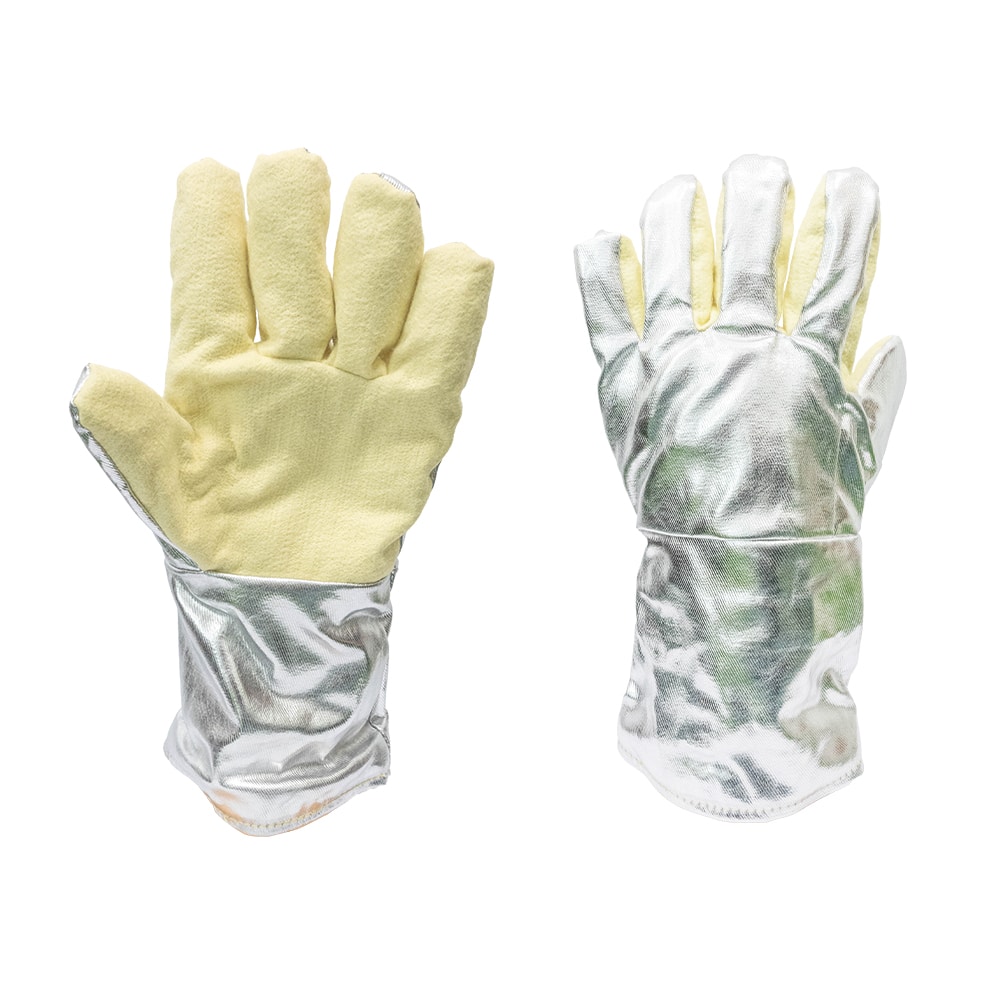
- Aluminized fabrics — reflective metallic coating dramatically reduces radiant heat absorption; used in foundry, casting, and high-temperature industrial environments. Often layered over aramid or terry cotton inner.
- Terry cotton / Towelling — thick loop-pile cotton provides insulation from moderate dry heat (up to 200–250°C); cost-effective for general oven and baking applications.
- Silicone — heat-resistant up to 300°C, excellent grip on hot surfaces; used in food, automotive, and general heat handling.
- Carbon fibre composites — used in specialist high-temperature applications where both heat resistance and some structural integrity are required.
Selecting Heat Gloves by Application Temperature
EN 511:2006 — Cold Resistant Gloves
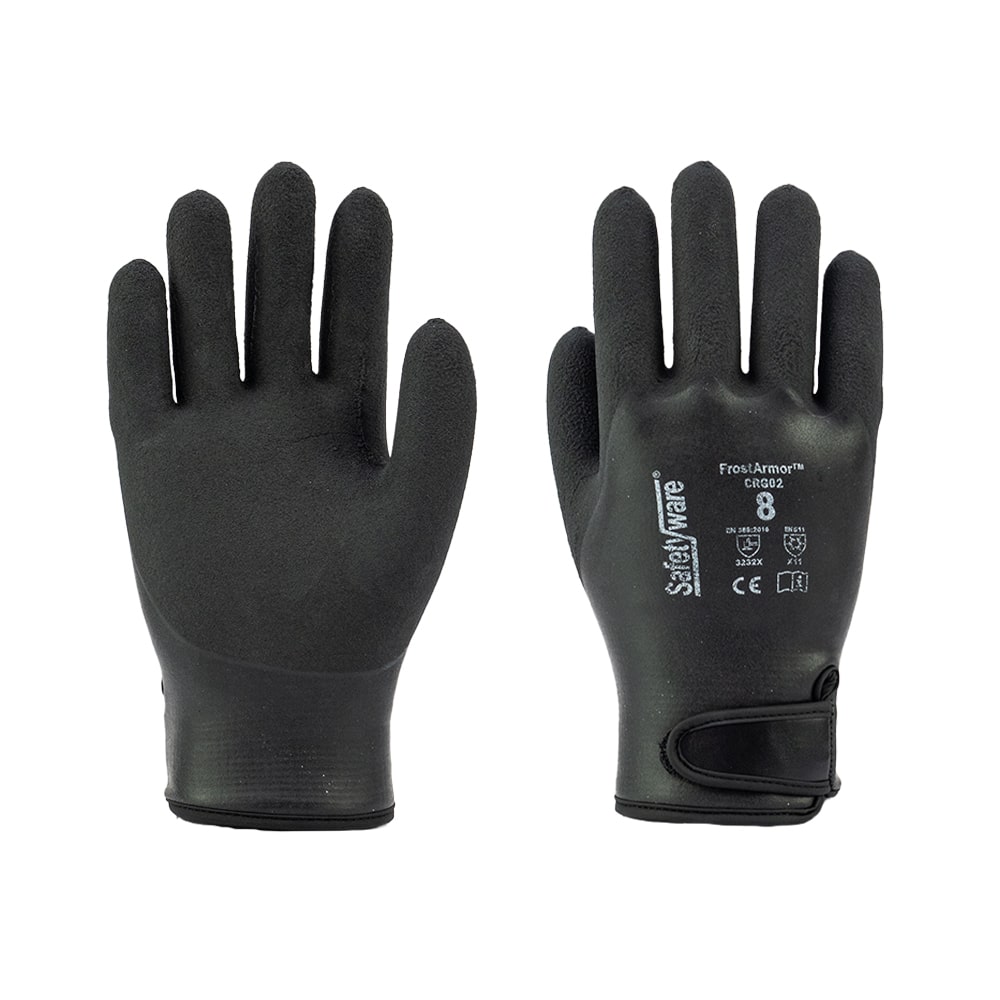
EN 511 governs protective gloves against cold. The standard tests three parameters, each rated 0–4, and the three-digit code is displayed on the glove’s EN 511 marking alongside the snowflake pictogram.
| EN 511 Parameter | Description | Levels | Key Application |
|---|---|---|---|
| ① Convective Cold | Resistance to heat loss through convection (cold air) | 0–4 (0 = not tested; 4 = maximum insulation) | Cold store, outdoor cold weather work, refrigerated trucks |
| ② Contact Cold | Resistance to cold transfer when touching cold surfaces | 0–4 (0 = not tested; 4 = maximum resistance) | Handling frozen products, cold metal, ice, refrigerated machinery |
| ③ Water Permeability | Resistance to water penetration | 0 = not waterproof; 1 = waterproof | Outdoor, wet-cold environments; handling wet-frozen materials |
Cryogenic (Ultra-Low Temperature) Gloves
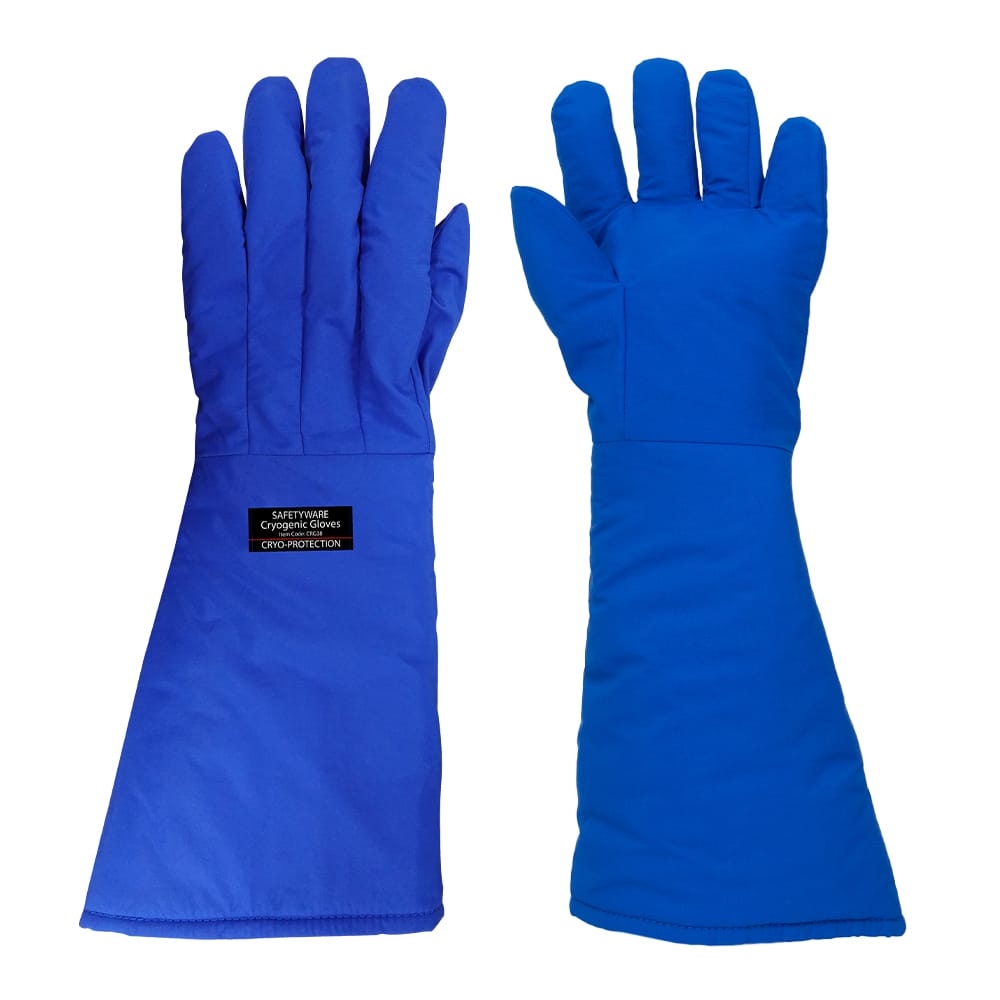
For handling liquid nitrogen (−196°C), liquid oxygen, dry ice (−78°C), and other cryogenic materials, standard cold-rated gloves are insufficient. Cryogenic gloves are specifically designed to prevent thermal shock injury from contact with extremely cold liquids and gases. Key requirements for cryogenic gloves include:
- Deep insulation with air gap layer to prevent immediate thermal shock
- Loose-fitting design to allow rapid removal if cryogenic liquid enters the glove
- EN 511 ratings at the maximum levels (typically 4/4/1)
- Materials that do not become brittle at cryogenic temperatures
- Training: workers must never wear tight-fitting gloves with cryogenic liquids — a splash inside a tight glove cannot be shaken off and will cause severe burns
EN 12477 — Welding Gloves: Type A and Type B
Welding presents a combination of thermal hazards: UV and infrared radiation, arc flash, molten metal spatter, hot surfaces, and conductive heat from workpieces. EN 12477 is the specific standard for protective gloves for welders. It defines two types based on the balance between heat protection and dexterity:
EN 12477 Type A
Higher protection level — designed for heavy welding (MIG, MMA) where maximum heat and spatter protection is needed. Greater stiffness; reduced dexterity.
- Higher EN 407 performance requirements
- Heavier leather construction (typically split cowhide or pig grain)
- Used for: MIG/MAG welding, MMA (stick) welding, grinding
- Gauntlet style — long cuff protects wrist and forearm
EN 12477 Type B
Lower protection, higher dexterity — designed for TIG welding and precision work where tactile sensitivity is critical. Lighter construction.
- Lower EN 407 requirements — less heat protection
- Thinner leather (typically goatskin or deerskin)
- Used for: TIG welding, plasma cutting, fine assembly
- Better finger articulation and tactile feedback
⚠ Warning: Welding Gloves Are Not Designed for Touch/Grip Tasks
Welding gloves are specifically designed to protect against the thermal hazards of welding — they are not general-purpose heat-resistant gloves. Using a welding glove for tasks such as oven handling or food production may not provide the appropriate type of thermal protection. Always select gloves certified for the specific thermal hazard type.
Safetyware’s Thermal Glove Range
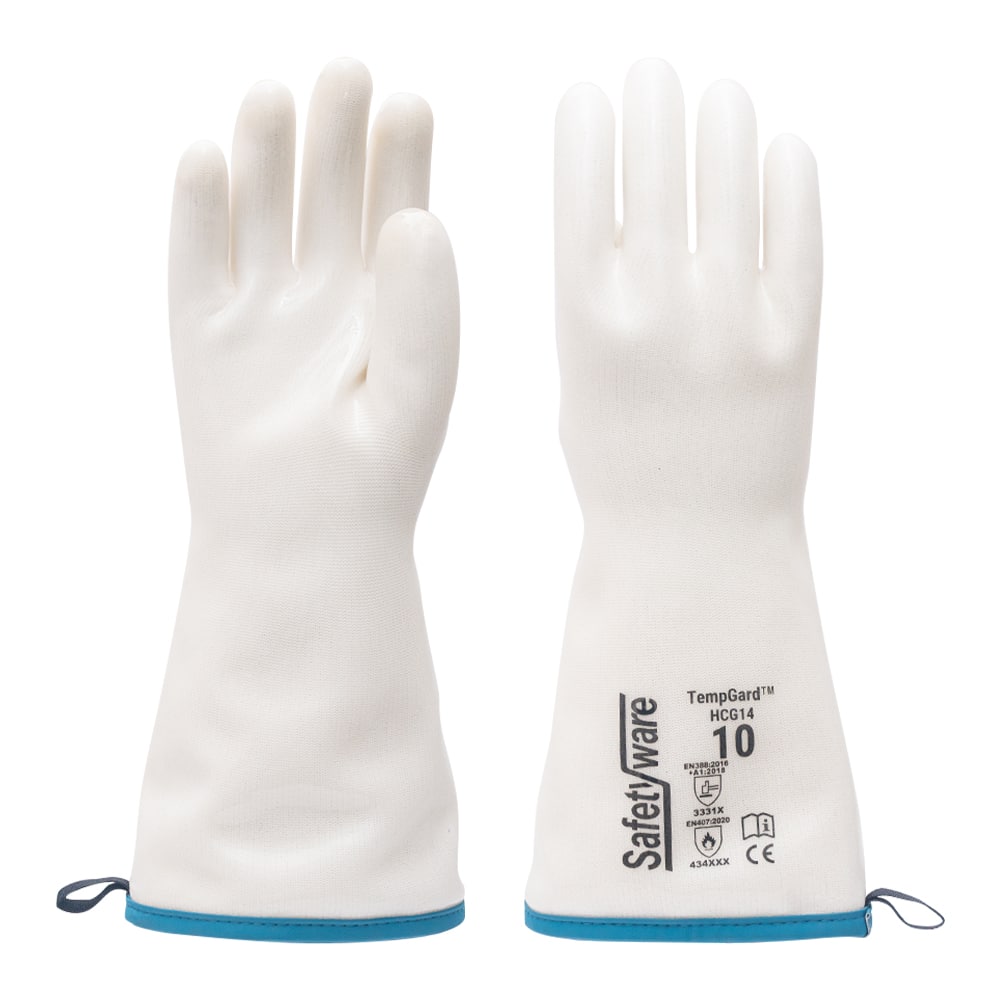
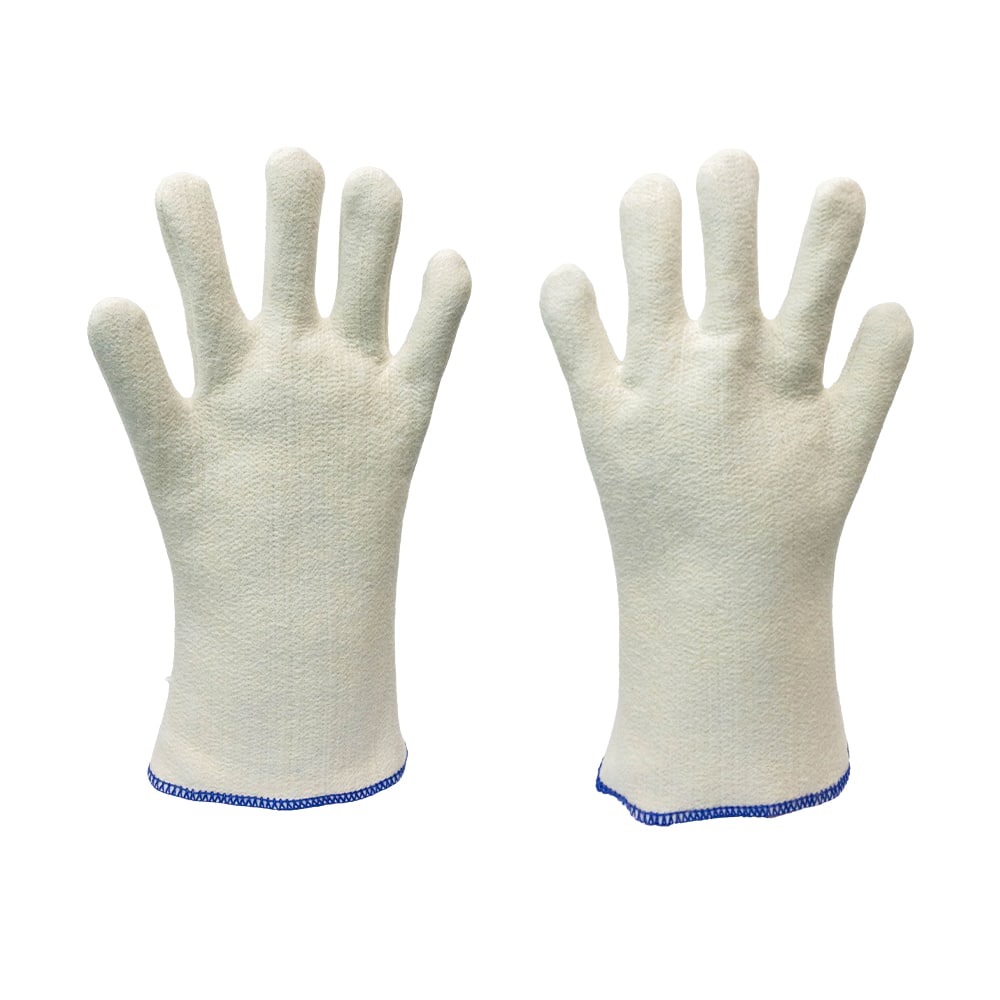
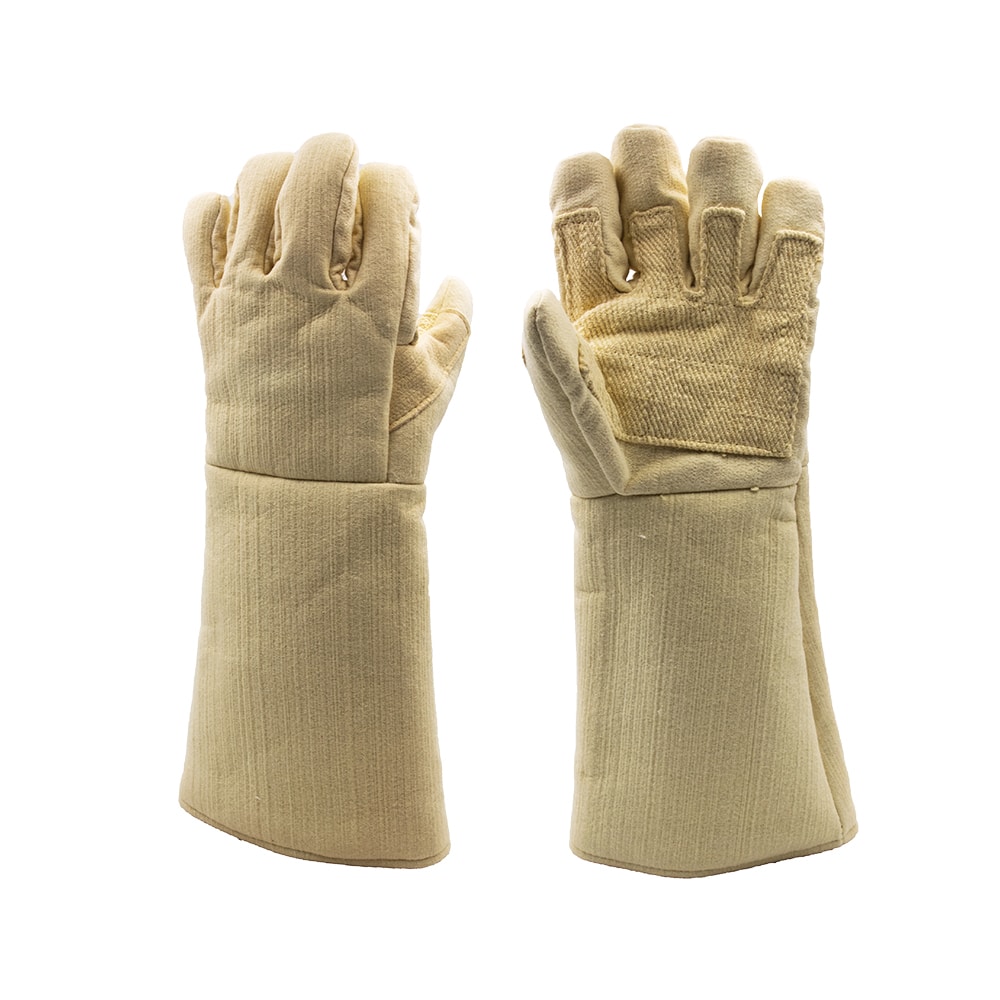
Safetyware Group offers a comprehensive range of thermal gloves for heat, cold, and welding applications across Malaysia, Singapore, Thailand, and the APAC region.
Frequently Asked Questions: Thermal Gloves
The six digits on an EN 407-certified glove correspond to six performance parameters tested in sequence: (1) flammability / flame spread resistance, (2) contact heat resistance, (3) convective heat resistance, (4) radiant heat resistance, (5) resistance to small splashes of molten metal, and (6) resistance to large splashes of molten metal. Each parameter is rated 0–4, with 4 being the highest level of protection, and X indicating the parameter was not tested. For example, a glove marked “4 3 4 2 X X” has maximum flame resistance, 350°C contact heat resistance, and good convective heat protection, but was not tested for molten metal splashes.
EN 12477 (welding gloves) defines two types: Type A provides higher levels of heat, UV, and spatter protection at the cost of dexterity — appropriate for MIG, MAG, and MMA (stick) welding. Type B provides lower heat protection but significantly better dexterity and tactile sensitivity — appropriate for TIG welding and precision work where the welder needs to feel the workpiece and control the electrode closely. Using a Type A glove for TIG welding can result in poor weld quality; using a Type B glove for MIG/MMA welding may result in burn injuries from higher spatter levels.
Standard cold-resistant gloves (EN 511) are designed for cold ambient environments (cold stores, freezers, outdoor cold) — not for contact with cryogenic liquids such as liquid nitrogen (−196°C) or liquid oxygen. Cryogenic liquids require specifically designed cryogenic gloves that provide thermal shock protection and — critically — are loose-fitting so they can be immediately shaken off if cryogenic liquid splashes inside. Tight gloves that trap cryogenic liquid against the skin will cause severe freeze burns. Always use purpose-designed cryogenic gloves and receive training in cryogenic handling before working with these materials.
Para-aramid fibres such as Kevlar® provide continuous heat resistance at temperatures up to approximately 250–300°C, and brief contact resistance up to 350°C (EN 407 Contact Heat Level 3). Aluminized aramid gloves extend radiant heat protection significantly further — reflecting infrared radiation and protecting against brief exposure to sources up to 500°C or higher. However, the specific EN 407 ratings on the glove’s label are the definitive performance reference and must always be matched to the actual temperature and duration of the thermal hazard.
Thick insulated gloves — particularly cryogenic and high-heat gloves — can be a snag hazard if worn near rotating machinery or conveyor systems. HIRARC must consider both the thermal hazard and any mechanical entanglement risk. In some cases, the correct approach is to isolate and de-energise the equipment (lockout/tagout), perform the thermal task, and then re-engage the machinery — rather than wearing bulky thermal gloves simultaneously with machine operation. Never wear loose, bulky thermal gloves near rotating equipment without a specific assessment of the entanglement risk.