
Safety helmet colour codes help workers recognise roles quickly on busy sites, but the meanings are not universal. A white, yellow, blue or green helmet may indicate different responsibilities from one company to another. Employers should therefore publish a site-specific colour chart and explain it during induction.
Why Safety Helmet Colours Matter
A clear helmet colour system supports faster role identification, visitor control and emergency coordination. It can also improve visibility when bright colours are selected for traffic, lifting or low-light work. Colour is an administrative aid, however, not a substitute for hazard controls, training or a correctly specified helmet.
- Role identification: supervisors, visitors, technical trades and emergency responders can be recognised more quickly.
- Site coordination: workers know who to approach for instructions, permits, first response or specialist support.
- Visibility: high-visibility colours can make personnel easier to see around vehicles and mobile plant.
- Induction: a documented colour chart gives employees and contractors one consistent reference.
Common Safety Helmet Colour Code
| Helmet colour | Common role meaning | Typical work setting |
|---|---|---|
| White | Managers, engineers, supervisors or architects | Construction, engineering and project sites |
| Yellow | General workers, plant operators or contractors | Construction, roadwork, warehouses and maintenance |
| Blue | Technical trades, electricians, carpenters or inspectors | Utilities, manufacturing and building services |
| Green | Safety personnel, first aiders, environmental teams or trainees | Industrial plants, laboratories and training areas |
| Red | Fire wardens, emergency responders or rescue teams | Oil and gas, manufacturing and emergency response |
| Orange | Traffic marshals, lifting teams or high-visibility roles | Roads, logistics yards and crane operations |
| Grey | Visitors or temporary personnel on some sites | Controlled visitor areas |
| Brown | Welders or workers near high-heat processes on some sites | Welding, foundries and hot work areas |
| Pink | Trainees, interns or temporary replacement helmets on some sites | Training and large construction projects |
Important: these meanings are widely used conventions, not a universal legal code. Before issuing helmets, check the client specification, principal contractor rules and your organisation’s approved PPE procedure.

White, Yellow, Blue and Green Helmets
White helmets commonly identify people with supervisory or technical authority. Yellow helmets are often issued to general workers and plant operators because the colour is highly visible. Blue helmets may distinguish skilled trades or technical personnel, while green helmets are frequently associated with safety teams, first aiders, environmental personnel or new workers.

Red, Orange, Grey, Brown and Pink Helmets
Red helmets are often reserved for emergency, fire or rescue responsibilities. Orange helmets are useful for traffic-facing and lifting roles where visibility matters. Grey, brown and pink are less consistent between organisations, so their meaning should always be confirmed from the site colour chart.
Helmet Standards and Local Site Rules
Performance standards such as EN 397 and ANSI/ISEA Z89.1 address protective characteristics, marking and testing. They do not prescribe one global colour-to-job mapping. In Malaysia and Singapore, buyers should match the helmet specification to the workplace risk assessment, project requirements and applicable approval or procurement documentation. A colour choice does not make an unsuitable helmet compliant.
How to Set Up a Helmet Colour Policy
- Start with site roles: list the people who need to be recognised quickly, including visitors and emergency teams.
- Keep the palette simple: too many colours make the system harder to remember.
- Document every meaning: display a colour chart at entrances, induction rooms and permit stations.
- Add durable identification: use approved decals, names or role markings where colour alone is insufficient.
- Review changes: update the issue register and helmet marking when a worker’s role changes.
- Check the product specification: confirm shell material, suspension, electrical classification, chin strap and accessories for the hazard.
Choosing Safety Helmets for Malaysia and Singapore
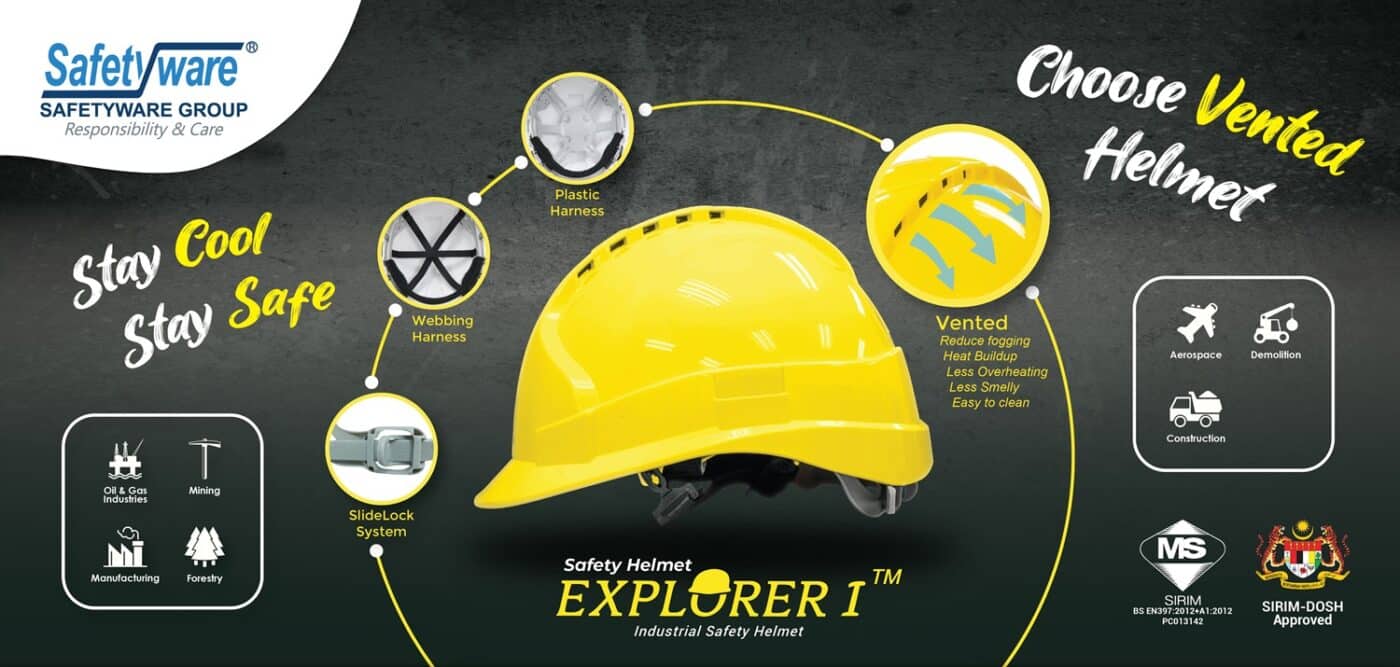
The Safetyware Explorer ITM industrial safety helmet is available in multiple colours for organised site identification. Product selection should still begin with the hazard and required test evidence. Compare impact protection, penetration resistance, flame behaviour, retention system, comfort, compatibility with face and hearing protection, and any project-specific approval requirements.
Browse Safetyware’s head protection range, view the wider PPE catalogue, or contact Safetyware for helmet colour planning, product documentation and a quotation.
Safety Helmet Colour Code FAQ
Is there one official safety helmet colour code?
No. Common conventions exist, but colour meanings vary by employer, project and country. The written site policy and induction briefing should be treated as the authoritative reference.
What colour helmet does a safety officer wear?
Green is often used for safety officers, first aiders or new workers, but some organisations use a different colour. Confirm the role against the site’s own helmet colour chart.
Does helmet colour affect protection?
The colour itself does not determine the protection level. Select the helmet from the hazard assessment and applicable performance standard, then choose a colour that supports site communication and visibility.
Technical review: Safetyware EHS Consultancy and Safetyware Academy technical team. Last reviewed: 19 August 2026.