

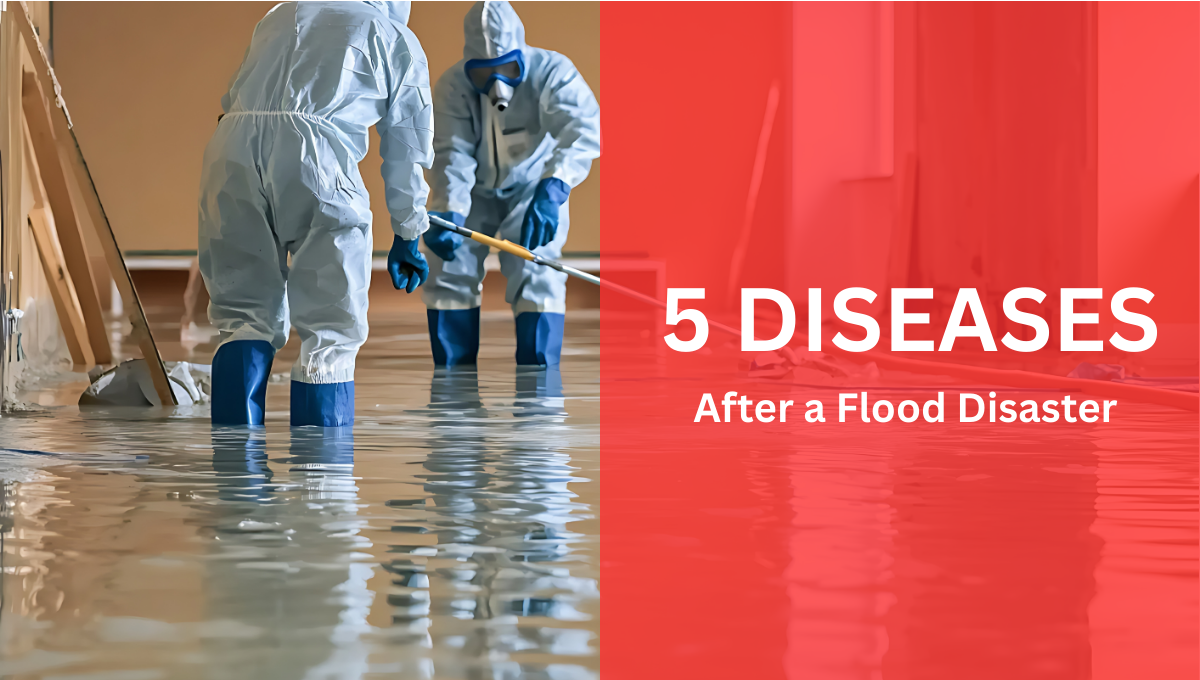
When floodwaters begin to recede, many feel relieved and think the danger has passed. However, the truth is that invisible health risks may just be beginning. Calm-looking floodwater can carry sewage, chemicals, dead animals, and various dangerous bacteria.
Let’s learn about 5 common diseases that occur after floods and the practical steps to protect yourself and your family.

1. Leptospirosis (Rat Urine Disease)
This dangerous disease spreads through floodwater contaminated with animal urine (especially from rats), which contains the Leptospira bacteria.
- Cause: Bacteria enter through open wounds, scraped skin, or exposed mucous membranes (eyes, nose, mouth) that come into contact with contaminated water.
- Symptoms: High fever, severe muscle pain (especially in the calves), headache, red eyes, and can lead to kidney or liver complications.
- How to Prevent:
- Wear rubber boots and waterproof gloves when cleaning flood-affected areas.
- Avoid walking or exposing yourself to dirty floodwater.
- Immediately wash and clean skin with soap and clean water if it comes into contact with floodwater.
2. Cholera / Severe Diarrhea
Cholera outbreaks spread easily after floods due to contaminated drinking water sources.
- Cause: Drinking water or eating food contaminated with the Vibrio cholerae bacteria.
- Symptoms: Severe, persistent watery diarrhea, vomiting, and dehydration that can be life-threatening if not treated.
- How to Prevent:
- Drink boiled water or bottled water that is confirmed safe.
- Avoid eating raw foods like vegetables that may have been submerged in floodwater.
- Practice washing hands with soap before eating and after using the toilet.
3. Dengue Fever
Receding floodwaters often leave behind stagnant water, which becomes a perfect breeding ground for Aedes mosquitoes.
- Cause: Bite from an Aedes mosquito that breeds in stagnant water (in cans, tires, containers).
- Symptoms: Sudden high fever, severe joint and muscle pain (“bone break fever”), pain behind the eyes, and the appearance of a rash.
- How to Prevent:
- Remove all stagnant water around the house and surrounding area.
- Use mosquito repellent spray or lotion.
- Install mosquito nets on windows or use a mosquito net when sleeping.
4. Skin Infections
Skin exposed to dirty floodwater is very susceptible to infection.
- Cause: Bacteria, fungi, or chemicals in the floodwater enter the skin through small cuts or skin that has been soaked for a long time.
- Symptoms: Skin redness, swelling, itching, pus, a feeling of heat or burning.
- How to Prevent:
- Avoid direct skin contact with floodwater.
- Wear proper waterproof Personal Protective Equipment (PPE) like gloves, high boots, and long-sleeved clothing.
- Wash skin with antiseptic soap and clean water after cleanup work.
5. Food Poisoning
Food hygiene is often severely compromised during and after floods.
- Cause: Food contaminated by floodwater or stored in unsafe conditions (without refrigeration, at room temperature).
- Symptoms: Vomiting, diarrhea, cramps, and stomach pain.
- How to Prevent:
- Immediately discard all food and drink that has come into contact with floodwater.
- Only eat food that is thoroughly cooked and prepared in clean conditions.
- Thoroughly clean and disinfect all kitchen surfaces.
🛡️ Protect Yourself with the Right PPE During Post-Flood Cleanup
Prevention is key. Before starting cleanup work, ensure you are equipped with adequate Personal Protective Equipment (PPE):
- High Rubber Boots: Protect feet from cuts and direct contact with water or sharp debris.
- Chemical-Resistant Rubber Gloves: Prevent bacteria and chemicals from contacting the skin.
- Protective Clothing (Apron or long-sleeved shirt): Protect the body from splashes of dirty water.
- Antiseptic Cleanser: For cleaning skin after work.
Safetyware provides a range of reliable PPE for post-disaster cleanup work, helping you work more safely.
Conclusion
Yes, the floodwaters may have receded, but the threat of disease still lingers. With awareness and the right preventive actions, we can break this chain of infection. Remember, the precautionary steps you take today not only protect yourself but also your loved ones around you.
Take care of yourself, take care of your family, don’t take it lightly. Share this information with friends and relatives to collectively stem post-flood outbreaks.
Feel free to contact us at:
📩 Email: [email protected]
📞 Tel: WhatsApp Us