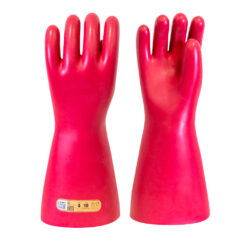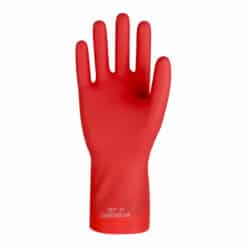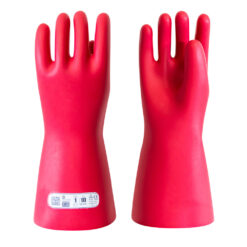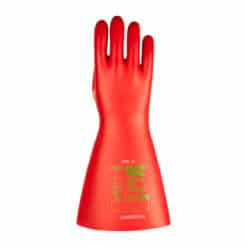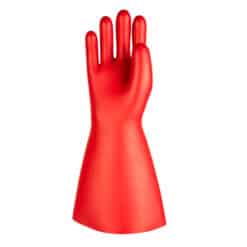
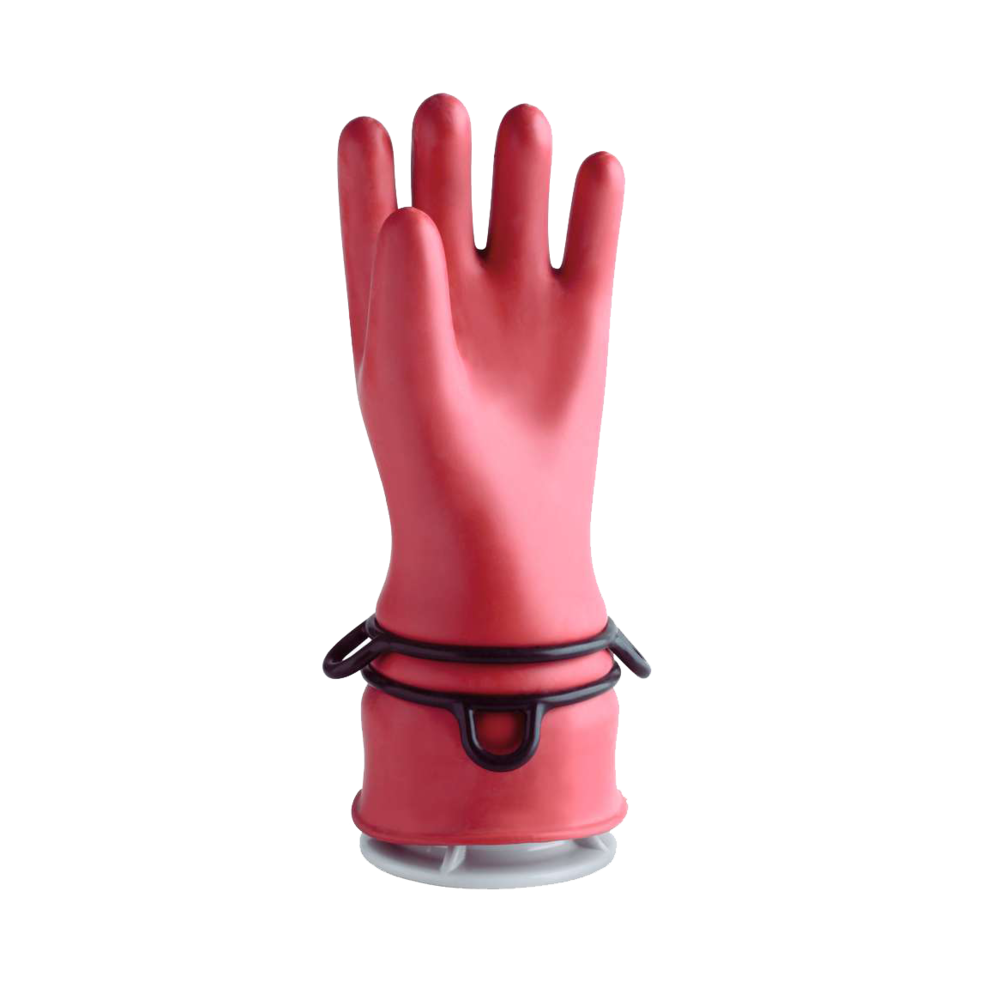
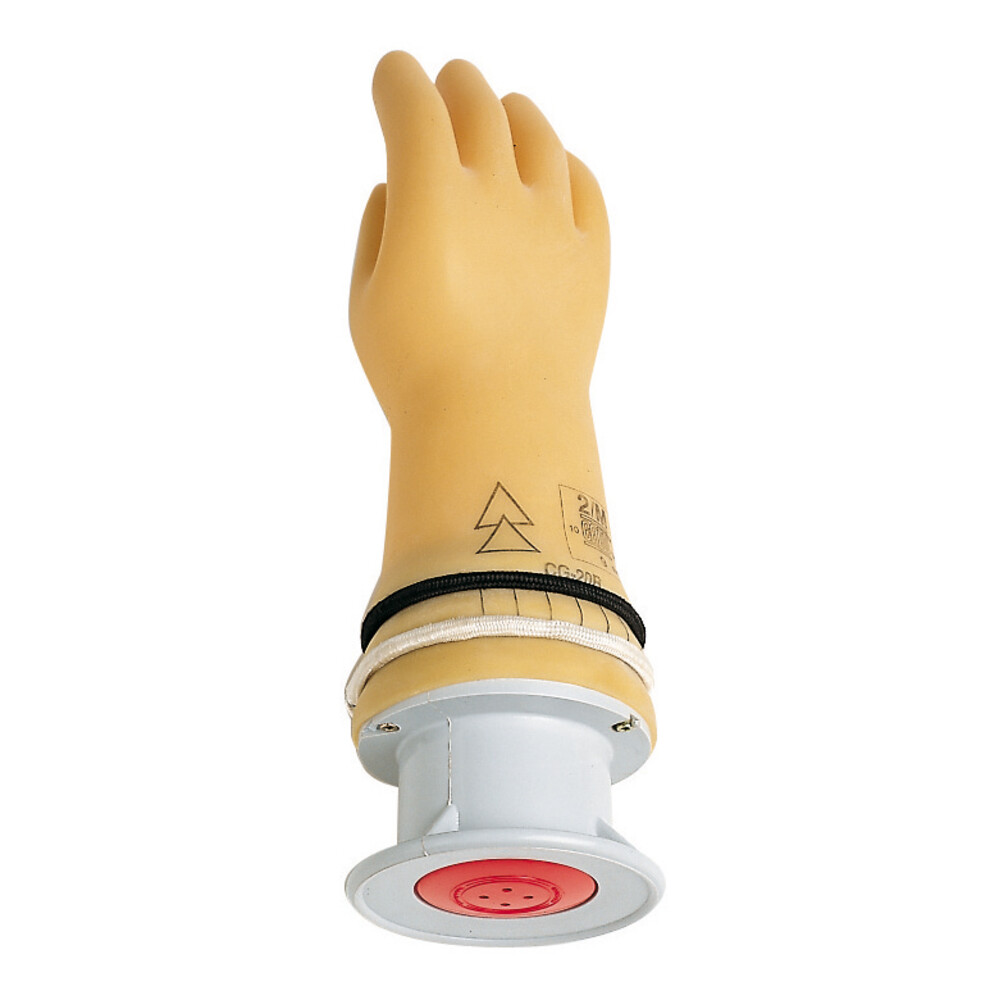
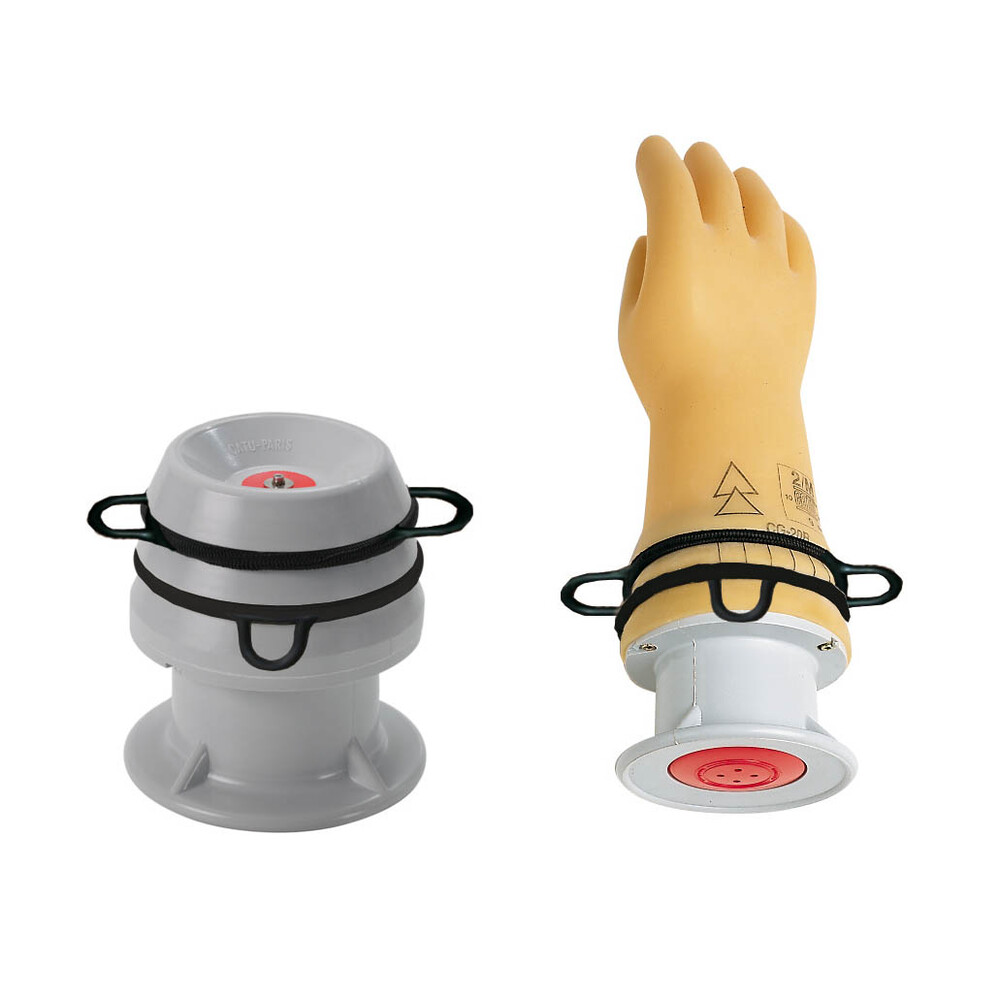
The CATU CG-117 Pneumatic Glove Tester is designed for the compulsory control of insulating gloves before use. Testing is performed by inflating the glove and immersing it in water to detect leaks. The device complies with IEC 60903:2014 standards for periodic testing of insulating gloves from class 00 to class 4, ensuring user safety during electrical operations.
Key Features and Benefits
-
Enables safe and accurate testing of insulating gloves before use.
-
Inflates gloves and checks for leaks through water immersion.
-
Suitable for insulating gloves from class 00 to class 4.
-
Recommended by IEC 60903:2014 for periodic glove control.
-
Body made of molded thermosetting material for durability and stability.
-
Frustoconical tip with grooves secures gloves during testing.
-
Central piston ensures proper air pressure distribution.
-
Soft valve at the bowl’s top maintains air pressure.
-
Two elastic rings hold gloves securely during inflation.
-
Simple and reliable design supports regular maintenance and safety compliance.
Recommended For
-
Testing insulating gloves before live electrical work.
-
Electrical utilities and industrial maintenance facilities.
-
Ensuring safety compliance during daily electrical operations.
Industries
-
Electrical utilities
-
Industrial maintenance
-
Power generation
-
Manufacturing facilities
-
Commercial electrical services
Specifications
-
Model reference: CG-117
-
Suitable for glove classes: 00 to 4
-
Testing method: Inflation and water immersion
-
Material: Molded thermosetting body
-
Design: Frustoconical tip with grooves, central piston, soft valve, and elastic rings
Approvals
-
Compliant with IEC 60903:2014 for periodic testing of insulating gloves.
CATU CG-117 Pneumatic Glove Tester Selection Notes
The CATU CG-117 Pneumatic Glove Tester is part of Safetyware’s electrical protection range for electricians, utilities, industrial maintenance teams, substations and facilities that need controlled protection against shock, arc flash, short-circuit or emergency rescue hazards. Review it against the actual task, voltage exposure, isolation status and site procedure before issue.
Where It Fits
| Selection area | Practical guidance |
|---|---|
| Product family | Arc flash PPE |
| Typical application | Electrical maintenance, switching, testing, isolation, substation work, panel service or emergency readiness. |
| Procurement note | Match arc rating, coverage, visor or hood, gloves and site arc-flash assessment. |
Standards and Safe Work Notes
Electrical protection should support a planned safe-work sequence: isolate where practical, lock out and tag out, verify absence of voltage, control stored energy, then use rated PPE and tools for the remaining risk. Local buyers should confirm datasheets, applicable EN/IEC/ASTM markings and DOSH/SIRIM KPD documentation where required.
Common Questions
Can this be used for live electrical work?
Only if the product rating, condition, procedure and user competency match the task. Electrical work should be de-energised and isolated whenever practical.
Can I request datasheets or matching accessories?
Yes. Contact Safetyware to compare ratings, sizes, compatible accessories or documentation for your site.
Browse related Electrical Body Protection products if you are building a complete electrical safety set.