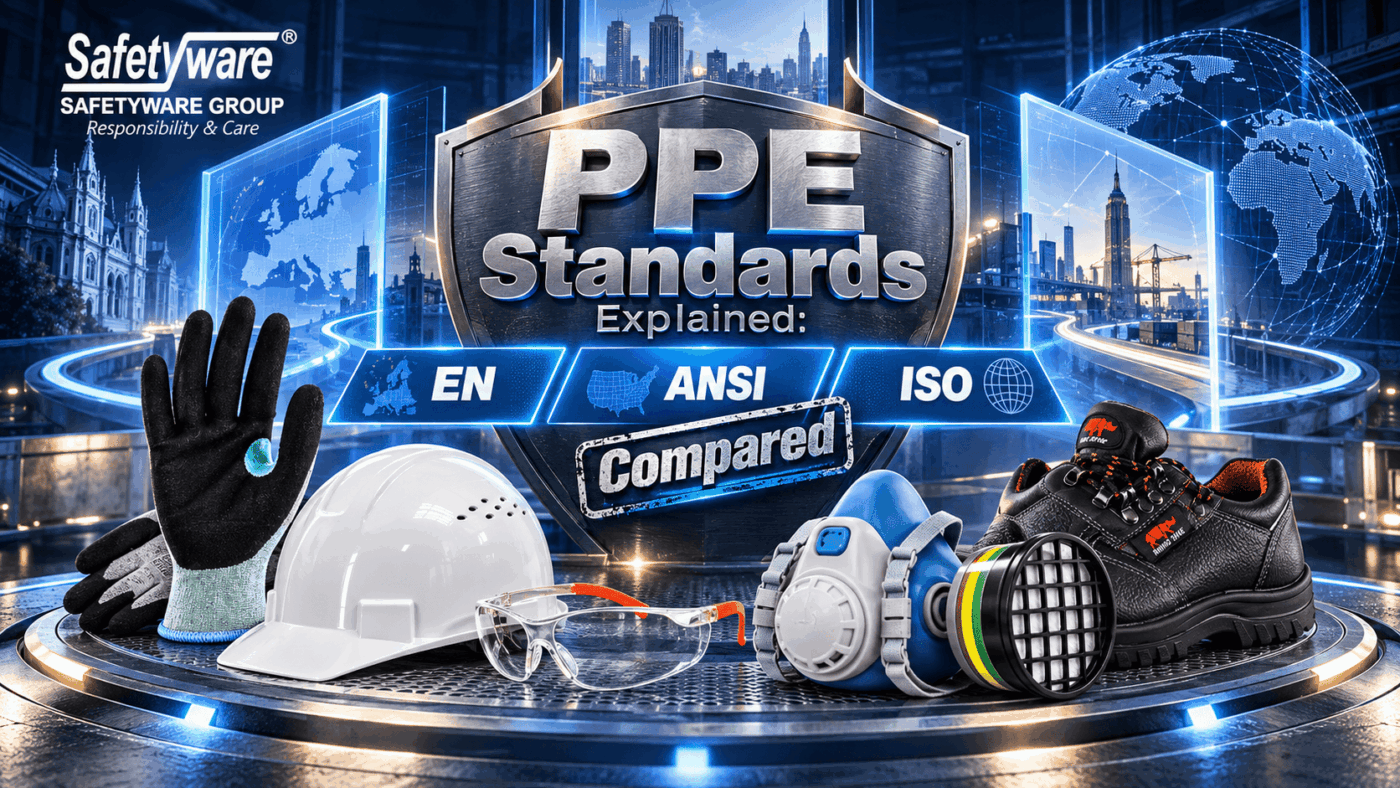
PPE labels can look deceptively simple. A helmet may show an EN number, safety glasses may carry an ANSI marking, and footwear may cite an ISO standard. Yet those labels do not automatically mean that the products are interchangeable, legally accepted in every country, or suitable for the same hazard.
For PPE buyers, safety managers and distributors, the useful question is not, “Which acronym is best?” It is: which legal requirements apply at the place of use, which standard describes the required protection, and what evidence proves that the exact product meets it?
This guide explains the roles of EN, ANSI and ISO, how they interact with legislation and certification, and how to compare PPE without relying on misleading one-line claims.
Important: This is a procurement and compliance guide, not legal advice. Standards, regulatory references and approved-product lists change. Always verify the destination country’s current legislation, the contract specification and the exact model documentation before purchase.
EN, ANSI and ISO: the short answer
EN, ANSI and ISO do not describe three equivalent certification systems.
| Term | What it is | Main reach | What the marking does not prove by itself |
|---|---|---|---|
| EN | A European Standard adopted by CEN, CENELEC or ETSI and implemented as a national standard by member bodies | Europe and other markets that specify EN methods | That the standard is legally mandatory, currently harmonised under EU law, or sufficient for every market |
| ANSI / ANS | The American National Standards Institute approves standards developed through an accredited US consensus process; it normally does not write the technical document itself | United States and contracts that specify an American National Standard | That ANSI tested, certified or “approved” the product |
| ISO | An International Standard developed through ISO’s international member network | Global; often adopted nationally or regionally | That a product is universally legal, independently certified, or accepted without local conditions |
The practical lesson is simple: the acronym identifies the standards framework, not the complete compliance decision.
How EN PPE standards work
An EN is a European Standard. Once approved, CEN-CENELEC members must implement it as an identical national standard and withdraw conflicting national standards. That is why the same technical text may appear with prefixes such as BS EN in the United Kingdom, DIN EN in Germany or MS EN in Malaysia when a national body adopts it.
EN does not automatically mean “EU law”
European standards are generally voluntary technical documents. EU legislation sets the legal obligations. For PPE placed on the EU market, Regulation (EU) 2016/425 establishes essential health and safety requirements and conformity-assessment obligations.
A harmonised European standard has a particular legal role: it is developed in response to a European Commission standardisation request, and its reference is published in the Official Journal of the European Union. Using the cited standard can create a presumption of conformity with the legal requirements that it covers. A manufacturer may use another technical solution, but must then demonstrate compliance by other adequate means.
As of this guide’s review on 5 October 2026, the European Commission’s PPE standards page points to Commission Implementing Decision (EU) 2026/1279, published on 16 June 2026 and amended on 3 September 2026. Buyers should check the live Official Journal summary because references, restrictions and transition dates can change.
CE marking is not an EN standard
CE marking is the manufacturer’s declaration that the product complies with applicable EU harmonisation legislation. Depending on the PPE risk category, an EU-type examination and notified-body involvement may also be required. A product should not be described as “EN certified” or “CE approved” without checking:
- the exact standard and edition;
- the EU Declaration of Conformity;
- the product’s PPE category and applicable conformity-assessment route;
- the notified-body details where required; and
- any limitations stated in the certificate, instructions or test report.

What ANSI means for PPE in the United States
ANSI coordinates the US voluntary consensus standards system. It accredits standards developers and approves documents as American National Standards when the development process meets requirements for openness, balance, consensus, due process and appeals.
This distinction matters because ANSI usually does not develop the PPE standard and does not certify the product. For example, ANSI/ISEA Z87.1 is developed through the ISEA-administered standards process and approved as an American National Standard.
ANSI standards are not automatically federal law
An American National Standard is usually voluntary unless it is incorporated into a law or regulation, required by a contract, or adopted as an employer’s site rule. US Occupational Safety and Health Administration requirements sit at the legal layer. OSHA’s PPE rules sometimes incorporate specific consensus-standard editions or permit equipment that is at least as effective as the incorporated standard.
Always check the regulatory text, because the newest market edition may not be the edition named in a regulation. For example, ISEA identifies ANSI/ISEA Z87.1-2025 as the current eye and face protection standard, but a procurement team must separately confirm what the applicable OSHA provision, state plan, client specification or project contract requires.
Not all US PPE requirements are ANSI standards
The phrase “ANSI PPE” can hide important exceptions:
- US occupational footwear commonly references ASTM standards rather than the withdrawn ANSI Z41 series.
- Respirators used in US occupational settings require the appropriate NIOSH approval and must be managed under the applicable OSHA respiratory-protection programme; an ANSI or ISO claim alone is not a substitute.
- Electrical, chemical, fall-protection and other applications may involve OSHA rules, ASTM standards, NFPA documents or additional sector requirements.
Avoid product copy that says “ANSI approved.” A more accurate statement identifies the exact standard, edition, classification and supporting evidence.
What ISO PPE standards mean globally
ISO develops International Standards through national member bodies. ISO standards provide shared technical methods and specifications, but ISO states that its standards are voluntary and do not themselves create contractual, statutory or legal obligations. National law takes precedence.
An ISO standard may become influential in several ways:
- A country or region adopts it as a national or regional standard.
- A regulator references it in legislation or guidance.
- A customer specifies it in a contract or approved-product list.
- A manufacturer uses it to demonstrate a defined performance level.
What EN ISO, BS EN ISO or MS ISO means
Prefixes show adoption, not necessarily a different test. For example:
- ISO 20345 is the international safety-footwear standard.
- EN ISO 20345 is the European adoption of that ISO standard.
- BS EN ISO 20345 is the British national adoption of the European text.
The year and any amendments still matter. Two references with similar names may use different editions, transition arrangements or national forewords. ISO/IEC Guide 21 describes degrees of correspondence such as identical or modified adoption; buyers should not assume that every national adoption is word-for-word identical without checking the document.
“ISO certified” can be an incomplete claim
ISO does not certify products or organisations. Certification is performed by independent certification bodies, while accreditation bodies assess the competence of those certification bodies.
Also distinguish a management-system certificate from product conformity. ISO 9001 certification can indicate that a manufacturer operates a quality-management system. It does not, by itself, prove that a glove, helmet or safety shoe passes its product-performance standard.

EN vs ANSI vs ISO: key differences for PPE buyers
| Procurement question | EN | ANSI / ANS | ISO |
|---|---|---|---|
| Who controls the framework? | European standards organisations and their national members | ANSI accredits the process and approves American National Standards; an accredited standards developer usually writes the document | ISO and its national member bodies |
| Is it law by itself? | Generally no | Generally no | No |
| How can it gain legal effect? | Referenced by EU or national legislation; harmonised EN references can support EU presumption of conformity | Incorporated by reference in federal, state or local requirements | Adopted or referenced by national/regional law or regulation |
| Does the body certify PPE? | CEN/CENELEC publish standards; conformity assessment is performed by designated bodies or other competent parties as applicable | ANSI does not certify PPE | ISO does not certify products or organisations |
| Can another market use it? | Yes, if the local authority, contract or customer accepts it | Yes, if the receiving market accepts it | Yes, often through national or regional adoption |
| Does a pass make another system equivalent? | No automatic equivalence | No automatic equivalence | No automatic equivalence |
Common PPE examples—and why direct conversion is risky
The following references are common examples, not a universal cross-certification table.
| PPE category | European/international reference commonly encountered | US reference commonly encountered | Buyer caution |
|---|---|---|---|
| Industrial safety helmets | EN 397 | ANSI/ISEA Z89.1 | Impact directions, classifications, optional tests and markings differ. Match the actual hazard and required class. |
| Eye and face protection | EN ISO 16321 series | ANSI/ISEA Z87.1 | Markings and impact/optical classifications are not one-to-one. Verify the protector and its components. |
| Protective gloves | EN 388 for mechanical risks; other EN/ISO standards for chemical, heat or cold hazards | ANSI/ISEA 105 for hand-protection classifications | Cut-test methods and rating scales differ. Never “convert” a level from the number alone. |
| Safety footwear | EN ISO 20345 / ISO 20345 | ASTM F2413 | Category codes, impact/compression marking and optional protections use different systems. |
| Respiratory protection | Product standards vary by respirator type; national requirements govern selection and use | NIOSH approval plus OSHA programme requirements | A filter class or laboratory test is not a complete respiratory-protection programme. |
The correct comparison starts with the hazard: impact energy and direction, chemical identity and concentration, cut mechanism, slip surface, electrical exposure, oxygen level, fall distance or another measurable risk. Only then should the buyer compare test clauses, performance levels and marking rules.
How to read a PPE standard marking
A useful marking normally contains more than a familiar acronym. Read it in this order:
- Standard designation — for example, the body/prefix and document number.
- Edition or year — confirm that it is current or accepted by the applicable rule or contract.
- Product classification — such as helmet type/class, footwear category or glove performance level.
- Optional protections — confirm that the precise optional property required for the hazard is marked and documented.
- Manufacturer and model identity — the tested or certified model must match the item supplied.
- Conformity marks and body numbers — where the legal regime requires them.
- Limitations and instructions — temperature, shelf life, compatibility, maintenance, inspection, replacement and other conditions affect real-world protection.
Markings can be small, so obtain the technical data sheet, user instructions, declaration or certificate before approving the item.

Legal requirement, technical standard and site rule: keep the layers separate
Many procurement errors disappear when the file records these three layers separately.
| Layer | What it answers | Example of evidence |
|---|---|---|
| Law or regulation | What must legally be done in the destination and workplace? | Regulation, approved-product register, regulator guidance, mandatory conformity route |
| Technical standard | How is performance classified, tested and marked? | Published EN, ANSI/ANS, ISO, ASTM or national standard and applicable edition |
| Employer, client or site rule | What has this organisation chosen to require for its risks and operations? | Risk assessment, PPE matrix, contract specification, approved-item list |
A site rule may be more demanding than the legal minimum. Conversely, a contract cannot cancel a statutory duty. Where multiple requirements apply, obtain a competent compliance review rather than selecting whichever mark is easiest to source.
A practical PPE standards verification checklist
Before issuing a purchase order, record the following:
- Destination: country, state or province, and worksite.
- Applicable law: regulation and regulator guidance for the PPE category.
- Hazard: task, exposure route, severity, duration and environmental conditions.
- Required performance: standard, edition, class and optional properties.
- Exact product: manufacturer, model, variant, size range and intended use.
- Evidence: declaration, current certificate or approval, accredited test report and technical data sheet as applicable.
- Evidence match: the documents name the same model and configuration being supplied.
- Certification scope: issuer, accreditation, validity dates, exclusions and surveillance where relevant.
- Marking: physical product and packaging markings agree with the documents.
- Compatibility: PPE works with every other item worn at the same time.
- User factors: fit, comfort, communication, medical limitations and training needs.
- Lifecycle: inspection, cleaning, storage, replacement and traceability requirements.
- Change control: process for supplier substitutions, revised standards and expired approvals.
Document hierarchy for a robust purchase file
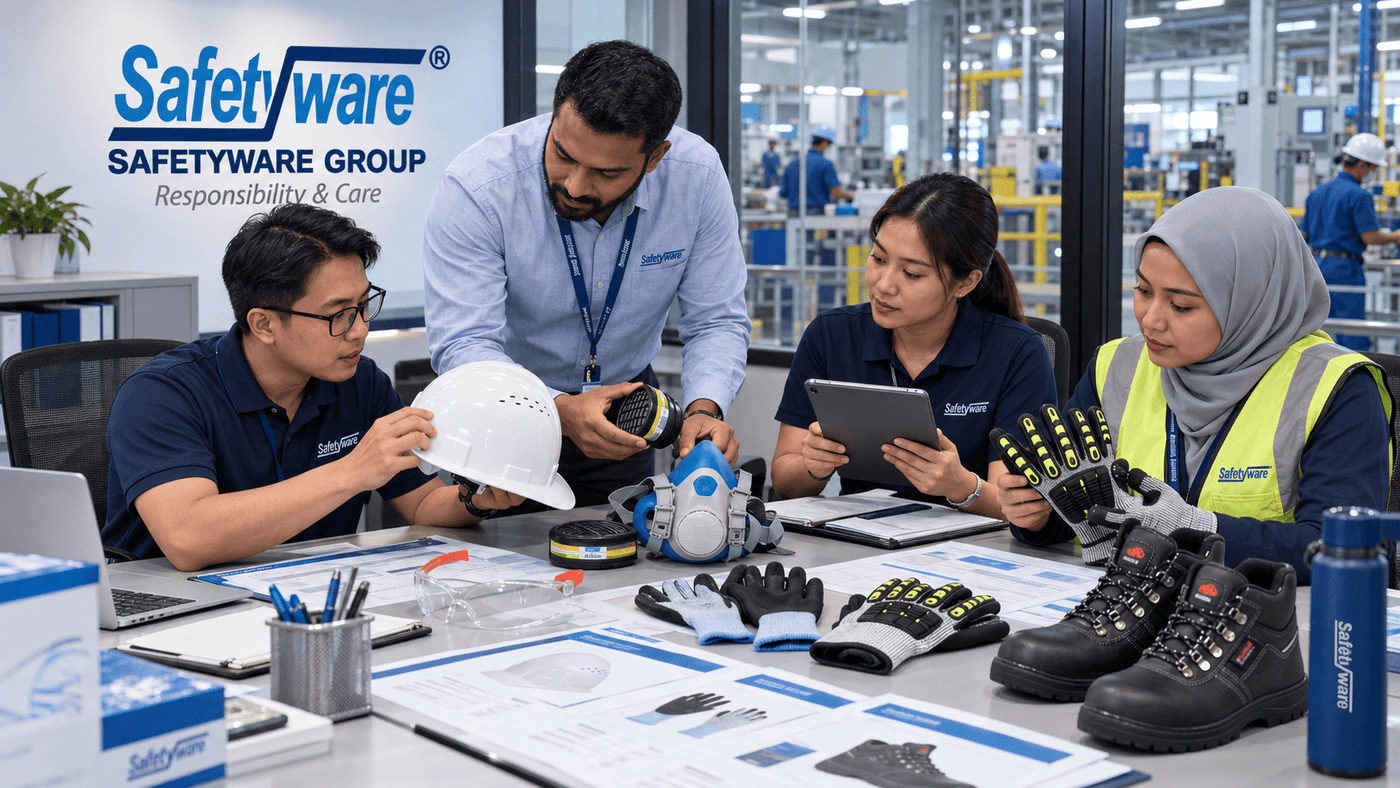
Keep a simple evidence pack for each approved model:
- Risk assessment and PPE specification.
- Supplier quotation and exact item code.
- Technical data sheet and user instructions.
- Declaration of conformity or applicable regulatory approval.
- Certificate and test report, where required or requested.
- Incoming-inspection record and product photographs.
- Training, inspection and replacement records.
Claims and red flags to challenge
“ANSI approved”
ANSI approves American National Standards and accredits conformity-assessment bodies; it does not normally approve an individual helmet, spectacle or glove. Ask for the precise ANSI/ISEA designation, edition, classification and evidence.
“ISO certified PPE”
Ask whether the claim refers to a product test, a product certification scheme or the manufacturer’s management system. These are not interchangeable.
“CE certified” with no model-specific documentation
Ask for the EU Declaration of Conformity and, when applicable, the EU-type examination certificate. Confirm that the model, variants, standard references and notified body align.
“Equivalent to” without a clause-by-clause comparison
Similar product types do not establish equivalent protection. The supplier should identify the test methods, classifications and limitations behind any equivalence claim.
A valid certificate for a different model
Compare product codes, construction, materials and accessories. A certificate for a family of products must clearly include the item offered.
SAFETYWARE Products and Solutions
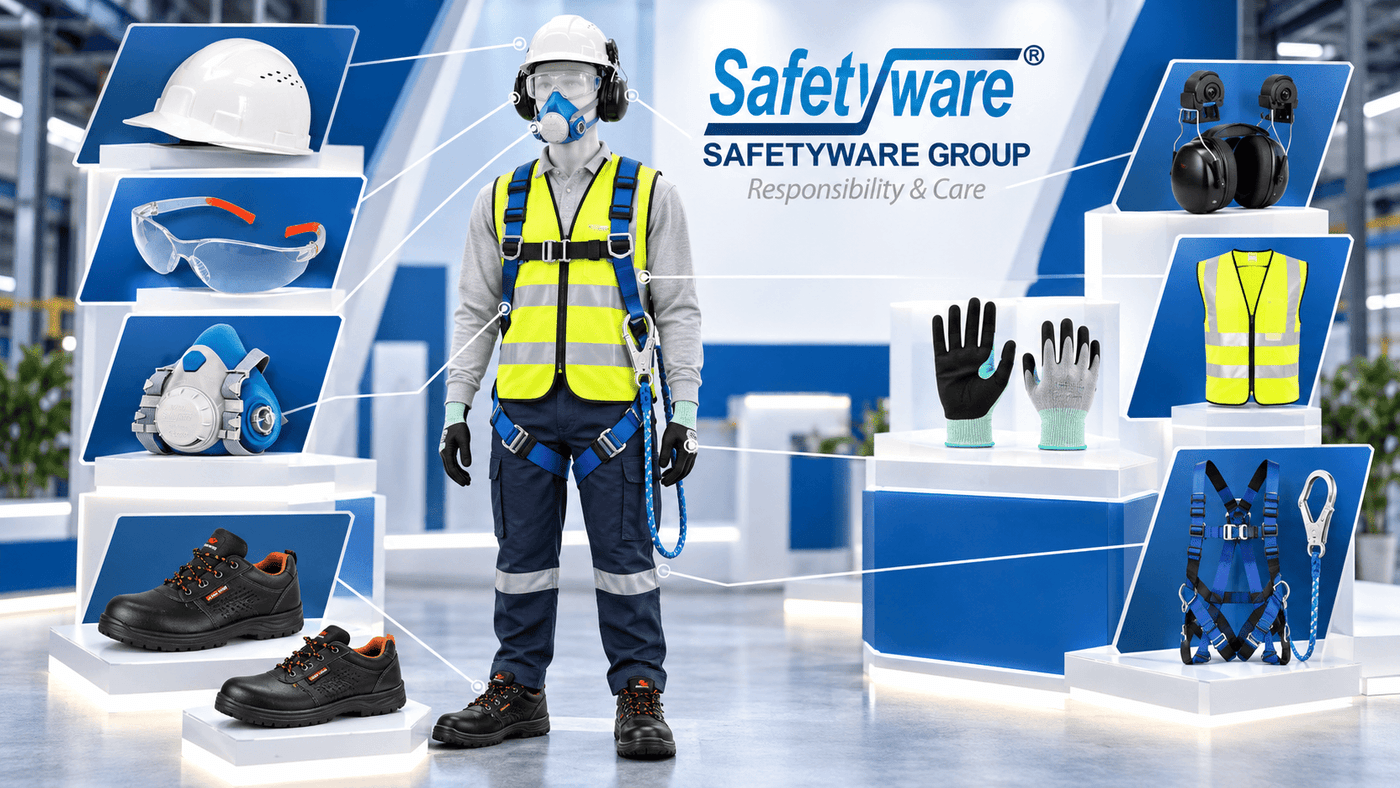
SAFETYWARE supplies a broad range of personal protective equipment across head, eye and face, hearing, respiratory, hand and arm, body, foot and fall protection. The best starting point is the official Personal Protective Equipment category, which organises products by the area protected.
For standards-led sourcing, buyers can explore:
- Head protection for industrial helmets and related products;
- Eye and face protection for spectacles, goggles, face shields and specialist eyewear;
- Hand and arm protection for mechanical, chemical, thermal and task-specific needs;
- Foot protection for safety footwear;
- Respiratory protection for particulate, gas and vapour, supplied-air and related solutions;
- Hearing protection for earplugs and earmuffs; and
- Fall protection for work-at-height equipment.
The SAFETYWARE catalogues page also provides current category catalogues and brochures. Availability, certification and approvals are model- and market-specific, so do not apply one product’s documentation to an entire category.
When requesting a recommendation or quotation, send SAFETYWARE the hazard assessment, destination market, required standard and edition, performance class, quantity, sizes, compatibility constraints and delivery schedule. This gives the product team a sound basis for proposing suitable models and the evidence that should accompany them.
Conclusion
EN, ANSI and ISO are not competing quality grades. They are different parts of the standards landscape: EN identifies European Standards, ANSI approves US consensus standards developed through accredited processes, and ISO publishes international standards for voluntary adoption and use.
None of the three acronyms, standing alone, tells a buyer that a product is legal for a particular country, suitable for a particular hazard or certified by the named organisation. A defensible PPE decision connects four things: the workplace risk, the applicable law, the correct standard and edition, and model-specific conformity evidence.
Build that chain before comparing price. It is the most reliable way to avoid false equivalence, outdated references and documentation that belongs to a different product.
📞 Need More Information?
Looking for Global Standard PPE?
Explore SAFETYWARE’s safety shoes and workplace PPE range at
👉Safetyware Catalogs
Our safety specialists can help evaluate workplace hazards, recommend suitable safety helmets, and support compliance with Malaysia workplace safety requirements.
If you need a quotation, feel free to contact us at:
📩 Email: [email protected]
📞 Tel: WhatsApp Us