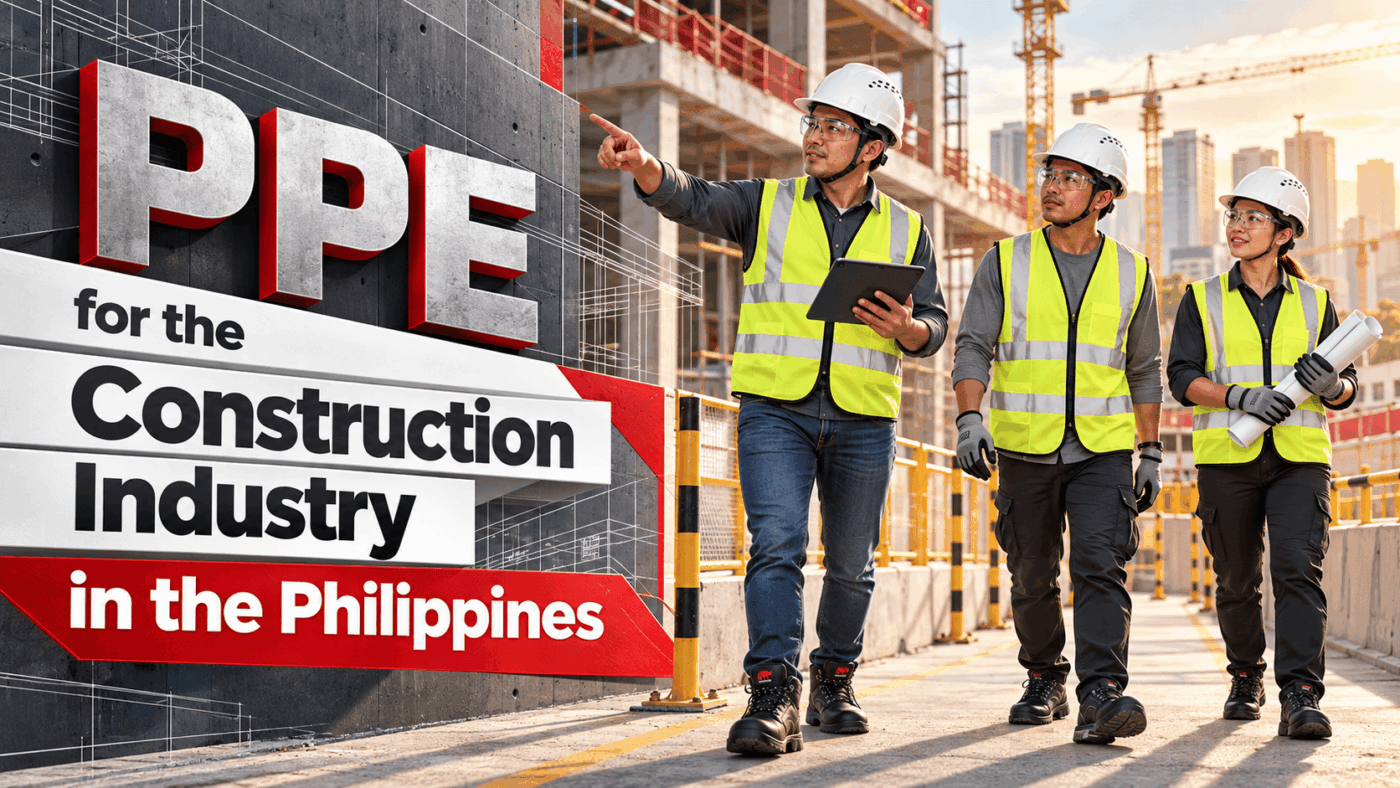
Choose PPE for the work your team actually performs
A worker unloading steel faces different hazards from a colleague pouring concrete or cutting masonry. Yet many purchasing lists give everyone the same gloves, shoes and mask. That gap can leave important risks uncovered.
Choosing construction PPE in the Philippines starts with the task, the exposure and the person. A helmet and safety shoes may form part of the site entry rules, but they cannot replace dust control, safe access or the specialist protection a trade needs.
This guide explains the Philippine legal framework, connects common construction tasks with PPE selection questions, and gives buyers a practical checklist. The aim is a consistent process: assess the work, reduce the hazard, select suitable equipment, check the fit and support correct use.
Understand Philippine construction PPE requirements
Employers provide required PPE free of charge
Section 8 of Republic Act No. 11058 requires employers, contractors and subcontractors to provide workers with appropriate PPE free of charge where hazards make it necessary. It also connects PPE use to the safety officer’s evaluation and recommendation, and specifies appropriate types tested and approved by DOLE based on its standards. Sections 12 and 20 place PPE within the safety and health programme and its budget. Source: RA 11058
For procurement, this means recording the hazard, required protection and supporting evidence before approving a purchase. A supplier’s general statement that an item is “industrial grade” does not resolve those questions.
Use the revised implementing rules
DOLE identifies Department Order No. 252-25 as the revised implementing rules and regulations of RA 11058. Its official notice dates from 1 May 2025, and OSHC’s current issuances list includes it. Use this revised framework when reviewing procedures; do not rely solely on older summaries of the implementing rules. Sources: DOLE notice and OSHC issuances
Apply the construction rules to workers and visitors
Department Order No. 13, series of 1998, provides construction-specific guidance. Section 6 addresses suitable PPE at the employer’s expense, necessary PPE use on site, specialist protection and appropriate PPE for other authorised persons. It also refers to OSHS Rule 1080. Rule 1081 addresses approved design, suitability and maintenance. Read these provisions together with later applicable issuances. Source: DOLE OSHS compilation hosted by ILO, Rule 1080 and DO 13 Section 6
Build visitor protection into the entry process. For example, keep suitable sizes available and explain which areas the visitor may enter.
Separate legal duties from standards and site practices
| Category | What it means for the buyer |
|---|---|
| Philippine law and DOLE rules | Establish duties for the worksite, including appropriate PPE provision and use. |
| Product standards and test evidence | Help establish what a particular model can do under specified test conditions. Verify the edition and performance claimed. |
| Project specifications and site rules | Set requirements for the project, such as entry PPE, approved models or role identification. These can supplement legal duties. |
| Overseas technical guidance | Can inform selection and training. It does not become Philippine law merely because it appears in a guide. |
The HSE, OSHA and NIOSH references below support technical good practice. This article does not present UK or US legal duties as Philippine requirements.
Match construction hazards to suitable PPE
First consider how to remove or reduce the hazard. Then choose PPE for the exposure that remains. For example, collect dust at the tool, separate pedestrians from moving plant and use guarded working platforms where suitable.
The following matrix is a selection aid, not a fixed legal PPE list for every worker. The safety officer should adapt it to the activity and site conditions.
| Work activity | Main exposure to assess | PPE selection focus |
|---|---|---|
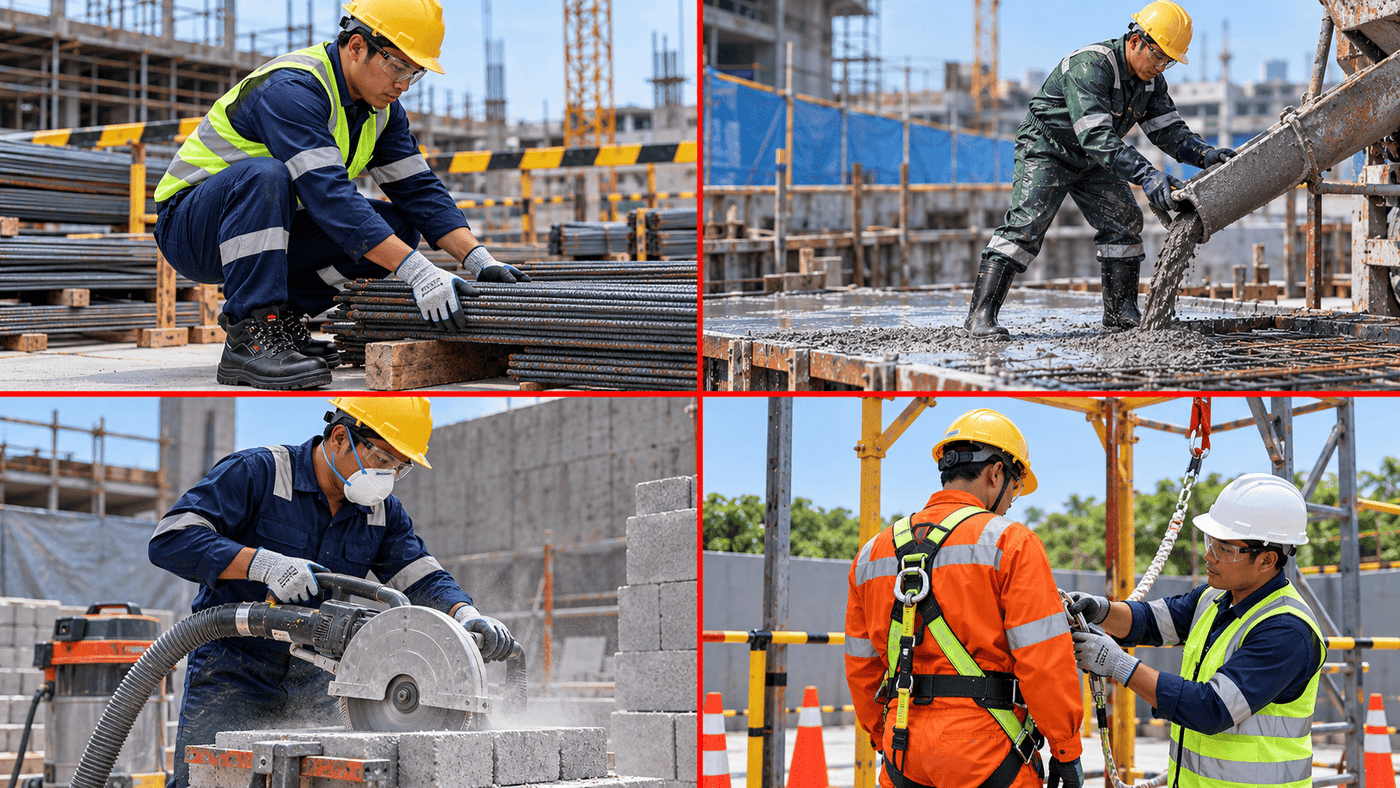
| General access and material handling | Falling objects, sharp edges, foot impacts and vehicle interfaces | Suitable helmet, protective footwear, task-specific gloves and visibility clothing where required by the assessment. |
| Rebar, sheet metal and formwork | Cuts, punctures, splinters and dropped materials | Gloves with suitable mechanical performance; footwear selected for toe and underfoot hazards; eye protection for the operation. |
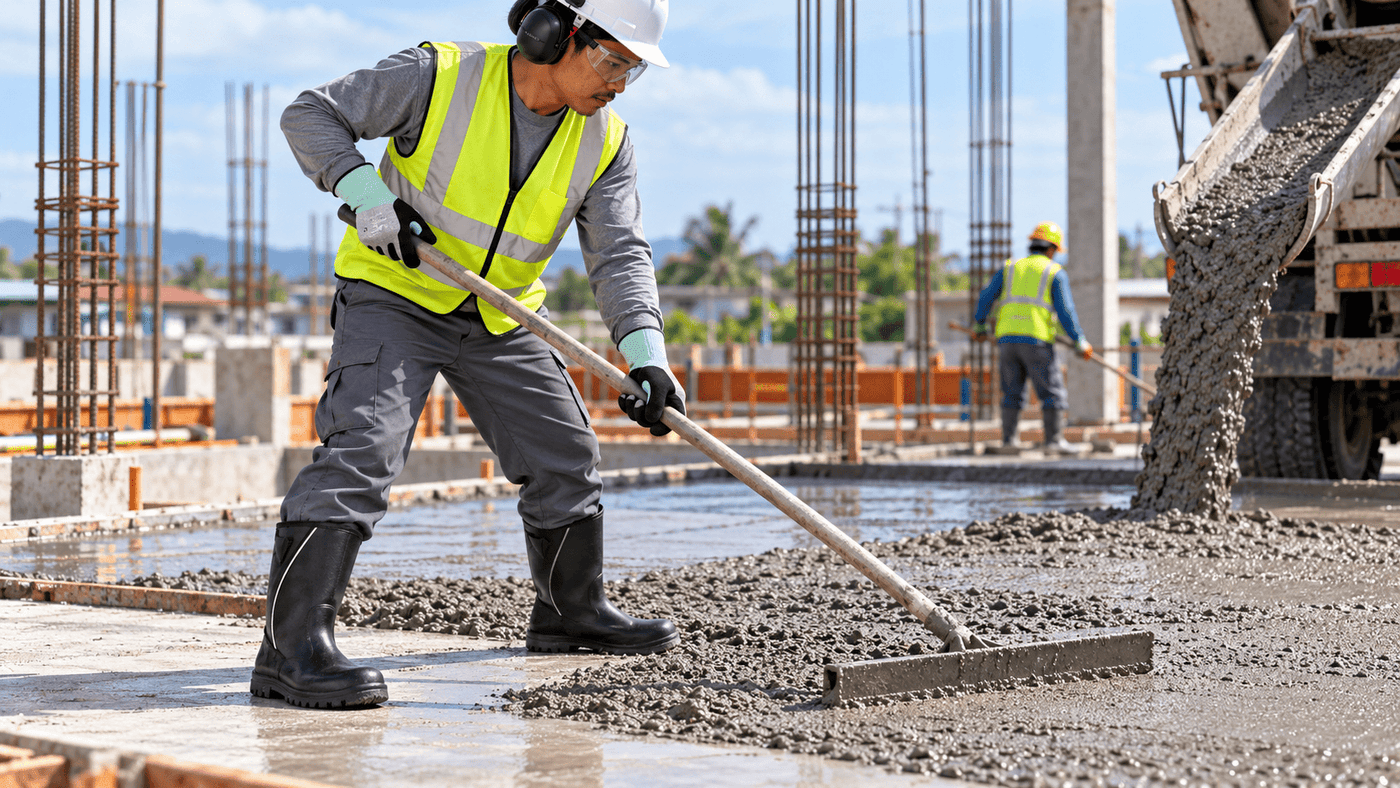
| Concrete pouring and wet mortar | Alkaline material contacting skin or eyes | Suitable waterproof gloves, protective footwear, clothing and splash protection; prevent cement entering cuffs and boots. |
| Masonry cutting or drilling | Respirable dust, flying fragments and noise | Assessed respiratory protection, suitable eye and face protection, and hearing protection alongside effective dust controls. |
| Grinding and welding | Impact, sparks, optical radiation, heat and fumes | Task-rated eye and face protection, suitable gloves and clothing; assess respiratory and hearing needs separately. |
| Painting and chemical application | Solvent vapours, aerosols and skin contact | Select gloves, clothing, goggles and respiratory equipment using the actual chemical information and exposure assessment. |
| Work near edges or on roofs | Falls, falling objects and access hazards | Prioritise fall prevention; where personal fall protection is necessary, specify the complete compatible system. |
The matrix combines the technical selection principles in the sources below. It does not establish a product’s suitability without model-specific evidence.
Select the main PPE categories
Head protection and safety footwear
Select a helmet for the assessed impact hazards, retention needs and any electrical exposure. Also check compatibility with hearing protection, visors and other accessories. Use manufacturer-approved combinations and follow the supplied inspection and replacement instructions. SAFETYWARE’s head protection range provides a starting point for model comparisons.
For footwear, consider falling loads, sharp debris, wet surfaces, contaminants and the worker’s movement. A description such as “steel toe” answers only part of the selection question. Ask for the model’s documented performance and limitations.
ISO 20345:2021, with Amendment 1:2024, is a published international safety-footwear reference. It covers basic and optional requirements, including mechanical and slip-related performance. However, specialist risks can require additional standards. Do not assume that a general safety shoe provides electrical insulation or chemical protection. Sources: ISO 20345 and Amendment 1
As a purchasing practice, arrange a size and comfort trial before a large order. Ask workers to walk, crouch and use steps in the intended socks. Record pressure points, heel movement and any difficulty fastening the footwear.
Hand and skin protection
Match gloves to the material and task. Handling rough steel calls for a different assessment from handling wet cement or solvent-based coatings. Check grip, dexterity, cuff length and the specific protective performance.
Wet cement can cause dermatitis and burns. HSE’s technical guidance recommends suitable waterproof gloves for alkaline exposure, footwear that prevents cement entry and protection when kneeling on wet material. Keep trousers over boot tops where needed to prevent cement entering, and remove contamination promptly using suitable washing facilities. Source: HSE cement guidance
For paints, resins and cleaning agents, identify the chemical and concentration first. Then ask the supplier for compatibility and use-limit information for the exact glove. Do not select chemical protection from glove colour alone.
Eye and face protection
Flying fragments, splashes and welding radiation require different protection. Choose safety glasses or goggles for the actual hazard, then add a suitable face shield where the assessment calls for broader face coverage.
A face shield does not replace primary eye protection for impact hazards. Likewise, welding needs an appropriate filter and protective arrangement for the process. Check that the complete combination remains secure and allows clear vision. Technical reference: OSHA PPE selection guidance
For a wear trial, include workers who use prescription lenses. Ask them to check visibility and comfort while wearing the helmet and any respirator required for the task.
Respiratory protection for dust and chemical exposure
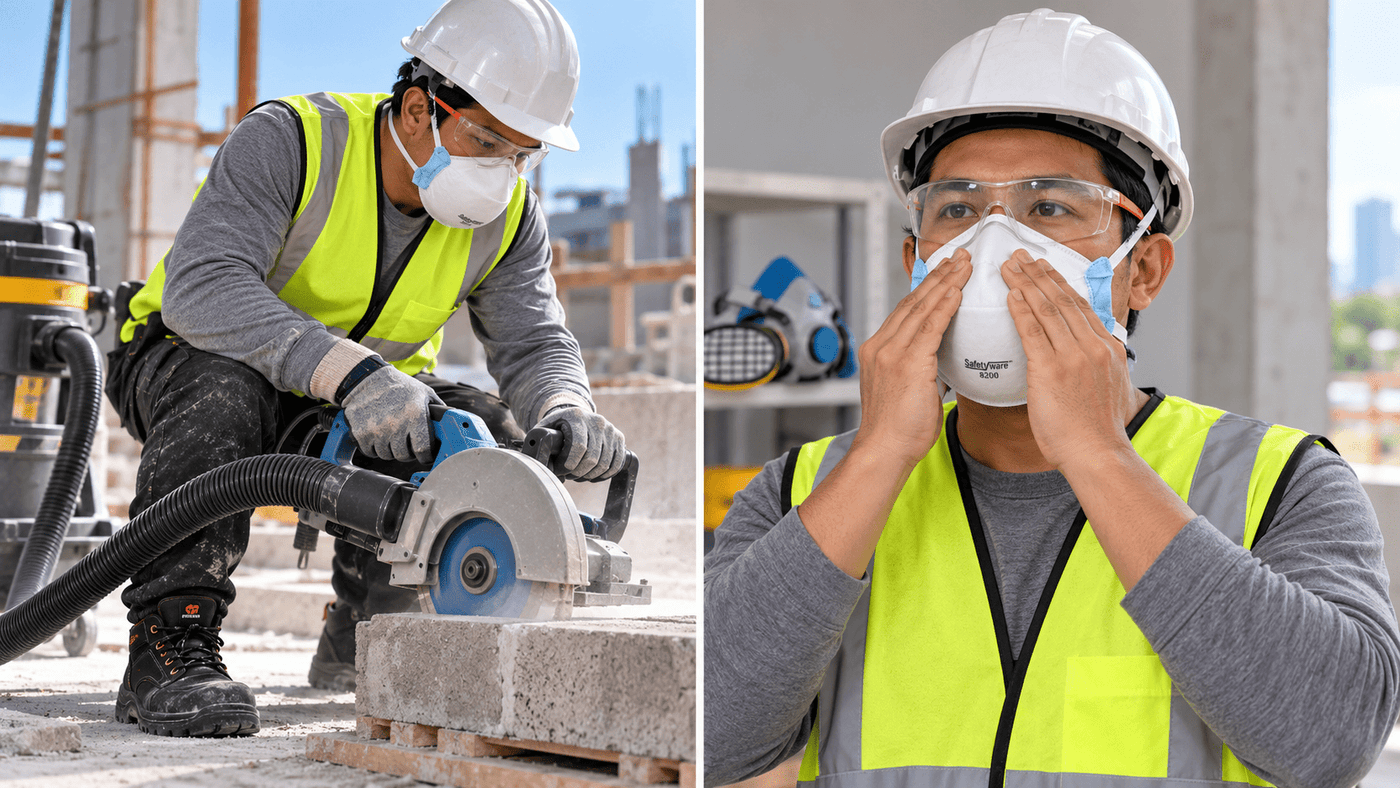
Concrete and masonry operations can create respirable crystalline silica. Use suitable dust extraction or water suppression and evaluate the remaining exposure before choosing respiratory protection. HSE provides task-specific technical guidance for activities such as scabbling, cutting and drilling. Source: HSE construction silica guidance
Select the respirator, filter and protection level for the contaminant and concentration. Particle filters and gas or vapour cartridges serve different purposes. A disposable particulate respirator should not become the default answer for every dusty or chemical task.
For tight-fitting equipment, include fit testing for the selected facepiece and wearer. The worker should also perform the manufacturer’s seal check each time they put it on. Facial hair at the sealing surface can prevent an effective seal. Check the fit with other PPE in place. Source: HSE fit-testing guidance
Air-purifying respirators do not supply oxygen and cannot protect a worker in an oxygen-deficient or immediately dangerous atmosphere. Confined-space work therefore needs a separate assessment and planned controls; issuing a cartridge respirator does not make entry safe. Source: NIOSH air-purifying respirator guide
Hearing protection
Assess noise exposure from activities such as drilling, breaking and cutting. Reduce noise at source where possible, then choose hearing protection that provides suitable attenuation and fits the wearer.
NIOSH advises considering comfort, compatibility and communication, as well as the noise reduction needed. The package rating alone does not establish the protection each worker receives. Include fitting instruction and, where available, individual hearing-protector fit testing. Source: NIOSH hearing protection guidance
During a trial, check earmuff seals with the actual helmet and eyewear. Also confirm that the team can follow the site’s communication and warning arrangements while wearing the selected protection.
Plan work at height as a complete system
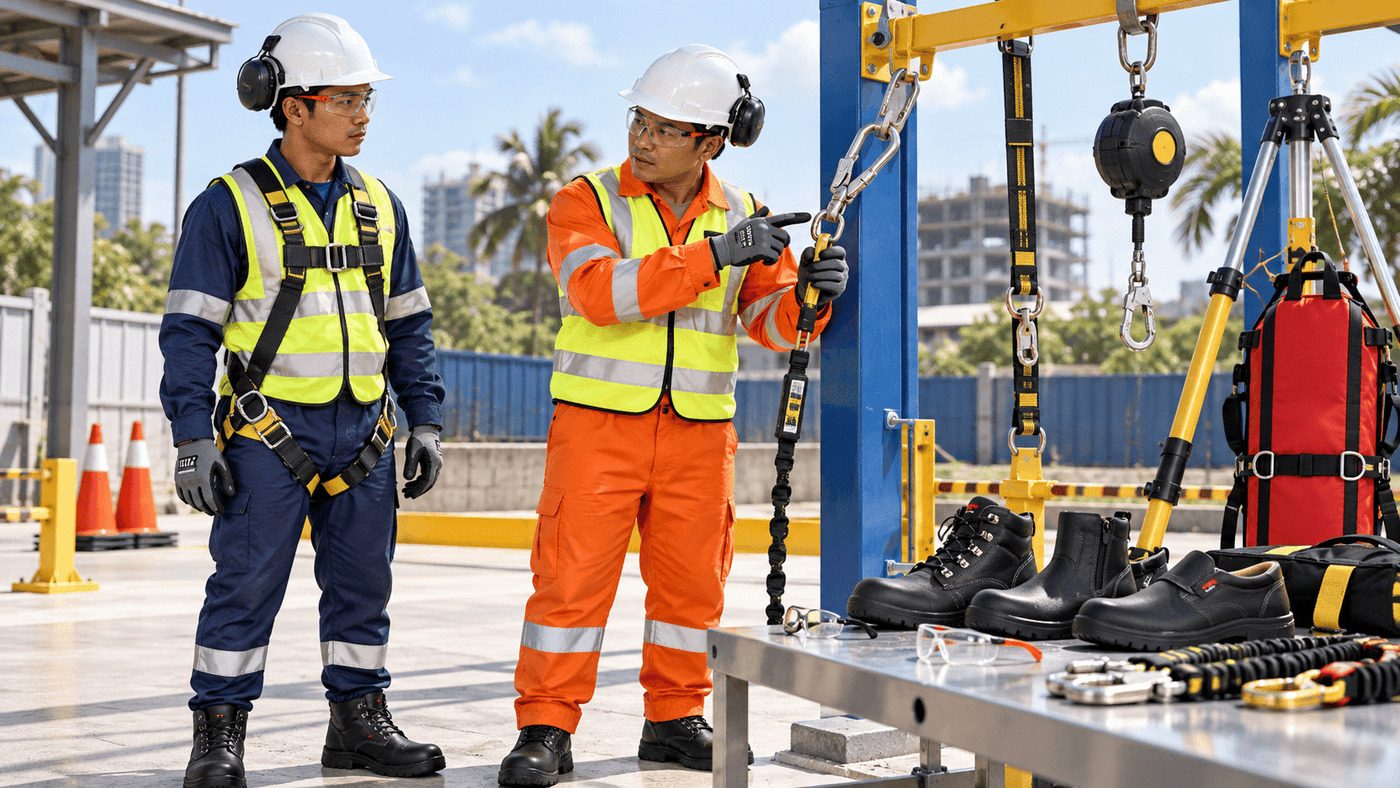
Avoid work at height where practicable. Where it remains necessary, consider guarded access and working platforms before personal protection. A properly designed restraint system can prevent access to a fall position; fall arrest serves a different purpose by stopping a fall after it begins. Technical reference: HSE work-at-height selection guide
When fall arrest is necessary, assess the harness, connector, anchorage, clearance, swing-fall risk and rescue arrangements together. A harness on its own does not form a working protection system. Competent selection, inspection and training are essential. Source: SAFETYWARE construction and work-at-height guidance
Do not treat six metres as a safe threshold below which fall protection is unnecessary. DO 13 Section 6.2 refers both to specified unguarded surfaces at six metres or more and to exposure to falls hazardous to life or limb. Assess the actual fall hazard, including at lower heights. Source: DO 13, Section 6.2
Put a practical PPE process in place
The following is a recommended management checklist. Adapt the records and frequency to the project, applicable rules and manufacturer instructions.
Before issuing equipment
- Record each task and its remaining hazards after other controls.
- Define the protection needed and acceptable model-specific evidence.
- Obtain sizes that fit the workforce, including smaller and larger users.
- Check PPE combinations through a supervised wear trial.
- Explain correct use, limits, cleaning and defect reporting in language workers understand.
- Plan replacement stock and identify who can issue it.
Before starting the shift
- Check that the issued PPE matches today’s work and site conditions.
- Inspect for damage, contamination, missing parts or unreadable identification.
- Confirm secure fit and compatibility with the rest of the equipment.
- Replace unsuitable items before the affected task begins.
- Report any change in the work that requires a fresh assessment.
Avoid setting one replacement interval for every item. Follow the manufacturer’s limits and inspection criteria, and account for actual use. A calendar date alone cannot establish that damaged equipment remains safe.
Before approving a purchase order
| Request from the supplier | Purpose |
|---|---|
| Exact model and product revision | Links the quotation to the equipment the site will receive. |
| Relevant test reports, certificates and local approval evidence | Supports verification against the required protection and Philippine requirements. |
| Standard number, edition and performance markings | Helps avoid comparisons between unlike specifications. |
| User instructions and limitations | Supports training, inspection, cleaning and replacement planning. |
| Sizes and sample arrangements | Enables fit and compatibility trials. |
| Lead time, local supply route and replacement parts | Helps maintain protection throughout the project. |
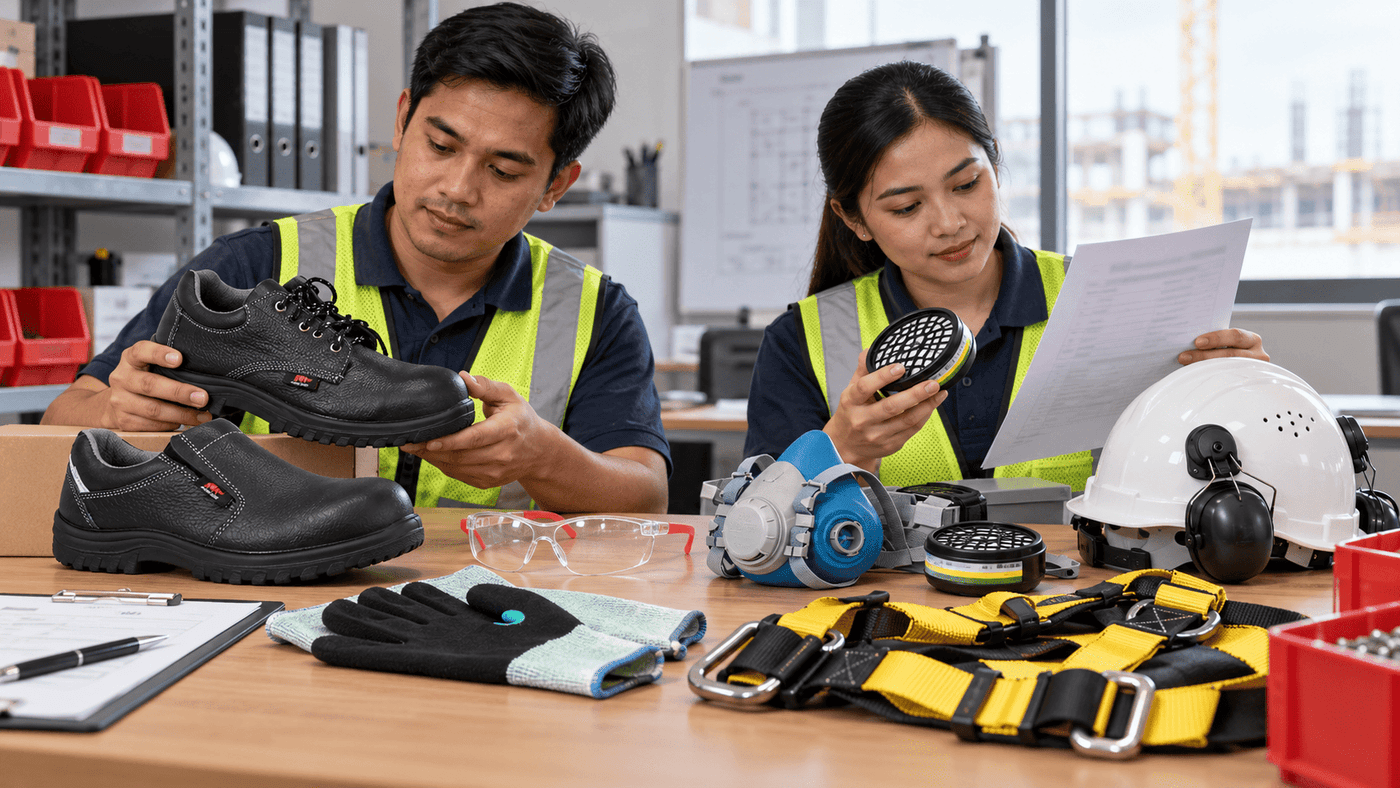
Image placement suggestion 6 — PPE inspection and procurement: Place after this checklist. Show a safety officer and buyer checking real PPE, labels and documents. See Image Prompt 6 at the end.
SAFETYWARE Products and Solutions
SAFETYWARE’s official product catalogue offers a starting point for building a construction PPE specification. Discuss the task and required performance before narrowing the choice to particular models.
| Product or solution | What to discuss with SAFETYWARE |
|---|---|
| Head protection | Helmet suitability, retention, fit and compatible accessories. |
| RHINO SHOE and foot protection | Toe protection, underfoot hazards, wet conditions, sizing and model documentation. |
| Hand and arm protection | Mechanical handling, wet cement or chemical exposure, with evidence for the exact glove. |
| Eye and face protection | Impact, splash or process-specific protection and compatibility with other PPE. |
| Respiratory protection | The contaminant, concentration, required protection, fit and replacement filters. |
| Hearing protection | Assessed exposure, fit, comfort and communication needs. |
| Fall protection | Compatible harnesses and connecting equipment within a planned system. |
SAFETYWARE lists a Philippine distributor support route for selected PPE and RHINO SHOE ranges. Confirm the local assortment, documentation, delivery time and after-sales arrangements for your project. Availability and service coverage can vary.
For a useful quotation, share your work activities, hazards, workforce size, size breakdown, required evidence, delivery location and target date. This gives the supplier a clear basis for recommending options and arranging a wear trial.
Conclusion
Effective construction PPE in the Philippines starts with a clear understanding of the work. Connect legal duties with a task-based assessment, select equipment with suitable evidence, and check that workers can use the complete combination correctly.
Then keep the process active. Review changing tasks, replace defective equipment and maintain a reliable supply of suitable sizes and consumables. For your next project, use the checklist above to prepare a specification and discuss appropriate options with SAFETYWARE’s Philippine support team.
Sources and references
Checked on 2 October 2026. Philippine sources support the legal section; overseas sources support technical guidance only.
- Republic Act No. 11058, especially Sections 8, 12 and 20.
- DOLE notice of Department Order 252-25 and OSHC current issuances.
- DOLE OSHS compilation hosted by ILO, Rule 1080 and DO 13 Section 6. This historical compilation supplies the cited provisions, not a consolidated statement of every subsequent amendment.
- ISO 20345:2021 and Amendment 1:2024.
- HSE: cement exposure, construction silica, respirator fit testing and work at height.
- NIOSH: hearing protection and air-purifying respirators. OSHA: PPE selection guidance.
- SAFETYWARE: products, the category pages linked above, construction safety solutions and Philippine support.
📞 Need More Information?
Looking for Global Standard PPE?
Explore SAFETYWARE’s safety shoes and workplace PPE range at
👉Safetyware Catalogs
Our safety specialists can help evaluate workplace hazards, recommend suitable safety helmets, and support compliance with Malaysia workplace safety requirements.
If you need a quotation, feel free to contact us at:
📩 Email: [email protected]
📞 Tel: WhatsApp Us