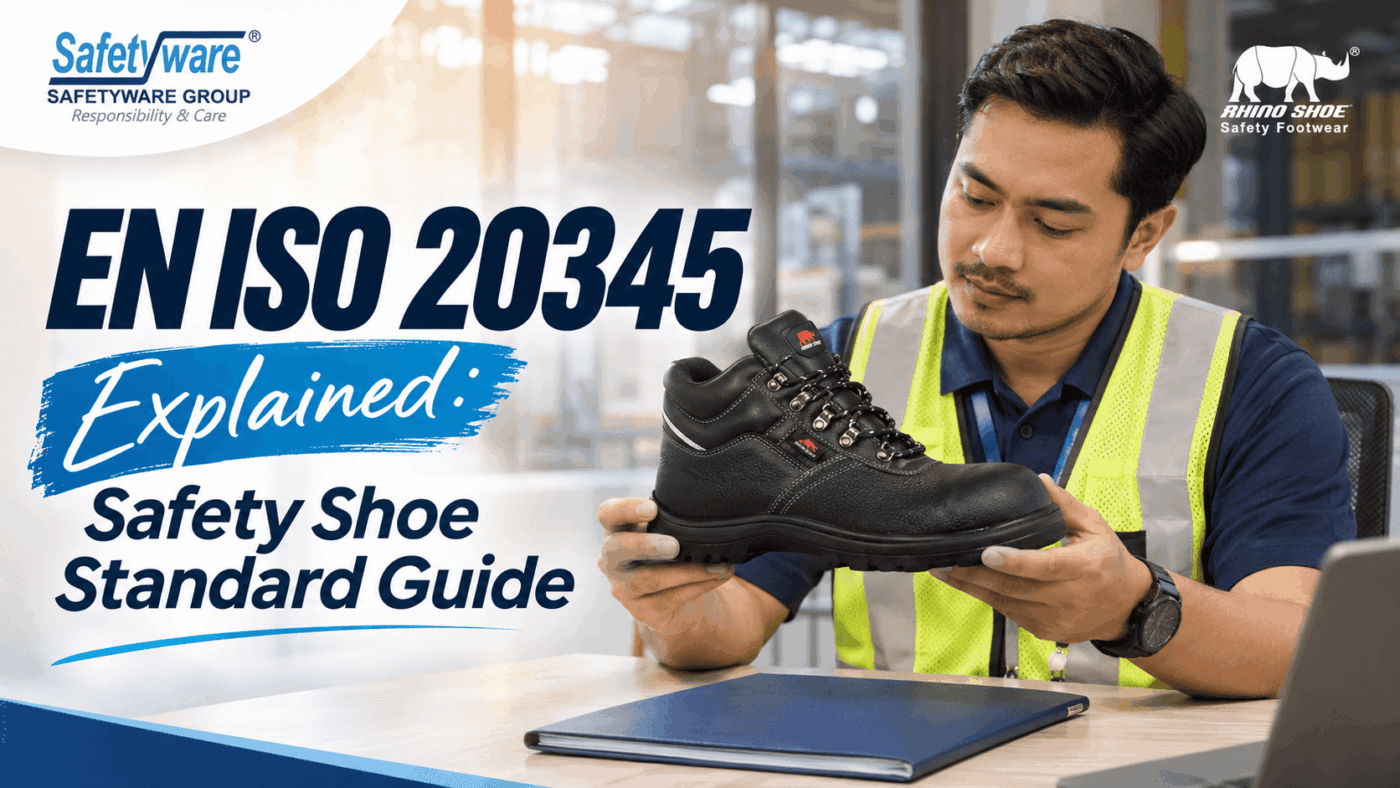
A supplier says a safety shoe “meets EN ISO 20345”. That is a useful starting point, but it does not yet tell you whether the shoe suits your workplace.
The next questions matter: which edition, which protection category, which additional properties, and which exact model do the documents cover? A clear answer helps buyers compare quotations, helps distributors explain alternatives and helps safety managers avoid gaps between the specification and the footwear workers receive.
This EN ISO 20345 guide explains how to read that information and turn it into a practical purchasing decision.
What Is EN ISO 20345?
EN ISO 20345 is the European adoption of an international standard for general-purpose safety footwear. It covers basic and additional requirements addressing areas such as mechanical protection, slip resistance, thermal performance and ergonomics. It also addresses certain customised footwear and insock configurations. [1]
A reference to the standard does not mean that every optional property is present. Nor does it establish suitability for every specialist hazard. ISO identifies complementary standards for applications such as electrical insulation, firefighting, chemical protection and chainsaw hazards. [1]
For procurement, treat the standard reference as the beginning of the specification, then read the category, extra markings and instructions.
Which Edition Should Buyers Recognise?
| Reference | How to understand it |
|---|---|
| ISO 20345:2021 | The international edition currently listed by ISO, with Amendment 1:2024. |
| EN ISO 20345:2022+A1:2024 | The European edition incorporating that amendment. |
| BS EN ISO 20345:2022+A1:2024 | The British adoption; BSI identifies it as the same ISO text with the amendment. |
| EN ISO 20345:2011 | An earlier edition that appears in older product specifications and documents. |
The ISO and EN publication years differ because they identify different publication stages. When purchasing, record the complete reference rather than shortening every document to “ISO 20345”. [1,2]
A new publication does not, on its own, answer whether a particular older certificate or product remains acceptable. Check the certificate status, market rules, customer specification and condition of the footwear concerned.
What Does the Standard Test?
Toe Protection: Understand the Numbers
Safety-footwear toe protection uses 200 J impact and 15 kN compression criteria. These are controlled test conditions with defined acceptance criteria, not promises that a shoe will prevent every crushing injury. [3]
A practical implication: do not turn the compression figure into a statement that footwear can safely support a vehicle or an arbitrary load. Real incidents differ in force, contact shape, position and duration.
The Complete Shoe Matters
Testing extends beyond the toe cap. Intertek’s overview includes construction, upper/outsole bonding where applicable, ergonomic features, material properties, outsole performance and other requirements. Class II footwear also has leakproofness requirements. [4]
Therefore, a component test report alone does not establish that the finished footwear meets all claimed requirements. Ask whether the evidence covers the complete model and configuration supplied.
Read a Footwear Label in Four Steps
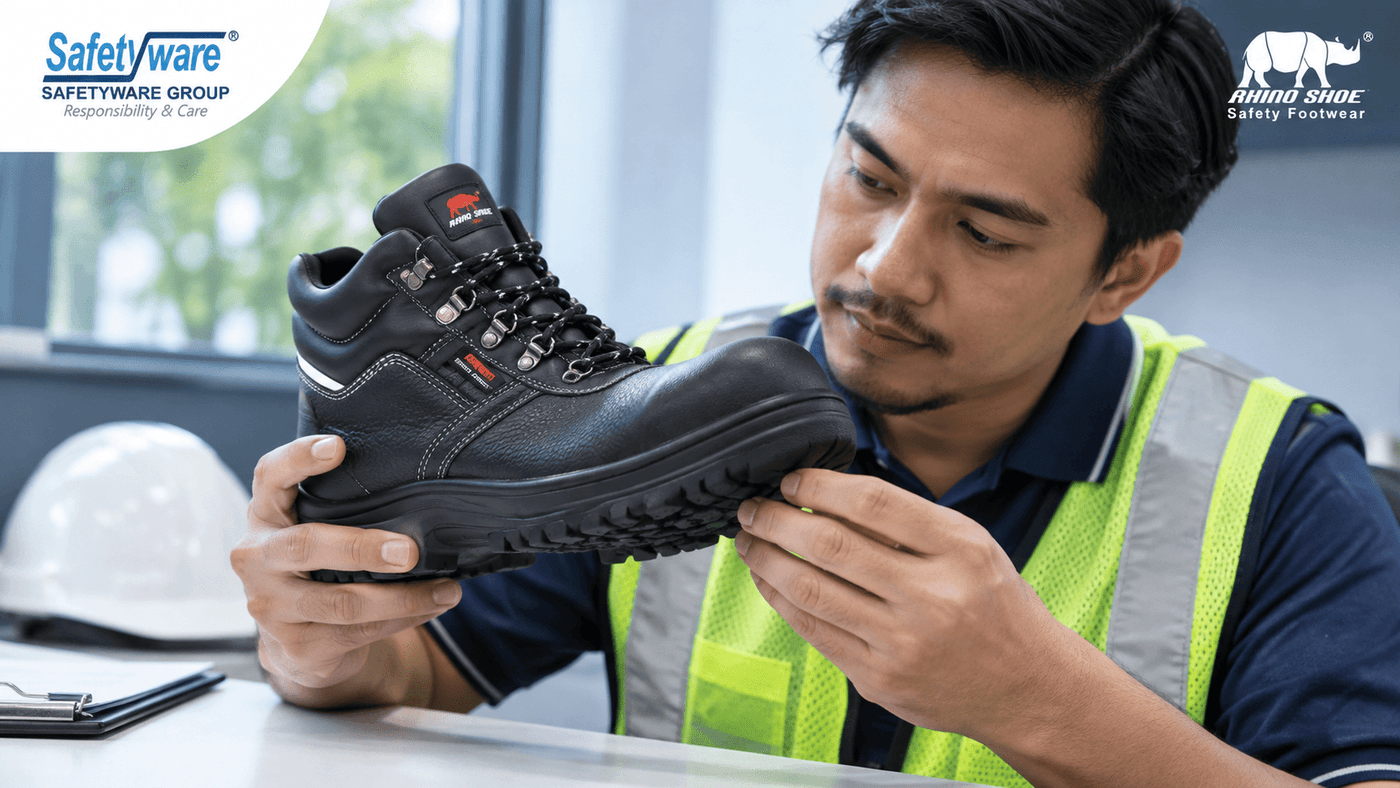
Use the following as a purchasing review method. It is not a reproduction of the standard’s full marking clause.
| Step | Look for | Question to resolve |
|---|---|---|
| 1. Identify | Manufacturer, exact model and size | Does this match the sample, quotation and supporting documents? |
| 2. Check the edition | Full standard reference | Are all parties using the same edition and amendment? |
| 3. Read the category | For example, S1, S2, S3S or S5 | Which package of requirements does the category represent? |
| 4. Read extra markings | For example, SR, FO or HRO | Which additional properties are actually claimed? |
Consider this illustrative marking, not a certification claim for a SAFETYWARE model:
EN ISO 20345:2022+A1:2024 — S3S FO SR
S3S combines the S3-family requirements with a PS-type non-metallic perforation-resistant insert. FO refers to outsole fuel-oil resistance, while SR identifies the additional slip-resistance test. The letters answer separate questions; they should not be combined into a general claim of “complete protection”. [3,4,5]
A Short Guide to Categories and Additional Markings
Categories Describe Packages of Properties
Under the newer system, SB is the basic category. S1 adds a closed heel, antistatic properties and heel energy absorption; S2 adds upper water penetration and absorption resistance. The S3 family also adds perforation resistance and a cleated outsole. S4 and S5 relate to all-rubber or all-polymeric footwear, with S5 adding perforation resistance and a cleated outsole. S6 and S7 families include whole-footwear water resistance. [5]
This is a summary, not a complete selection table. Higher numbers do not mean universally better footwear: construction, hazards and additional properties still determine suitability.
Important Markings to Keep Separate
| Marking | Meaning to check |
|---|---|
| A | Antistatic properties. |
| E | Energy absorption in the heel/seat region. |
| WPA | Upper water penetration and absorption resistance. |
| WR | Whole-footwear water resistance. |
| FO | Outsole resistance to fuel oil. |
| SR | Additional slip resistance on ceramic tile with glycerine. |
| HRO | Outsole resistance to hot contact. |
| HI / CI | Heat/cold insulation of the sole complex. |
| M / AN | Metatarsal/ankle protection. |
| SC / LG | Scuff-cap abrasion resistance/ladder grip. |
These properties are distinct. In particular, a tall collar alone does not prove AN performance, and HRO is not a general permission to work at a stated ambient temperature. Confirm the relevant marking and instructions. [4]
What Changed from the Older Edition?
Three changes deserve attention when comparing supplier documents:
- Perforation resistance: P denotes metallic inserts; PL and PS distinguish non-metallic inserts tested with 4.5 mm and 3.0 mm nails respectively. Category suffixes reflect the difference.
- Fuel-oil resistance: FO is an optional additional property in the newer system rather than an automatic inclusion in S1–S5.
- Water terminology: WPA replaces the older WRU marking for upper water penetration and absorption resistance. [3]
Slip testing also changed. The newer system normally includes a baseline ceramic-tile test without an SRA marking, with specified exceptions for special footwear. SR denotes the additional test. The old SRA, SRB and SRC markings should not be treated as interchangeable with SR because the procedures differ. [6]
For an existing purchasing specification, review each required property before changing the wording. Simply replacing “SRC” with “SR” across a spreadsheet does not demonstrate equivalence between two products.
What EN ISO 20345 Does Not Prove by Itself
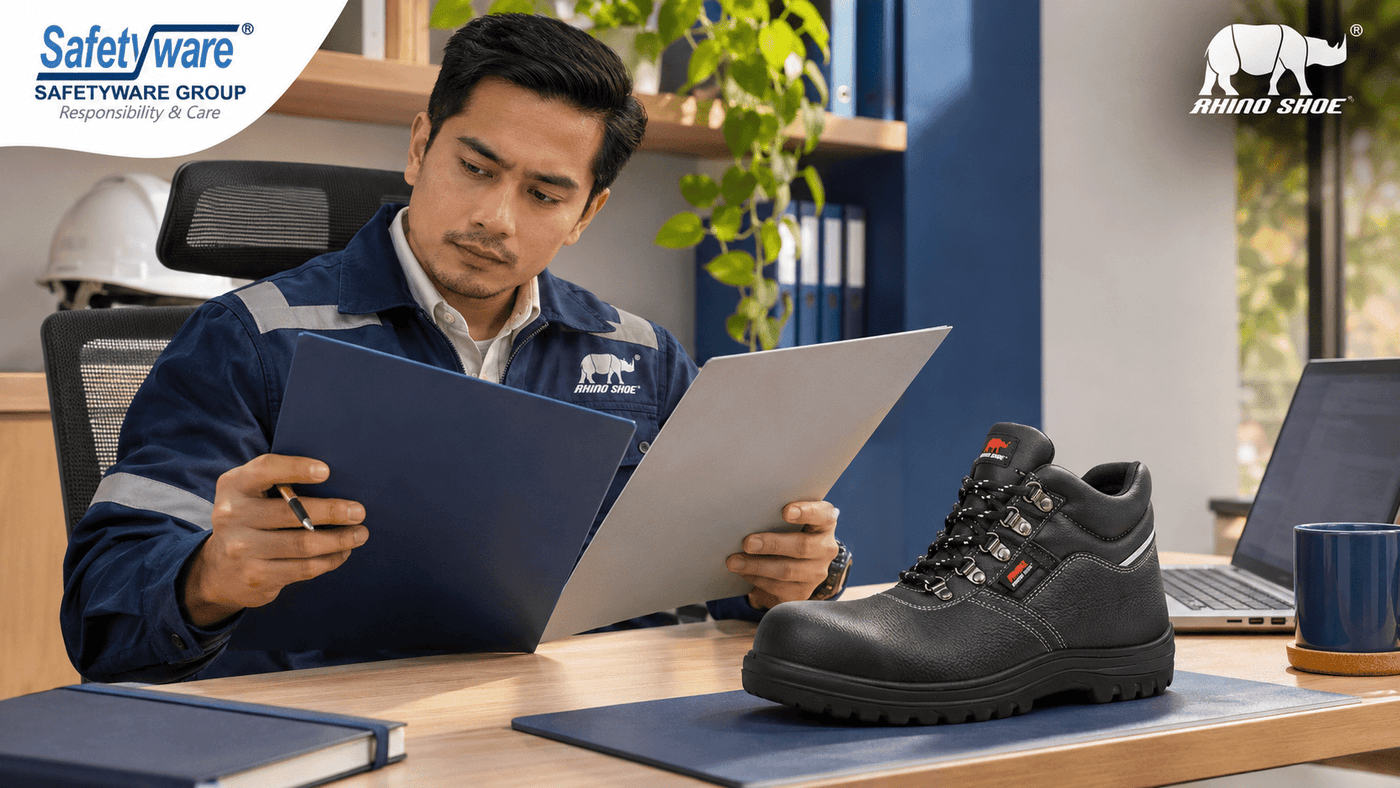
A standard reference is valuable evidence, but it does not answer every purchasing question.
| Claim or assumption | Better purchasing check |
|---|---|
| “It meets EN ISO 20345, so it suits every job.” | Match the model’s actual protection to the task. |
| “The supplier has a certificate.” | Check the model, scope, issuer and current status. |
| “This shoe looks identical to the approved sample.” | Confirm the supplied model and configuration in writing. |
| “A higher category solves all our exposure risks.” | Review each relevant hazard and additional property. |
| “The label is enough.” | Review instructions, limitations and supporting conformity documents. |
If specialist protection is required, specify it separately. The general standard’s scope should not be stretched into unverified claims about electrical insulation or resistance to a particular chemical. [1]
Standards, Certification and Legal Requirements Are Different
A standard provides technical requirements and test criteria. Conformity documentation connects a particular product to the requirements it claims to meet. Legislation establishes the obligations that apply in a market or workplace.
For PPE supplied to the EU market, Regulation (EU) 2016/425 establishes requirements including the appropriate conformity assessment, CE marking, instructions and an EU declaration of conformity. Manufacturers must supply that declaration with the PPE or provide its internet address in the instructions. Distributors have document and marking checks before making PPE available. [7]
That EU framework is not a statement of Malaysian, Indonesian, Vietnamese or Philippine approval rules. For other destinations, verify local requirements separately. A familiar international standard reference does not automatically settle every local compliance question.
For buyers, the useful distinction is simple: request evidence for the product, and check the obligations for the destination and application.
Procurement Checklist: From Quotation to Delivery
Use this recommended workflow to make a footwear order easier to review.
Before Requesting a Quotation
- Record the task, floor conditions, moisture, sharp-object hazards and any specialist exposure.
- Agree the required standard edition, category and additional properties with the safety team.
- Identify the required size range and any special fit or insole needs.
- State the destination market and customer-specific document requirements.
Before Approving the Model
- Match the exact model and variant across the quotation, sample and documents.
- Check certificate scope and status through the relevant issuer where needed.
- Review user instructions, care requirements and limitations.
- Trial fit with representative workers using their normal work socks.
- Require approval before a supplier substitutes another model or configuration.
When the Order Arrives
- Compare received labels and model codes with the approved order.
- Check packaging, sizes and visible condition.
- Retain the agreed documents with the purchasing record.
- Give users instructions for inspection, care and reporting problems.
These steps are practical purchasing controls, not a claim that every listed record is legally mandated in every country.
SAFETYWARE Products and Solutions
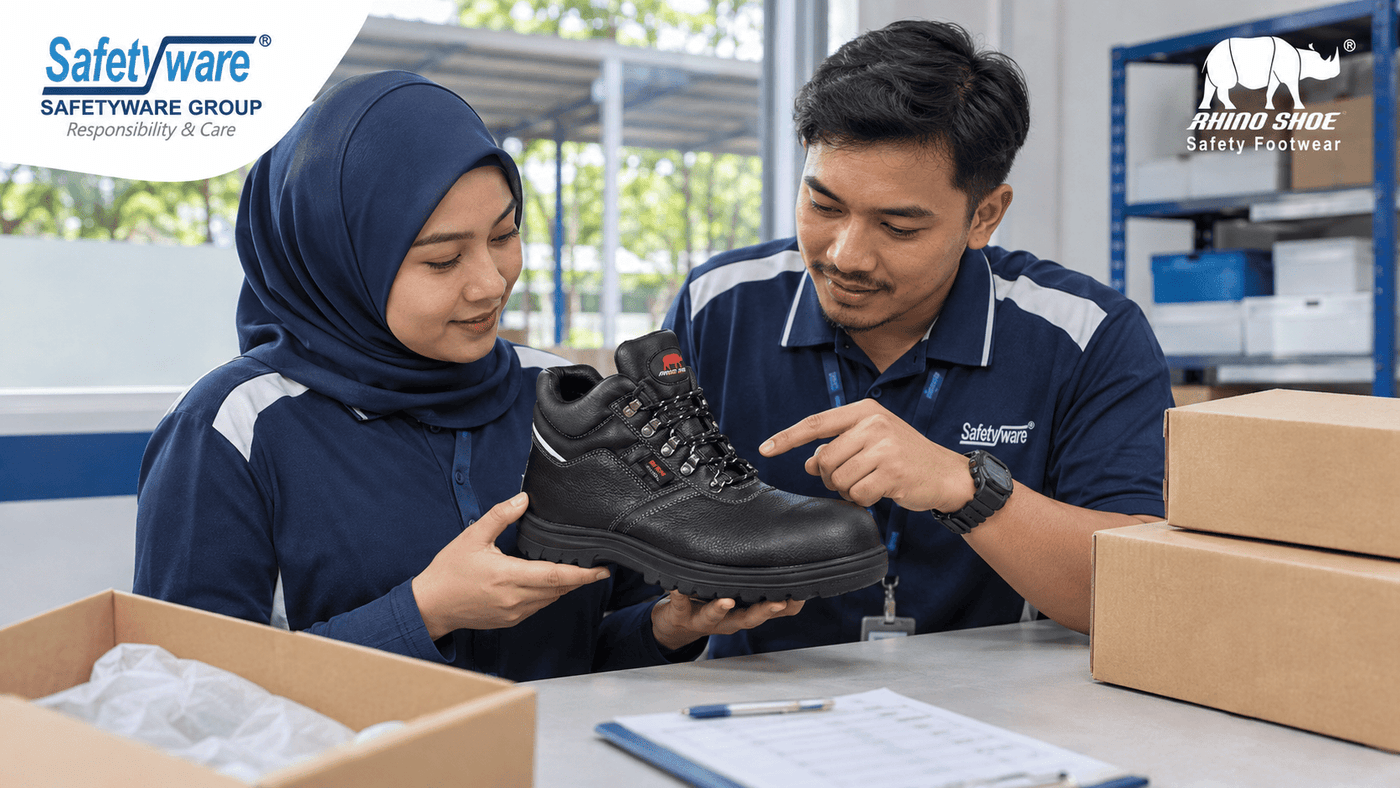
Start with SAFETYWARE’s official product directory and foot protection range. For model appearance and original footwear references, use RHINO SHOE’s official website.
Two relevant options for a documented product discussion are:
| Product | Verified reference information | What to confirm |
|---|---|---|
| RHINO SHOE PU101SP | Listed by RHINO SHOE in its Safeguard range. | Exact supplied variant, current label, standard edition and complete conformity documents. |
| RHINO SHOE CH211KP | The official specification describes a brown mid-cut lace-up shoe with a buffalo-leather upper, PU/PU outsole, fibreglass toe cap and aramid midsole. | Current model-specific certification, markings and suitability for the required task. |
A product description or catalogue helps shortlist options, but the final order should use current model evidence. Where website wording and certificates differ, resolve the discrepancy before assigning a grade or making a compliance claim.
Ready to review your safety footwear specification? Share your task, required protection, destination, quantity and size breakdown with SAFETYWARE. Ask for a proposal that identifies the exact model and supporting documents, together with any differences from your requested specification.
Conclusion
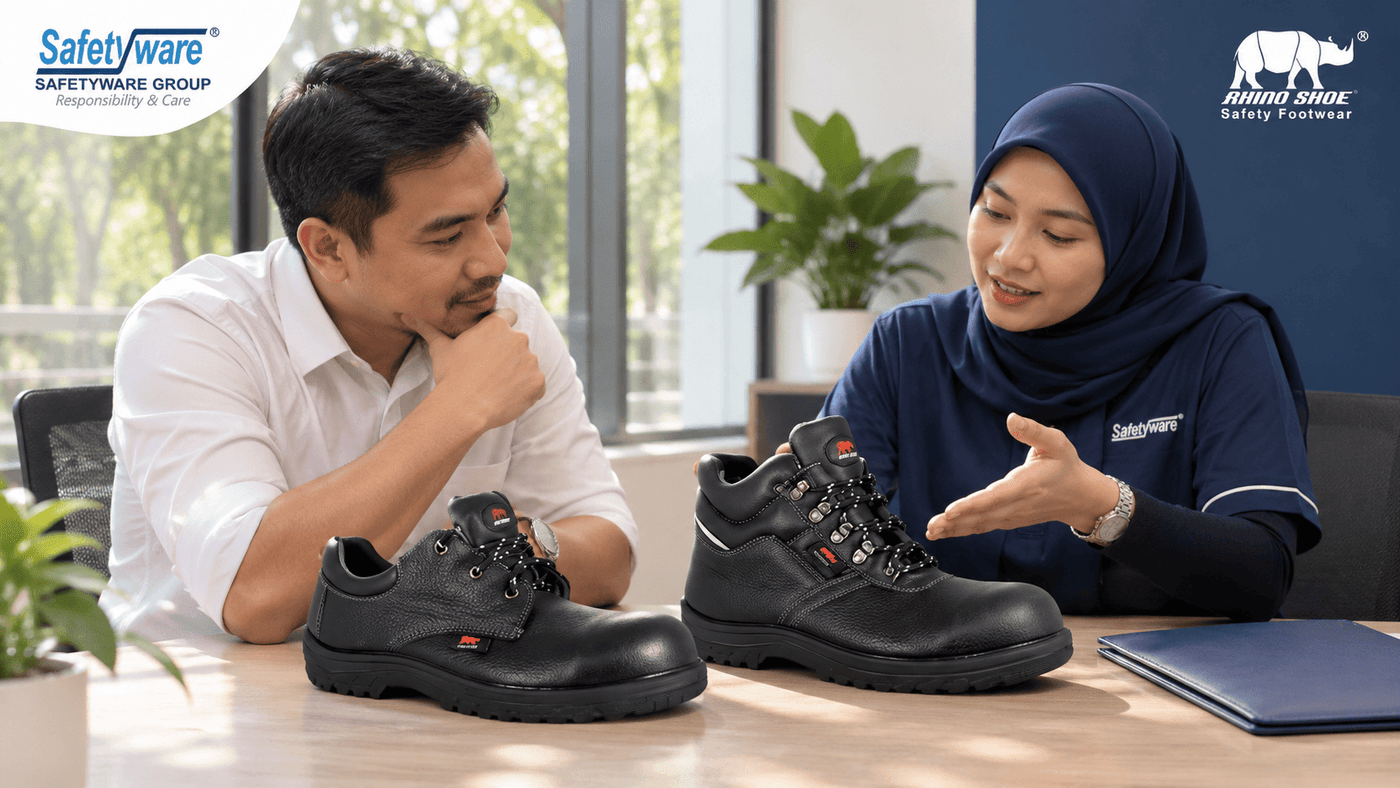
EN ISO 20345 helps buyers describe and verify safety-footwear performance. Its value comes from reading the whole specification: edition, category, additional markings, model identity and supporting evidence.
Before your next order, choose one model and compare its sample label, quotation and documents side by side. Resolve any mismatch, confirm fit and keep the agreed specification with the purchase record. That gives everyone a clearer basis for selection and repeat supply.
Sources and References
Official and primary technical sources checked on 20 November 2026. This is an educational overview, not a replacement for the complete standard or a workplace assessment.
- ISO: ISO 20345:2021 and Amendment 1:2024.
- BSI via ANSI: BS EN ISO 20345:2022+A1:2024 preview.
- uvex: Technical explanation of the 2022 changes.
- Intertek: Safety footwear testing requirements.
- uvex: Safety footwear category and marking guide.
- uvex: Guide to EN ISO 20345:2022 slip-test changes.
- EUR-Lex: Regulation (EU) 2016/425 on PPE, especially Articles 8, 11 and 15.
- SAFETYWARE and RHINO SHOE: Products, PU101SP, CH211KP product page and official CH211KP-BRN specification.
📞 Need More Information?
Searching for your EN20345 Safety Shoes?
Explore SAFETYWARE’s safety shoes and workplace PPE range at
👉Safetyware Catalogs
Our safety specialists can help evaluate workplace hazards, recommend suitable safety helmets, and support compliance with Malaysia workplace safety requirements.
If you need a quotation, feel free to contact us at:
📩 Email: [email protected]
📞 Tel: WhatsApp Us