
Chemical Resistant Gloves:
EN ISO 374-1, Breakthrough Time & Material Selection
Protect your workers from chemical burns, dermal absorption, and toxic exposure. Understand EN ISO 374-1:2016 Type A, B, C classification, breakthrough time categories, and which glove material resists which chemicals.
Why Chemical Resistant Gloves Are Critical
The skin is the largest organ of the human body — and one of the most frequently overlooked routes of chemical exposure. Many hazardous chemicals can penetrate intact skin, causing systemic poisoning, sensitisation, organ damage, or cancer, without causing immediate visible burns or irritation. Chemicals that do cause skin damage — acids, caustics, solvents — act rapidly, and even brief unprotected exposure can cause severe, irreversible injury.
In Malaysia’s petrochemical, pharmaceutical, chemical manufacturing, laboratory, semiconductor, agriculture, and cleaning service industries, chemical hand protection is among the most critical PPE decisions a safety officer makes. The challenge is selecting the right glove material for the specific chemical — because no single glove material protects against all chemicals, and the wrong glove can give false assurance while offering little real protection.
This guide covers the EN ISO 374-1:2016 standard in detail, explains breakthrough time and permeation testing, provides a material resistance reference matrix, and helps safety professionals select the right chemical glove for every application.
⚠ Critical Principle: One Glove Does Not Fit All Chemicals
A nitrile glove that provides excellent resistance to petroleum solvents offers very poor protection against ketones. A latex glove that resists acids is rapidly permeated by many organic solvents. Chemical glove selection must always start with the specific chemical hazard — never with the glove type. The SDS (Safety Data Sheet) for every chemical used at your site must be reviewed as part of the glove selection process.
EN ISO 374-1:2016 — The Chemical Glove Standard Explained
EN ISO 374 is the suite of European standards governing protective gloves against chemicals and microorganisms. The most important part for glove selection is EN ISO 374-1:2016, which classifies gloves into three performance types based on the number of test chemicals against which they achieve a minimum breakthrough time of 30 minutes.
EN ISO 374-1:2016 — Type A, B, C Classification
The 18 Test Chemicals (EN ISO 374-1:2016)
The standard uses a defined list of 18 reference chemicals (labelled A through R), each representing a different chemical class. The glove’s certification letters indicate which specific chemicals it has been tested against and achieved a minimum 30-minute breakthrough time. When selecting a glove, always check that the letters shown on the glove’s EN ISO 374-1 marking include the chemical class relevant to your application.
| Letter | Chemical | CAS No. | Class |
|---|---|---|---|
| A | Methanol | 67-56-1 | Primary alcohol |
| B | Acetone | 67-64-1 | Ketone |
| C | Acetonitrile | 75-05-8 | Nitrile compound |
| D | Dichloromethane | 75-09-2 | Chlorinated paraffin |
| E | Carbon disulphide | 75-15-0 | Sulphur-containing organic |
| F | Toluene | 108-88-3 | Aromatic hydrocarbon |
| G | Diethylamine | 109-89-7 | Amine |
| H | Tetrahydrofuran | 109-99-9 | Heterocyclic compound |
| I | Ethyl acetate | 141-78-6 | Ester |
| J | n-Heptane | 142-82-5 | Aliphatic hydrocarbon |
| K | Sodium hydroxide 40% | 1310-73-2 | Inorganic base |
| L | Sulphuric acid 96% | 7664-93-9 | Inorganic mineral acid |
Breakthrough Time and Permeation Categories
Breakthrough time measures how long a chemical takes to permeate (pass through) the glove material at the molecular level under defined test conditions. It is the most critical performance metric for chemical glove selection — because once breakthrough occurs, the worker’s skin is exposed even though the glove appears intact on the outside.
EN ISO 374-1 defines six permeation performance categories based on breakthrough time:
EN ISO 374-1 Permeation Categories — Breakthrough Time
⏳ The 50% Safety Factor Rule
Certified breakthrough times are measured under ideal laboratory conditions — static immersion, constant temperature, and undamaged glove. In real use, factors such as flexing, heat, and physical abrasion accelerate permeation. As a practical safety rule, the safe working time in a chemical glove should be set at no more than 50% of the certified breakthrough time. A glove with a Category 4 breakthrough time (120 minutes) should be used for no more than 60 minutes of actual chemical contact before replacement.
Chemical Resistance Matrix: Which Material for Which Chemical?
Understanding how different glove materials perform against common chemical classes is fundamental to glove selection. This matrix provides a comparative guide — always verify against the specific chemical and concentration using manufacturer permeation data tables.
| Chemical Class / Example | Nitrile | Neoprene | Latex | PVC | Butyl | Viton® | PVA |
|---|---|---|---|---|---|---|---|
| Aliphatic hydrocarbons (petrol, heptane) | Good | Fair | Poor | Fair | Poor | Excellent | Poor (water-swells) |
| Aromatic hydrocarbons (toluene, xylene) | Fair | Fair | Poor | Poor | Fair | Excellent | Poor |
| Chlorinated solvents (DCM, chloroform) | Poor | Fair | Poor | Poor | Fair | Good | Good |
| Ketones (acetone, MEK) | Poor | Fair | Fair | Poor | Excellent | Fair | Good |
| Esters (ethyl acetate) | Fair | Fair | Poor | Poor | Good | Good | Good |
| Alcohols (methanol, IPA) | Good | Good | Good | Fair | Good | Fair | Poor (water-swells) |
| Dilute acids (HCl, H₂SO₄ <50%) | Good | Good | Good | Good | Good | Good | Good |
| Concentrated acids (H₂SO₄ >50%) | Fair | Good | Fair | Fair | Good | Excellent | Poor |
| Caustic / alkalis (NaOH, KOH) | Good | Good | Good | Good | Good | Fair | Poor |
| Amines (diethylamine) | Fair | Fair | Fair | Poor | Good | Poor | Poor |
| Oils and fats (cutting oils, lubricants) | Good | Good | Fair | Fair | Poor | Good | Poor |
| Formaldehyde, disinfectants | Good | Good | Good | Good | Good | Fair | Fair |
Chemical Glove Material Selection Guide — At a Glance
Glove Thickness and Length — Additional Selection Factors
Beyond material selection, two further factors significantly affect chemical glove performance:
- Glove thickness — thicker gloves (e.g., 0.6 mm vs. 0.3 mm nitrile) provide longer breakthrough times and greater resistance to pin-holes and physical damage, but reduce dexterity. Higher-risk chemical tasks should specify thicker gloves.
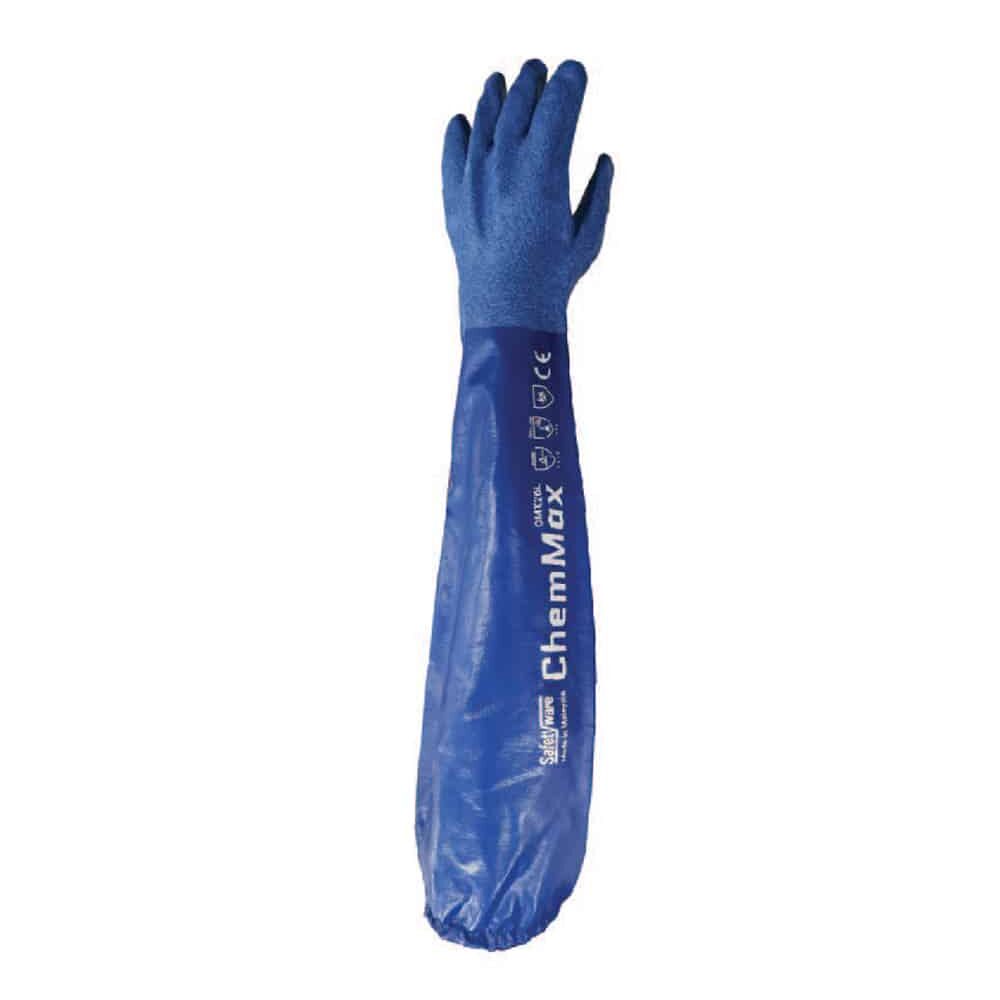
- Glove length — for tasks involving immersion, overhead work, or splash risk to the forearm and wrist, extended-length gloves (30 cm, 40 cm, or elbow-length) are required. A wrist-length glove that exposes the forearm does not provide adequate protection for immersion applications.
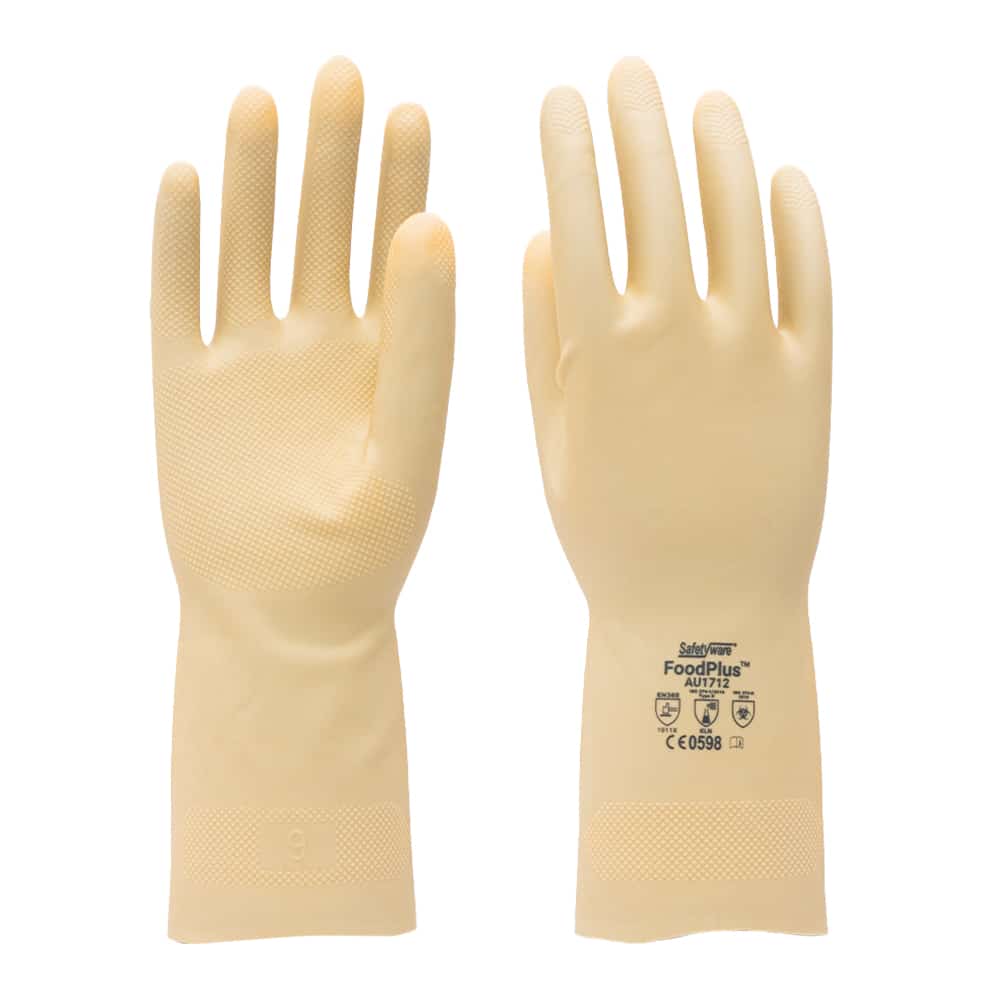
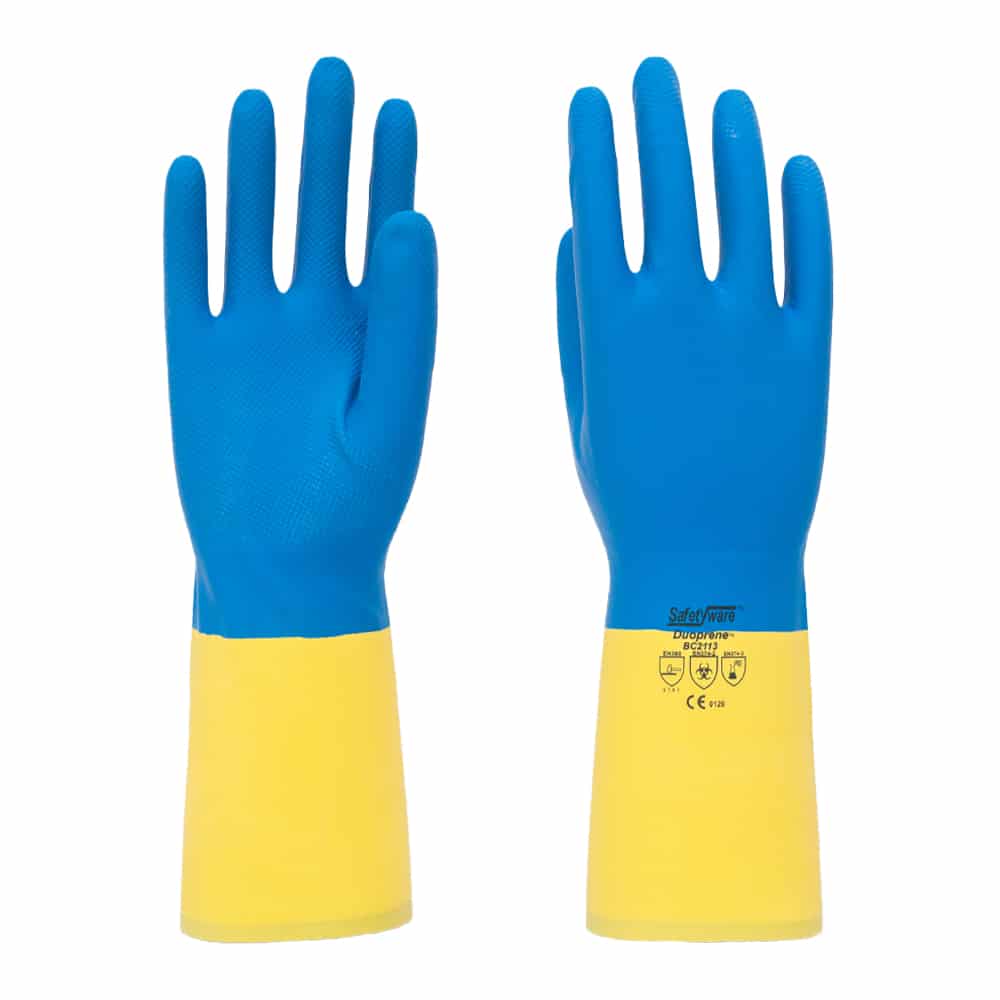
Safetyware’s Chemical Resistant Glove Range
Safetyware Group offers a comprehensive range of chemical-resistant gloves across all key materials — from everyday nitrile protection to specialist butyl and Viton® gloves for the most demanding chemical environments in Malaysia, Singapore, Thailand, and across the APAC region.



40 Years of Glove Manufacturing Heritage
Safetyware’s expertise in rubber and chemical gloves is backed by over four decades of manufacturing history — rooted in the very origins of Malaysia’s glove industry.
Leader Rubber Products Sdn. Bhd. founded in Penang — Malaysia’s first locally-owned rubber gloves manufacturer. Our chemical glove expertise began here.
Multifocal Corporation Sdn. Bhd. established — expanding our chemical and industrial glove range across Malaysia and the wider region.
Safetyware Group Berhad listed on Bursa Malaysia — a public company with supply operations across Malaysia, Singapore, Thailand, Australia, and APAC.
One of the most comprehensive chemical glove ranges in the region — nitrile, neoprene, latex, PVC, butyl, Viton®, and PVA — for every chemical hazard.
Frequently Asked Questions: Chemical Resistant Gloves
EN ISO 374-1 Type A is the highest chemical performance classification under the European standard. A Type A glove has achieved a breakthrough time of at least 30 minutes against a minimum of 6 of the 18 defined test chemicals. The specific letters shown on the glove (A through R) indicate which chemicals were tested. Type A gloves are appropriate for tasks involving sustained or frequent contact with hazardous chemicals. Type B requires 3 chemicals, and Type C requires only 1.
Breakthrough time is the time taken for a chemical to permeate through the glove material at the molecular level under laboratory test conditions. It matters because a chemical can be passing through an intact-looking glove without any visible sign — meaning the worker’s skin is being exposed even though the glove appears undamaged. A glove with a very short breakthrough time provides little real protection for continuous chemical contact. For practical use, safe wearing time should be set at no more than 50% of the certified breakthrough time to account for real-world conditions.
Nitrile is the most versatile chemical glove material for general industrial use — it provides good resistance to a wide range of oils, fuels, dilute acids, alkalis, and many solvents. However, nitrile performs poorly against ketones (such as acetone and MEK), many aromatic hydrocarbons, and chlorinated solvents. For any task involving these chemical classes, a different material — typically butyl, Viton®, or PVA — must be specified. Always verify nitrile performance against your specific chemical using the manufacturer’s permeation data.
This must be approached with great caution. Different chemicals may cause the glove material to swell, soften, or degrade — making subsequent exposure to a different chemical much faster than the published breakthrough time. If a glove is used for one chemical and then contacted with another, the protection offered against the second chemical may be significantly reduced. In multi-chemical environments, the safest approach is to use fresh gloves for each chemical, or to use a material that provides adequate protection against all chemicals present. Consult Safetyware’s chemical glove specialists for multi-chemical workplaces.
PVA (Polyvinyl Alcohol) is an unusual glove material that dissolves in water. This means that while it provides outstanding resistance to aromatic and chlorinated solvents — outperforming all other materials for these chemicals — it cannot be used anywhere that water, aqueous solutions, or even perspiration may contact the glove. PVA is a highly specific specialty material used only where the chemical hazard is a solvent that PVA resists, and where water contact can be fully excluded.
Chemical gloves should be replaced before the breakthrough time is reached — typically after each shift or when the safe wearing time (50% of breakthrough time) has elapsed. Additionally, gloves should be replaced immediately after any visible damage (pin-holes, cuts, tears, discolouration, or swelling), after heavy chemical immersion, and at any time the integrity is uncertain. Disposable chemical gloves (thin nitrile or latex) should be replaced after each use. Reusable chemical gloves must be inspected before each use, including inflating the glove to check for pin-holes.